
30 Workers Dead, Families Left in Limbo: Lawmakers Push to Criminalize Safety Violations After Angeles Building Collapse
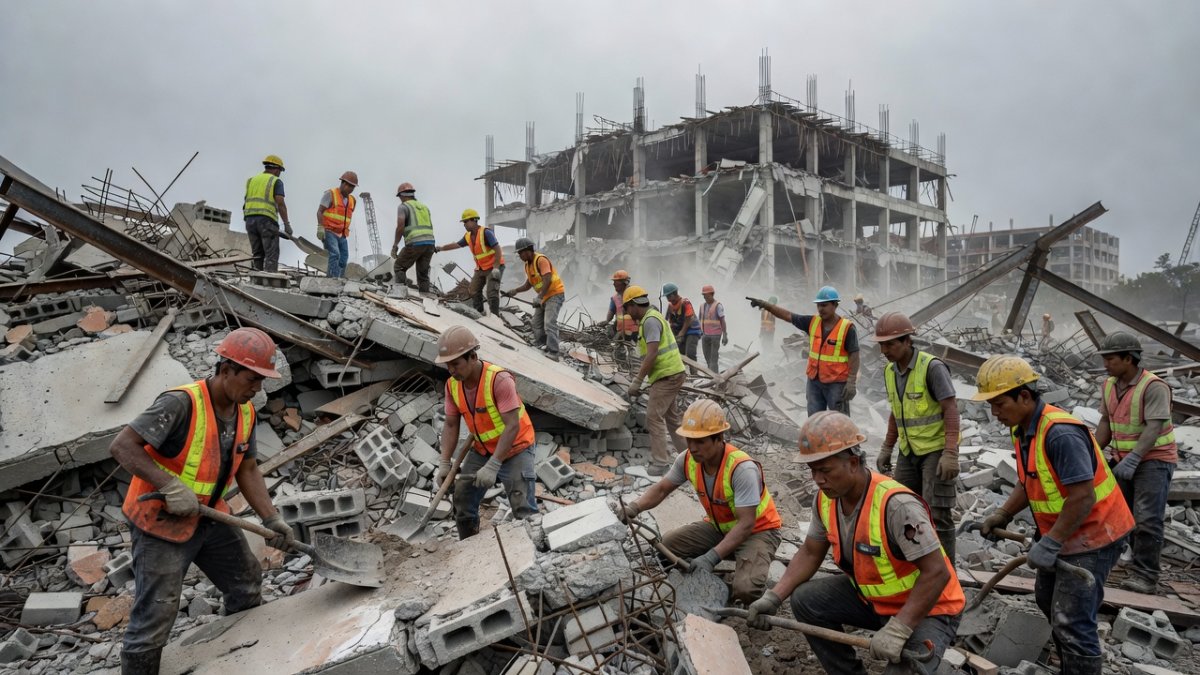
The Collapse That Killed 30 Workers in Angeles City The sudden collapse of a building under construction in Angeles City claimed the lives of 30 workers in a single tragic event. Families across Central Luzon were left reeling as news of the incident spread through barangay networks and local communities. The workers had been laboring on the site with hopes of providing for the
The Collapse That Killed 30 Workers in Angeles City
The sudden collapse of a building under construction in Angeles City claimed the lives of 30 workers in a single tragic event. Families across Central Luzon were left reeling as news of the incident spread through barangay networks and local communities. The workers had been laboring on the site with hopes of providing for their loved ones, only to have their futures cut short without warning.
Residents in nearby areas described the shock that rippled through the city as emergency responders arrived. The scale of the loss highlighted long-standing concerns about construction practices in rapidly growing urban centers. Many in the community knew someone connected to the site, making the grief deeply personal and widespread.
Local government units immediately coordinated initial response efforts, yet questions lingered about how such a disaster could occur. Workers in the construction sector often face tight schedules and limited oversight, factors that community leaders say contribute to heightened risks. The Angeles City incident served as a stark reminder of these vulnerabilities.
Survivors and witnesses from surrounding barangays shared accounts of the chaos that followed the collapse. Support networks quickly formed to assist affected households with basic needs during the first difficult days. This outpouring of solidarity underscored the tight-knit nature of Philippine communities when tragedy strikes.
The event also drew attention to the daily hazards faced by laborers who build the infrastructure many take for granted. In Angeles City, the loss of 30 lives has prompted neighbors to reflect on the true cost of development. Community discussions continue as families seek answers and ways to prevent similar losses.
Advocates emphasize that each worker represented a vital thread in the social fabric of their barangay. The collapse has left lasting voids that extend far beyond the construction site itself. Healing will require sustained attention from both local and national levels.
Makabayan Lawmakers File Resolution for Congressional Inquiry
Rep. Antonio Tinio of the ACT Teachers Party-list joined Rep. Sarah Elago of Gabriela Women's Party and Rep. Renee Co of Kabataan Party-list in filing a resolution that calls for a congressional inquiry. The measure targets the House Committee on Labor and Employment and aims to examine the Angeles City building collapse in detail. Lawmakers seek to understand the sequence of events that led to the deaths of 30 workers.
The resolution stresses the need to review Republic Act No. 11058 and identify gaps in worker protection. Tinio noted that nearly a month had passed without any public report on the incident, leaving families and communities in uncertainty. He emphasized that accountability must extend to owners, contractors, and government agencies tasked with enforcing building standards.
Elago and Co added their voices to the call for justice, highlighting how the tragedy affects working families across the country. The lawmakers argued that current mechanisms have proven insufficient to prevent such outcomes. They expressed hope that an inquiry would produce concrete recommendations for stronger safeguards.
Community organizations in Central Luzon welcomed the resolution as a step toward meaningful change. Residents believe congressional attention can bring transparency to an event that has shaken public trust. The filing marks an important moment for labor advocacy in the Philippines.
Tinio stated that criminal liability should be considered to deter future violations and protect workers more effectively. The resolution reflects a broader desire among progressive legislators to prioritize occupational safety. Families of the victims have expressed gratitude for this legislative initiative.
The move also signals renewed focus on how Republic Act No. 11058 is implemented at the local level. Lawmakers intend to gather testimony from various stakeholders during the inquiry process. This approach aims to ensure that lessons from the Angeles City collapse inform national policy.
Families Left Without Support: Bea Bermejo's Story
Bea Bermejo, whose husband was among the 30 workers killed, has spoken openly about the hardships her family now faces. She described how owners and contractors have yet to reach out to grieving households despite repeated appeals. Many families buried their loved ones without proper funeral services because financial assistance never arrived.
Bermejo recalled her husband's accounts of the work site, where owners appeared only on Saturdays to deliver wages. This limited interaction left workers and their families with little recourse when tragedy struck. She appealed directly to those responsible to coordinate with victims' relatives and provide the support they desperately need.
The absence of immediate help has forced some households to rely on barangay assistance and neighborly contributions. Bermejo noted that uncertainty about legal representation further complicates efforts to seek accountability. Families feel isolated as they navigate grief and mounting expenses.
Community members in Angeles City have rallied around Bermejo and others in similar situations. Local networks have organized small fundraisers and meal drives to ease daily burdens. These grassroots efforts highlight the resilience of Philippine communities during times of crisis.
Bermejo continues to hope for justice and meaningful engagement from those connected to the collapsed building. Her story illustrates the human cost when support systems fail to activate promptly. Many other widows and children share parallel experiences of waiting for answers and aid.
The emotional toll on families extends beyond financial strain to include prolonged uncertainty. Bermejo's calls for coordination reflect a common plea among affected households. Community leaders encourage continued advocacy to ensure no family is left behind.
Labor Groups Demand Criminal Penalties for Safety Violations
Kilusang Mayo Uno and the Institute for Occupational Health and Safety Development have voiced strong support for amending Republic Act No. 11058 to include criminal penalties. Ka Pol Viuya, vice chairperson of Kilusang Mayo Uno Central Luzon, pointed to 369 construction-related deaths recorded last year along with 560 to 600 injuries. These figures underscore the urgent need for stronger deterrents against safety lapses.
Viuya expressed hope that Congress will review and amend the law to better protect workers in hazardous industries. He noted that hundreds of cases tied to unsafe conditions have already accumulated, making legislative action essential. Labor groups believe criminal liability would compel owners and contractors to prioritize safety measures.
Nadia De Leon of IOHSAD reinforced the call, stating that one worker dies each day due to unsafe working conditions. She described the Angeles City collapse as proof that the cycle of neglect must end. De Leon emphasized the importance of safeguarding occupational health and safety rights for all laborers.
Progressive organizations across the Philippines have echoed these demands in community forums and online discussions. Workers in construction and other sectors see the proposed changes as vital for long-term protection. The push for criminal penalties reflects widespread frustration with existing enforcement gaps.
Advocates argue that financial penalties alone have not prevented repeated tragedies. They point to the need for accountability that matches the severity of lost lives. Labor groups plan to sustain pressure on lawmakers throughout the inquiry process.
The combined voices of Kilusang Mayo Uno and IOHSAD add weight to the Makabayan resolution. Community support for these demands continues to grow as more families share their experiences. The goal remains clear: prevent future losses through meaningful legal reform.
Republic Act No. 11058: What the Law Says and Where It Falls Short
Republic Act No. 11058 establishes occupational safety and health standards intended to protect workers across various industries. The law outlines responsibilities for employers to maintain safe workplaces and report incidents promptly. It also empowers government agencies to conduct inspections and impose administrative sanctions when violations occur.
Despite these provisions, the statute lacks explicit criminal penalties for serious breaches that result in worker deaths. This gap has allowed some owners and contractors to evade meaningful accountability after incidents like the Angeles City collapse. Community advocates argue that the absence of criminal liability weakens the law's deterrent effect.
Implementation at the local government unit level often faces resource constraints that limit effective monitoring. Barangay officials frequently lack the training or authority to address complex construction safety issues. These shortcomings contribute to uneven protection for workers nationwide.
Lawmakers involved in the current resolution seek to address these deficiencies through targeted amendments. They emphasize that stronger enforcement mechanisms would better align the law with the realities faced by laborers. Public discussions around Republic Act No. 11058 have intensified following the recent tragedy.
Stakeholders note that clearer guidelines on reporting and liability could improve compliance across the construction sector. The law's current framework has not prevented the high number of incidents recorded annually. Reform efforts aim to close these loopholes while preserving the protective intent of the original legislation.
Community organizations continue to educate workers about their rights under Republic Act No. 11058. Greater awareness is seen as one step toward demanding better enforcement. The ongoing congressional inquiry offers an opportunity to strengthen the law for future generations of workers.
Impact on Communities: Beyond the Construction Site
The Angeles City collapse has reverberated through multiple barangays, affecting not only immediate families but entire neighborhoods. Children who lost parents now face uncertain educational prospects, while spouses struggle to cover household expenses. Local support systems have mobilized to fill immediate gaps left by absent contractors.
Local government units have coordinated relief efforts, yet resources remain stretched thin in the aftermath. Community leaders highlight how such incidents disrupt the social and economic fabric of affected areas. The loss of 30 workers represents a significant blow to the local workforce and family networks.
Residents have organized regular gatherings to share information and offer emotional support. These initiatives reflect the deep community bonds that characterize Philippine society. Many participants express determination to advocate for safer workplaces to protect future generations.
The tragedy has also sparked conversations in nearby towns about construction practices and regulatory oversight. Families connected through kinship or work ties feel the ripple effects across provincial boundaries. This broader impact underscores the interconnected nature of labor communities.
Advocates stress that sustained community engagement will be necessary to maintain pressure for accountability. Barangay assemblies have become venues for discussing both immediate needs and long-term policy changes. The shared experience has strengthened solidarity among affected households.
Healing will require ongoing attention from national agencies and local leaders alike. Communities remain hopeful that the congressional inquiry will yield tangible improvements in worker protections. The Angeles City incident serves as a catalyst for collective action.
What Happens Next: Congressional Timeline and Advocacy Steps
The House Committee on Labor and Employment is expected to schedule hearings on the Makabayan resolution in the coming weeks. Lawmakers plan to invite testimony from families, labor groups, and relevant government agencies. This process aims to build a comprehensive record of the factors contributing to the collapse.
Community advocates intend to monitor the inquiry closely and submit position papers outlining needed reforms. They emphasize the importance of including worker voices in every stage of the legislative review. Public participation is viewed as essential to achieving meaningful amendments to Republic Act No. 11058.
Progressive organizations will continue holding forums in Central Luzon to keep residents informed about developments. These gatherings allow families to connect with legal resources and share their experiences. Sustained advocacy is seen as key to maintaining momentum for change.
Timeline projections suggest that initial findings could emerge within two months if the committee proceeds efficiently. Lawmakers have indicated willingness to consider criminal penalties as part of any proposed amendments. Community support will play a vital role in encouraging decisive action.
Advocates also plan to engage with other congressional committees to broaden awareness of occupational safety issues. Coordinated efforts across party lines could strengthen the prospects for reform. The goal remains to translate the tragedy into lasting protections for workers.
Regular updates through barangay channels will help keep the public engaged throughout the process. Families like those represented by Bea Bermejo continue to hope for justice and concrete improvements. The path forward depends on persistent collective effort.
Broader Pattern: Worker Safety Across Philippine Industries
The Angeles City incident fits into a larger pattern of occupational fatalities documented across construction and other sectors. Kilusang Mayo Uno recorded 369 construction-related deaths last year, alongside 560 to 600 injuries. These numbers reveal systemic challenges that extend well beyond a single site or city.
Similar concerns arise in manufacturing, mining, and agricultural work, where safety standards often receive inconsistent enforcement. Labor groups note that one worker dies daily due to unsafe conditions, a reality that demands national attention. The call to criminalize violations under Republic Act No. 11058 reflects this widespread concern.
Community organizations across regions have begun sharing data and strategies to address these patterns. Barangay-level monitoring initiatives aim to identify hazards before they result in tragedy. Collaboration between local groups and national advocates strengthens the overall push for reform.
Progressive lawmakers continue to highlight how inadequate protections disproportionately affect low-income families. The economic consequences of worker deaths ripple through communities already facing multiple challenges. Addressing the broader pattern requires both legislative changes and cultural shifts in workplace priorities.
IOHSAD and similar groups plan expanded training programs to empower workers with knowledge of their rights. These efforts complement the congressional inquiry by building grassroots capacity. Long-term success depends on combining policy reform with sustained community vigilance.
The experiences of families in Angeles City serve as a powerful reminder of what is at stake. Advocates remain committed to breaking the cycle of neglect that has claimed too many lives. A safer future for Philippine workers is both necessary and achievable through continued action.
By Bella Reyes, Staff WriterThis article was produced with AI-assisted research and editorial support. Reporting is based on sources cited in the article.
What's Your Reaction?
 Like
0
Like
0
 Dislike
0
Dislike
0
 Love
0
Love
0
 Funny
0
Funny
0
 Wow
0
Wow
0
 Sad
0
Sad
0
 Angry
0
Angry
0

Philippines/Southeast Asia Correspondent at Global1.News. Manila-based journalist covering Philippine politics, environment, maritime security, and social issues. Passionate about marine conservation and the communities protecting the Philippines' natural heritage.












Comments (0)