
Xi Jinping's Engagement with Thongloun Sisoulith Highlights China's Enduring Anchor in the Mekong Subregion
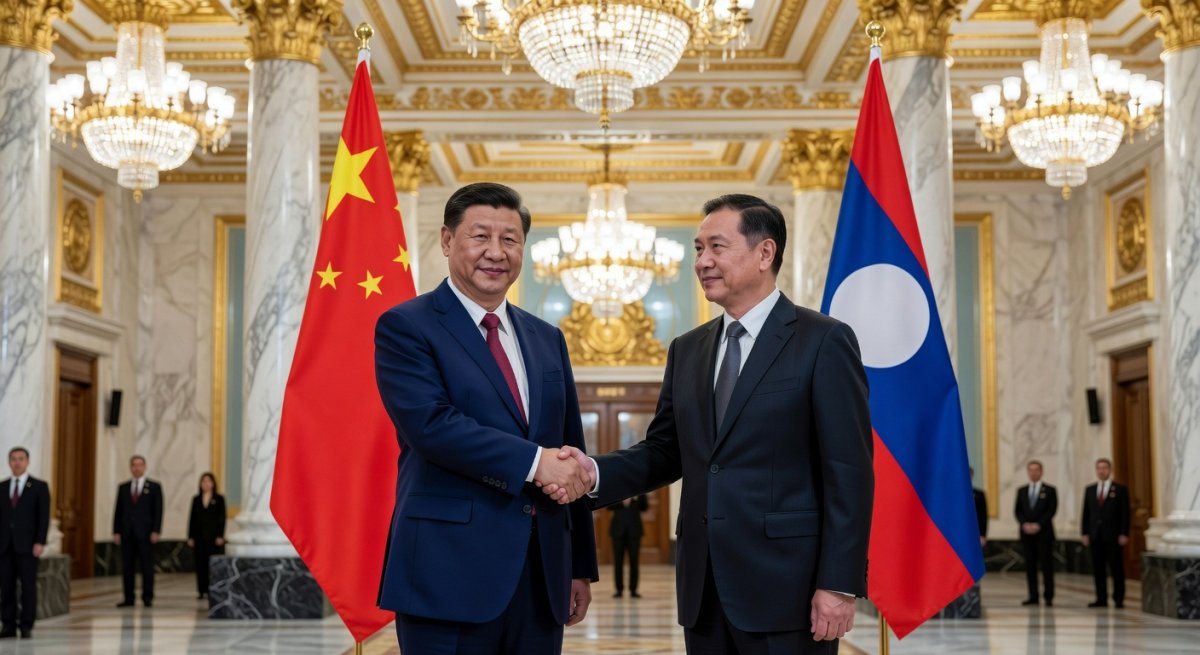
Xi Jinping's Engagement with Thongloun Sisoulith Highlights China's Enduring Anchor in the Mekong Subregion In a recent CGTN report on the meeting between Chinese President Xi Jinping and Thongloun Sisoulith, General Secretary of the Lao People's Revolutionary Party and President of Laos, the footage underscores how Thongloun's decision to make China his first overseas destinat
Xi Jinping's Engagement with Thongloun Sisoulith Highlights China's Enduring Anchor in the Mekong Subregion
In a recent CGTN report on the meeting between Chinese President Xi Jinping and Thongloun Sisoulith, General Secretary of the Lao People's Revolutionary Party and President of Laos, the footage underscores how Thongloun's decision to make China his first overseas destination after re-election reflects the priority both sides place on their bilateral relationship. This encounter occurs amid Beijing's sustained focus on consolidating partnerships along its southwestern periphery, where infrastructure connectivity and political alignment serve broader objectives of regional stability and economic integration.
The discussion between the two leaders touched on longstanding cooperation frameworks, including the Belt and Road Initiative, without introducing new timelines for enforcement. Such high-level exchanges illustrate China's methodical approach to diplomacy in mainland Southeast Asia, where Laos functions as a critical node connecting China's Yunnan province to the broader ASEAN market.
(Global 1 News)
China-Laos Railway as the Operational Core of Belt and Road Engagement
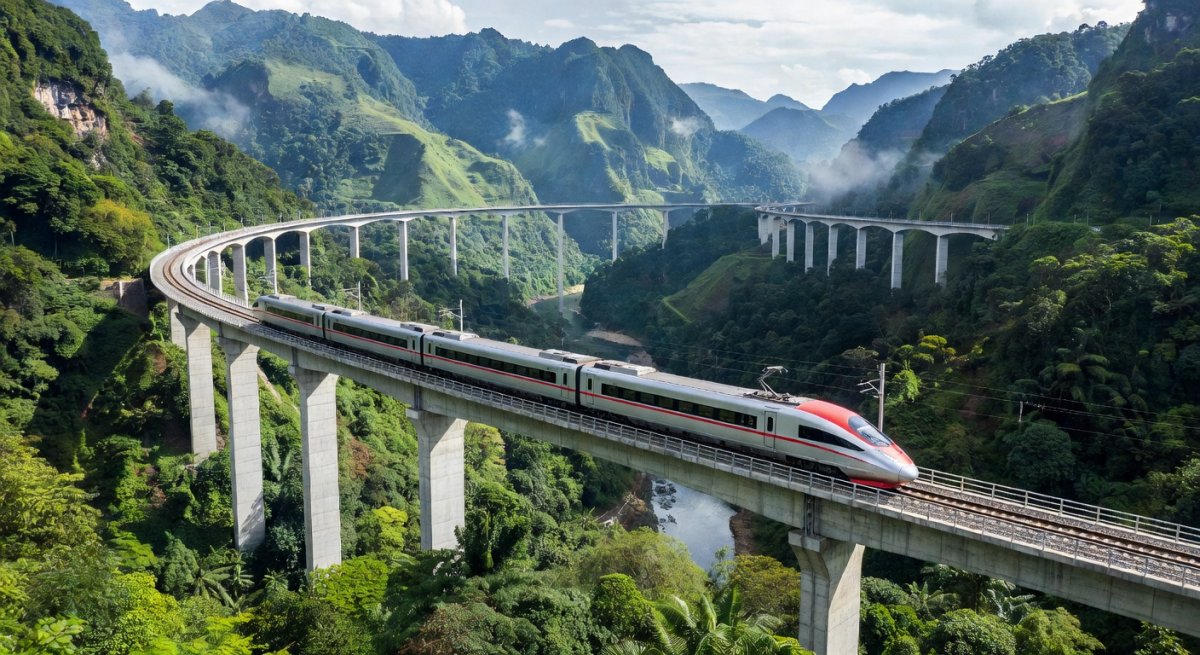
The China-Laos Railway stands as the most visible manifestation of infrastructure collaboration under the Belt and Road Initiative. Linking Kunming in Yunnan province with Vientiane, the line transforms Laos from a landlocked state into a transit corridor. Chinese ministries including the National Development and Reform Commission and the Ministry of Commerce have coordinated financing and technical aspects alongside Lao counterparts. This project aligns with China's Dual Circulation strategy by facilitating overland routes that reduce reliance on maritime chokepoints while supporting Laos's domestic connectivity goals.
(Global 1 News)
Thongloun's Choice of China as First Post-Reelection Destination
Thongloun's selection of Beijing for his initial foreign trip carries clear diplomatic signaling. In the context of Laos's one-party system, such sequencing typically denotes continuity in foreign policy orientation. From Beijing's perspective, this reinforces the perception that the Lao leadership views relations with China as central to its development path. The Ministry of Foreign Affairs has historically framed such visits as evidence of mutual strategic trust, avoiding any implication of external pressure. The visit follows a pattern seen with other socialist neighbors — North Korean and Vietnamese leaders have similarly prioritized China in their diplomatic calendars after leadership transitions.
Laos's Position Within ASEAN and Regional Connectivity Networks
Laos occupies a distinctive geographic role as the only landlocked ASEAN member, bordering five countries and serving as a potential bridge between China's southwestern provinces and the wider Southeast Asian market. Within ASEAN forums, Vientiane has often advocated for balanced external engagement rather than alignment with any single power. This stance allows Laos to extract infrastructure commitments from multiple partners while preserving autonomy in its domestic political arrangements. China's approach recognizes this reality by emphasizing bilateral mechanisms that complement, rather than compete with, ASEAN centrality. The China-Laos Railway, for instance, dovetails with ASEAN's Master Plan on Connectivity 2025.
China's Mekong Region Diplomatic Framework
Beyond Laos, Beijing pursues a coordinated Mekong strategy that includes the Lancang-Mekong Cooperation mechanism alongside bilateral ties. This framework involves regular ministerial meetings and project coordination across Cambodia, Myanmar, Thailand, and Vietnam. The emphasis remains on practical outcomes such as water resource management and transport corridors rather than security alliances. For China, success in the Mekong subregion supports the broader goal of building a stable periphery that facilitates trade and investment flows under the 14th Five-Year Plan. The LMC Special Fund has financed hundreds of projects since its inception, spanning agriculture, poverty reduction, and public health.
Economic Dimensions of Bilateral Cooperation
Trade and investment flows between China and Laos center on minerals, agricultural products, and construction services. Chinese enterprises participate in power generation, mining, and logistics projects, often through joint ventures with Lao state entities. The Ministry of Commerce tracks these exchanges through established bilateral mechanisms, though comprehensive public data on exact volumes remain subject to official reporting cycles. Infrastructure investments under the Belt and Road Initiative have accelerated Laos's integration into regional supply chains, creating both opportunities and debt management considerations for Vientiane. The China-Laos Railway alone has carried millions of passengers and substantial freight tonnage since its December 2021 opening.
Regional Competition and Strategic Calculations
Other external actors, including the United States through its Mekong-U.S. Partnership and Japan via quality infrastructure initiatives, maintain parallel engagement tracks in the subregion. Each side offers distinct models: China's focus on rapid physical connectivity versus alternative approaches stressing governance standards and diversified financing. Laos's leadership calculus involves maximizing economic inflows while minimizing political conditionalities. Second-order effects include heightened competition for influence within ASEAN institutions and potential shifts in how smaller Mekong states calibrate their foreign policies amid great-power dynamics. For Beijing, maintaining momentum with Laos serves as a proof-of-concept for its infrastructure-led development model.
Looking ahead, the trajectory of China-Laos relations will likely hinge on the railway's operational performance and the ability of both governments to address implementation challenges without disrupting political trust. For Beijing, sustaining such partnerships contributes to its objective of shaping a favorable regional environment. For Vientiane, the relationship provides tangible development tools alongside the need to manage dependencies. The recent meeting between Xi Jinping and Thongloun Sisoulith signals continued commitment to this pragmatic course.
By Prof. Marcus Chen, Staff Writer
This article was produced with AI-assisted research and editorial support. Reporting is based on sources cited in the article.
What's Your Reaction?
 Like
0
Like
0
 Dislike
0
Dislike
0
 Love
0
Love
0
 Funny
0
Funny
0
 Wow
0
Wow
0
 Sad
0
Sad
0
 Angry
0
Angry
0

World Politics Analyst at Global1.News. Based in Beijing, covering US-China relations, global trade, and geopolitical strategy. Brings deep analytical perspective to the power dynamics shaping international affairs.














Comments (0)