
Xi Jinping's Forthcoming Engagement with Kim Jong Un Signals Renewed Focus on Korean Peninsula Stability
Xi Jinping's Forthcoming Engagement with Kim Jong Un Signals Renewed Focus on Korean Peninsula Stability Timing and Historical Context of the Summit China's president Xi Jinping will travel to North Korea from 8 to 9 June at the invitation of Kim Jong Un. This marks his first visit to Pyongyang in nearly seven years, following his previous trip in 2019. The two leaders' meeting
Timing and Historical Context of the Summit
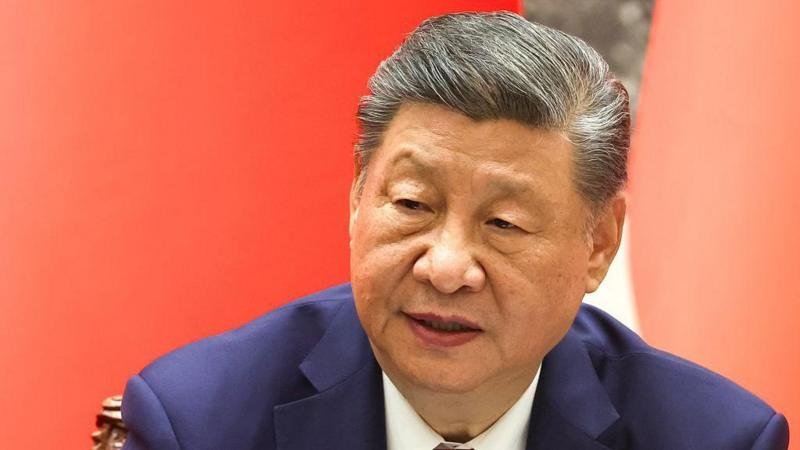
China's president Xi Jinping will travel to North Korea from 8 to 9 June at the invitation of Kim Jong Un. This marks his first visit to Pyongyang in nearly seven years, following his previous trip in 2019. The two leaders' meeting occurs against the backdrop of the 65th anniversary of the bilateral defence pact, the sole such agreement China maintains with any nation. This treaty commits both sides to mutual support in the event of external attack and underscores the enduring strategic linkage across their 1,400-kilometre shared border.
Sequence of Recent High-Level Diplomacy
The Pyongyang visit follows closely on Xi's recent receptions in Beijing of US President Donald Trump and Russian President Vladimir Putin. These encounters placed North Korea's foreign policy choices in sharp relief, given the influence both Washington and Moscow exert over Pyongyang's calculations. The sequence illustrates Beijing's preference for managing multiple great-power relationships while preserving its position as North Korea's principal economic and political partner amid sweeping international sanctions tied to the nuclear programme and alleged human rights concerns.
Economic Lifelines and Domestic Priorities in Pyongyang
North Korea continues to rely on China as its largest trading partner and primary economic lifeline. Kim Jong Un is expected to seek expanded cross-border commerce and increased Chinese tourist inflows to support newly constructed beach and ski resorts. These infrastructure projects form part of Pyongyang's efforts to project self-reliance after navigating the pandemic and aligning with Russia in the Ukraine conflict. The propaganda value of hosting Xi is considerable, allowing Kim to showcase capital developments and an expanded nuclear and missile arsenal achieved without concessions to the United States or engagement with South Korea.
Shifts in Inter-Korean Relations
Since declaring an end to reunification efforts with the South in December 2024, Kim has labelled South Koreans a sworn enemy and severed all communication channels with Seoul. This stance was visibly demonstrated during the recent visit of North Korea's women's professional football team to South Korea, where players offered minimal acknowledgment to local spectators and engaged in notably aggressive on-field conduct. Seoul's attempts at rapprochement have thus far yielded no visible response from Pyongyang, leaving open the question of whether external mediation might alter the current freeze.
Denuclearisation Positions and Recent Statements
Beijing has long advocated denuclearisation of the Korean Peninsula, yet has moderated the emphasis placed on this objective in recent years. During last month's meeting between Xi and Trump, the two sides reaffirmed a shared goal of denuclearising North Korea, according to a White House fact sheet. A subsequent Chinese foreign ministry spokesperson, when queried, described China's stance as maintaining continuity and consistency without directly confirming the reported agreement. In parallel, Kim recently stated that North Korea's weapons-grade nuclear materials production capacity has more than doubled over the past five years during a tour of a new nuclear facility.
Potential Mediatory Role and Regional Calculus
South Korea's minister of unification, Chung Dong-young, has expressed the view that Xi's discussions with Kim could address the resumption of talks between Pyongyang and both Seoul and Washington. Such an outcome would align with Beijing's broader interest in preventing escalation on its northeastern frontier while balancing its relationships with Moscow and Washington. The visit therefore offers a window into how China weighs the risks of a deepening Pyongyang-Moscow alignment against the stabilising effects of sustained economic engagement with North Korea. For all parties, the coming days will test whether high-level personal diplomacy can translate into concrete movement on trade facilitation, tourist flows, or renewed dialogue channels without altering Pyongyang's core strategic posture.
By Prof. Marcus Chen, Staff WriterThis article was produced with AI-assisted research and editorial support. Reporting is based on sources cited in the article.
What's Your Reaction?
 Like
0
Like
0
 Dislike
0
Dislike
0
 Love
0
Love
0
 Funny
0
Funny
0
 Wow
0
Wow
0
 Sad
0
Sad
0
 Angry
0
Angry
0

World Politics Analyst at Global1.News. Based in Beijing, covering US-China relations, global trade, and geopolitical strategy. Brings deep analytical perspective to the power dynamics shaping international affairs.















Comments (0)