
Venezuelan migrants overwhelm Brazil health services in Roraima
Every dawn at the Pacaraima border crossing, mothers clutch feverish children while dialysis patients shuffle forward on foot, fleeing Venezuela's collapsed hospitals in search of Brazil's SUS system. This is the human face of a public health emergency that has transformed Roraima state into Latin America's most acute humanitarian frontline. With over 7.7 million Venezuelans di
Every dawn at the Pacaraima border crossing, mothers clutch feverish children while dialysis patients shuffle forward on foot, fleeing Venezuela's collapsed hospitals in search of Brazil's SUS system. This is the human face of a public health emergency that has transformed Roraima state into Latin America's most acute humanitarian frontline. With over 7.7 million Venezuelans displaced and more than one million now in Brazil, the crisis tests the capacity of Brazil's universal healthcare model and the solidarity of the entire region.
Venezuelan Migrant Influx Overwhelms Brazil's Health Services at the Pacaraima Border
PACARAIMA, Roraima – Brazil, June 24, 2026 —
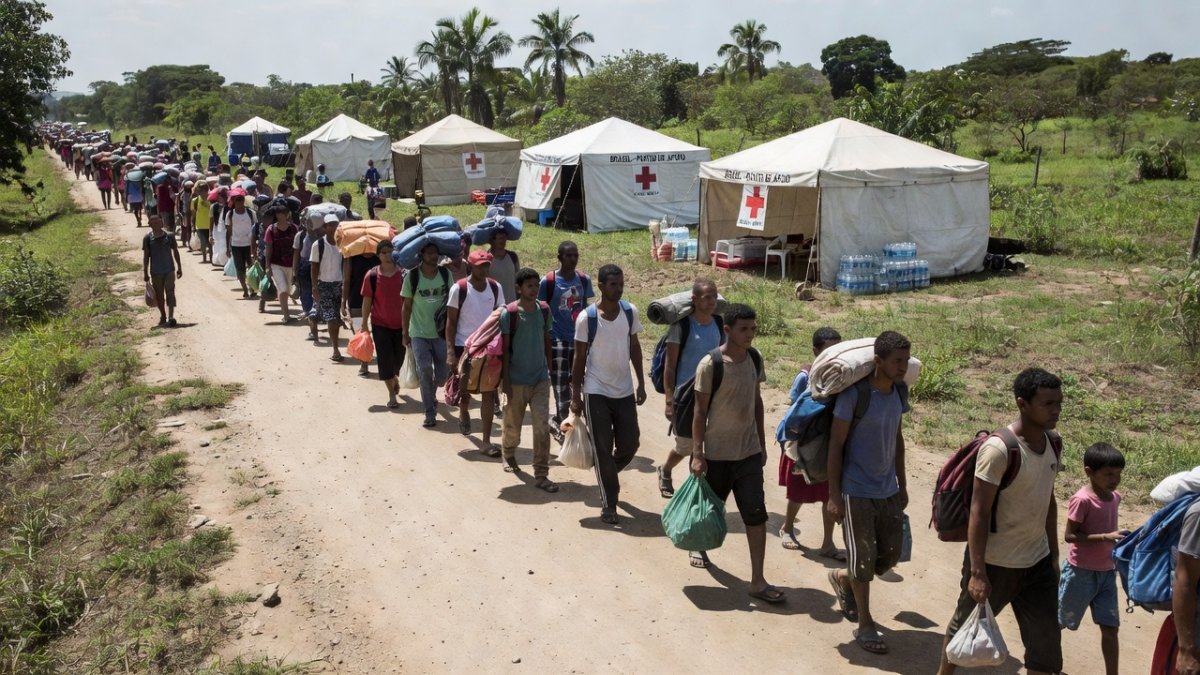
The Pacaraima Corridor: Latin America's Health Emergency
The Pacaraima corridor has become the most visible artery of a regional health catastrophe. Every day between 300 and 400 Venezuelans cross into Roraima state, many arriving dehydrated, malnourished, and carrying untreated conditions that demand immediate attention from Brazil’s Sistema Único de Saúde. In 2025 alone Pacaraima received more than 96,000 people, turning a once-quiet indigenous municipality into a frontline clinic. The pressure is relentless: on a single August 2025 day the local facility recorded over 350 consultations. These numbers reveal a pattern repeated across Latin America whenever political and economic implosion drives mass movement. The corridor is no longer simply a migration route; it functions as an open-air triage center where Brazil’s northernmost health posts absorb the consequences of Venezuela’s lost decade. Local nurses describe shifts that begin before dawn and end long after midnight, treating patients whose stories echo those of millions displaced elsewhere on the continent. The human tide shows no sign of slowing, and every new arrival underscores how one nation’s failure to govern has become a shared Latin American burden.
The Scale of the Crisis: Millions on the Move
More than 7.74 million Venezuelans have now fled their homeland, with over one million entering Brazil through the northern border. In Boa Vista, the capital of Roraima, Venezuelans already constitute 20 percent of the total population, a demographic shift that has transformed neighborhoods, schools, and hospitals within a few short years. The interiorization program Operação Acolhida has relocated more than 150,000 people to other Brazilian states in an attempt to ease pressure on the border region, yet daily crossings continue unabated. This scale of movement dwarfs previous Latin American displacement events and places Brazil in an unprecedented position as both recipient and regional stabilizer. The numbers are not abstract; they represent families who have walked hundreds of kilometers, children who have missed years of schooling, and elders whose chronic illnesses have gone untreated for months. When 96,000 arrivals were registered in Pacaraima in a single year, the municipality’s modest infrastructure was overwhelmed almost overnight. These figures illustrate why the crisis cannot be viewed as Brazil’s problem alone; it is a hemispheric challenge that tests the solidarity mechanisms Latin American nations have built over decades.
Health at the Border: What Arriving Patients Carry
Patients crossing at Pacaraima present with severe malnutrition, dehydration, advanced cancers left untreated for years, tuberculosis, parasitic infections, and renal failure requiring dialysis. Sexually transmitted infections have risen sharply in border clinics, linked directly to the vulnerabilities of the migration journey. In January 2025 alone, health teams administered more than 4,000 vaccine doses to new arrivals, while the International Organization for Migration donated critical supplies in August 2025 to keep shelves from emptying. A GloboNews investigation published in December 2025 documented how many Venezuelans cite the total absence of healthcare inside their country as the decisive factor in their decision to cross. These conditions do not respect borders; they travel with people who have already endured extreme hardship. The clinical picture is a stark reminder that Venezuela’s collapse has exported not only people but also a public-health burden that neighboring systems must now shoulder. Every case of untreated tuberculosis or advanced renal disease represents both a personal tragedy and a regional risk that demands coordinated response across Latin America.
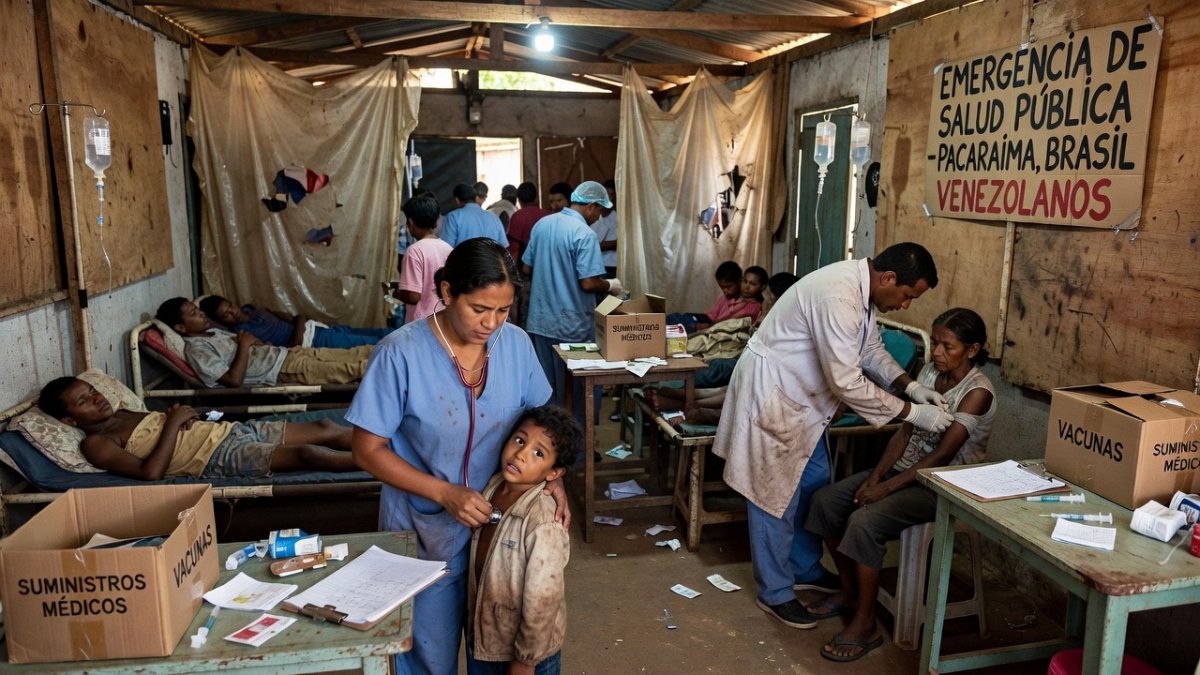
Brazil's Response: SUS, Operação Acolhida, and Interiorization
Brazil’s public health system, the SUS, has mobilized extraordinary resources to meet the influx. Operação Acolhida, the federal operation coordinating reception and interiorization, has moved more than 150,000 Venezuelans away from the saturated border zone into cities with greater capacity. In early 2026 Brazil dispatched over 40 tons of medications and dialysis supplies into Venezuela itself, with some reports placing the total humanitarian medical transfer at 300 tons. These actions reflect a pragmatic recognition that stabilizing the health situation on both sides of the border serves Brazilian interests. The SUS has absorbed the initial clinical load in Roraima while federal authorities manage logistics and the International Organization for Migration and UNHCR provide supplementary support. Yet the scale of need continues to test even this coordinated machinery. Interiorization has proven the most effective tool for distributing pressure, but it cannot address the steady daily flow of 300 to 400 new arrivals. Brazil’s response demonstrates both the strengths and the limits of a middle-income nation attempting to manage a crisis whose roots lie in the political and economic disintegration of its largest neighbor.
Warning Signs: Governor Denarium and the Risk of Collapse
In January 2026, Roraima Governor Antonio Denarium issued a blunt public warning that the state could no longer absorb additional arrivals without risking systemic collapse. His statement came after months of sustained pressure on hospitals, schools, and social services already operating near capacity. The governor’s assessment is grounded in data: Pacaraima’s clinic routinely exceeds its designed patient volume, and Boa Vista’s hospitals report chronic shortages of beds and specialists. Denarium’s call for greater federal support echoes concerns voiced by other Latin American governors facing similar displacement pressures. The risk of collapse is not theoretical; it is measured in waiting times that stretch from hours into days and in health workers who are themselves approaching burnout. When a single border municipality receives 96,000 people in one year, the margin for error disappears. Governor Denarium’s warning serves as an early alarm for the entire region that current reception models may soon prove insufficient if the outflow from Venezuela continues at present rates.
The Regional Dimension: Venezuela's Collapse, Brazil's Aid, and Hemispheric Ripple Effects
Brazil’s decision to close the border in January 2026 following reported U.S. bombing activity and the subsequent deployment of the national guard marked a significant shift in regional migration policy. In June 2026 authorities intercepted 108 Cuban immigrants attempting irregular entry, while 2025 saw Cuban asylum applications in Brazil exceed Venezuelan ones for the first time in a decade. These developments illustrate how the Venezuelan exodus has reshaped migration dynamics across Latin America, drawing additional nationalities into the same corridors. Brazil’s medical aid shipments to Venezuela, totaling hundreds of tons, represent an unusual instance of a receiving country attempting to stabilize conditions inside the sending nation. The ripple effects extend far beyond Roraima: health systems in Colombia, Peru, and Ecuador face parallel strains, while Caribbean nations report secondary movements. The crisis has exposed the absence of a unified Latin American protocol for large-scale health emergencies tied to displacement. Without coordinated investment in both origin and destination countries, the human and financial costs will continue to mount across the hemisphere.
The Bottom Line
The Venezuelan migrant influx has transformed Brazil’s northern border into a permanent health emergency that tests the resilience of the SUS and the solidarity of Latin American nations. Daily crossings of 300 to 400 people, a 20 percent Venezuelan share of Boa Vista’s population, and more than 96,000 arrivals in Pacaraima in 2025 alone have produced a clinical burden that includes advanced cancers, tuberculosis, renal failure, and surging sexually transmitted infections. Operação Acolhida has relocated over 150,000 individuals, yet Governor Antonio Denarium’s January 2026 warning of imminent collapse underscores the limits of current capacity. Brazil’s shipment of hundreds of tons of medical supplies into Venezuela reveals the regional nature of the crisis, while shifting asylum patterns involving Cuban nationals demonstrate its evolving character. The data paint a clear picture: without sustained hemispheric cooperation and substantially increased resources for border health services, the human suffering will intensify and the risk of systemic breakdown will grow. This is Latin America’s shared challenge, and the time for half-measures has passed. By Elena Vasquez, Staff Writer
This article was produced with AI-assisted research and editorial support. Reporting is based on sources cited in the article.
What's Your Reaction?
 Like
0
Like
0
 Dislike
0
Dislike
0
 Love
0
Love
0
 Funny
0
Funny
0
 Wow
0
Wow
0
 Sad
0
Sad
0
 Angry
0
Angry
0

Latin America Correspondent at Global1.News. Based in Mexico City, covering politics, economics, energy, and culture across the region. Brings an on-the-ground perspective to stories spanning from the Rio Grande to Patagonia.











Comments (0)