
The Dominion Trial That Tested Fox News: A 2023 Reckoning in Wilmington
The Dominion Trial That Tested Fox News: A 2023 Reckoning in Wilmington The Stage Was Set in Delaware In April 2023 the media defamation trial of the century stood on the precipice of beginning in Wilmington, Delaware. Jury selection for Dominion Voting Systems' $1.6 billion lawsuit against Fox News had consumed an entire Thursday, drawing 300 potential jurors to the courthouse
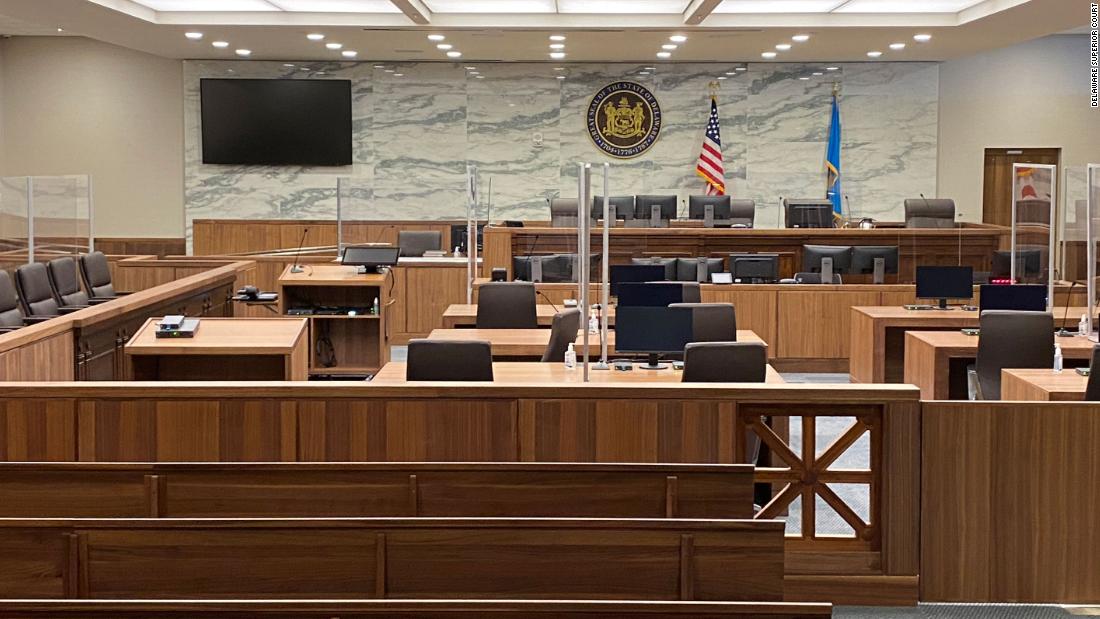
The Stage Was Set in Delaware
In April 2023 the media defamation trial of the century stood on the precipice of beginning in Wilmington, Delaware. Jury selection for Dominion Voting Systems' $1.6 billion lawsuit against Fox News had consumed an entire Thursday, drawing 300 potential jurors to the courthouse. The presiding judge observed that more than enough jurors stood ready to launch proceedings the following Monday in Courtroom 7E. Looking back, that moment marked a rare instance when the network's usual playbook of deflection met an immovable legal process.
Atlanta viewers, long accustomed to watching national cable news filter through local lenses, recognized the stakes immediately. Georgia's own battles over voting equipment and election integrity made the Delaware proceedings feel personal. The trial promised to expose whether a major network could be forced to defend its post-2020 election coverage under oath rather than on its own airwaves.
Fox's Failed Attempts to Avoid Scrutiny
By the time jury selection wrapped, Fox News had already exhausted multiple efforts to convince the judge to dismiss the case. The network arrived in Courtroom 7E accompanied by its most prominent Murdoch Media executives and a phalanx of high-powered attorneys. Those pre-trial setbacks signaled that the usual crisis-management tactics—ignoring questions or pivoting to attacks on other outlets—would not suffice inside a courtroom bound by rules of evidence.
From an Atlanta newsroom perspective, this shift carried particular weight. Southern audiences had witnessed years of national coverage that sometimes blurred lines between commentary and fact. The Delaware trial forced a different standard: arguments had to rest on verifiable records rather than narrative momentum. That distinction mattered for viewers who relied on accurate information about elections in their own states.
Jury Selection Revealed the Gravity
The summoning of 300 potential jurors underscored how seriously the court treated the $1.6 billion claim. Progress moved steadily, and the judge's assurance that sufficient jurors existed for a Monday start date removed any lingering doubt about the trial's forward momentum. In retrospect, that orderly selection process stood in sharp contrast to the chaotic claims about voting systems that had aired on Fox after the 2020 election.
Atlanta's media market, with its mix of urban and suburban households, had long debated the reach of national cable narratives. The Delaware jury pool represented ordinary citizens tasked with weighing whether those narratives crossed into defamation. Their presence reminded observers that accountability ultimately rested with people outside the media ecosystem, not with executives or hosts.
Pre-Trial Signals of a Difficult Road
Even before opening statements, the presiding judge had already expressed frustration with Fox's legal team and placed them on notice. Those exchanges suggested the trial would not unfold as a routine defense. The network's representatives would need to present fact-driven arguments rather than rely on the rhetorical tools that had sustained ratings during earlier controversies.
Reflecting on that period from Atlanta, the pre-trial friction highlighted a broader tension in American journalism. Outlets that built audiences by pushing boundaries often assumed they could manage fallout through public relations. The Delaware courtroom demonstrated that legal standards operate independently of audience share or political alignment. That lesson resonated in a city where local reporting on state elections demanded precision.
Implications for Journalism and Democracy
The Dominion case forced a public examination of how election-related claims moved from fringe speculation to prime-time repetition. In April 2023, the prospect of top executives and hosts answering questions under oath represented an uncommon check on media power. The trial's structure—centered on evidence rather than spin—offered a template for evaluating whether journalism serves or undermines democratic processes.
Atlanta's vantage point added context. Georgia's recent history of close elections and voting-technology disputes meant residents had direct stakes in accurate coverage. When national networks amplified unverified assertions, the effects rippled into state-level trust. The Delaware proceedings illustrated that repeated falsehoods carry financial and reputational costs, potentially encouraging more rigorous internal standards across the industry.
What the Trial Meant for Media's Future
Looking back, the April 2023 trial marked a turning point in expectations for cable news accountability. The inability to simply ignore discovery requests or redirect criticism on-air exposed vulnerabilities in a business model built on rapid, high-volume commentary. Executives and hosts accustomed to controlling their own narratives confronted a venue where deception carried direct consequences.
For Atlanta journalists and viewers alike, the outcome reinforced the value of separating commentary from reporting. Future coverage of elections would need to account for the precedent that even large media organizations could face sustained legal examination. That reality encouraged greater caution without eliminating robust debate, provided the debate remained tethered to evidence.
By Jessica Ali, Staff WriterThis article was produced with AI-assisted research and editorial support. Reporting is based on sources cited in the article.
What's Your Reaction?
 Like
0
Like
0
 Dislike
0
Dislike
0
 Love
0
Love
0
 Funny
0
Funny
0
 Wow
0
Wow
0
 Sad
0
Sad
0
 Angry
0
Angry
0

Editor-in-Chief at Global1.News. Atlanta-based journalist who cuts through the BS and tells it like it is. Lead anchor, host, and the voice you hear when the spin stops and the truth starts.












Comments (0)