
Colombian Killed by ICE in Maine Sparks Latin America Outcry
The Fatal Shooting in Biddeford On Monday, ICE agents in Biddeford, Maine, fatally shot 26-year-old Colombian national Joan Sebastian Guerrero during an enforcement operation. Agents had been monitoring an address linked to an individual with a final order of removal. When they attempted to stop a vehicle leaving the location, the car tried to flee, prompting an agent to discharge a weapon out of concern for public safety, according to an ICE statement. Guerrero, who was...
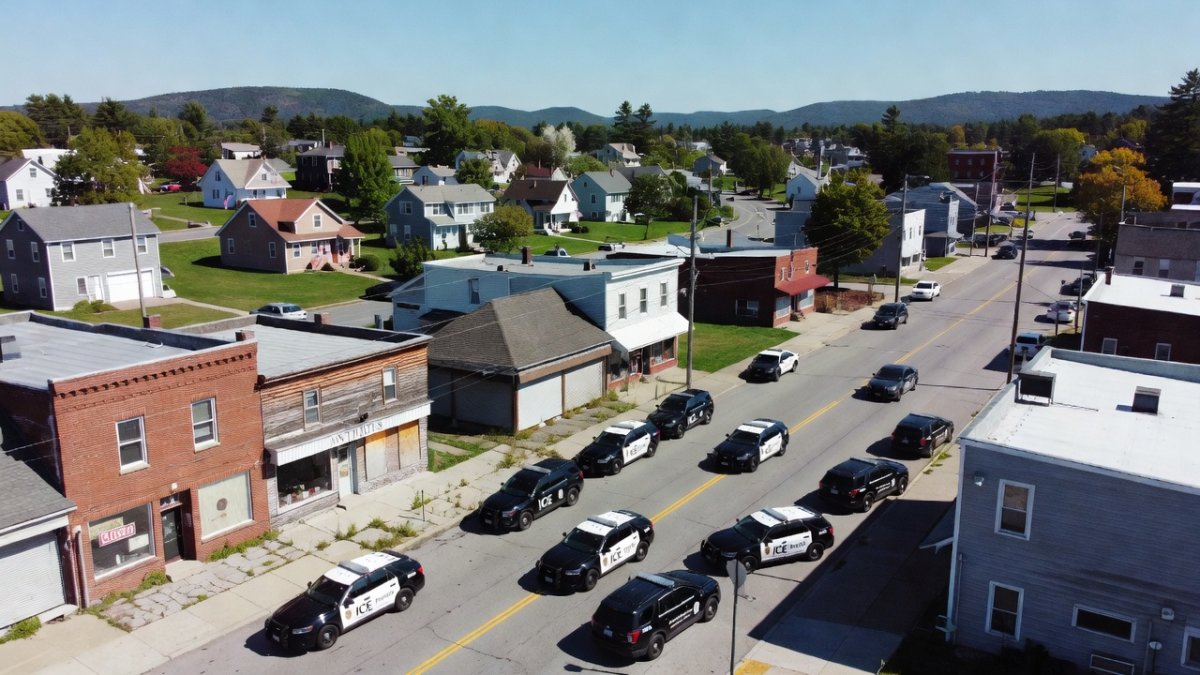
The Fatal Shooting in Biddeford
On Monday, ICE agents in Biddeford, Maine, fatally shot 26-year-old Colombian national Joan Sebastian Guerrero during an enforcement operation. Agents had been monitoring an address linked to an individual with a final order of removal. When they attempted to stop a vehicle leaving the location, the car tried to flee, prompting an agent to discharge a weapon out of concern for public safety, according to an ICE statement. Guerrero, who was authorized to work in the United States, was struck and killed. Hours later, DHS Secretary Markwayne Mullin confirmed to Senator Angus King that Guerrero was not the target of the arrest warrant.
Official Reactions from Maine Leaders
The Biddeford protests erupted within hours of Joan Sebastian Guerrero's death, with hundreds of residents—many from the Colombian and broader Latin American diaspora—gathering outside the local ICE field office to demand answers. Community witnesses described the chaotic scene: the vehicle had barely pulled away when shots rang out, and bystanders reported seeing no immediate threat to bystanders, only the desperate flight of a father trying to protect his family. These accounts fuel outrage over the absence of body cameras on the agents involved, leaving the public reliant on an ICE narrative that has repeatedly proven incomplete in similar incidents.
The political divide in Maine has sharpened into open confrontation. Republican Senator Susan Collins has called for a full federal review while defending the need for enforcement, yet Democratic Governor Janet Mills has labeled the operation reckless and haphazard, echoing the grief of Congresswoman Chellie Pingree, who highlighted Guerrero's three-year-old daughter now fatherless. This partisan split mirrors national tensions, where local leaders confront the human cost of policies crafted far from the communities they devastate.
Without body-camera footage or independent video, the investigation rests on internal DHS accounts, deepening mistrust. Advocates note that this opacity has become a pattern, turning every enforcement surge into a potential tragedy shielded from scrutiny.
Parallel Incident in Houston
In recent days, a similar operation in Houston resulted in the fatal shooting of 52-year-old Mexican builder Lorenzo Salgado Araujo by an ICE officer as he drove to a construction site. Federal officials later acknowledged that Araujo was also not the intended target of the enforcement action. This case has drawn attention to repeated instances where Latin American nationals have been killed during U.S. immigration enforcement despite not matching the profiles of those sought.
Protests erupted across Houston within hours of the shooting, with thousands of Mexican-American residents marching through downtown streets and blocking key intersections near the site of the incident. Community leaders organized vigils and demanded an independent investigation, highlighting long-standing tensions between local immigrant populations and federal agents. Houston Mayor Sylvester Turner issued a statement condemning the use of lethal force and calling for greater transparency from ICE, while urging federal authorities to pause operations pending review.
Civil rights lawyers from organizations such as the ACLU and MALDEF have begun building a wrongful death case, citing body-camera footage and witness accounts that suggest excessive force and inadequate identification protocols. Families of the victim have joined class-action efforts alleging systemic targeting of Latino workers, with filings expected in federal court to seek policy reforms and compensation for affected communities.
Mexico's Demand for Criminal Charges
Mexico's push for criminal charges rests on established international legal frameworks, including the Vienna Convention on Consular Relations and bilateral agreements that allow the foreign ministry to seek accountability when nationals die in U.S. custody. The Mexican government has invoked these tools before, citing past diplomatic frictions over cross-border enforcement operations that left families without justice. In the case of Lorenzo Salgado Araujo, the 52-year-old Mexican builder shot in Houston while driving to a construction site, officials are demanding prosecution after confirming he was never the intended target.
The Mexican Foreign Ministry has formally stated that it will coordinate with its embassy network to pursue charges, building on earlier protests against operations that disproportionately endanger workers with no criminal records. This stance reflects years of accumulated tensions, from family separations to fatal encounters, and signals a willingness to escalate through diplomatic channels rather than accept routine expressions of regret.
By linking the Biddeford and Houston cases, Mexico underscores a pattern of negligence that violates the spirit of bilateral cooperation on migration. The ministry's public statements emphasize that no nation can claim sovereignty while denying due process to those caught in enforcement crossfire.
Colombian Embassy Involvement
The Embassy of Colombia has formally requested information and clarification from the Department of Homeland Security regarding the Biddeford shooting. Colombian officials are seeking full details on the circumstances of Joan Sebastian Guerrero's death to inform their response and support for the victim's family. This diplomatic step aligns with standard protocols when Colombian nationals are involved in fatal encounters abroad.
Leadership Changes at DHS
DHS Secretary Markwayne Mullin assumed the role in March after replacing Kristi Noem, who was dismissed by President Trump. During Noem's tenure, immigration enforcement operations resulted in the fatal shootings of two American citizens, Alex Pretti and Renee Good. The current administration has since announced surges in enforcement activity across multiple states, increasing the frequency of such operations.
Mullin, a former Oklahoma senator with a background in law enforcement advocacy, has adopted a more aggressive operational style than Noem, emphasizing rapid-response raids and expanded use of local partnerships over the previous focus on targeted removals. His approach aligns closely with President Trump's directives to prioritize volume in enforcement, resulting in broader sweeps that extend beyond criminal priorities.
These shifts have heightened risks for Latin American nationals, as patterns show increased encounters during routine activities like commuting or work commutes, often involving officers with limited cultural or linguistic training. Analysts note that the policy emphasis on deterrence may inadvertently amplify collateral incidents, prompting concerns from advocacy groups about due process and the erosion of community trust in enforcement mechanisms.
Impact on Latin American Communities
Fear has settled like a shadow over Colombian and Mexican diaspora neighborhoods from Maine to Texas, where families now weigh every trip to work or school against the risk of an ICE encounter. With roughly 11 million Mexican nationals and over 800,000 Colombians living in the United States, the chilling effect is measurable: parents report skipping shifts, children miss classes, and community vans that once ferried workers sit idle. These daily disruptions fracture the economic stability many risked everything to build.
Advocacy groups such as the Maine Immigrants' Rights Coalition have seen a surge in requests for legal support and know-your-rights workshops, as residents organize rideshares and emergency hotlines to avoid solitary travel. The anxiety extends beyond the directly affected, rippling through Brazilian and Venezuelan enclaves that recognize the same vulnerability. What begins as one family's loss quickly becomes a collective retreat from public life.
These communities are responding with renewed organizing, pooling resources for legal defense funds and pressuring local officials for sanctuary policies. Yet the human price remains steep—lost wages, fractured trust, and children growing up with the constant lesson that their presence here can end in sudden violence.
Broader Regional Implications
The killings strain already fragile ties between the United States, Colombia, and Mexico, turning routine diplomatic exchanges into confrontations over sovereignty and the value of Latin American lives. Both nations have activated embassy channels to demand transparency, signaling that continued enforcement surges—such as the Trump administration's Operation Catch of the Day in Maine—risk broader retaliation in trade negotiations and migration accords.
With the upcoming review of North American trade relations on the horizon, these incidents carry economic weight. Mexico and Colombia may link cooperation on border security to stronger protections for their nationals, potentially complicating tariff talks and supply-chain agreements that depend on stable bilateral trust. The pattern of fatal errors during operations erodes the goodwill required for any meaningful partnership.
Regional governments are watching closely, aware that each unaccountable death reinforces the perception of U.S. enforcement as indifferent to collateral harm. Without structural reforms, these tragedies threaten to reshape not only migration policy but the economic architecture binding the hemisphere.
This article was produced with AI-assisted research and editorial support. Reporting is based on sources cited in the article.
What's Your Reaction?
 Like
0
Like
0
 Dislike
0
Dislike
0
 Love
0
Love
0
 Funny
0
Funny
0
 Wow
0
Wow
0
 Sad
0
Sad
0
 Angry
0
Angry
0

Latin America Correspondent at Global1.News. Based in Mexico City, covering politics, economics, energy, and culture across the region. Brings an on-the-ground perspective to stories spanning from the Rio Grande to Patagonia.













Comments (0)