
Bolivia Declares Emergency Over Fuel Subsidies, Lithium Crisis
Emergency Powers Amid Bolivia's Deepening Crisis Bolivian President Rodrigo Paz has declared a state of emergency after weeks of protests demanding his resignation. The move would give Paz broader powers to clear road blocks by demonstrators, which have caused serious shortages of basic goods and paralysed large parts of the nation. Under law, Bolivia's Congress must approve or
Emergency Powers Amid Bolivia's Deepening Crisis
Bolivian President Rodrigo Paz has declared a state of emergency after weeks of protests demanding his resignation. The move would give Paz broader powers to clear road blocks by demonstrators, which have caused serious shortages of basic goods and paralysed large parts of the nation. Under law, Bolivia's Congress must approve or reject the measure within 72 hours of the declaration. This step comes as blockades led by miners, farmers and indigenous groups have disrupted supply chains across the country, leaving communities without reliable access to fuel, food and medicine. The paralysis has hit transportation networks hard, isolating rural areas and urban centers alike in a nation where many rely on daily movement of goods for their livelihoods.
The state of emergency builds on a bill passed by Congress last month that enables troop deployment to address the unrest. Paz has faced mounting pressure since the protests began at the end of April, with several people reported dead and hundreds arrested during clashes. The declaration aims to restore order by allowing authorities to dismantle barriers that have brought economic activity to a standstill in multiple regions. In Bolivia, where the economy depends heavily on resource extraction and agriculture, such disruptions carry immediate consequences for families struggling to maintain basic stability amid rising tensions.
Critics of the emergency powers argue that they risk escalating confrontations rather than resolving underlying grievances. Supporters, however, point to the need for swift action to reopen roads and resume the flow of essential supplies. The 72-hour congressional review period places the decision in the hands of lawmakers who must weigh the immediate security needs against long-term political fallout. As the crisis unfolds, the measure reflects the depth of division in Bolivian society, where economic hardships intersect with demands for political change.
Local economies in affected areas have seen sharp declines in commerce, with markets reporting empty shelves and farmers unable to transport produce. The broader paralysis threatens to compound existing vulnerabilities in a country already navigating shifts in global commodity prices. Paz's administration has emphasized that the powers are temporary and targeted at restoring mobility, yet the declaration has intensified debates over the balance between authority and democratic oversight in times of national strain.
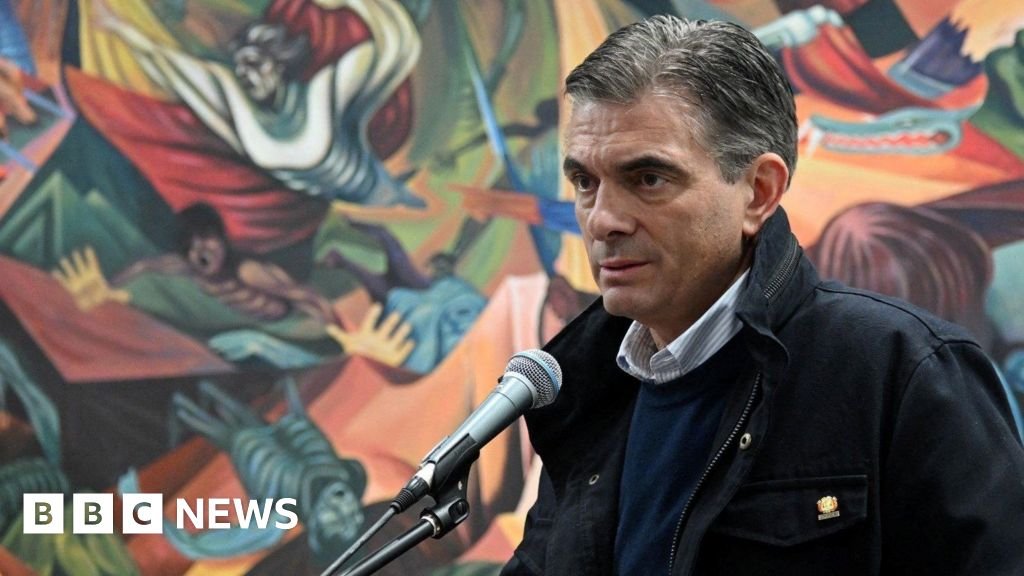
President Rodrigo Paz says weeks of protests have been used to destabilise the country (Reuters)
Fuel Subsidies and the Cost of Living
Protest groups demand fuel subsidies reinstated, austerity measures rolled back, and Paz's resignation. The blockades have amplified concerns over the cost of living, as fuel shortages drive up prices for transportation and everyday essentials. In Bolivia, where many households depend on affordable energy for cooking, heating and commuting, the cuts to subsidies have placed direct pressure on family budgets. Demonstrators have linked these policy shifts to broader austerity efforts that they say erode living standards across urban and rural communities.
The fuel subsidy debate connects to global energy transition efforts, highlighting tensions between domestic affordability and international calls for reduced fossil fuel reliance. Bolivia's position as a major energy producer makes these cuts particularly sensitive, affecting not only consumers but also industries tied to mining and agriculture. Road blocks have prevented fuel distribution, creating cascading effects that leave vehicles stranded and supply lines broken in key provinces.
Miners, farmers and indigenous groups have sustained the protests since the end of April, framing subsidy reductions as a direct threat to their economic survival. The resulting shortages have forced many residents to ration resources or seek alternative, often more expensive, options. This situation underscores how energy policy decisions ripple through daily life, influencing everything from school attendance to market access in remote areas of the country.
Paz has attempted to address some grievances through measures such as a cabinet reshuffle and salary cuts for officials, yet these steps have not eased the unrest over fuel costs. The demand for reinstated subsidies remains central to the demonstrators' platform, reflecting widespread frustration with policies perceived as disconnected from local realities. As Congress reviews the state of emergency, the fuel issue continues to fuel public anger and sustain the momentum of the blockades.
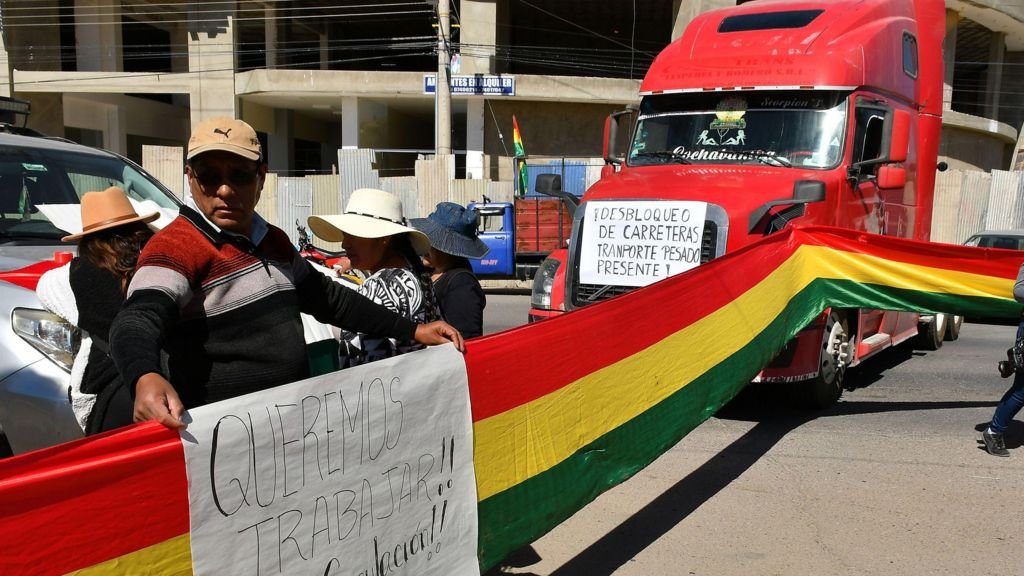
Road blocks have heightened shortages of fuel and other basic supplies around the country (EPA)
Land Reform That Lit the Fuse
Protests triggered by Paz's proposed land reform. Critics argued proposals would make it easier for large landowners to buy small properties. Paz scrapped the reform, but farmers joined by others grievance over fuel subsidy cuts. The initial backlash centered on fears that the changes would concentrate land ownership, undermining small-scale producers who form the backbone of Bolivia's agricultural sector. Even after the reform was withdrawn, the momentum carried into wider protests as additional grievances surfaced.
The land reform proposals emerged amid Paz's efforts to reshape economic rules, yet they quickly became a flashpoint for rural communities concerned about losing control over their holdings. Farmers across multiple regions mobilized alongside miners and indigenous groups, turning localized discontent into a national movement. The scrapped measure left a legacy of distrust that has complicated subsequent attempts at dialogue.
In Bolivia's countryside, where land serves as both livelihood and cultural anchor, any perceived threat to small properties resonates deeply. The protests that began at the end of April have kept these issues alive, with demonstrators insisting that policy reversals alone cannot restore confidence. The joining of forces with those protesting fuel subsidy cuts has broadened the coalition, creating sustained pressure on the government.
Paz's administration has sought to defuse tensions through a negotiation council, but the land reform episode continues to shape perceptions of the government's priorities. The episode illustrates how single policy initiatives can ignite broader resistance when they touch on fundamental questions of equity and access in a nation with deep rural-urban divides.
Natural Resources at the Center of the Storm
Backlash to proposed constitutional changes. Paz (centre-right, elected October) says changes needed to open economy to private investment. Demonstrators argue changes undermine oversight of natural resources. Bolivia has the world's largest lithium reserves, placing resource governance at the heart of the current crisis. The proposed constitutional adjustments have drawn sharp opposition from groups who view them as weakening state control over minerals and energy assets critical to national sovereignty.
The fuel subsidy debate connects directly to these resource questions, as shifts in energy policy intersect with global energy transition demands. Demonstrators maintain that greater private involvement risks prioritizing external interests over domestic needs, particularly in regions rich in lithium and other minerals. This tension has added another layer to the protests that began at the end of April.
Natural resource sovereignty remains central to the unrest, with miners and indigenous groups emphasizing the need for continued public oversight. Paz has framed the constitutional changes as essential for attracting investment and stimulating growth, yet opponents see them as eroding protections built over previous decades. The resulting standoff has paralyzed parts of the country through sustained blockades.
The lithium reserves underscore Bolivia's strategic importance in emerging clean energy supply chains, making the outcome of the crisis relevant beyond national borders. Demonstrators have tied their demands to preserving control over these assets, arguing that any dilution of oversight threatens long-term economic independence. As the state of emergency moves toward congressional review, resource policy stands as a core unresolved issue.
Indigenous Communities on the Front Line
Indigenous groups protecting land and resources have played a leading role in the blockades alongside miners and farmers. Their participation highlights longstanding concerns over how policy changes affect ancestral territories and traditional livelihoods. The protests that started at the end of April have seen these communities maintain road blocks despite arrests and reported deaths, underscoring their determination to defend resource sovereignty.
The fuel subsidy cuts and land reform proposals have hit indigenous areas particularly hard, where reliance on affordable energy and secure land access supports both economic and cultural continuity. Demonstrators from these groups argue that the measures threaten the balance between development and environmental stewardship in sensitive biomes across Bolivia.
Indigenous participation has broadened the protest movement, linking local grievances to national debates over constitutional changes and private investment. Paz has accused former president Evo Morales of orchestrating the unrest, though Morales denies involvement. The presence of indigenous voices has kept questions of equity and environmental protection prominent throughout the crisis.
The state of emergency would grant additional powers to clear the blockades these communities have helped sustain, raising concerns about potential impacts on protest rights. Their frontline role reflects deep connections between land, resources and identity in Bolivia, where indigenous groups continue to shape the direction of public discourse amid the shortages and paralysis affecting daily life.
The Political Calculus and What Comes Next
Paz accused former president Evo Morales of orchestrating protests. Morales denies. Paz tried to defuse the situation through a cabinet reshuffle, salary cuts and a negotiation council, yet these steps failed to quell the unrest. The protests, now extending beyond their start at the end of April, continue to demand fuel subsidy reinstatement, austerity rollbacks and Paz's resignation. Congress last month passed the bill enabling the state of emergency and troop deployment, setting the stage for the current 72-hour review period.
The political landscape remains fractured, with centre-right policies under Paz facing resistance from a coalition of miners, farmers and indigenous groups. The scrapped land reform and proposed constitutional changes have left lasting divisions that complicate efforts at compromise. Demonstrators maintain that only concrete reversals on subsidies and resource oversight can restore stability.
As Bolivia navigates this period, the outcome of the congressional vote on the emergency powers will influence whether road blocks are cleared or tensions escalate further. The shortages of basic goods and nationwide paralysis have already exacted a heavy toll on communities, adding urgency to political calculations. Paz's administration continues to position the measures as necessary for economic openness, while opponents insist on stronger protections for natural resources.
The crisis connects domestic policy disputes to wider questions of energy transition and resource governance, with Bolivia's lithium reserves amplifying international interest. What comes next depends on whether negotiations can bridge the gap between government proposals and protester demands, or whether the emergency framework becomes the dominant response. The coming days will test the resilience of Bolivia's institutions amid these overlapping challenges.
By Elena Vasquez, Staff Writer
This article was produced with AI-assisted research and editorial support. Reporting is based on sources cited in the article.
What's Your Reaction?
 Like
0
Like
0
 Dislike
0
Dislike
0
 Love
0
Love
0
 Funny
0
Funny
0
 Wow
0
Wow
0
 Sad
0
Sad
0
 Angry
0
Angry
0

Latin America Correspondent at Global1.News. Based in Mexico City, covering politics, economics, energy, and culture across the region. Brings an on-the-ground perspective to stories spanning from the Rio Grande to Patagonia.













Comments (0)