
SpaceX Wins $2.29 Billion Space Force Contract to Build Military Data Network in Orbit

SpaceX Wins $2.29 Billion Space Force Contract to Build Military Data Network in Orbit
SpaceX just landed one of the most significant military contracts in the company's history. The US Space Force has awarded Elon Musk's rocket company a $2.29 billion firm-fixed-price agreement to build the backbone of a new military communications network in low-Earth orbit — and it is based on Starlink technology.
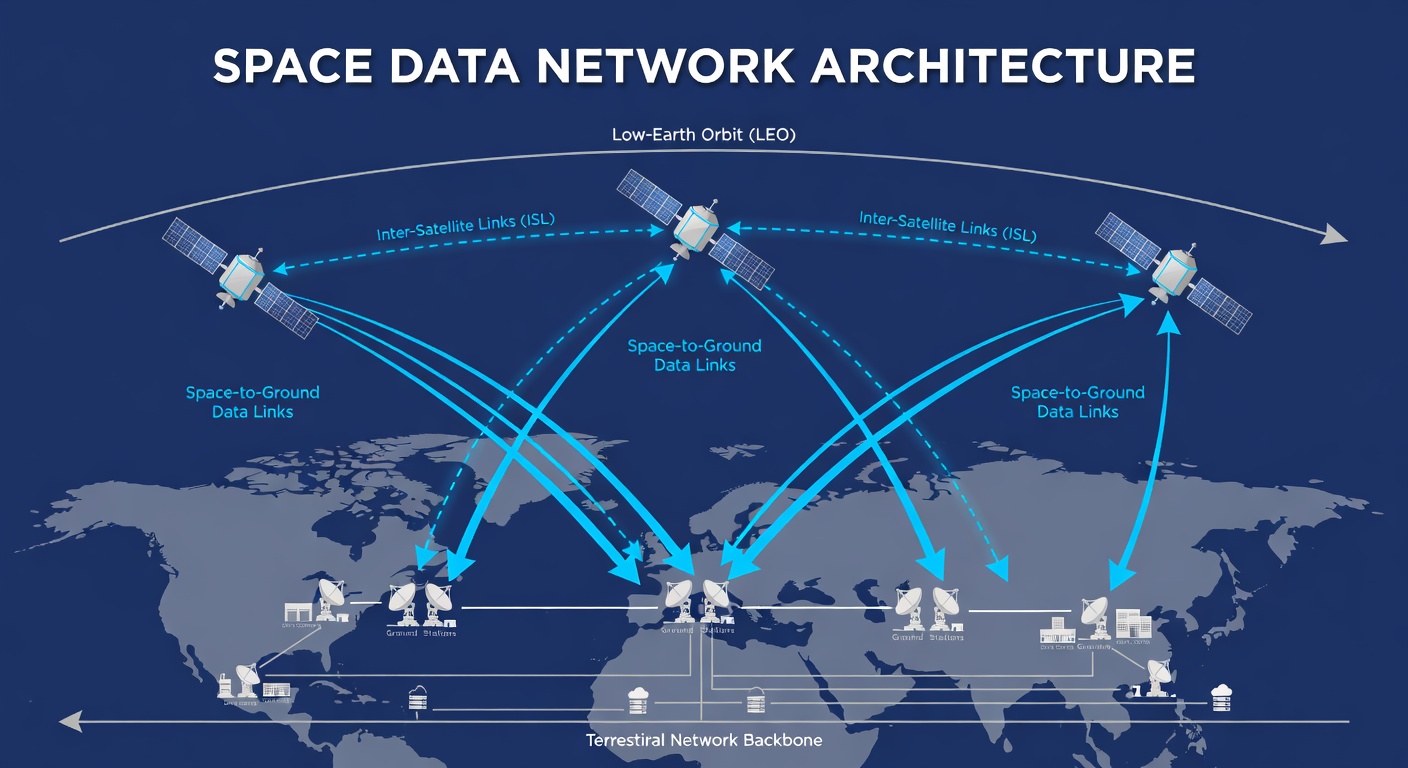
This is not just another government contract. The Space Data Network (SDN) Backbone represents a fundamental shift in how the military thinks about space-based communications. Instead of relying on a small number of expensive, vulnerable satellites in geostationary orbit, the Pentagon is betting on a distributed network of hundreds — potentially thousands — of smaller satellites in low-Earth orbit. And SpaceX's Starlink platform is the perfect foundation.
What the Contract Covers
Space Systems Command, the Space Force's primary procurement center, announced the agreement on Tuesday, confirming long-simmering reports that the Pentagon was likely to tap SpaceX for the project. The network will be based on technology originally developed for Starlink — SpaceX's global internet constellation that already has thousands of satellites in orbit.
SpaceX already builds and launches specially designed satellites called Starshield for military applications. The SDN Backbone network will presumably use the Starshield platform, which is a militarized version of the Starlink satellite bus with enhanced encryption, hardening against radiation and attack, and secure cross-links between satellites.
The contract accelerates the delivery of a resilient, high-speed communications network in space that will enable "sensor-to-shooter" targeting — meaning data from space-based sensors can be transmitted directly to weapons systems on the ground, at sea, or in the air with minimal delay.
Why This Matters
The traditional military communications architecture is built around a small number of highly capable but extremely expensive satellites in geostationary orbit, about 22,000 miles above Earth. These satellites cost billions of dollars each, take years to build and launch, and are attractive targets for adversaries with anti-satellite weapons.
LEO constellations like Starlink offer a fundamentally different approach. By distributing capability across hundreds or thousands of smaller satellites, the network becomes much harder to disable. Lose a few satellites, and the rest pick up the slack. The distributed architecture also reduces latency dramatically — signals in LEO travel a fraction of the distance compared to geostationary orbit.

The Strategic Implications
This contract represents a major strategic win for SpaceX and for the broader commercial space industry. It signals that the Pentagon is serious about leveraging commercial innovation rather than relying exclusively on traditional defense contractors. It also puts SpaceX in an extraordinarily powerful position as the gatekeeper of critical military space infrastructure.
For SpaceX, the $2.29 billion contract is a significant revenue stream that diversifies the company beyond launch services and Starlink consumer subscriptions. It also strengthens the company's relationship with the Defense Department — a relationship that has been complex at times, given Elon Musk's sometimes controversial statements on geopolitics.
The Bigger Picture
The SDN Backbone is part of a broader rearchitecture of military space capabilities. The Pentagon has been moving away from the "exquisite satellite" model — small numbers of highly capable, extremely expensive spacecraft — toward a distributed architecture that emphasizes resilience, rapid refresh, and commercial integration.
SpaceX's selection is a validation of the Starlink platform's military utility, which was demonstrated dramatically in Ukraine, where Starlink terminals provided connectivity for critical infrastructure and military communications. The Pentagon has clearly taken note, and the SDN Backbone contract is the result.
Key Takeaways
- SpaceX wins $2.29 billion Space Force contract to build the Space Data Network backbone.
- The network is based on Starlink/Starshield technology with enhanced military-grade security.
- It will enable low-latency sensor-to-shooter targeting across all military domains.
- The contract signals a shift from expensive geostationary satellites to distributed LEO constellations.
- SpaceX's position as a critical defense contractor is now cemented.
Conclusion
The Space Force's decision to bet on SpaceX and Starlink technology is a watershed moment for military space. It validates the commercial approach to space capability and sets the stage for a new generation of resilient, distributed military networks in orbit. For SpaceX, it is both a financial windfall and a strategic victory. For the Pentagon, it is a bet on the future of warfare — a future that will be increasingly fought from space.
This is Jessica Ali for Global1 News, reporting from Atlanta. 🇺🇸🔥
What Starshield Brings to the Table
Starshield, the military variant of Starlink, is not just a software-locked version of the commercial satellite. It includes hardware-level encryption, radiation-hardened components, and secure cross-links that allow satellites to communicate directly with each other in orbit without routing through ground stations. This makes the network far more resilient to jamming and cyber attacks. The SDN Backbone will leverage these capabilities to create a mesh network in low-Earth orbit that can route data around damaged or compromised nodes automatically — a critical feature in a conflict scenario where adversaries may attempt to disrupt communications.
Competitive Implications
The award is a significant blow to traditional defense contractors like Lockheed Martin, Northrop Grumman, and Raytheon, who have dominated military satellite communications for decades. SpaceX's ability to undercut traditional pricing while offering superior performance through commercial technology has fundamentally disrupted the defense space market. The company's vertically integrated manufacturing — building satellites, rockets, and ground terminals in-house — gives it cost advantages that traditional contractors cannot match.
Risks and Concerns
The growing dependence on a single commercial provider for critical military infrastructure carries obvious risks. Elon Musk's unpredictable public statements and his ownership of a company that is becoming indispensable to the Pentagon creates a concentration of power that some defense analysts find concerning. The Pentagon has sought to mitigate this by also funding competing architectures from other providers, but SpaceX's technological lead and cost advantages make it the default choice for an increasing range of military applications.
The International Reaction
The Space Data Network contract has not gone unnoticed by US adversaries. Both China and Russia have accelerated their own military LEO constellation programs in response to the growing US advantage in space-based communications. The strategic implications extend far beyond the contract itself — the SDN Backbone represents a fundamental shift in military communications architecture that other nations will now race to replicate or counter. For the US, maintaining this technological edge will require sustained investment and continued openness to commercial innovation.
What This Means for the Space Industry
The .29 billion SDN Backbone contract is a landmark moment for the commercial space industry. It signals that the Pentagon is willing to entrust critical national security infrastructure to commercial providers — something that was unthinkable just a decade ago. The implications for other commercial space companies are significant: if SpaceX can win a contract of this magnitude, so can others who develop capabilities aligned with military needs. Companies like Amazon's Project Kuiper, OneWeb, and Telesat are all developing LEO communications constellations, and the Space Force's embrace of the architecture opens the door for them to compete for future contracts as well. The contract also validates the broader thesis that low-Earth orbit is the new frontier for military capability. Future contracts for missile tracking, space domain awareness, and even space-based weapons platforms are likely to follow the same model — distributed LEO architectures leveraging commercial innovation. For SpaceX, the .29 billion contract is just the beginning. The company's growing relationship with the Defense Department positions it to capture an increasingly large share of military space spending, which is projected to grow significantly in the coming years. The strategic implications for the balance of power in the space industry are profound: a single company that designs, builds, launches, and operates its own satellites has a level of vertical integration that traditional defense contractors cannot match. That is a competitive advantage that will be difficult to overcome.
The Space Data Network contract is more than a business deal — it is a strategic commitment to a new model of military space capability. SpaceX has earned the Pentagon's trust through years of reliable launches and proven technology. Now it has the opportunity to build the backbone of America's military communications network. The implications for national security, for the space industry, and for the future of warfare are profound. And this is only the beginning.
The SDN Backboard contract validates a new model for military space capability: commercial innovation, distributed architecture, and rapid deployment. It is a model that other nations will seek to emulate and that the US must continue to invest in. The future of military communications is in low-Earth orbit, and SpaceX just secured its place at the center of that future.
The SpaceX Space Force contract is a watershed moment that will be studied by military analysts and space industry observers for years. It marks the moment when commercial space capability became indistinguishable from military space capability, and when the Pentagon fully embraced the distributed LEO architecture that SpaceX pioneered. The implications for national security, deterrence, and the future of warfare are only beginning to be understood.
This article was produced with AI-assisted research and editorial support. Reporting is based on sources cited in the article.
What's Your Reaction?
 Like
0
Like
0
 Dislike
0
Dislike
0
 Love
0
Love
0
 Funny
0
Funny
0
 Wow
0
Wow
0
 Sad
0
Sad
0
 Angry
0
Angry
0

Editor-in-Chief at Global1.News. Atlanta-based journalist who cuts through the BS and tells it like it is. Lead anchor, host, and the voice you hear when the spin stops and the truth starts.















Comments (0)