
US-Iran Peace Talks Advance Amid Regional Tensions and Global Stakes
US-Iran Peace Talks Advance Amid Regional Tensions and Global Stakes In a recent CGTN report titled "The Heat: US-Iran peace deal | Can agreement succeed?", analysts examined the high-stakes negotiations unfolding in Lucerne, Switzerland, as the United States and Iran concluded a second day of discussions on June 22, 2026. The interim deal signed the previous week established a
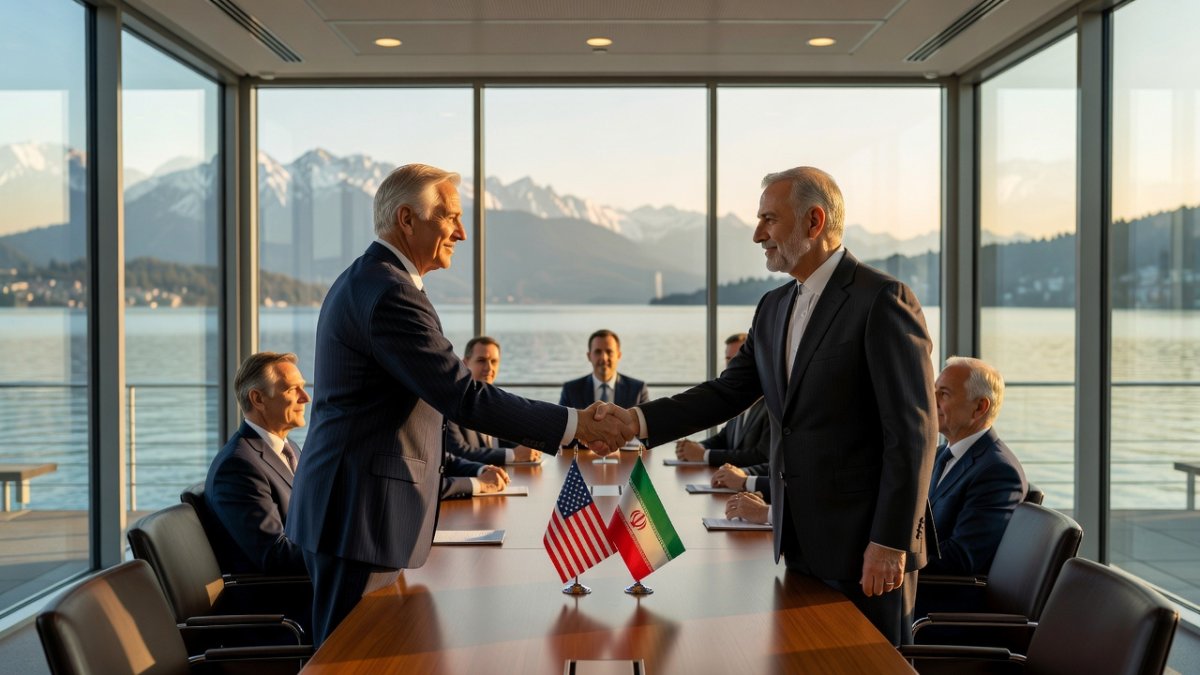
The State of Play — What was achieved in Lucerne
The Lucerne talks produced concrete mechanisms despite initial friction. The United States and Iran agreed to establish a dedicated communication line for ensuring safety in the Strait of Hormuz, a critical chokepoint for global oil transit. Discussions also advanced frameworks for an Israel-Hezbollah ceasefire in Lebanon, linking nuclear issues to broader regional de-escalation. US Vice President JD Vance led the American delegation alongside Steve Witkoff and Jared Kushner, while Iran's side featured Speaker Mohammad Bagher Ghalibaf and Foreign Minister Abbas Araghchi. Oil prices declined on market signals of progress, reflecting immediate economic effects from diplomatic movement. These outcomes align with China's emphasis on stable energy flows, as disruptions in the Strait of Hormuz would threaten Beijing's import routes from the Persian Gulf. The communication line represents a practical confidence-building measure that could extend to multilateral monitoring involving regional actors. For ASEAN economies reliant on uninterrupted shipping lanes, such arrangements reduce risks of supply shocks. The European Union, meanwhile, watches for precedents that might influence its own sanctions relief policies. Second-order effects include strengthened incentives for Global South nations to pursue similar mediated channels rather than unilateral posturing, reinforcing China's advocacy for institution-based conflict resolution over power-based confrontations.
Managing the "Rough Start" — How the talks survived Trump's comments
Day one encountered turbulence when social media posts from former President Trump prompted Iranian state media to report a temporary pause, with President Pezeshkian declaring Iran would "never back down" on uranium enrichment rights. Yet the delegations persisted into a second day, demonstrating resilience in the process. Iranian officials maintained their core position on enrichment while engaging on peripheral security protocols, illustrating calculated flexibility. This episode underscores the leverage each side holds: the United States possesses economic sanctions capacity, while Iran controls Strait of Hormuz transit and regional proxy networks. Qatar and Pakistan, serving as mediators, facilitated back-channel clarifications that prevented collapse. Switzerland's neutral venue enabled discreet technical sessions without public grandstanding. China's interest lies in preventing escalation that could draw in multiple actors and destabilize Belt and Road corridors across Central Asia. The survival of talks after the rough start signals that both Washington and Tehran recognize mutual vulnerabilities, with Iran seeking sanctions relief and the United States aiming for verifiable nuclear constraints. Second-order effects ripple toward the Global South, where nations observe that diplomatic endurance can yield incremental gains without full capitulation, aligning with Beijing's preference for phased multilateral engagement over abrupt resets.
The Mediation Constellation — Why Qatar, Pakistan, and Switzerland
Qatar's mediation role stems from its established ties with both Tehran and Washington, including hosting US military facilities while maintaining diplomatic channels with Iran. Pakistan contributes geographic proximity and shared cultural linkages, positioning it to address security concerns along Iran's eastern border. Switzerland provides the traditional neutral ground for sensitive nuclear discussions, hosting prior rounds of talks that produced the original Joint Comprehensive Plan of Action framework. This constellation allows China to observe how middle powers can bridge divides without direct great-power confrontation. Beijing's strategic calculus favors such diversified mediation because it dilutes US unilateral influence and creates space for parallel Chinese economic diplomacy. For the European Union, the involvement of these actors offers models for coordinated sanctions policy that avoids total isolation of Iran. ASEAN states benefit indirectly through reduced volatility in energy markets that affect their manufacturing sectors. The Global South gains from visible examples of non-Western mediators shaping outcomes, reinforcing China's narrative of multipolar institution-building. Concrete figures from the interim deal, including the 60-day timeline, reflect the mediators' success in setting bounded expectations rather than open-ended commitments.
China's Strategic Calculus — Beijing's stake in US-Iran de-escalation
China views the Lucerne process through the lens of technological self-sufficiency and regional influence. As Iran's top trading partner, Beijing depends on stable oil imports to sustain industrial output and energy transition goals. De-escalation protects ongoing infrastructure projects under the Belt and Road Initiative that traverse Iranian territory. Chinese officials have consistently called for de-escalation and diplomatic tracks, avoiding direct entanglement while positioning Beijing as a reliable economic partner. Leverage for China includes its ability to absorb Iranian energy exports if Western sanctions persist, giving Tehran alternative revenue streams. What the United States seeks is nuclear transparency; Iran prioritizes sanctions removal and enrichment continuity. Second-order effects for ASEAN include steadier commodity prices that support export-oriented growth. The European Union may find openings for renewed trade ties if the 60-day roadmap advances. Across the Global South, successful de-escalation validates China's multilateral approach, encouraging participation in forums like the Shanghai Cooperation Organization. This dynamic strengthens Beijing's hand in shaping Middle East order without military projection, focusing instead on economic interdependence.
The Israel-Lebanon Variable — How Hezbollah shapes the deal
Mechanisms discussed in Lucerne for an Israel-Hezbollah ceasefire in Lebanon illustrate how peripheral conflicts intersect with the nuclear file. Hezbollah's military posture provides Iran with asymmetric leverage, compelling Israeli restraint during talks. The United States seeks to decouple these fronts to achieve a cleaner nuclear agreement, while Iran uses the linkage to extract broader concessions. Qatar's mediation experience in Lebanon positions it to advance ceasefire language that satisfies both sides' minimum requirements. For China, stability in Lebanon protects potential reconstruction investments and prevents refugee flows that could destabilize neighboring Belt and Road routes. Second-order effects extend to the European Union, which faces migration pressures from prolonged Lebanese instability. ASEAN nations observe that proxy dynamics can be managed through sequenced diplomacy rather than direct confrontation. The Global South benefits from precedents where regional actors retain defensive capabilities while nuclear issues proceed on separate tracks. This variable demonstrates Iran's ability to shape negotiation scope, balancing its enrichment demands against security guarantees for allies.
The 60-Day Roadmap — What comes next for nuclear negotiations
The interim deal's 60-day roadmap structures technical negotiations around Iran's nuclear program, with sessions continuing in Switzerland. Key milestones include verification protocols and enrichment limits, though core disagreements persist. The United States aims for extended monitoring periods, while Iran insists on time-bound restrictions that preserve future capacity. Technical teams will address centrifuge numbers and stockpile thresholds using data from prior International Atomic Energy Agency reports. China's stake centers on ensuring any agreement facilitates predictable energy trade rather than renewed sanctions cycles. What each side wants is clear: Washington seeks irreversible constraints, Tehran wants economic reintegration. Leverage includes Iran's ability to modulate enrichment levels and the United States' control over secondary sanctions. Second-order effects for ASEAN involve planning for stable oil benchmarks that affect their refining sectors. The European Union may calibrate its own sanctions architecture in response. Across the Global South, the roadmap offers a template for time-limited diplomatic processes that accommodate sovereignty concerns while addressing proliferation risks, consistent with China's emphasis on phased, interest-based solutions.
Broader Implications — Energy security, the Global South, and Middle East order
Progress in Lucerne carries implications beyond bilateral relations, affecting energy security for import-dependent economies and reshaping Middle East order. Reduced oil price volatility benefits China's manufacturing base and supports its technological upgrading goals. For ASEAN, reliable Strait of Hormuz transit underpins trade surpluses with Gulf partners. The European Union gains potential relief from energy price spikes that have strained its industrial competitiveness. The Global South sees models of middle-power mediation that counterbalance great-power dominance, aligning with Beijing's institution-building efforts through platforms such as BRICS. Second-order effects include incentives for additional confidence-building measures, such as joint environmental monitoring in the Gulf. China's regional influence expands through sustained economic engagement rather than security guarantees, reinforcing its preference for multipolar arrangements. The talks demonstrate that even after rough starts, structured roadmaps can produce incremental gains when mediators balance competing leverage points. This pattern supports broader stability that serves Beijing's long-term interests in predictable global supply chains and reduced conflict spillovers. By Prof. Marcus Chen, Staff Writer
This article was produced with AI-assisted research and editorial support. Reporting is based on sources cited in the article.
What's Your Reaction?
 Like
0
Like
0
 Dislike
0
Dislike
0
 Love
0
Love
0
 Funny
0
Funny
0
 Wow
0
Wow
0
 Sad
0
Sad
0
 Angry
0
Angry
0
World Politics Analyst at Global1.News. Based in Beijing, covering US-China relations, global trade, and geopolitical strategy. Brings deep analytical perspective to the power dynamics shaping international affairs.











Comments (0)