
UPSC Prelims 2026: 5.49 Lakh Candidates, Face Authentication, and Results Expected
The Union Public Service Commission conducted the Civil Services (Preliminary) Examination 2026 on May 24 across 2,072 venues in 83 cities, drawing 8,19,732 registered candidates and an attendance of approximately 5.49 lakh aspirants at a 67 percent rate. Delhi recorded the highest turnout, underscoring the capital's continued dominance in India's competitive examination landsc
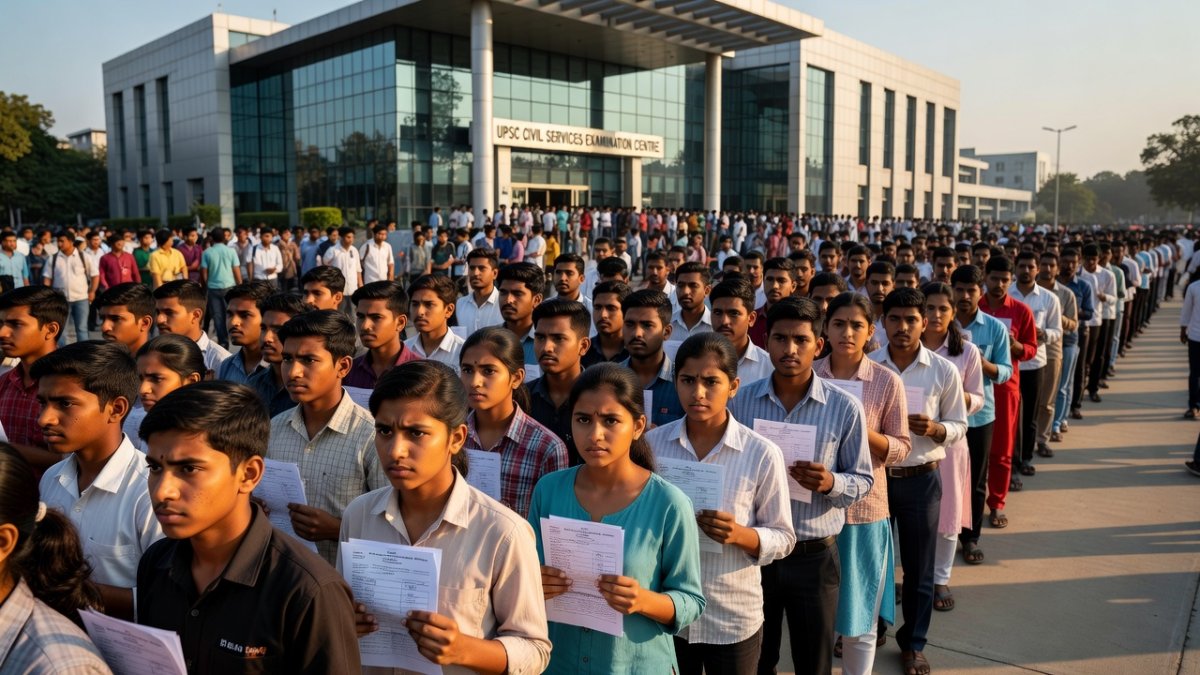
The Union Public Service Commission conducted the Civil Services (Preliminary) Examination 2026 on May 24 across 2,072 venues in 83 cities, drawing 8,19,732 registered candidates and an attendance of approximately 5.49 lakh aspirants at a 67 percent rate. Delhi recorded the highest turnout, underscoring the capital's continued dominance in India's competitive examination landscape. This scale reflects the enduring pull of civil services within the country's education system, where millions prepare annually through coaching hubs in Delhi, Hyderabad, and Jaipur amid limited government job opportunities.
UPSC Prelims 2026: Analysing the Numbers, Technology Shift, and What Candidates Can Expect
New Delhi, Delhi – June 9, 2026 — As 5.49 lakh aspirants await the UPSC Civil Services Preliminary Examination 2026 results, expected between June 5 and June 10, the examination cycle that began on May 24 has already made history with the first-ever deployment of real-time face authentication across 2,072 venues nationwide.
Technology Integration in India's Examination Framework
UPSC introduced real-time face authentication for the first time in 2026, leveraging Aadhaar-linked facial recognition to process nearly 12,000 verifications per minute at peak entry times. Each authentication required only 6-8 seconds, a marked improvement over manual processes that previously caused long queues and verification delays. This deployment aligns with India's broader push toward digital governance under the Ministry of Electronics and Information Technology, where Aadhaar serves as the backbone for identity verification in education and recruitment. The system directly addresses impersonation risks that have plagued high-stakes exams conducted by bodies such as the National Testing Agency and state public service commissions.
By streamlining entry, the technology reduced physical crowding at venues, an important factor given the health considerations in large-scale gatherings. Indian students preparing for multiple examinations now encounter similar biometric tools in NTA-conducted tests like JEE and NEET, creating a standardized technological environment across the national education pipeline.

Turnout Data and Regional Patterns Among Aspirants
Of the 8,19,732 registered candidates, roughly 5.49 lakh appeared, yielding the 67 percent attendance rate. This figure remains consistent with recent years, indicating sustained interest despite the rigorous preparation required. Highest participation from Delhi highlights how the city functions as the epicenter for civil services coaching, attracting aspirants from Bihar, Uttar Pradesh, and Rajasthan. These migration patterns place significant pressure on urban infrastructure and coaching ecosystems that operate year-round.
The numbers carry direct implications for Indian taxpayers and policymakers. Each examination cycle involves substantial logistical expenditure by UPSC, and higher attendance rates justify continued investment in secure, technology-enabled processes. Lower turnout in certain regions may signal access barriers related to travel costs or awareness, prompting calls for expanded regional centers in tier-2 cities.
Historical Waiting Periods and 2026 Result Expectations
Result timelines follow a predictable pattern. In 2025, the examination held on May 25 yielded results on June 11, a 17-day interval. The 2024 cycle similarly concluded within a 15-20 day window. With the 2026 paper conducted on May 24, results are therefore expected between June 5 and June 10. As of June 9, aspirants remain in the final stretch of this waiting period.
This compressed timeline affects thousands of candidates who must simultaneously prepare for the Mains examination while managing uncertainty. Prolonged waiting periods have been shown to increase stress levels among Indian youth already navigating an intensely competitive education system. The introduction of a provisional answer key for the first time in 2026, with objections accepted until May 31, offers greater transparency and may shorten effective waiting times by allowing early self-assessment.
Cut-off Trends and Qualifying Benchmarks
Historical cut-offs provide clear benchmarks. The 2025 Prelims required 92.66 marks for General category, 92.00 for OBC, 84.00 for SC, 82.66 for ST, and 89.34 for EWS candidates. Paper 2 maintained the standard 33 percent qualifying threshold. These figures illustrate the narrow margins that determine progression to the Mains stage each year.
For the current cohort of 5.49 lakh aspirants, these thresholds translate into intense score optimization strategies. Candidates from reserved categories benefit from differentiated cut-offs, yet overall competition remains fierce given the limited number of vacancies. The data underscores the need for equitable access to quality preparation resources across states, a persistent challenge within India's federal education framework.
Reforms, Aspirant Impact, and Policy Outlook
The 2026 reforms, particularly the provisional answer key and biometric authentication, signal UPSC's responsiveness to long-standing demands for fairness and efficiency. These changes reduce opportunities for malpractice while empowering candidates with immediate feedback mechanisms. For Indian students and working professionals balancing preparation with employment, such measures lower the psychological and financial costs associated with repeated attempts.
Looking ahead, integration of similar technologies across other recruitment bodies under the Ministry of Personnel, Public Grievances and Pensions could standardize practices nationwide. The experience of 5.49 lakh candidates this year will likely influence future policy discussions on examination frequency, regional accessibility, and mental health support structures. As results approach, the focus remains on how these incremental reforms strengthen the integrity of India's most prestigious gateway to public service.
— By Dr. Raj Patel, Staff Writer
This article was produced with AI-assisted research and editorial support. Reporting is based on sources cited in the article.
What's Your Reaction?
 Like
0
Like
0
 Dislike
0
Dislike
0
 Love
0
Love
0
 Funny
0
Funny
0
 Wow
0
Wow
0
 Sad
0
Sad
0
 Angry
0
Angry
0

Caribbean Correspondent at Global1.News. Based in Port of Spain, Trinidad, covering Caribbean politics, economy, energy, climate, and culture. Amplifying the voices and stories of the Caribbean region.















Comments (0)