
Trump's Call to Terminate CUSMA Sparks Urgent Questions for Canada-U.S. Trade Relations
The CBC News video hosted by Rosemary Barton examined Donald Trump’s June 17, 2026 statement that he would prefer CUSMA be terminated rather than renewed, featuring analysis from Jean Charest, Tony Wakeham and Andy Rielly on the mandatory review now underway. Trump’s Demand to Terminate CUSMA Triggers Fresh Uncertainty for Canadian Trade and Jobs Ottawa, Ontario – Today — Donal
The CBC News video hosted by Rosemary Barton examined Donald Trump’s June 17, 2026 statement that he would prefer CUSMA be terminated rather than renewed, featuring analysis from Jean Charest, Tony Wakeham and Andy Rielly on the mandatory review now underway.
Trump’s Demand to Terminate CUSMA Triggers Fresh Uncertainty for Canadian Trade and Jobs
Ottawa, Ontario – Today — Donald Trump’s public call on June 17, 2026 to terminate the Canada-United States-Mexico Agreement has placed the mandatory six-year review of the trade pact at the centre of urgent federal discussions. The agreement, which took effect on July 1, 2020, carries a 16-year term that would otherwise run until 2036. Canada and Mexico are both seeking a full 16-year extension during this first formal review, yet the United States president’s remarks have introduced the possibility of annual rolling reviews that could stretch uncertainty for up to a decade.
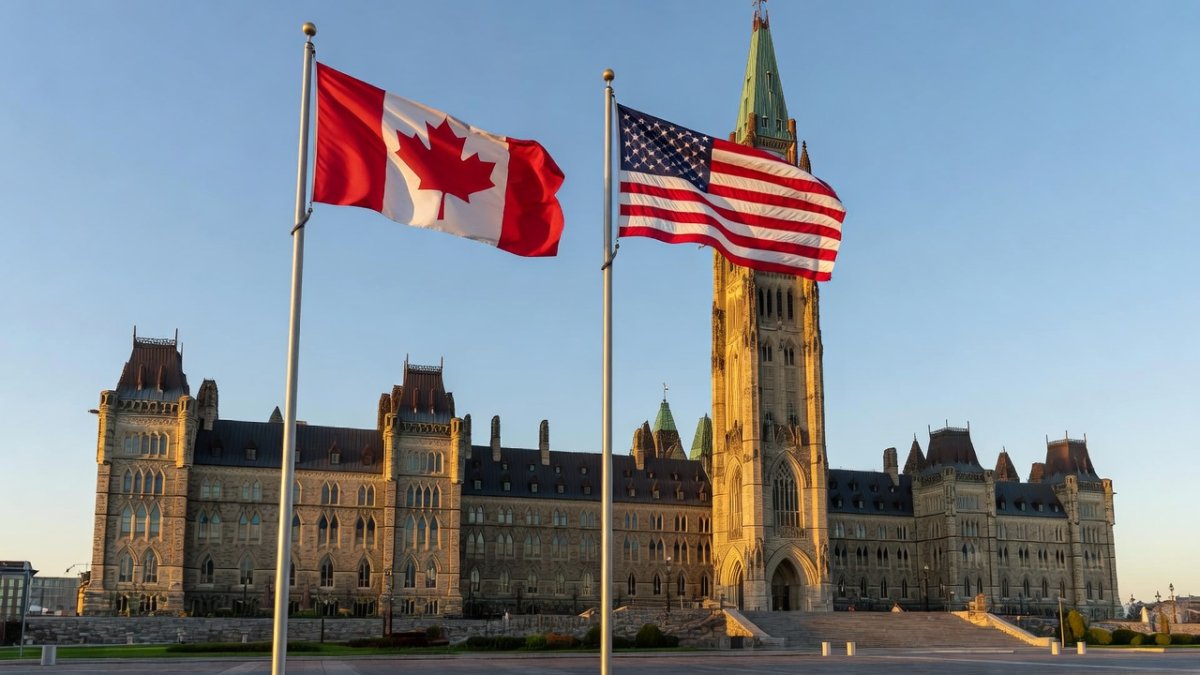
The Structure of CUSMA and the 2026 Review
The Canada-United States-Mexico Agreement replaced the North American Free Trade Agreement and established a fixed 16-year lifespan with a mandatory review every six years. This first review, triggered in 2026, requires all three parties to decide whether to extend the deal for another 16 years or shift to annual reviews that could continue for as long as ten years. Canadian negotiators have made clear they favour the longer extension to provide stability for exporters and investors.
Trade Minister Dominic LeBlanc, who chairs the Prime Minister’s 24-member Canada-U.S. Economic Council, has indicated that Ottawa is prepared to pursue bilateral side agreements on issues adjacent to CUSMA if a full extension proves difficult. These side deals could address specific irritants such as dairy access and automotive rules of origin without reopening the entire text. LeBlanc has stressed that the government will not accept terms that weaken Canadian labour or environmental protections.
Prime Minister Mark Carney has noted publicly that it is no secret Trump dislikes the current agreement, yet the two leaders have not discussed termination in their private conversations. Carney’s government continues to organise its approach around the existing framework while preparing contingency plans should the United States insist on annual reviews. The review process itself is scheduled to conclude by the end of 2026.
Trump’s Statements and Shifting U.S. Position
On June 17, 2026, Trump stated he would rather see CUSMA terminated than renewed in its present form. He had already labelled the agreement irrelevant in January 2026, claiming the United States does not need Canadian products. These remarks mark a departure from his earlier praise of the deal during his first term and have prompted Canadian officials to reassess their negotiating strategy.
White House sources indicate that Trump views the review as an opportunity to extract further concessions on agriculture and digital trade. Canadian negotiators report that U.S. demands have included greater access for American dairy and poultry, areas that remain sensitive in Quebec and Ontario. The president’s public stance has hardened the atmosphere even as technical talks continue in Washington.
Analysts note that termination would require formal notice and a lengthy wind-down period, making an immediate end to the agreement unlikely. Nevertheless, the threat alone has already influenced investment decisions, with some firms delaying expansion plans until greater clarity emerges. The possibility of annual reviews creates a rolling environment of uncertainty that businesses on both sides of the border have said they wish to avoid.
Industry Voices and Regional Stakes
Newfoundland and Labrador Premier Tony Wakeham has warned that thousands of jobs in seafood, energy and mining depend on stable access to U.S. markets. The province ships more than 70 percent of its seafood exports to the United States, and any disruption to tariff-free treatment would immediately affect processing plants in rural communities. Wakeham has urged the federal government to secure long-term certainty during the current review.
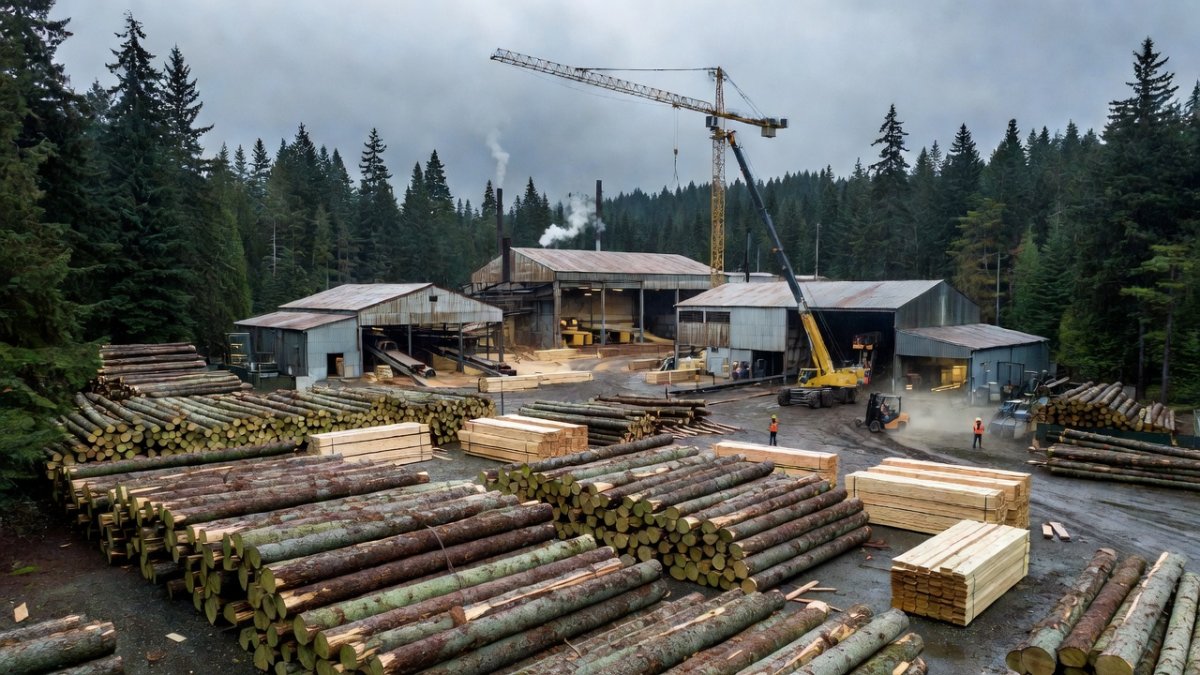
British Columbia lumber producer Andy Rielly described how existing softwood lumber tariffs already exceed 35 percent, with additional retroactive duties applied in recent months. The decades-long dispute has cost the B.C. forest sector an estimated 8,000 positions since 2017. Rielly told CBC News that further uncertainty under annual CUSMA reviews would compound the damage and accelerate mill closures in the interior of the province.
Jean Charest, the former Quebec premier and federal Progressive Conservative leader now serving on Carney’s advisory council, emphasised that Canada must remain united in its approach. Charest noted that provincial premiers from coast to coast have aligned behind the goal of a 16-year extension. He argued that any perception of internal division would weaken Canada’s hand at the negotiating table.
Economic Consequences for Canadian Workers
Canada’s merchandise trade with the United States reached 1.2 trillion dollars in 2025, supporting more than 1.9 million jobs across the country. A shift to annual reviews would introduce repeated opportunities for tariff adjustments and new conditions, raising costs for manufacturers that rely on integrated North American supply chains. Automotive parts producers in Ontario and aerospace firms in Quebec have already begun modelling scenarios that assume higher compliance expenses.
Small and medium-sized exporters, which account for 42 percent of Canada’s shipments to the United States, lack the resources to navigate frequent regulatory changes. Business organisations have reported a measurable slowdown in new orders as American buyers adopt a wait-and-see posture. The Bank of Canada has cited trade policy uncertainty as a factor that could trim GDP growth by up to 0.4 percentage points in 2027 if the review remains unresolved.
Labour unions representing workers in steel, aluminium and forestry have called for stronger safeguards in any revised agreement. They argue that past trade disputes have shown how quickly tariff actions can eliminate well-paying positions in single-industry towns. The federal government has committed to consulting these groups throughout the review process.
Diplomatic and Legal Pathways Forward
Canadian officials continue to engage their Mexican counterparts to present a united front during the review. Joint technical working groups have been established on rules of origin, labour standards and digital trade. Both countries maintain that the current text already delivers balanced benefits and requires only modest updates rather than wholesale replacement.
LeBlanc has indicated that Ottawa remains open to supplementary bilateral arrangements on issues such as critical minerals and clean energy that fall outside the core CUSMA text. These parallel agreements could provide additional stability even if the main pact moves to annual reviews. Discussions on such arrangements are expected to intensify in the coming months.
Legal experts at Global Affairs Canada have examined the termination clause and concluded that any party must provide six months’ written notice. This procedural requirement gives Canada and Mexico time to mobilise diplomatic and legal responses should the United States proceed with formal termination steps. The government has also begun outreach to congressional leaders in Washington who have historically supported stable North American trade.

Why the Outcome Matters to Canadians
Stable access to the U.S. market underpins living standards in every region of Canada. From lobster harvesters in Nova Scotia to auto assemblers in Windsor and potash miners in Saskatchewan, the terms of CUSMA directly influence paycheques and community viability. Prolonged uncertainty risks higher prices for consumers and reduced competitiveness for Canadian firms.
The review also tests Canada’s ability to defend its interests in an era of shifting U.S. trade policy. Success would reinforce the value of rules-based agreements, while failure could encourage further unilateral actions. Canadians have a direct stake in ensuring the outcome preserves the integrated supply chains that have developed over three decades.
By Alex Thompson, Staff Writer
This article was produced with AI-assisted research and editorial support. Reporting is based on sources cited in the article.
What's Your Reaction?
 Like
0
Like
0
 Dislike
0
Dislike
0
 Love
0
Love
0
 Funny
0
Funny
0
 Wow
0
Wow
0
 Sad
0
Sad
0
 Angry
0
Angry
0

Canada Correspondent at Global1.News. Based in Toronto, covering Canadian politics, energy, trade, and US-Canada relations. Provides the Canadian perspective on North American and global affairs.















Comments (0)