
Trump Threatens Iran's Kharg Island Seizure as Tensions Rise
Folks, the United States and Iran are barreling toward a flashpoint that could reshape global energy and drag American forces into another quagmire. President Trump has now openly declared the United States will seize Kharg Island, Iran's critical oil export hub. This is not posturing from a distance. It follows months of strikes, warnings, and direct threats that have already
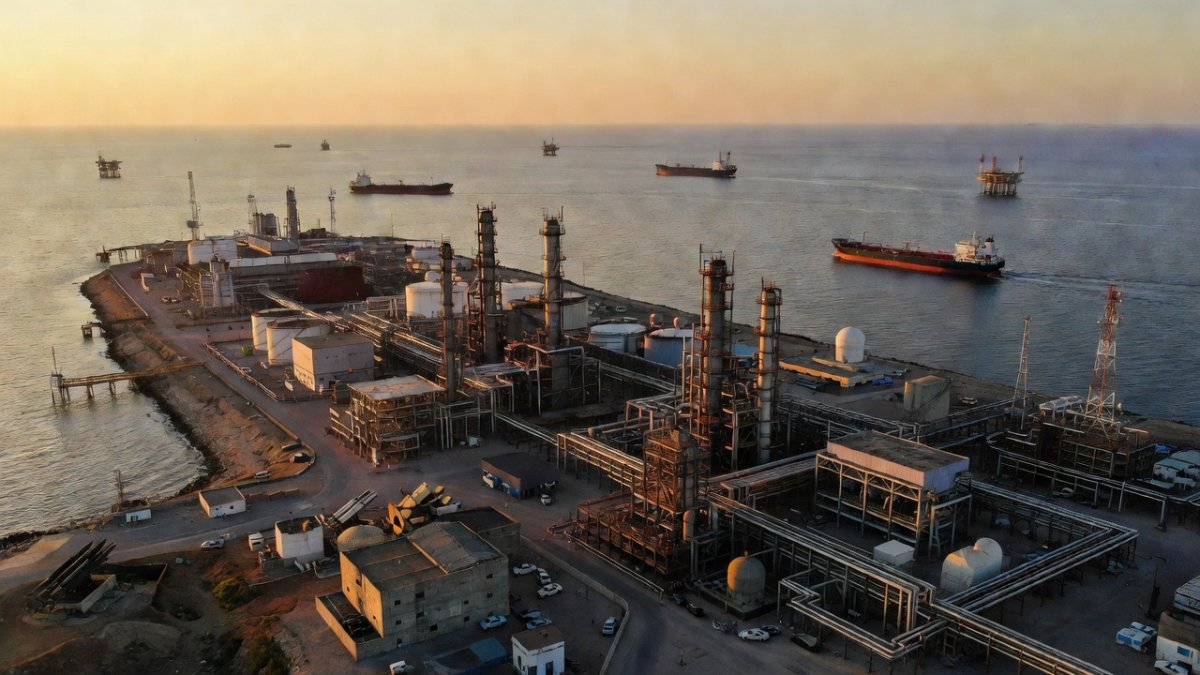
Folks, the United States and Iran are barreling toward a flashpoint that could reshape global energy and drag American forces into another quagmire. President Trump has now openly declared the United States will seize Kharg Island, Iran's critical oil export hub. This is not posturing from a distance. It follows months of strikes, warnings, and direct threats that have already lit up the Gulf. Listen up: oil markets are watching, Gulf states are nervous, and American households could feel the pinch at the pump. The stakes are not theoretical. They are measured in barrels, bases, and potential body counts. Let me break this down before the situation spins further out of control.
What is Kharg Island
Kharg Island sits in the northern Persian Gulf, roughly 25 miles off Iran's coast. It serves as the primary terminal for Iran's crude exports, handling 90 percent of the country's oil shipments according to Reuters reporting from March 14, 2026. The island's infrastructure includes massive storage tanks, loading terminals, and pipelines that connect directly to mainland fields. Without it, Tehran would lose the bulk of its revenue stream overnight. JP Morgan analysts warned on March 9, 2026, that any seizure by U.S. or Israeli forces would stall those exports and cut Iran's oil output roughly in half. That is not a minor disruption. It is a direct hit on a nation already under sanctions. The geography makes it a natural chokepoint: narrow approaches, limited landing zones, and surrounding waters that can be mined or patrolled. CENTCOM preserved the oil facilities during its March 14 strikes on military targets there, showing the island's dual role as both economic lifeline and strategic prize. This is why the threat to take it carries such weight. Lose Kharg and Iran's economy contracts fast. Control it and the leverage shifts dramatically toward Washington.
Timeline of Escalation
The path to today's threat started with clear warnings. On March 9, 2026, JP Morgan flagged that an oil shock would intensify if the U.S. or Israel moved on Kharg Island. Days later, on March 14, CENTCOM struck more than 90 Iranian military targets on the island while deliberately sparing the oil infrastructure. Vice President Vance confirmed the action on April 7, stating, "We were going to strike some military targets on Kharg Island, and I believe we have done so." By late March, Reuters reported Trump was actively weighing ground forces to seize the island outright. June brought the sharpest turn. On June 11, Trump declared the United States would be taking Kharg Island and vowed additional attacks. Iranian forces responded by targeting American bases across the region. CENTCOM then fired on an oil tanker in the Gulf of Oman the same day. The sequence shows steady ratcheting: initial precision strikes, public confirmation, open consideration of occupation, and now direct threats of seizure. Each step has narrowed the space for de-escalation. The conflict has moved from targeted hits to potential territorial control in under four months.
Trump's Threat Today
President Trump stated plainly on June 11, 2026, "The United States will be taking Kharg Island." He paired the declaration with vows of more attacks, signaling frustration that negotiations had not produced the desired results. The comment came amid reports that Trump had stormed out of an NBC interview on June 8 when pressed on unrelated claims, underscoring his impatience with pushback. At the same time, May CPI data showed prices rising at the fastest pace in three years, yet Trump remarked, "I love the inflation." The combination reveals a leader willing to escalate militarily even as domestic costs mount. Seizure talk moves the conflict from air and missile exchanges into ground operations. It also signals that existing sanctions and limited strikes have not delivered the leverage Trump seeks. The statement is not ambiguous. It frames Kharg as U.S. property to be claimed, not merely targeted. That language raises the threshold for what counts as victory and lowers the threshold for further Iranian retaliation.
Iran's Military Response
Tehran answered the latest U.S. moves by striking American bases after attacks across Iran, according to CNN reporting on June 11, 2026. CENTCOM responded by engaging an oil tanker in the Gulf of Oman the same day, per ABC News. Iran's foreign ministry issued warnings to Gulf neighbors about their legal and moral responsibility to prevent further U.S. or Israeli strikes, as reported by CBS News. Foreign Minister Araghchi alleged that some bombing runs originated from UAE territory, specifically citing HIMARS launches from Ras Al Khaimah and areas near Dubai. These claims, documented in coverage of the 2026 Kharg Island attack, point to Iranian efforts to widen the diplomatic front. The responses mix direct military action with regional pressure. By hitting bases and raising questions about third-country involvement, Tehran aims to complicate U.S. planning and force Gulf capitals to choose sides. The tanker incident shows both sides are already operating in shared waterways where miscalculation can spread quickly.
Global Oil Market Impact
JP Morgan's March 9 analysis warned that seizing Kharg would stall Iran's exports and halve its output, creating an immediate supply shock. With the island handling 90 percent of those exports, any sustained disruption would remove roughly 1.3 million barrels per day from world markets. Traders have already priced in higher volatility. The March 14 CENTCOM strikes demonstrated that military action near the terminals can occur without destroying export capacity, yet the threat of full seizure changes the calculation. Reduced Iranian supply would tighten global balances at a time when other OPEC producers face their own constraints. Gas prices in the U.S. would face upward pressure through both higher crude costs and potential tanker rerouting around the Strait of Hormuz. The economic channel is direct: less Iranian oil means tighter inventories and higher benchmarks that feed into refinery margins and retail fuel. Markets are not waiting for the first landing craft. They are moving on the credible possibility that Kharg could change hands.
Military Risks of Seizure
Reuters reporting from March 27, 2026, highlighted that taking Kharg Island would require ground forces and expose U.S. troops to drones and mines. The island's defenses include layered air and coastal systems that survived the March 14 strikes on military targets. Limited beachheads and confined terrain favor defenders who can concentrate fire on approaching units. HIMARS and drone swarms could target any assembled force from mainland positions or nearby islands. Mines laid in the shallow approaches would slow naval support and create persistent hazards even after initial landings. Escalation risk rises sharply once boots are on the ground, because Iranian forces could respond with ballistic missiles against regional bases or attempt to close the Strait of Hormuz. The operation would demand sustained air and sea superiority plus rapid reinforcement, all while managing the political fallout of occupying Iranian sovereign territory. These factors explain why earlier planning stayed at the level of strikes rather than seizure.
Regional Fallout
Gulf states now sit directly in the crossfire. Iran's foreign ministry has already warned neighbors of their responsibility to block further strikes. Allegations that HIMARS were launched from Ras Al Khaimah and near Dubai place the UAE under direct Iranian scrutiny. Any U.S. move on Kharg would force Saudi Arabia, Kuwait, and others to decide whether to host additional forces or distance themselves. The Strait of Hormuz remains the most immediate pressure point. Even a partial closure or increased insurance costs would affect every exporter in the region. Smaller Gulf capitals lack the military depth to absorb Iranian retaliation and would face domestic pressure to avoid entanglement. The conflict is no longer contained to bilateral U.S.-Iran exchanges. It now pulls in every capital that relies on Gulf shipping lanes or hosts U.S. assets. The diplomatic map is being redrawn in real time.
What Americans Need to Know
U.S. households will feel effects through higher fuel and heating costs if Iranian exports drop. The May CPI already showed the fastest price increases in three years. Further escalation adds risk of supply-chain shocks and renewed inflation pressure. Service members face deployment into a theater where drones, mines, and missiles are active. Taxpayers will shoulder the bill for sustained operations. The public record shows a clear progression from strikes to seizure threats in under four months. Citizens should track official statements on force levels, monitor energy prices weekly, and contact representatives about contingency planning for Gulf stability. Understanding the timeline and the specific assets involved is the minimum required to follow developments that could affect both pocketbooks and national security commitments.
Next Steps for the Public
Call your members of Congress today and demand clear limits on any ground operation. Track weekly EIA reports on global oil inventories. Support independent verification of tanker movements in the Gulf of Oman. Stay engaged. The decisions made in the next weeks will shape energy prices and military commitments for years.
By Jessica Ali, Staff Writer
This article was produced with AI-assisted research and editorial support. Reporting is based on sources cited in the article.
What's Your Reaction?
 Like
0
Like
0
 Dislike
0
Dislike
0
 Love
0
Love
0
 Funny
0
Funny
0
 Wow
0
Wow
0
 Sad
0
Sad
0
 Angry
0
Angry
0

Editor-in-Chief at Global1.News. Atlanta-based journalist who cuts through the BS and tells it like it is. Lead anchor, host, and the voice you hear when the spin stops and the truth starts.












Comments (0)