
‘Time’s running out for looters’ before local elections arrive
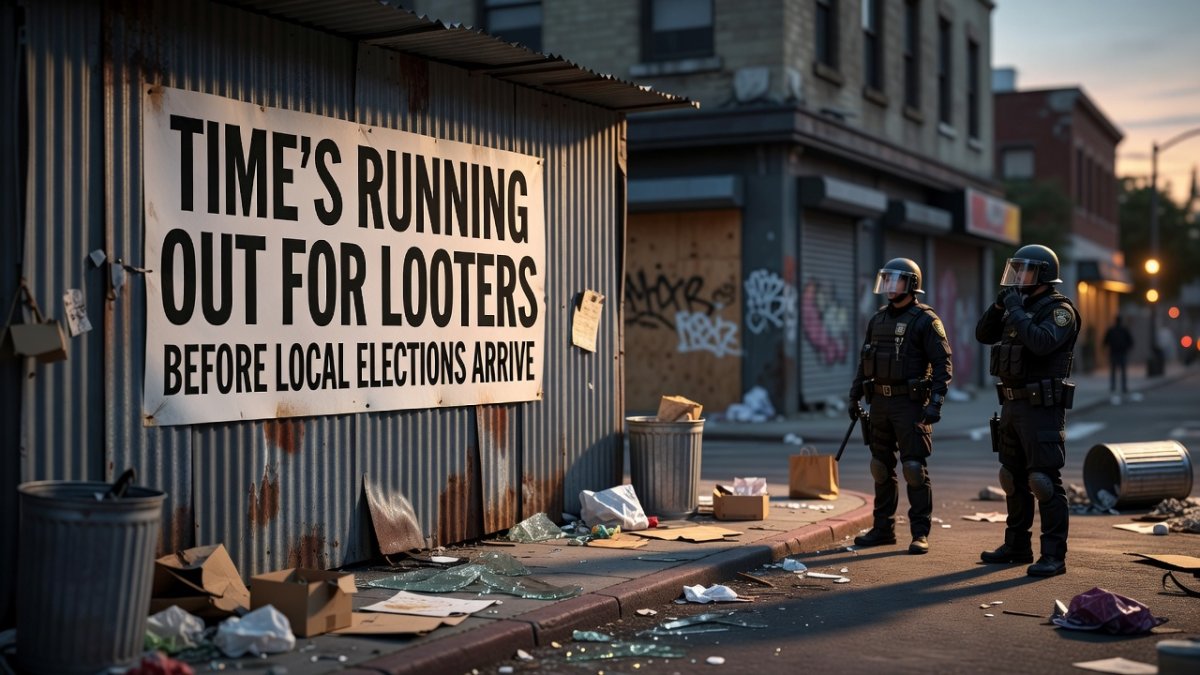
‘Time’s running out for looters’ before local elections arrive
As South Africa’s municipal polls draw nearer, a familiar anxiety is gripping communities from Soweto to rural Eastern Cape villages. The phrase “time’s running out for looters” has begun circulating in town halls and on social media, capturing the hope that those who treat public budgets as personal ATMs will soon lose their grip. Yet alongside that optimism sits a sharper fear: that desperate politicians and connected tenderpreneurs will accelerate their extraction of municipal funds in the final months before voters head to the polls.
The Looting Cycle and Municipal Reality
South Africa’s 257 municipalities manage roughly R500 billion in annual expenditure. Auditor-General reports over the past decade show irregular, fruitless and wasteful expenditure frequently exceeding R30 billion per year. In the 2022-23 financial year alone, 149 municipalities received qualified or worse audit opinions. These figures are not abstract; they translate directly into broken water pipes in Limpopo, uncollected refuse in Gauteng townships and collapsed roads in KwaZulu-Natal. Residents have watched the same pattern repeat before every local government election since 2006: accelerated tender awards, inflated contracts and sudden “emergency” procurement that bypasses competitive bidding.
This is a primitive fear among people that something like that is about to happen again, and they are right to feel it. The upcoming elections, scheduled for late 2026, have already triggered visible movement in supply-chain management units across several provinces.
Why the Final Stretch Matters
Local government is the sphere closest to daily service delivery. When a councillor or municipal manager knows their party’s majority is under threat, the incentive structure shifts. A contract signed today can deliver kickbacks before a new administration arrives to audit the paperwork. Opposition parties, including the Democratic Alliance and Economic Freedom Fighters, have publicly warned of “fire-sale” disposals of municipal assets and last-minute appointments of politically connected individuals on inflated salaries.
Data from the South African Local Government Association indicates that 62 municipalities changed political control after the 2021 elections. In those hung councils or coalition arrangements, procurement irregularities spiked in the 18 months leading up to the vote. The City of Johannesburg, for example, recorded R2.8 billion in irregular expenditure in the 2020-21 financial year, much of it linked to contracts concluded in the run-up to polling day.
Expert Perspectives on the Risk Window
Professor Haroon Bhorat of the University of Cape Town’s Development Policy Research Unit argues the problem is structural rather than purely moral. “When political survival depends on patronage networks, the period immediately before an election becomes a high-stakes window for rent extraction,” he told Global1 News. “We see the same pattern in comparative studies across sub-Saharan Africa: public procurement volumes rise sharply six to nine months before voters cast ballots.”
Anti-corruption lawyer and former Scorpions investigator Adv. Paul Pretorius agrees the risk is acute this cycle. “Coalition governments have made accountability even harder to enforce. With no single party holding a clear majority in metros such as Tshwane and Nelson Mandela Bay, oversight committees are frequently deadlocked. That paralysis creates space for officials to push through questionable awards before a potential change in administration.”
Impact on Ordinary Residents
The human cost is measured in hours spent queuing for water tankers and children studying by candlelight after infrastructure collapses. In Emfuleni Local Municipality, repeated sewerage spills into the Vaal River have been linked to contracts awarded without proper environmental compliance. Residents report that maintenance budgets disappear into consultancy fees while actual repairs never materialise. Similar stories echo across 97 municipalities flagged by the Department of Cooperative Governance for intervention under Section 139 of the Constitution.
Community activist and founder of the #StopTheLooting campaign, Thandiwe Molefe, describes the mood on the ground. “People are tired of seeing the same faces reappear on new tender boards every election cycle. They want the looting to stop, but they also know that once the campaign posters go up, the feeding frenzy intensifies.”
Political Calculations and Opportunistic Parties
Smaller parties contesting the local elections face their own pressures. Some analysts suggest that emerging movements may attempt to extract concessions or side deals in exchange for coalition support, further complicating clean governance. Meanwhile, established parties have begun internal audits of their own candidate lists, aware that voters increasingly punish perceived corruption at the ballot box.
The Electoral Commission of South Africa has already flagged increased monitoring of campaign financing, yet procurement remains the larger vulnerability. Unlike campaign donations, municipal tenders can move hundreds of millions of rand with relatively light public scrutiny until after the fact.
Path Forward and Voter Agency
Civil society organisations are urging residents to track municipal council agendas and demand publication of all contracts above R1 million in the final quarter of the financial year. The newly strengthened Public Procurement Bill, once fully operational, is expected to introduce real-time disclosure portals, but critics note that implementation will lag behind the next election cycle.
Ultimately, the phrase “time’s running out for looters” reflects both hope and warning. If accountability mechanisms are strengthened and voters remain vigilant, the window for last-minute extraction can be narrowed. If not, the pattern will simply repeat under new names and new party logos.
This is Dante Williams for Global1 News, reporting from Johannesburg. 🇿🇦
This article was produced with AI-assisted research and editorial support. Reporting is based on sources cited in the article.
What's Your Reaction?
 Like
0
Like
0
 Dislike
0
Dislike
0
 Love
0
Love
0
 Funny
0
Funny
0
 Wow
0
Wow
0
 Sad
0
Sad
0
 Angry
0
Angry
0

Breaking News and Investigations Correspondent at Global1.News. Based in London, covering global breaking news, security, and investigative stories. Known for digging deeper and connecting the dots across continents.














Comments (0)