
The Liushenyu Disaster: What 82 Deaths Reveal About China's Coal Safety Reforms
The Liushenyu Disaster: What 82 Deaths Reveal About China's Coal Safety Reforms On 22 May 2026, a methane blast at the Liushenyu coal mine in Shanxi province killed 82 workers and injured over 120 others — making it China's deadliest mining disaster in more than 15 years. The explosion, which occurred in one of the country's most coal-intensive regions, has reopened painful que
The Liushenyu Disaster: What 82 Deaths Reveal About China's Coal Safety Reforms
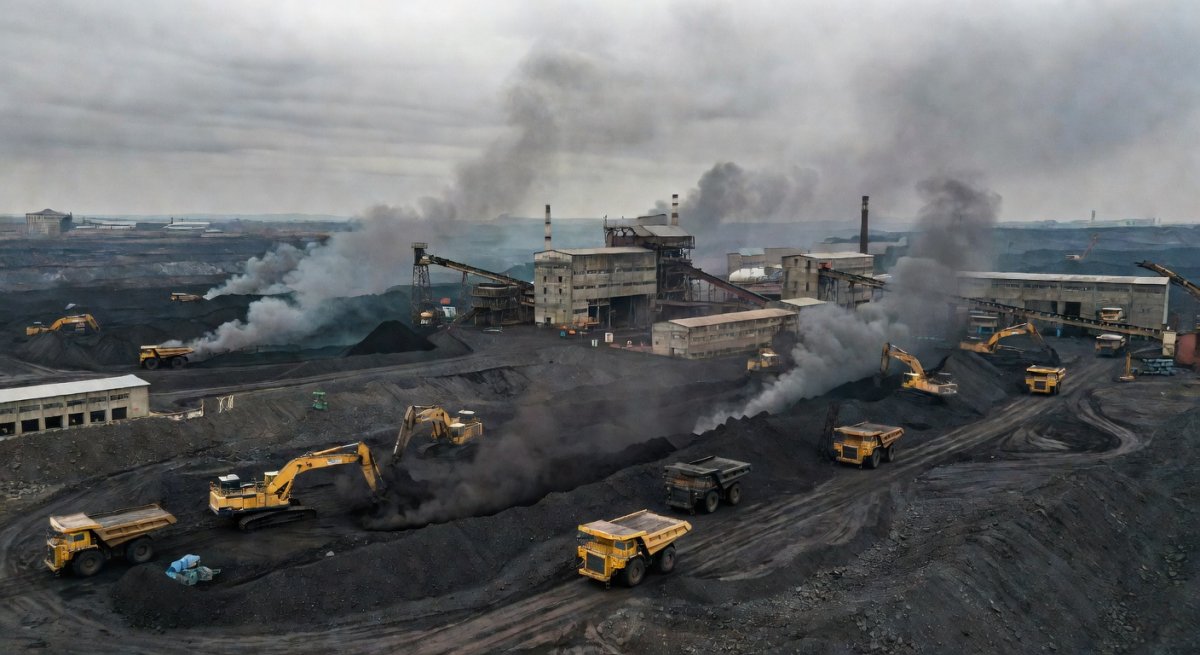
On 22 May 2026, a methane blast at the Liushenyu coal mine in Shanxi province killed 82 workers and injured over 120 others — making it China's deadliest mining disaster in more than 15 years. The explosion, which occurred in one of the country's most coal-intensive regions, has reopened painful questions about whether Beijing's safety reforms have truly taken root in the industry's darker corners.
Shanxi province, which accounts for nearly 30% of China's national coal output, has long known tragedy. Local miners have a saying: "Only go down a coal pit when you have no other way out." For decades, gas explosions, shaft collapses and flooding were routine. But after a package of safety reforms brought fatality rates down by more than 90% since 1990, the industry had begun to shed its deadly reputation — until Liushenyu.
Systemic Failures Below the Surface
Investigations by Chinese state media and independent outlets have uncovered a pattern of violations that go well beyond individual negligence. The mine, operated by privately held Tongzhou Group, had been flagged for "severe hazards" as early as 2024 by the Chinese National Mine Safety Administration. In 2025, Tongzhou Group was penalised twice for safety violations. Yet operations continued.
A former employee told Chinese outlet Lengshan Record that the company did not permit workers to carry mandatory tracking devices because it was illegally mining coal seams that had not received government approval. "Wearing trackers would expose it," he said. State media has reported that on the day of the blast, only half of the workers underground were officially registered. Rescue efforts were further complicated by the existence of secret tunnels and an inaccurate mine blueprint.
Human Error and Institutional Gaps
Experts are careful to note that such disasters are almost never purely technical. Hong Chen, a professor at Jiangnan University's Institute for National Security and Green Development, told the BBC that a properly designed coal mine is "fully capable of preventing an explosion through systematic safeguards." He added: "Based on the coal mine safety management and technical systems we have in place today, let me be very clear about this: this accident should not have happened."
The recurring pattern in China's worst mining accidents — from the 2009 Heilongjiang blast that killed 108 to the 2014 Shandong explosion with 36 fatalities — is management failure. Mines cut corners on ventilation, methane monitoring, and worker training to maintain profitability. Regulators discover violations, issue fines, and mines return to business as usual.
The Green Energy Paradox
The timing of the Liushenyu disaster is particularly significant. China is in the middle of an ambitious pivot toward green energy, having invested tens of billions of dollars in solar, wind, and electric vehicle supply chains. Yet coal still supplied nearly 60% of the country's electricity in 2025. The paradox is that even as Beijing pushes renewable energy at home and abroad, the coal industry remains deeply embedded in the political economy of provinces like Shanxi.
State-owned enterprises dominate the top tiers of the industry, but privately owned mines — especially smaller operations — operate under less scrutiny. The Liushenyu mine was privately owned by Tongzhou Group, and the company's other mines have been ordered to halt operations while investigations continue. Authorities have placed the management under "control measures," though the company has not responded to requests for comment.
Accountability and the Limits of Reform
The official response has been swift. Authorities have placed Tongzhou Group's management under "control measures" and halted operations at the company's other mines. The Ministry of Emergency Management and the National Mine Safety Administration have launched investigations, though the precise cause of the blast has not yet been confirmed.
What remains unclear is whether the Liushenyu disaster will produce meaningful structural change. Previous tragedies led to temporary crackdowns and personnel changes, but the underlying incentives — profit pressure, weak enforcement, and the political weight of the coal industry — have persisted. Professor Chen's warning resonates: "Just because we've made progress overall, doesn't mean we can afford to let our guard down."
For those who remember China's earlier mining disasters — described by state media Xinhua at the turn of the century as "GDP stained with blood" — the Liushenyu blast is a sobering reminder that reforms on paper do not always translate into safety underground. The question now is whether the government's investigation will lead to more than fines and temporary suspensions, or whether the industry's deeper structural vulnerabilities will remain unaddressed.
What Comes Next
Authorities have not yet confirmed the exact cause of the blast, though experts point to methane or coal dust ignition as the likely trigger. Tongzhou Group's management is under investigation, and the company's other mining operations have been suspended. Survivors are receiving medical treatment, and families of the deceased are awaiting compensation — though state media has reported little on the aftermath for victims.
The disaster also arrives as China faces growing international scrutiny over labour standards and environmental enforcement. While the global conversation around Chinese coal has focused on emissions and climate commitments, Liushenyu is a grim reminder that the human cost of coal extraction has not disappeared.
By Prof. Marcus Chen, Staff Writer
This article was produced with AI-assisted research and editorial support. Reporting is based on sources cited in the article.
What's Your Reaction?
 Like
0
Like
0
 Dislike
0
Dislike
0
 Love
0
Love
0
 Funny
0
Funny
0
 Wow
0
Wow
0
 Sad
0
Sad
0
 Angry
0
Angry
0

World Politics Analyst at Global1.News. Based in Beijing, covering US-China relations, global trade, and geopolitical strategy. Brings deep analytical perspective to the power dynamics shaping international affairs.














Comments (0)