
Thajiwas Glacier Retreat Signals Systemic Failures in Himalayan Environmental Governance
The Thajiwas Glacier in Sonamarg has lost 95% of its surface area, directly threatening water supplies for downstream communities across the Kashmir Valley and exposing critical gaps in India's climate adaptation strategies under the National Action Plan on Climate Change. This accelerated retreat at 3,000 metres altitude stems from unregulated tourism pressures combined with r
The Thajiwas Glacier in Sonamarg has lost 95% of its surface area, directly threatening water supplies for downstream communities across the Kashmir Valley and exposing critical gaps in India's climate adaptation strategies under the National Action Plan on Climate Change. This accelerated retreat at 3,000 metres altitude stems from unregulated tourism pressures combined with rising regional temperatures tracked by the IMD. The crisis in Jammu and Kashmir underscores urgent needs for stronger enforcement by the MoEFCC and state agencies to protect Himalayan water towers vital for millions of Indians.
Thajiwas Glacier Retreat Signals Systemic Failures in Himalayan Environmental Governance
Srinagar, Jammu and Kashmir – June 12, 2026 — The Thajiwas Glacier has undergone a catastrophic 95% reduction in surface area, transforming a once-substantial ice mass into fragmented remnants that no longer sustain reliable meltwater flows into the Sind River basin. This measured loss, documented through repeated surveys by the Geological Survey of India, directly imperils irrigation, drinking water, and hydropower generation for downstream populations in Ganderbal and Anantnag districts. Unregulated tourism at Sonamarg, which draws thousands of visitors each season, compounds the damage through physical trampling of ice surfaces and accumulation of solid waste that accelerates albedo reduction and melting rates.
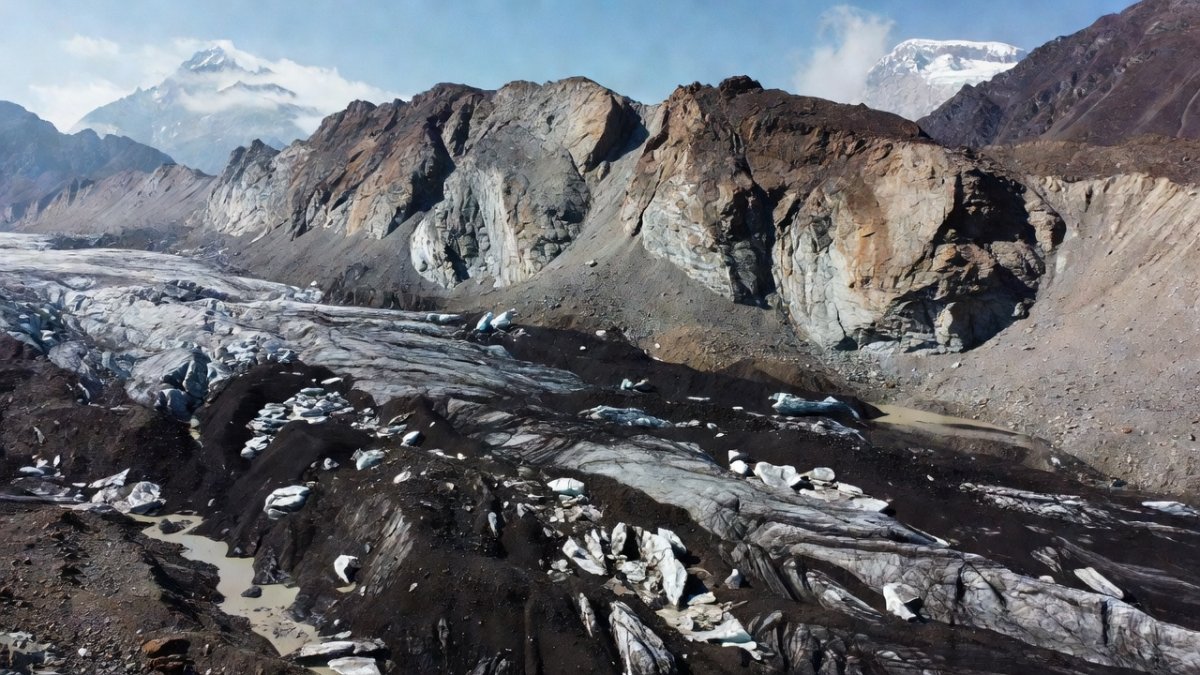
Unregulated Tourism and Rising Temperatures Drive 95% Glacier Collapse
The 95% surface area collapse at Thajiwas reflects a precise intersection of anthropogenic and climatic drivers that Indian institutions have failed to contain. IMD temperature records for the Kashmir region demonstrate consistent warming trends exceeding 1.5 degrees Celsius above pre-2000 baselines, driving equilibrium line altitudes upward and reducing accumulation zones on glaciers like Thajiwas. Simultaneously, the J&K Tourism Department has permitted exponential growth in visitor numbers without corresponding carrying capacity limits, allowing pony trails and makeshift facilities to encroach directly onto glacier margins.
GSI monitoring protocols have recorded recession rates across the Himalayan belt that now surpass historical averages by significant margins, with Thajiwas serving as a stark local example of this broader pattern. Waste deposition from tourists further darkens ice surfaces, increasing absorption of solar radiation and creating feedback loops that hasten ablation. The J&K Pollution Control Board maintains oversight responsibilities yet lacks the enforcement mechanisms to penalize operators who violate waste management norms at high-altitude sites.
MoEFCC glacier monitoring programmes exist on paper but suffer from implementation gaps that leave sites like Sonamarg without real-time regulatory intervention. These combined pressures have reduced the glacier's capacity to buffer seasonal water variability, creating downstream vulnerabilities that affect agricultural calendars and urban supply systems throughout the Kashmir Valley.
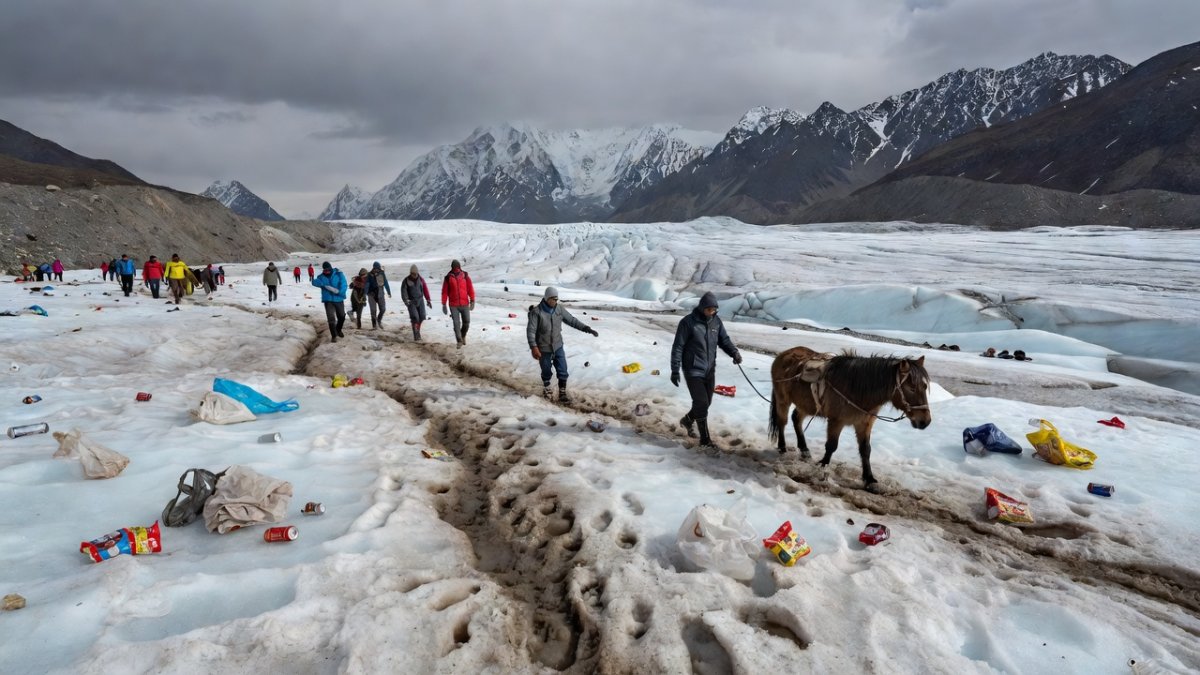
What This Means for India
India's constitutional framework under Article 48A mandates protection of the environment, yet the Thajiwas case reveals disconnects between policy intent and ground-level execution in ecologically sensitive zones. NITI Aayog sustainable development frameworks emphasize glacier preservation as critical for national water security, but funding allocations for Himalayan monitoring remain insufficient relative to the scale of observed retreat. The 95% loss at Thajiwas therefore functions as an early warning for similar high-altitude sites across Himachal Pradesh, Uttarakhand, and Sikkim where tourism expansion proceeds without integrated environmental impact assessments.
Downstream water security implications extend beyond Jammu and Kashmir into national food production systems that rely on Himalayan meltwater contributions during lean seasons. Regulatory bodies must now prioritize binding limits on tourist footfall and mandatory waste removal protocols enforced through the J&K Pollution Control Board to prevent further irreversible damage.
Glacier Monitoring Shortfalls and Policy Implementation
GSI data collection efforts have identified accelerated thinning across multiple Kashmir glaciers, yet integration of these findings into actionable tourism regulations by the J&K Tourism Department remains incomplete. IMD station records from nearby observatories confirm that summer temperature anomalies have intensified, reducing winter snowpack that historically replenished Thajiwas. These scientific outputs have not translated into revised carrying capacity norms despite repeated recommendations from scientific advisory panels.
MoEFCC programmes for glacier inventory updates operate with multi-year lags that prevent timely policy responses. The absence of real-time sensors at Sonamarg means degradation proceeds unchecked until annual surveys capture the cumulative loss. Strengthening inter-agency coordination between GSI, IMD, and state pollution boards represents the minimum requirement for reversing current trajectories.
Expert Perspectives
Scientists affiliated with the Geological Survey of India emphasize that Thajiwas exemplifies how localized tourism pressures can amplify regional climate signals, producing retreat rates that outpace purely temperature-driven models. Officials from the J&K Pollution Control Board acknowledge enforcement challenges at remote sites but point to recent directives requiring waste segregation at all Sonamarg facilities. Tourism operators have begun limited adoption of low-impact trail designs, yet compliance remains voluntary rather than mandated through licensing conditions.
Policy analysts connected to NITI Aayog stress the necessity of embedding glacier health metrics into state tourism master plans to align economic development with constitutional environmental obligations. Community representatives from downstream villages highlight observable reductions in summer stream flows that now threaten traditional irrigation schedules.
The Bottom Line
The 95% surface area loss at Thajiwas Glacier demonstrates that current regulatory frameworks administered by the J&K Tourism Department and MoEFCC cannot safeguard Himalayan water resources against combined tourism and climate pressures. Immediate imposition of visitor caps, mandatory waste audits by the J&K Pollution Control Board, and expanded GSI-IMD monitoring networks offer the only viable path to stabilize remaining ice reserves. Without these interventions, similar 95% scale losses will propagate across the Himalayan arc, undermining India's long-term water and energy security. Forward planning must treat glacier preservation as non-negotiable infrastructure rather than optional conservation.
— By Dr. Raj Patel, Staff Writer
This article was produced with AI-assisted research and editorial support. Reporting is based on sources cited in the article.
What's Your Reaction?
 Like
0
Like
0
 Dislike
0
Dislike
0
 Love
0
Love
0
 Funny
0
Funny
0
 Wow
0
Wow
0
 Sad
0
Sad
0
 Angry
0
Angry
0

India/South Asia Correspondent at Global1.News. Analytical voice with a background in science and health journalism. Based in New Delhi, covering Indian politics, education, healthcare, technology, and policy. Breaks down complex data into clear, actionable reporting.













Comments (0)