
Thailand Hunts Chinese Fugitive In $28M Crypto Mining Crack
Thailand's Department of Special Investigation has issued an arrest warrant for Chinese businessman Wang Yicheng, charging him with theft and violations of the Computer Crimes Act in connection with a transnational network that laundered money from online scams through illegal cryptocurrency mining operations. DSI spokesman Pol Maj Woranan Srilam confirmed that Wang is believed
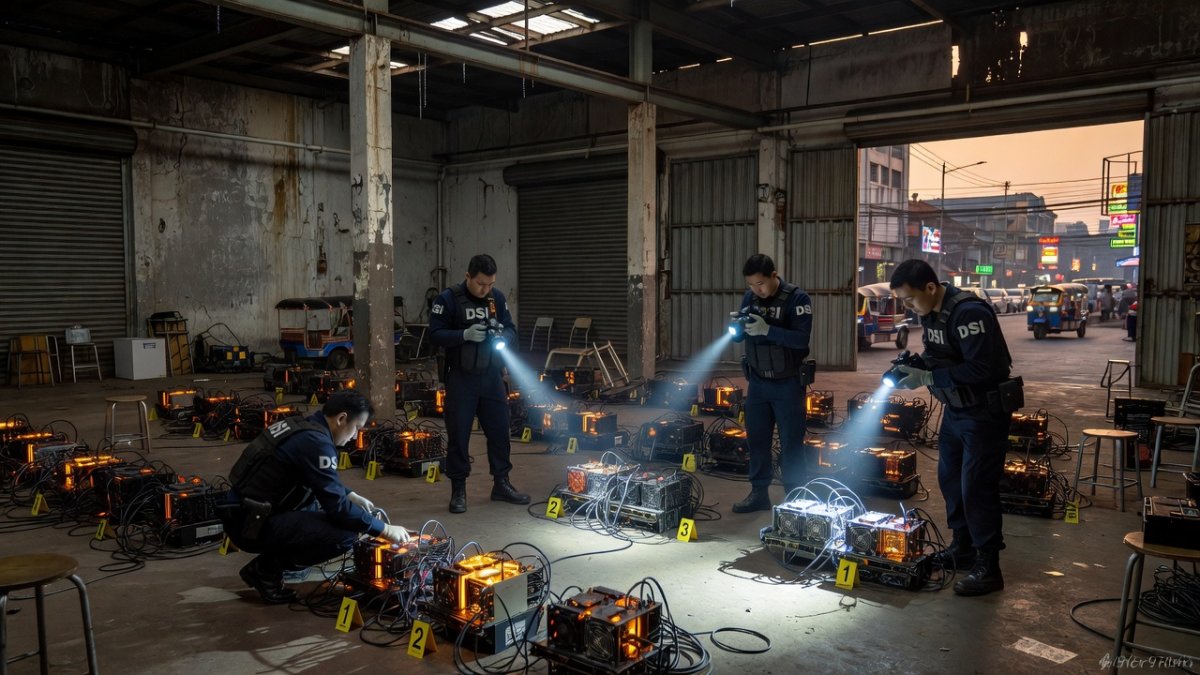
Thailand's Department of Special Investigation has issued an arrest warrant for Chinese businessman Wang Yicheng, charging him with theft and violations of the Computer Crimes Act in connection with a transnational network that laundered money from online scams through illegal cryptocurrency mining operations. DSI spokesman Pol Maj Woranan Srilam confirmed that Wang is believed to have fled Thailand and that authorities are now working with international counterparts to locate him. The case represents one of the most significant cross-border financial crime investigations in Thailand in recent years, with implications that extend from Bangkok boardrooms to borderland crime hubs in Myanmar.
Thailand Hunts Chinese Fugitive Over $28 Million Illegal Crypto Mining Network
Bangkok, Thailand — The DSI issued the arrest warrant for Wang Yicheng, a former board member and vice-president of the Thai-Asia Economic Exchange Trade Association, on charges filed in November. The DSI also issued arrest warrants for four unnamed Chinese nationals and four Myanmar nationals in connection with the same network. Authorities say Wang is the central figure in a group of Chinese investors accused of using illegal cryptocurrency mining to launder proceeds from online scams and gambling operations.
The Arrest Warrant and Charges
DSI spokesman Pol Maj Woranan Srilam confirmed during a briefing at the agency's headquarters on Rama IX Road in Bangkok that Wang faces charges of theft and violations under the Computer Crimes Act, which covers unauthorised interference with computer systems and data. The charges were formally filed in November following an extensive investigation that involved tracing digital financial flows across multiple jurisdictions.
"The suspect is believed to have fled the country," Pol Maj Woranan told Reuters in a statement, adding that Thai authorities are coordinating with international law enforcement agencies to locate him. The DSI has not disclosed Wang's suspected location but confirmed that the investigation remains active with additional arrests anticipated.
Four unnamed Chinese nationals and four Myanmar nationals also face separate arrest warrants linked to the same criminal network. These individuals are believed to have operated key nodes in the money laundering and crypto mining infrastructure that stretched across Thailand's industrial zones and into neighbouring countries.
Wang Yicheng's Background and Business Ties
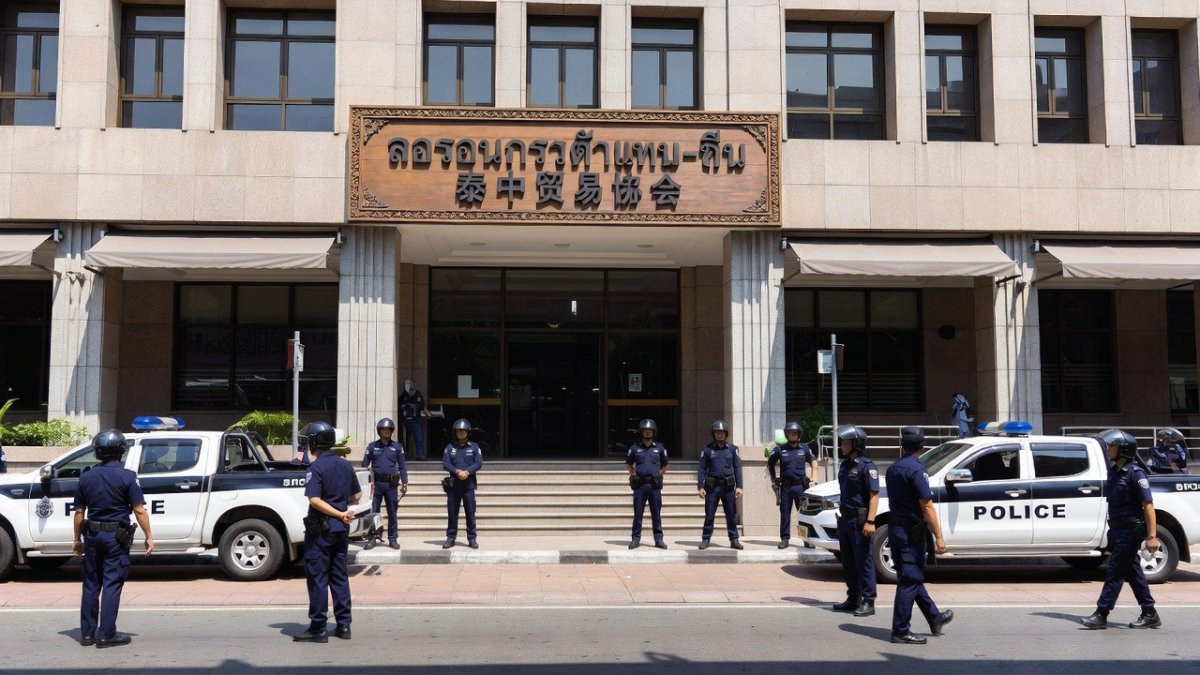
Wang Yicheng served as both a former board member and vice-president of the Thai-Asia Economic Exchange Trade Association, an organisation based in Bangkok that promotes commercial ties between Thai and Chinese businesses. His position within the association provided him access to political and law enforcement elites in Thailand, enabling him to operate with significant influence before the charges surfaced.
A 2023 Reuters investigation first brought Wang's activities to international attention, detailing how a cryptocurrency wallet registered in his name received at least $9.1 million between 2021 and 2022 from accounts that blockchain analysis firm TRM Labs linked to "pig-butchering" scams — a sophisticated form of fraud in which victims are deceived into making fraudulent investments. The investigation could not determine whether Wang personally controlled the account or whether his identity had been used without his knowledge.
Bitmain, the world's largest cryptocurrency mining hardware manufacturer, confirmed that Wang was a close partner and customer, stating that it had supplied equipment legally to his operations in Thailand. This connection positioned Wang at the centre of a network that spanned from Bangkok offices to mining facilities across multiple provinces.
The Transnational Scam Network and KK Park Connection
Many of the scams linked to Wang's network traced back to KK Park, a notorious crime hub located in Myawaddy, Myanmar, just across the border from Mae Sot district in Thailand's Tak province. KK Park has been identified by international investigators as one of Southeast Asia's largest centres of transnational organised crime, hosting multiple scam compounds staffed partly by trafficking victims.
The human toll of these operations is devastating. One documented victim, a 71-year-old man from California, lost his entire $2.7 million life savings after being approached by someone posing as a young woman online. His case is one of thousands that the United Nations says collectively generate billions of dollars annually for scam syndicates operating across Southeast Asia.
The DSI investigation determined that the network's structure allowed funds to flow seamlessly between Thailand, Myanmar, and beyond. Thai authorities at the Tak provincial border checkpoint have increased surveillance in response to these findings, working alongside Myanmar counterparts to disrupt the remaining operational hubs in Myawaddy.
Illegal Cryptocurrency Mining and Electricity Theft
The network illicitly consumed approximately 950 million baht — equivalent to $28 million — worth of electricity for unauthorised cryptocurrency mining operations. This ranks among the largest electricity theft cases in Thailand's recent history, according to DSI officials. Power was siphoned from provincial electrical grids in areas surrounding Bangkok and extended into northern provinces.
DSI investigators determined that transnational organised crime groups use illegal cryptocurrency mining as a dual-purpose tool: generating income for their operations while simultaneously providing a mechanism to launder proceeds from online scams and gambling. The energy-intensive nature of crypto mining makes electricity theft a particularly attractive target for criminal networks seeking to maximise profits.
The Metropolitan Electricity Authority documented unusual consumption spikes during the investigation period, alerting authorities to the unauthorised mining facilities. The DSI continues to audit similar installations in industrial zones across Thailand to identify any other operations that may be linked to the broader syndicate.
International Cooperation and US Involvement
The United States has played a significant role in the investigation. In June 2023, US federal authorities seized approximately $500,000 in cryptocurrency from an account linked to Wang, tracing funds stolen from a victim in Massachusetts. The US Department of Justice has declined to comment on the current arrest warrant but the seizure provided critical evidence that strengthened the Thai case.
Wang is believed to have left Thailand shortly before the warrants were executed in Bangkok. DSI teams now share intelligence with Interpol and regional partners to monitor possible routes through Southeast Asia. The Royal Thai Police and the Thai Ministry of Foreign Affairs have joined the DSI in coordinating cross-border efforts to locate all named suspects.
The case demonstrates Thailand's growing integration into global efforts against transnational financial crime. Joint task forces now focus on freezing additional assets linked to the scam network, with officials from multiple countries sharing banking intelligence and digital forensics data.
Impact on Thailand and Regional Security
Thailand and other Southeast Asian nations have intensified crackdowns on Chinese-run scam syndicates in recent months, recognising the enormous economic and social damage these operations inflict. The DSI's actions against Wang's network signal that Thai authorities will not tolerate the use of the kingdom's territory for transnational organised crime.
The case raises important questions about oversight mechanisms within Bangkok's business associations and the extent to which foreign nationals can cultivate ties to Thai elites. Communities in the Isaan region, which has seen some of the highest rates of scam victimisation, have voiced strong support for tougher enforcement measures.
For ordinary Thai citizens, the case underscores the importance of financial vigilance in an increasingly digital economy. The DSI has urged the public to report suspicious investment schemes and to verify the credentials of any individual or organisation offering cryptocurrency-related opportunities.
What to Watch For
DSI teams expect further arrests as international partners process shared intelligence on Wang's network. Additional warrants may target associates who operated from offices in Bangkok's business districts and provincial hubs. Thai authorities are monitoring border areas near Mae Sot for any signs of renewed activity from Myawaddy-linked groups.
Regional meetings among ASEAN finance ministers and law enforcement agencies will likely address cryptocurrency regulations in response to this case. Thai officials anticipate new guidelines from the Ministry of Digital Economy and Society to prevent similar electricity theft and money laundering incidents in the future.
The success of this investigation will depend on sustained international cooperation and Thailand's commitment to prosecuting high-profile transnational crime cases. As the DSI continues its work, the case serves as a reminder that the fight against organised crime in Southeast Asia requires vigilance at every level — from local communities in Tak province to the boardrooms of Bangkok's business associations.
By Ann Srisawat, Staff Writer
This article was produced with AI-assisted research and editorial support. Reporting is based on sources cited in the article.
What's Your Reaction?
 Like
0
Like
0
 Dislike
0
Dislike
0
 Love
0
Love
0
 Funny
0
Funny
0
 Wow
0
Wow
0
 Sad
0
Sad
0
 Angry
0
Angry
0

Southeast Asia Correspondent at Global1.News. Based in Bangkok, covering Thai and Southeast Asian politics, economy, technology, and culture. Deep regional perspective on one of the world's most dynamic regions.













Comments (0)