
NEET-UG 2026 Re-Exam: 22 Lakh Candidates Face Tougher Physics Paper Under Supreme Court Mandate
Re-Examination Under Supreme Court Oversight The NEET-UG 2026 re-examination took place on June 21, 2026, with 22 lakh candidates appearing at 5,440 centres nationwide. The National Testing Agency conducted the test under direct Supreme Court monitoring after the original paper was cancelled due to a massive leak. This level of judicial oversight marks a significant shift in ho
Re-Examination Under Supreme Court Oversight
The NEET-UG 2026 re-examination took place on June 21, 2026, with 22 lakh candidates appearing at 5,440 centres nationwide. The National Testing Agency conducted the test under direct Supreme Court monitoring after the original paper was cancelled due to a massive leak. This level of judicial oversight marks a significant shift in how high-stakes medical entrance examinations are administered in India.
Every stage of paper handling and distribution received real-time reporting to the Court. The involvement of the Indian Air Force for secure transport of question papers added another layer of accountability previously unseen in NTA operations. Students in cities such as Delhi and Chennai noted that the process felt more regimented than any previous attempt.
For the 1.1 lakh MBBS and BDS seats spread across roughly 700 medical colleges, this re-examination determines admission outcomes for an entire generation of aspirants. The Supreme Court directive ensures that results carry greater legal weight and reduces the scope for future litigation from affected candidates.
Multi-Layered Security: IAF, Biometrics, and Lockdown Protocol
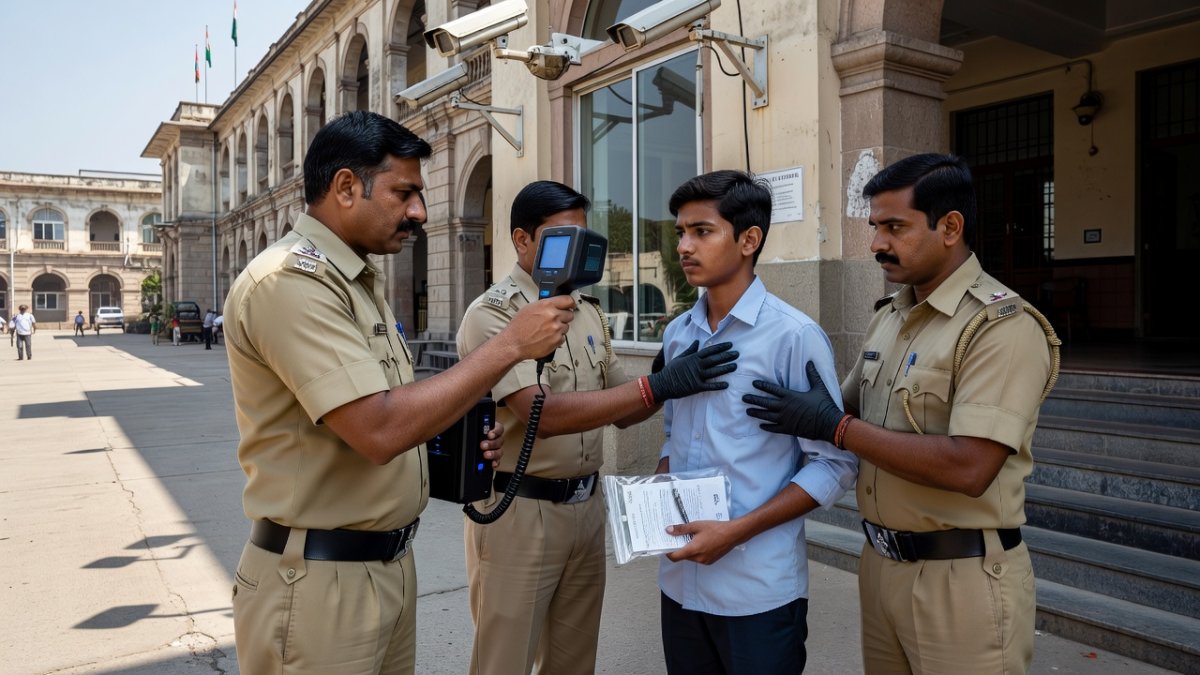
Security arrangements for the June 21 re-examination included biometric verification, manual frisking, and deployment of 1.38 lakh CCTV cameras across all centres. Paper setters and translators remained under strict lockdown at a secure facility until the examination concluded. These measures were implemented after the earlier breach exposed vulnerabilities in the traditional pen-and-paper system.
The Indian Air Force played a direct role in transporting question papers to examination cities, ensuring that materials did not pass through multiple civilian hands. This protocol was particularly visible in sensitive regions including West Bengal and Jharkhand. Candidates in Pune and Indore reported that frisking procedures were noticeably stricter than in previous years.
These enhanced protocols carry long-term implications for public trust in national examinations. Taxpayers and parents now expect similar standards for other major tests conducted by NTA, including JEE and CUET. Failure to maintain this rigour could trigger renewed demands for complete overhaul of the agency.
Subject-Wise Difficulty: Physics Surges, Biology Steady
Student feedback indicated that Physics emerged as significantly tougher than in the cancelled original paper. Questions required deeper conceptual application and longer calculations, shifting the overall difficulty balance. Chemistry was described as difficult while Biology remained moderate to easy across most regions.
This subject-wise pattern affected time management strategies for candidates. Many reported spending excessive time on Physics sections, leaving less room for Chemistry. The variation in difficulty also highlighted gaps in coaching centre preparation, particularly for students relying on last-minute revision modules.
The uneven distribution of difficulty raises questions about standardisation in future NTA papers. Medical aspirants from states with limited access to advanced coaching may face disproportionate challenges when Physics dominates the scoring curve.
Voices from the Ground: City-by-City Student Reactions
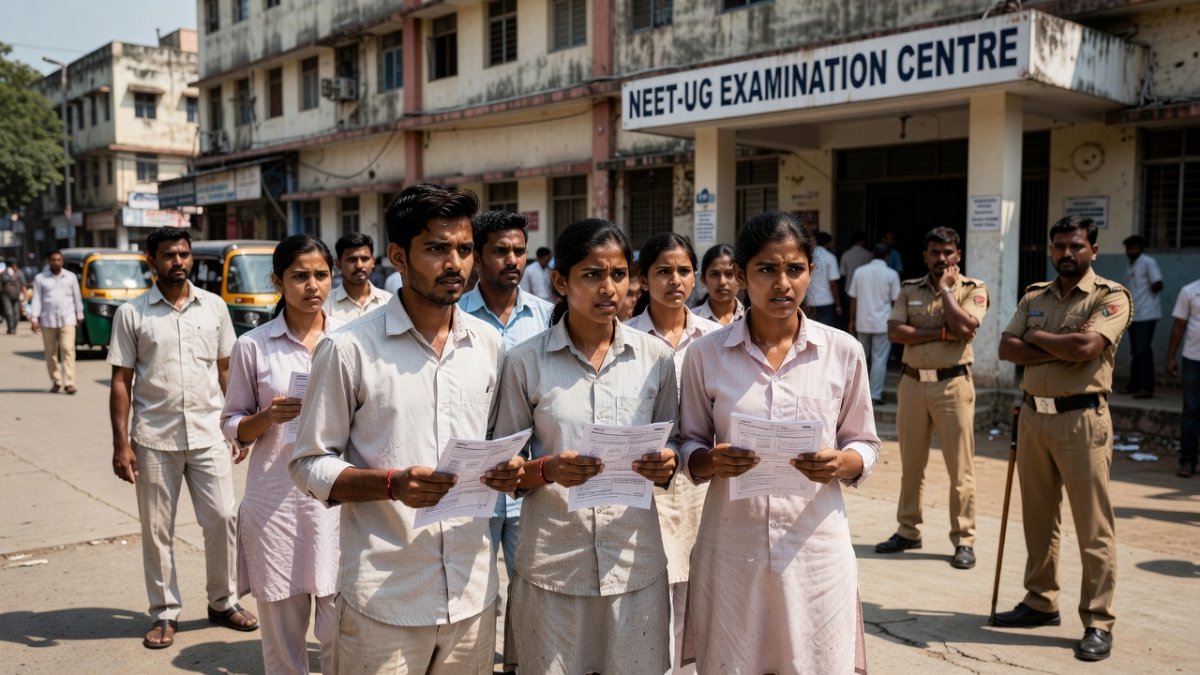
Reactions varied across examination cities. A Delhi candidate stated that the paper was tougher than the previous test. In Pune, students highlighted tight security alongside tough Physics questions. Indore aspirants noted that Biology was good but Physics proved lengthy.
West Bengal candidates found Biology easy and Physics moderate. In Ranchi, Physics was reported as tougher while Biology appeared easier. Chennai students described the re-examination as more challenging overall compared with their earlier attempt.
These regional differences reflect varying levels of preparation and access to quality teaching resources. The live reactions captured in India Today coverage from multiple centres underscore how local conditions continue to influence performance even under uniform national testing conditions.
The Paper Leak That Shook Indian Medical Education
The original NEET-UG paper leak triggered nationwide protests and forced cancellation of the examination. The incident exposed systemic weaknesses in question paper handling and storage at several centres. Subsequent investigations revealed involvement of organised networks that compromised the integrity of the test.
The leak directly affected admission timelines for over 22 lakh students and created uncertainty for medical colleges preparing for the new academic session. Political pressure from opposition parties and student organisations compelled the government to order a fresh examination under judicial supervision.
The episode has lasting consequences for the credibility of India’s medical education pipeline. Families that invested heavily in coaching and multiple attempts now demand structural changes that prevent recurrence of such failures.
NTA Restructuring: 16 New Posts and the Road to Reform
Restructuring of the National Testing Agency began in October 2024 with the creation of 16 new senior administrative posts. These appointments aim to strengthen oversight, improve operational protocols, and reduce dependence on external agencies for paper handling. The changes were accelerated following the 2024 leak controversy.
Additional senior staff are expected to focus on technology integration and regional coordination. However, critics argue that structural reform requires more than new positions; it demands transparent recruitment processes and independent audits of examination procedures.
The re-examination on June 21 served as the first major test of these reforms. Early indications suggest improved coordination, yet sustained monitoring will be necessary to assess whether the new administrative framework delivers lasting improvements.
The CBT Transition: Digital Hope, Infrastructure Anxiety
The NTA has announced a shift to computer-based testing format from 2027. This transition is intended to eliminate physical paper leaks and enable faster result processing. The June 21 re-examination remained pen-and-paper, serving as a final large-scale test of the old system.
Concerns persist regarding digital infrastructure in tier-2 and tier-3 cities. Many districts lack reliable electricity and high-speed internet required for smooth CBT operations. Students from rural areas fear that the transition could widen existing urban-rural performance gaps.
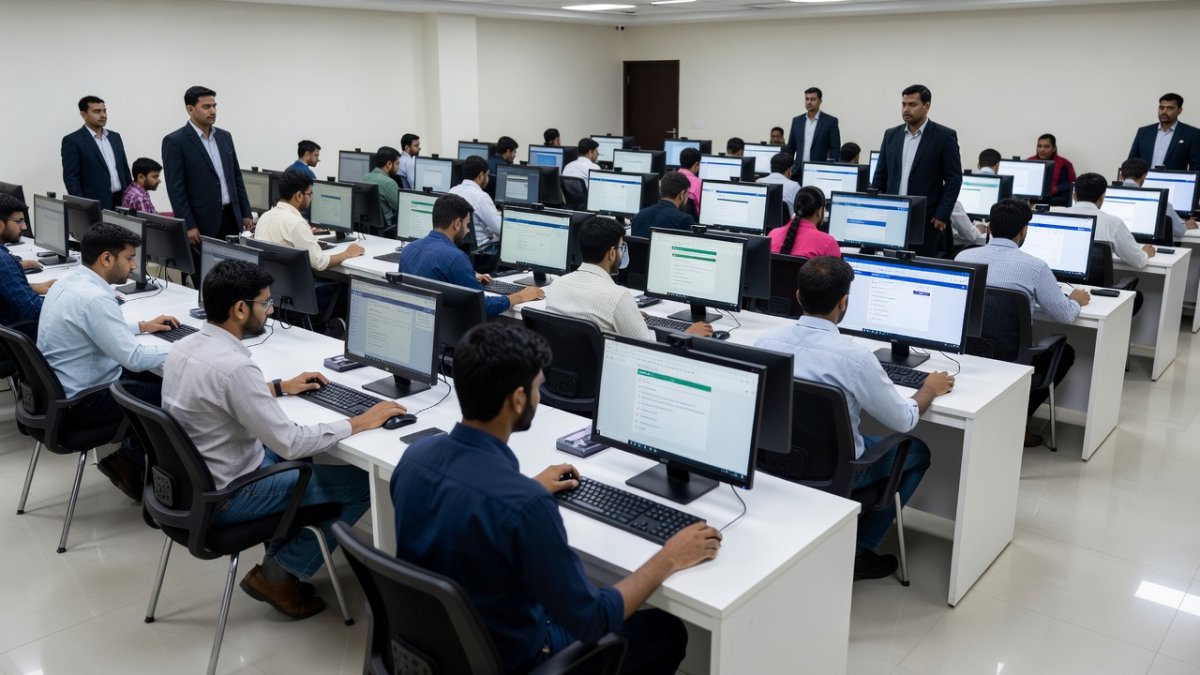
Government investment in examination centres will be critical. Without targeted upgrades in states such as Bihar, Odisha and parts of the Northeast, the CBT move risks excluding capable candidates from under-resourced regions.
Regional Disparities: Coaching Hubs vs Rural Access
Coaching hubs in Kota, Hyderabad and Delhi continue to dominate NEET preparation. Students from these centres benefit from intensive mock tests and updated study material aligned with recent difficulty trends. In contrast, aspirants from smaller towns and villages often rely on limited local resources.
The 2026 re-examination highlighted these disparities once again. Candidates from metropolitan areas reported better adaptation to the tougher Physics section, while rural students struggled with time management. The cost differential between government and private medical seats, ranging from ₹10 lakh to ₹50 lakh per year, further compounds the pressure on families from lower-income backgrounds.
Policy interventions such as regional coaching support centres and digital learning platforms could help bridge this gap. Without such measures, the re-examination may simply reproduce existing inequalities in medical college admissions.
What This Means for 22 Lakh Medical Aspirants
The outcome of the June 21 re-examination will shape career trajectories for 22 lakh candidates competing for limited government medical seats. Those who secure admission to government colleges avoid the heavy financial burden associated with private institutions.
Many aspirants have already invested two or three years in preparation. A single examination now carries disproportionate weight in determining whether their efforts translate into a medical degree. The Supreme Court-supervised process offers some reassurance, yet anxiety remains high until results are declared.
Longer-term reforms must address the root causes of repeated examination controversies. Aspirants and their families expect a transparent, technology-enabled system that values merit over access to coaching networks.
The Bottom Line: Rebuilding Trust in Examination Integrity
The NEET-UG 2026 re-examination represents a critical attempt to restore credibility to India’s medical entrance process. Strict security protocols, judicial oversight and administrative restructuring signal a serious response to the paper leak crisis.
However, the shift to CBT in 2027 and persistent regional disparities require sustained policy attention. Success will be measured not only by leak-free examinations but also by equitable access for students across all states and socio-economic backgrounds.
India’s healthcare system depends on selecting competent doctors through fair processes. The lessons from this re-examination must guide future reforms that prioritise both integrity and inclusion.
 — By Dr. Raj Patel, Staff Writer
This article was produced with AI-assisted research and editorial support. Reporting is based on sources cited in the article.
What's Your Reaction?
 Like
0
Like
0
 Dislike
0
Dislike
0
 Love
0
Love
0
 Funny
0
Funny
0
 Wow
0
Wow
0
 Sad
0
Sad
0
 Angry
0
Angry
0

India/South Asia Correspondent at Global1.News. Analytical voice with a background in science and health journalism. Based in New Delhi, covering Indian politics, education, healthcare, technology, and policy. Breaks down complex data into clear, actionable reporting.














Comments (0)