
Bomber Crash, Monastery Strike and UK Arson: Russia Link
Three Fronts Open in One Day: Siberia, Kyiv and London The conflict has now produced simultaneous incidents across three distinct theatres in recent days. A Russian strategic bomber came down in Siberia during a training flight. Ukrainian authorities reported a strike on one of the country’s most revered religious sites. In London, a court convicted a man of conspiring to set f
Three Fronts Open in One Day: Siberia, Kyiv and London
The conflict has now produced simultaneous incidents across three distinct theatres in recent days. A Russian strategic bomber came down in Siberia during a training flight. Ukrainian authorities reported a strike on one of the country’s most revered religious sites. In London, a court convicted a man of conspiring to set fire to the prime minister’s residence on behalf of Russian handlers. These events together illustrate how the war has expanded far beyond the front lines in eastern Ukraine.
Each incident carries its own operational and political weight. The loss of a nuclear-capable Tu-22M3 highlights ongoing Russian aviation difficulties. The attack on the Dormition Cathedral raises fresh questions about the protection of cultural heritage. The arson conviction demonstrates that Russian intelligence activity has reached British domestic targets. Together they show a campaign that now touches military readiness, religious identity and national security in allied capitals.
Western governments have responded with a mixture of sanctions, diplomatic coordination and renewed intelligence scrutiny. The timing, coming just before the G7 gathering in France this week, adds pressure on European leaders to maintain unity. Observers note that the Kremlin appears willing to accept risks across multiple domains rather than confine operations to Ukrainian territory. This widening scope is reshaping how Britain and its partners assess daily threats.
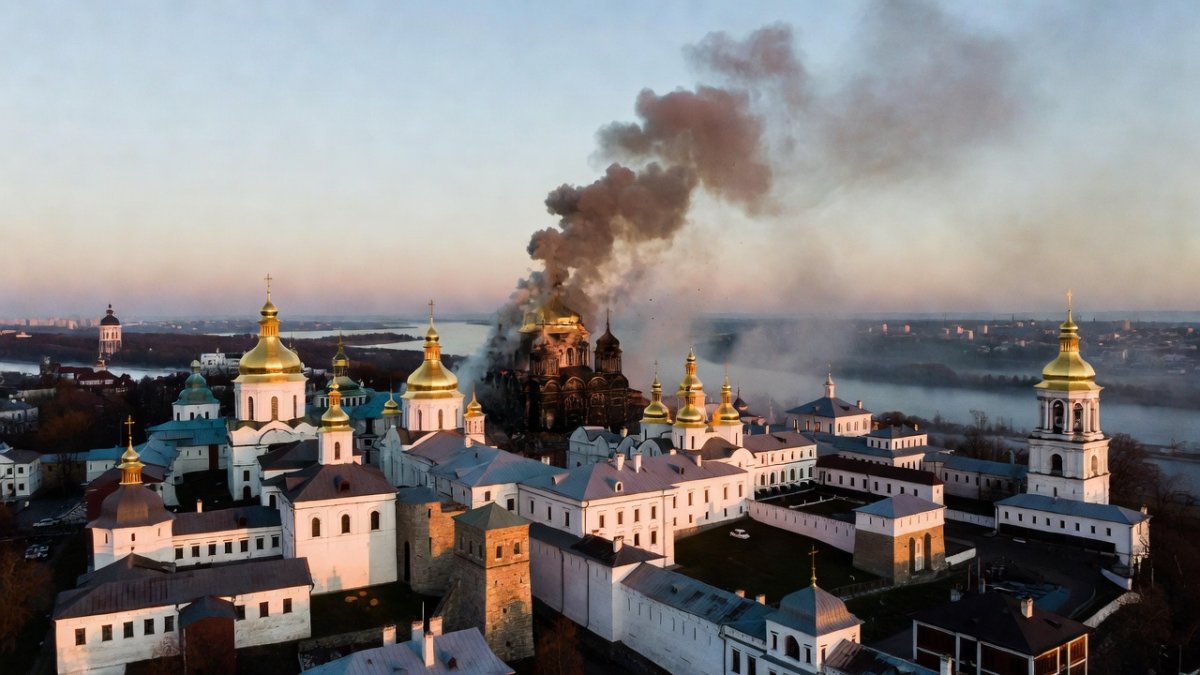
The Dormition Cathedral at the Kyiv Pechersk Lavra, a UNESCO World Heritage site, was damaged in the strikes. (Global 1 News)
Russian Bomber Crash: A Nuclear-Capable Platform Lost in Training
A Tu-22M3 strategic bomber crashed in the Irkutsk region of Siberia during a training sortie. The aircraft, known to NATO as the Backfire, is nuclear-capable and has previously been used in operations over Syria and Ukraine. Four crew members ejected safely and no ground damage was reported. The aircraft was not carrying a combat load at the time of the incident.
The loss of such a platform underscores the strain on Russian long-range aviation after years of sustained operations. Maintenance backlogs and pilot fatigue have been cited by analysts as persistent problems. The fact that all crew survived suggests that basic ejection procedures remain functional, yet the crash itself points to deeper readiness shortfalls. Russian forces have relied heavily on these bombers for stand-off strikes, making each airframe increasingly valuable.
Zelensky Accuses Moscow of Deliberate Strike on Historic Monastery
President Zelensky stated that Russian forces deliberately targeted the Dormition Cathedral within the Kyiv Pechersk Lavra. The site, a UNESCO World Heritage location with origins stretching back a thousand years, is among the holiest in Orthodox Christianity. A fire broke out following the airstrikes. Thirty-five people were injured in Kyiv, while fifty-three were wounded and eleven killed across Ukraine in the same wave of attacks.
Metropolitan Epifaniy, head of the Orthodox Church of Ukraine, described President Putin as the “Kremlin Antichrist” in response to the strike. The timing, immediately ahead of the G7 meeting in France this week, has drawn attention to questions of cultural heritage protection. Ukrainian officials argue that the choice of target was intended to inflict symbolic damage rather than achieve a clear military objective. The incident has prompted renewed calls for stronger safeguards around historic religious sites.
Moscow Dismisses Allegations as 'Crude Fake'
Russia’s foreign ministry rejected the Ukrainian accusations as a “crude fake”. Spokeswoman Maria Zakharova accused Ukraine and the West of engaging in “another falsification”. The defence ministry claimed that a US-made Patriot missile was responsible for the damage to the cathedral. This line of argument follows a pattern of denial that has characterised Russian statements throughout the conflict.
The information dimension of the war has become as contested as the military one. Each allegation is met with counter-claims that shift responsibility onto Western-supplied weapons. Such exchanges complicate efforts to establish independent verification of strikes on civilian or heritage sites. Observers suggest the approach is designed to sow doubt among international audiences rather than persuade through evidence.
Arson at the Prime Minister's House: A Russian Link Confirmed
Roman Lavrynovych was convicted on Monday of conspiracy to commit arson at the residence of Prime Minister Sir Keir Starmer. The BBC reported that the plot was traced to Russian state actors. A handler identified only as “EL” offered Russian citizenship in exchange for carrying out attacks and expressed admiration for President Putin. EL has been identified as Evgeny Lyukshin, a twenty-three-year-old son of a senior Russian official with diplomatic connections close to the Kremlin.
The case has prompted fresh scrutiny of Russian influence operations inside the United Kingdom. Security services are examining how recruitment networks operate among diaspora communities and whether similar plots remain active. The Russian embassy in London rejected any association with unlawful activities. For British readers the conviction underlines that the conflict’s reach now extends to domestic counter-intelligence priorities and the protection of senior political figures.
Whitehall departments have increased coordination between the Home Office, police and intelligence agencies in response. The episode illustrates how low-level criminal acts can be linked to state-directed campaigns. Analysts warn that such operations aim to create disruption and test the responsiveness of British institutions. The conviction provides concrete evidence that these efforts have already materialised on UK soil.
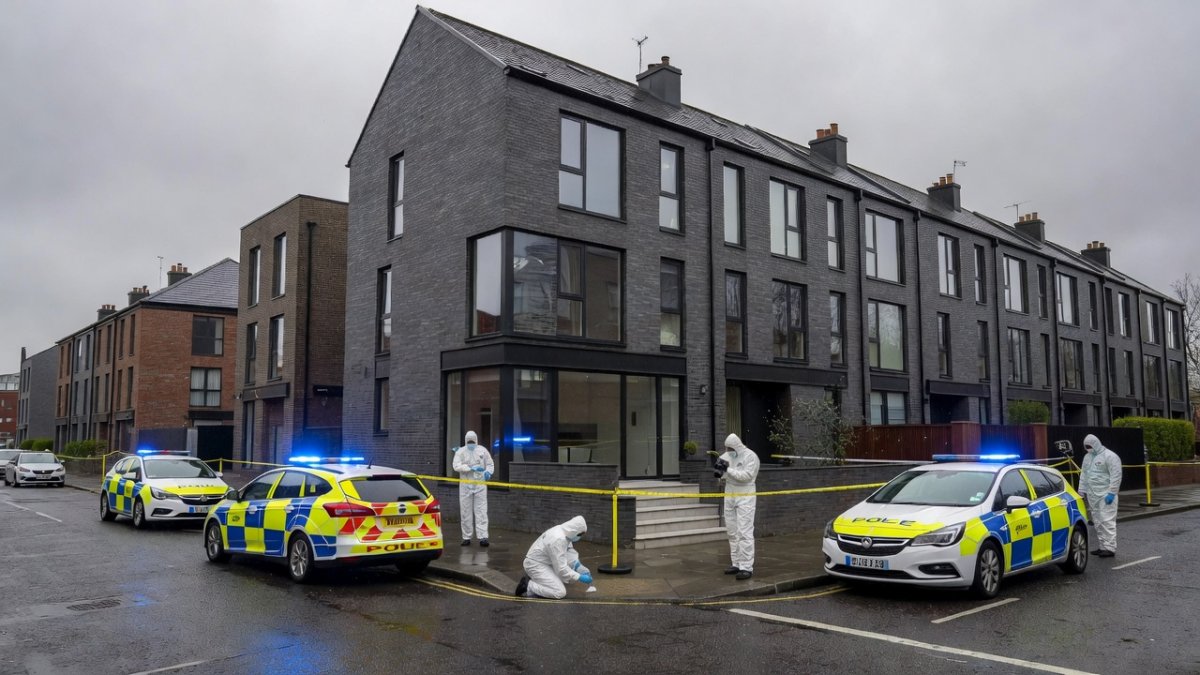
British authorities have increased counter-intelligence scrutiny following the conviction linked to Russian networks. (Global 1 News)
EU Sanctions Expand to Shadow Fleet and Influence Operations
The European Union has approved sanctions against thirty-four individuals and forty-seven entities. The measures target Russia’s military-industrial complex, its shadow fleet of tankers and operations linked to political interference. A twenty-first sanctions package is already under discussion among member states. European coordination has focused on closing loopholes that have allowed Russia to sustain its war economy.
The latest round reflects a determination to address both conventional military support and hybrid tactics. Shadow fleet designations aim to restrict the covert movement of Russian oil that funds the conflict. Political interference measures seek to limit influence campaigns across the continent. Officials describe the package as part of a sustained effort to maintain economic pressure without immediate escalation.
G7 Diplomacy Against a Backdrop of Escalation
Leaders of the G7 group are meeting in France this week against the backdrop of the cathedral strike and other recent incidents. Discussions are expected to cover continued military aid to Ukraine and measures to protect cultural heritage during conflict. The timing of the Kyiv attack has sharpened focus on how allies can respond to strikes on historic sites. Russian spy chief Sergei Naryshkin stated that US and Russian intelligence services remain in contact over Ukraine.
Such contacts suggest that limited channels persist even as public rhetoric hardens. G7 participants are likely to emphasise unity on sanctions and support packages. The meeting also provides an opportunity to coordinate responses to hybrid threats that have surfaced in allied capitals. Observers will watch for any joint statements addressing both battlefield developments and domestic security concerns.
How the Ukraine Conflict Now Reaches British Shores
The conviction in the Starmer arson case has concentrated attention on Russian activity within the United Kingdom. Security services have long warned of influence and sabotage risks, yet the court outcome supplies a clear example of operational intent. Whitehall has stepped up coordination across the Home Office, police and intelligence agencies to monitor similar networks. The episode connects directly to wider European concerns about political interference and the protection of critical infrastructure.
British officials now treat such cases as part of the broader conflict rather than isolated criminal matters. Counter-intelligence resources have been reallocated to assess recruitment patterns and funding routes. The Russian embassy’s denial has done little to reduce official vigilance. For the public the case serves as a reminder that events in Ukraine can generate direct consequences inside Britain.
What Comes Next: The Widening Arc of This War
The coming days will test whether the twenty-first EU sanctions package can further constrain Russia’s military-industrial base and shadow fleet. G7 discussions in France are expected to shape the next phase of military assistance and heritage protection measures. Transatlantic coordination remains central, yet differing national priorities could surface if the conflict continues to generate hybrid incidents in allied countries. The Naryshkin statement on intelligence contacts may indicate whether back-channel communication can prevent further miscalculation.
British readers should watch for additional sanctions designations, updates on domestic security investigations and any G7 commitments on long-term aid. The war has moved beyond questions of territorial control to encompass the security of European homes, the safety of historic religious sites and the resilience of democratic institutions. Each new incident reinforces the need for sustained vigilance across multiple fronts. The pattern suggests that the coming weeks will bring further tests of allied cohesion and institutional preparedness.
By Erica Thornton, Staff WriterThis article was produced with AI-assisted research and editorial support. Reporting is based on sources cited in the article.
What's Your Reaction?
 Like
0
Like
0
 Dislike
0
Dislike
0
 Love
0
Love
0
 Funny
0
Funny
0
 Wow
0
Wow
0
 Sad
0
Sad
0
 Angry
0
Angry
0

US Politics and Policy Correspondent at Global1.News. Based in Washington DC, covering American politics, policy, elections, and the courts. Knows how the system works and tells you what it actually means.















Comments (0)