
ROKS Jeongjo the Great Departs for RIMPAC 2026 with First Command Role for ROK Navy
Introduction The Republic of Korea Navy’s newest Aegis-equipped destroyer, ROKS Jeongjo the Great (DDG-995), has departed for the Rim of the Pacific (RIMPAC) 2026 exercise. This marks the vessel’s first participation in the world’s largest multinational maritime drill and its initial assignment to a command role within the multinational force structure. Commissioned on 27 Novem
Introduction
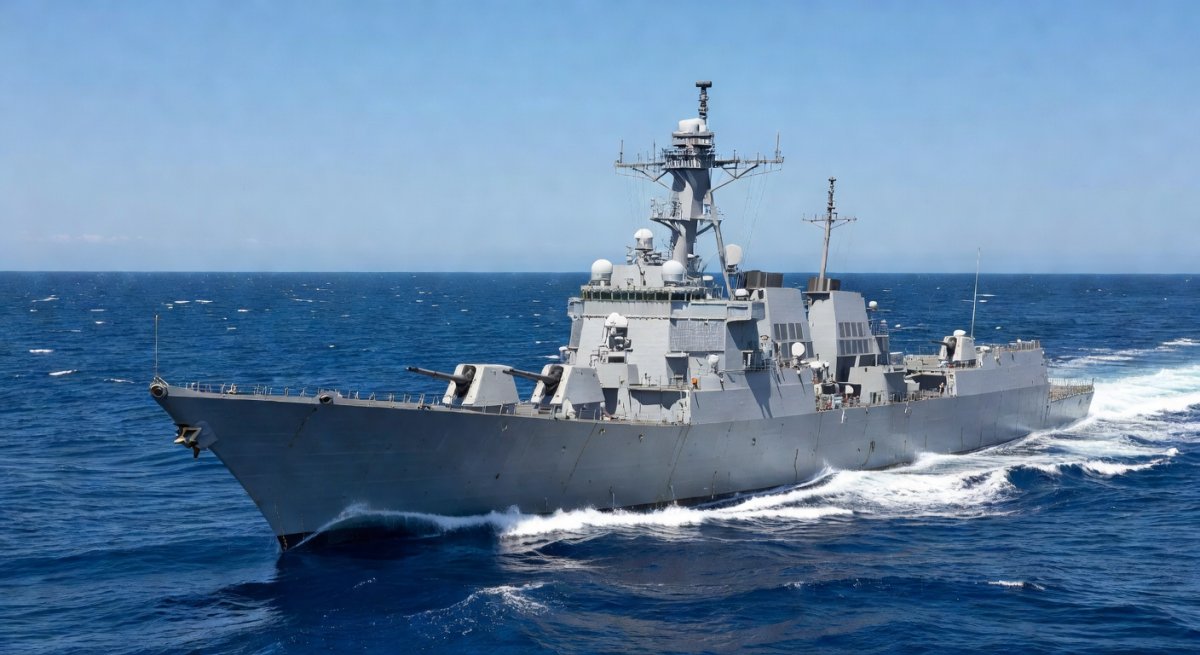
The Republic of Korea Navy’s newest Aegis-equipped destroyer, ROKS Jeongjo the Great (DDG-995), has departed for the Rim of the Pacific (RIMPAC) 2026 exercise. This marks the vessel’s first participation in the world’s largest multinational maritime drill and its initial assignment to a command role within the multinational force structure.
Commissioned on 27 November 2024 as the lead ship of the KDX-III Batch II class, the destroyer represents the next evolutionary step in South Korea’s surface combatant program. Its deployment underscores Seoul’s determination to expand operational reach beyond the Korean Peninsula while deepening interoperability with the United States and other partner navies.
A New Flagship for the Blue-Water Navy
ROKS Jeongjo the Great is the fourth Sejong the Great-class destroyer overall and the first of four Batch II hulls. Constructed by Hyundai Heavy Industries and launched on 28 July 2022, the ship displaces 8,500 tons standard and approximately 10,000 tons at full load. Its naming honors King Jeongjo, the 22nd monarch of the Joseon dynasty, continuing the Navy’s tradition of linking modern warships to historical Korean figures.
The transition from Batch I to Batch II introduces enhanced combat-system architecture and improved endurance. These upgrades directly support South Korea’s long-term goal of fielding a credible blue-water force capable of protecting sea lines of communication and contributing to regional maritime security.
Technical Capabilities and Strategic Significance
The destroyer is fitted with the Aegis Combat System Baseline 9.C2 “KII” integrated with the AN/SPY-1D(V) multi-function radar. This configuration permits simultaneous tracking and engagement of multiple air, surface, and subsurface threats. The ship’s 128-cell Mark 41 Vertical Launch System can employ SM-3 ballistic-missile interceptors, SM-6 multi-role missiles, and legacy SM-2 air-defense rounds.
These capabilities allow Jeongjo the Great to perform area air defense, anti-ship strike, and limited ballistic-missile defense missions. In the Korean context, such versatility strengthens deterrence against North Korean missile salvos while also enabling participation in broader Indo-Pacific contingency planning.
RIMPAC 2026: A Command Role for the ROK Navy
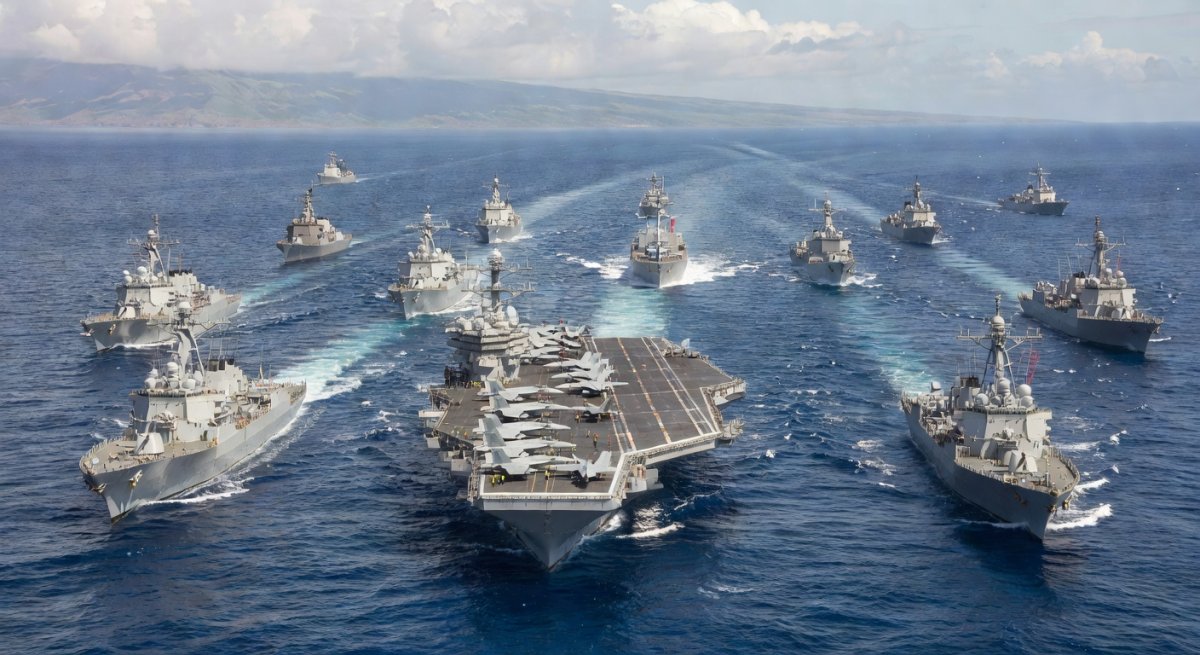
RIMPAC 2026 is scheduled to involve more than 25,000 personnel, over 40 ships and submarines, and participants from more than 25 nations. The exercise will be conducted in the waters around Hawaii during June and July. South Korea has taken part in RIMPAC continuously since 1994, yet this year’s deployment carries added weight because Seoul has been invited to assume a command function for the first time.
By placing Jeongjo the Great in a coordination billet, the ROK Navy will gain direct experience in multinational task-group leadership. This step aligns with Seoul’s ambition to move from platform contributor to operational leader within U.S.-led maritime coalitions.
Geopolitical Context: Korea’s Naval Modernization
South Korea’s naval expansion occurs against a backdrop of persistent North Korean missile tests and China’s growing maritime presence in the East and South China Seas. The deployment of Jeongjo the Great therefore serves both immediate peninsular defense needs and longer-term regional power-projection requirements.
Hyundai Heavy Industries’ role in building the ship also illustrates the tight linkage between chaebol industrial capacity and national security policy. Domestic construction reduces reliance on foreign suppliers and supports high-skilled employment in the shipbuilding sector, a strategic industry for Korea’s export economy.
Regional Dynamics and Alliance Implications
The ROK-US alliance remains the central pillar of Seoul’s defense posture. RIMPAC participation provides a high-end training venue that tests joint command-and-control procedures, shared situational awareness, and integrated air-and-missile defense architectures. Successful execution of a command role will reinforce Washington’s confidence in South Korea’s ability to lead coalition elements during contingencies.
At the same time, the exercise offers opportunities for trilateral coordination with Japan, whose own Aegis destroyers routinely participate. Such practical cooperation can help manage historical sensitivities while advancing collective deterrence in Northeast Asia.
Looking Ahead
Following RIMPAC 2026, the ROK Navy is expected to rotate additional Batch II destroyers through similar high-profile deployments. The experience gained will inform future force-structure decisions, including the planned KDX-III Batch III program and potential acquisition of larger amphibious and auxiliary vessels.
Ultimately, the voyage of ROKS Jeongjo the Great signals South Korea’s emergence as a more consequential maritime actor—one whose technological sophistication and alliance commitments are increasingly aligned with the demands of a contested Indo-Pacific theater.
By Prof. David Park, Staff Writer
This article was produced with AI-assisted research and editorial support. Reporting is based on sources cited in the article.
What's Your Reaction?
 Like
0
Like
0
 Dislike
0
Dislike
0
 Love
0
Love
0
 Funny
0
Funny
0
 Wow
0
Wow
0
 Sad
0
Sad
0
 Angry
0
Angry
0

World Politics Analyst at Global1.News. Based in Beijing, covering US-China relations, global trade, and geopolitical strategy. Brings deep analytical perspective to the power dynamics shaping international affairs.















Comments (0)