
'We Will Not Leave': The Untold Story of Jewish Resistance to Zionism and Israel
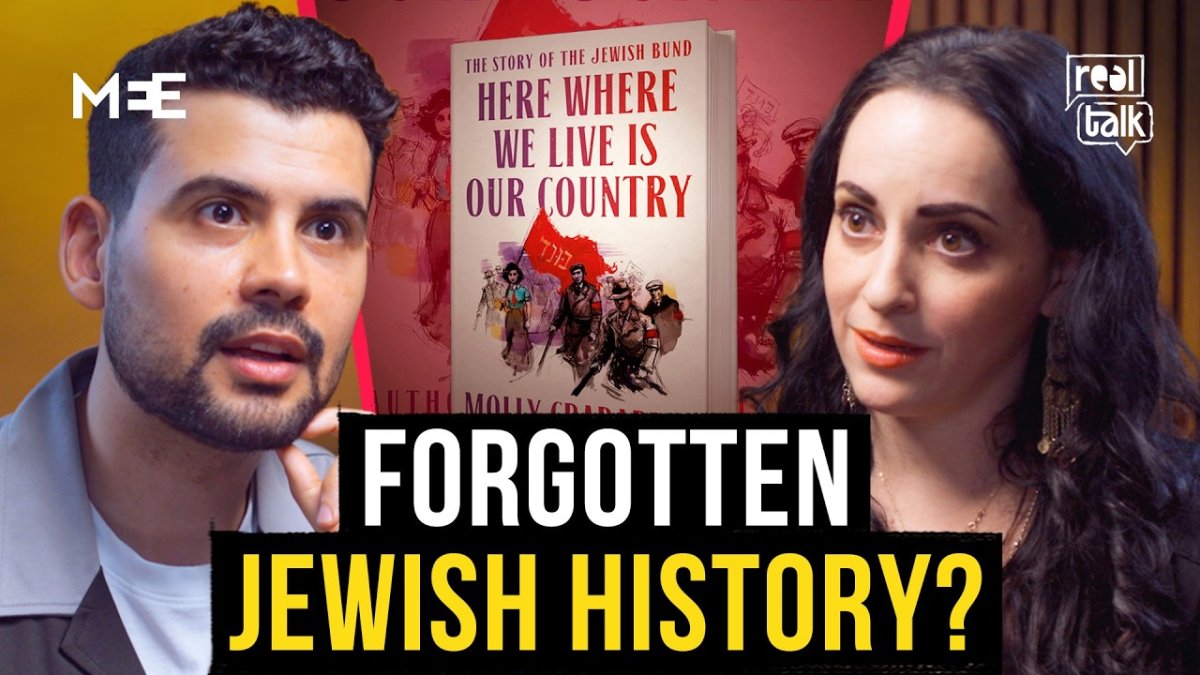
In a recent Middle East Eye report titled "'We will not leave': The untold story of Jewish resistance to Zionism & Israel," the experiences of Jewish groups opposing Zionism are highlighted, from ultra-Orthodox communities such as Neturei Karta to secular organizations like Jewish Voice for Peace. The account draws attention to individuals who reject the Israeli state on religi
In a recent Middle East Eye report titled "'We will not leave': The untold story of Jewish resistance to Zionism & Israel," the experiences of Jewish groups opposing Zionism are highlighted, from ultra-Orthodox communities such as Neturei Karta to secular organizations like Jewish Voice for Peace. The account draws attention to individuals who reject the Israeli state on religious or political grounds and stand alongside Palestinians facing displacement and restrictions on movement in the West Bank and Gaza Strip.
Historical Roots of Jewish Opposition to Zionism
Jewish criticism of political Zionism dates back to the late nineteenth century, when many religious leaders viewed the movement as a departure from traditional Jewish teachings that emphasized waiting for divine redemption rather than human political action. Communities in Eastern Europe and parts of the Ottoman Empire argued that establishing a state in historic Palestine would lead to conflict with the existing Arab population.
By the early twentieth century, groups such as Agudat Israel initially maintained distance from Zionist institutions, though some later adjusted their positions. Neturei Karta emerged in Jerusalem during the 1930s as a distinct ultra-Orthodox faction that refused cooperation with Zionist authorities both before and after 1948. These positions reflected longstanding debates within Jewish thought about the proper relationship between faith and national sovereignty.
Palestinian families in villages near Jerusalem and Hebron recall encounters with these dissenting Jewish voices during the mandate period, when shared concerns about land sales and demographic change created limited but notable points of contact. Such historical intersections remain part of local oral histories passed down through generations still living under occupation.
Theological Arguments Against a Jewish State
Within certain strands of Orthodox Judaism, the creation of Israel is viewed as a violation of three oaths described in classical rabbinic literature, which prohibit mass return to the land, rebellion against nations, and forcing the end of exile. Neturei Karta continues to cite these teachings when explaining its refusal to recognize Israeli sovereignty or participate in its institutions.
Leaders within this tradition maintain that true redemption must come through spiritual means, not military or political ones. This stance places them at odds with both secular Israeli policies and religious Zionist currents that interpret Jewish settlement as fulfillment of divine command. The theological divide shapes daily choices, including avoidance of Israeli national symbols and elections.
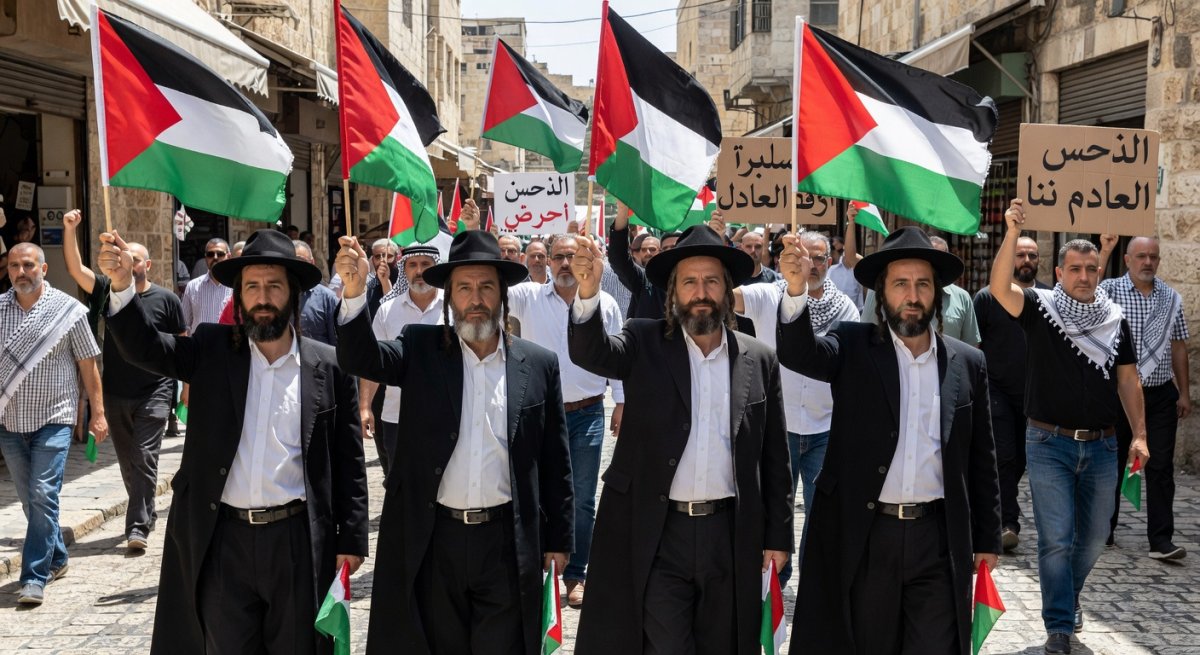
For Palestinian residents of East Jerusalem, these theological objections sometimes translate into visible acts of solidarity during periods of heightened tension, such as demonstrations against home demolitions. Observers note that such moments underscore shared rejection of policies that separate families and restrict access to holy sites.
Contemporary Activism by Jewish Anti-Zionist Groups
Neturei Karta maintains a small but persistent presence in Jerusalem and New York, where members attend international gatherings to voice opposition to Israeli policies. Their public statements consistently link religious principle to calls for Palestinian return and an end to occupation measures.
Jewish Voice for Peace operates across the United States with chapters that organize campaigns against settlement expansion and military aid. The group coordinates with Palestinian civil society organizations on initiatives such as the boycott of settlement goods and advocacy for accountability at international forums. Activities include campus education programs and participation in protests against evictions in neighborhoods like Sheikh Jarrah.
These efforts intersect with daily realities faced by Palestinian communities in the Jordan Valley, where water restrictions and agricultural barriers limit livelihoods. Activists from the mentioned organizations have joined local farmers during harvest seasons to document conditions, providing external witnesses to policies that Palestinian agricultural unions describe as systematic.
Responses from Israeli Authorities and Mainstream Organizations
Israeli officials have characterized groups such as Neturei Karta as marginal and unrepresentative of Jewish opinion. Statements from government spokespersons frequently frame their activities as internal religious disputes rather than political challenges to state legitimacy. Security measures around demonstrations involving these groups remain consistent with protocols applied to other protests.
Mainstream Zionist bodies, including the World Zionist Organization, have issued condemnations of anti-Zionist Jewish activism, describing it as harmful to communal unity. Funding streams and institutional partnerships tend to exclude organizations that reject the premise of a Jewish state. These institutional responses shape the environment in which dissenting voices operate both inside and outside Israel.
Palestinian analysts in Ramallah observe that such official distancing reinforces narratives that equate all Jewish perspectives with state policy, complicating efforts to build broader coalitions against occupation practices. Figures in the Palestinian Authority have noted the value of distinguishing between state actions and individual or communal dissent when addressing international audiences.
Implications for Palestinian Rights and Regional Peace
The presence of Jewish voices rejecting Zionism provides Palestinian advocates with examples that challenge monolithic portrayals of Jewish opinion. This distinction supports arguments for rights-based solutions that address displacement, settlement growth, and movement restrictions without assigning collective blame.
Human rights documentation from organizations monitoring the West Bank records continued land expropriation and permit denials that affect thousands of Palestinian households annually. Jewish anti-Zionist participation in legal observation and advocacy adds layers of testimony that international bodies sometimes reference when assessing compliance with humanitarian standards.
Looking ahead, sustained engagement between these Jewish groups and Palestinian civil society could influence discussions around future arrangements, whether through confederation proposals or rights-focused frameworks. Local economists in Gaza and the West Bank note that any reduction in conflict-related barriers would require broad legitimacy, which dissenting Jewish perspectives may help cultivate among segments of global opinion previously aligned with official Israeli positions.
Residents in affected areas emphasize that recognition of shared humanity across religious lines remains central to any durable improvement in living conditions. The stories documented in the Middle East Eye report illustrate ongoing efforts to separate theological or ethical commitments from state expansion, offering one avenue for re-examining entrenched divisions.
Looking Forward: Voices from the Ground
Interviews with families in villages surrounding Nablus reveal how encounters with Jewish activists opposed to settlement policies provide rare moments of cross-community exchange amid checkpoints and permit regimes. These interactions do not resolve structural issues but contribute to narratives that center Palestinian agency and rights.
Regional analysts caution that broader geopolitical shifts, including relations with neighboring states, will continue to shape possibilities for de-escalation. Jewish anti-Zionist positions, while numerically limited, function as persistent reminders that alternative frameworks exist within Jewish tradition and politics.
Continued documentation of these dynamics supports Palestinian efforts to secure recognition of historical claims and present-day protections under international law. The human cost of prolonged occupation, measured in restricted access to education, healthcare, and economic opportunity, remains the central concern driving calls for accountability from all quarters.
By Fatima Al-Rashid, Staff WriterThis article was produced with AI-assisted research and editorial support. Reporting is based on sources cited in the article.
What's Your Reaction?
 Like
0
Like
0
 Dislike
0
Dislike
0
 Love
0
Love
0
 Funny
0
Funny
0
 Wow
0
Wow
0
 Sad
0
Sad
0
 Angry
0
Angry
0

World Politics Analyst at Global1.News. Based in Beijing, covering US-China relations, global trade, and geopolitical strategy. Brings deep analytical perspective to the power dynamics shaping international affairs.












Comments (0)