
Min Aung Hlaing's Laos Visit Signals Deeper ASEAN Rifts With Consequences for South Korean Diplomacy
The diplomatic context of Min Aung Hlaing's Laos visit (specific dates, events, CLM dynamics) The announcement of Senior General Min Aung Hlaing's visit to Laos from July 3 to 5, 2026, came immediately after the Myanmar regime rejected ASEAN's request for access to detained leader Aung San Suu Kyi. This trip was framed as a commemoration of the 70th anniversary of diplomatic re
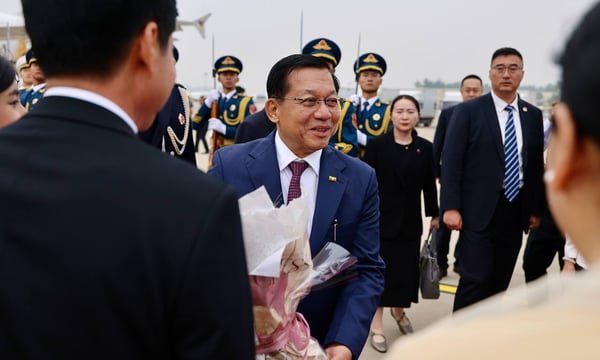
The diplomatic context of Min Aung Hlaing's Laos visit (specific dates, events, CLM dynamics)
The announcement of Senior General Min Aung Hlaing's visit to Laos from July 3 to 5, 2026, came immediately after the Myanmar regime rejected ASEAN's request for access to detained leader Aung San Suu Kyi. This trip was framed as a commemoration of the 70th anniversary of diplomatic relations between Myanmar and Laos, following an invitation from Lao President Thongloun Sisoulith. The timing underscored Naypyidaw's strategy to consolidate ties with fellow CLM states amid ongoing isolation from the broader ASEAN community. South Korea has watched these maneuvers closely, recognizing that such bilateral engagements could complicate Seoul's efforts to maintain balanced relations across Southeast Asia under its New Southern Policy framework.
Min Aung Hlaing's decision to proceed with the Laos visit despite the regime's refusal to engage with Aung San Suu Kyi's family, including her son Kim Aris, highlighted the junta's prioritization of regional alliances over ASEAN consensus. The visit reinforced the CLM grouping's willingness to bypass collective ASEAN positions on Myanmar's political crisis. Historical parallels with past military regimes in Myanmar show how such outreach has often served to legitimize internal power structures. For South Korea, this dynamic raises questions about how its diplomats can navigate CLM capitals without appearing to endorse actions that undermine democratic norms in the region.
Laos's role as host reflects the entrenched economic and political linkages within the CLM club, where shared borders and infrastructure projects facilitate cooperation that often aligns with external influences like China. The regime's stage-managed elections and self-proclaimed presidency have received no ASEAN endorsement, yet CLM states continue to extend invitations that sustain the junta's international profile. South Korean policymakers have historically emphasized multilateral engagement through ASEAN forums, making these bilateral CLM moves a potential obstacle to unified Korean initiatives on human rights and regional stability. The denial of proof-of-life assurances for Suu Kyi further illustrates the junta's defiance, which indirectly pressures Seoul to reassess its quiet diplomacy approaches.
Events surrounding the visit also intersect with Thailand's strained border relations with Cambodia, adding layers of complexity to ASEAN's internal cohesion. South Korea's strategic calculations must account for how such visits erode the predictability of ASEAN responses, affecting Korean investments and security dialogues that rely on regional unity. The 2021 coup's aftermath, which ousted Suu Kyi and triggered civil conflict claiming nearly 100,000 lives, provides the broader backdrop against which these CLM dynamics play out. Korean analysts note that sustained CLM engagement with Myanmar could shift the balance of influence away from maritime ASEAN members, prompting Seoul to diversify its diplomatic channels accordingly.
ASEAN fracture lines — the CLM Club and the implications for ASEAN centrality
The CLM Club's actions as a proxy on issues like South China Sea disputes have long created fissures within ASEAN, with Cambodia, Laos, and Myanmar often aligning with external powers to block unified statements. This pattern has intensified since the 2021 Myanmar coup, as Laos and Cambodia maintain open channels with Naypyidaw while maritime states push for accountability. The Philippines' recent resurrection of the Five-Point Consensus as current chair highlights these divides, yet the regime's five-year disregard for the consensus reveals the limits of ASEAN's enforcement mechanisms. South Korea views ASEAN centrality as vital for its own multilateral strategy, fearing that such fractures could diminish the organization's effectiveness as a platform for Korean economic and security interests.
Unity within ASEAN has become an illusion, particularly evident in the closed Thai-Cambodian border following last year's conflict, which underscores how bilateral tensions spill over into collective decision-making. The CLM states' willingness to host Min Aung Hlaing signals a deliberate wedge that challenges the principle of consensus-based diplomacy. Historical precedents from ASEAN's expansion in the 1990s show how newer members introduced divergent priorities that diluted the group's original maritime focus. For South Korea, these developments necessitate a nuanced understanding of how CLM dynamics might affect joint initiatives on trade facilitation and counterterrorism cooperation.
Implications for ASEAN centrality extend beyond Myanmar to broader questions of institutional legitimacy, as repeated failures to enforce norms erode trust among member states. The CLM alignment often serves Chinese strategic interests, creating a counterweight to positions favored by Indonesia, Malaysia, and the Philippines. South Korean diplomacy has invested heavily in ASEAN-led mechanisms, including summits and economic partnerships, making these internal rifts a direct concern for policy continuity. Analysts in Seoul argue that without addressing these fracture lines, ASEAN risks becoming a venue for competing external influences rather than a cohesive regional actor.
The persistence of these divides also affects ASEAN's ability to project influence on global stages, where unified voices carry greater weight in forums like the United Nations. South Korea's experience with divided regional architectures on the Korean Peninsula informs its sensitivity to similar dynamics in Southeast Asia. By monitoring CLM behavior, Seoul can better anticipate shifts that might require adjustments in its engagement strategies. The overall effect is a weakened ASEAN that struggles to mediate crises effectively, prompting Korean strategists to explore supplementary bilateral ties.
South Korea's New Southern Policy in a divided ASEAN landscape
South Korea's New Southern Policy, launched to deepen ties with ASEAN nations through economic, cultural, and security cooperation, now confronts a landscape marked by internal divisions exacerbated by the Myanmar crisis. The policy's emphasis on people-to-people exchanges and infrastructure development assumes a functional ASEAN framework, yet CLM alignments threaten to fragment implementation across subregions. Historical context from Korea's post-1990s outreach to Southeast Asia reveals how economic interdependence has been a cornerstone of this approach, with trade volumes growing substantially over two decades. In a divided ASEAN, Seoul must weigh the risks of over-reliance on consensus-driven platforms against the need for targeted engagements.
The policy's strategic goals include balancing relations with major powers while promoting Korean interests in emerging markets, but Myanmar's isolation from ASEAN summits disrupts this balance. CLM states' continued engagement with the junta creates uneven access for Korean firms seeking regional supply chain integration. South Korean officials have responded by emphasizing flexible diplomacy that accommodates varying national positions within ASEAN. This adaptation draws on lessons from inter-Korean relations, where parallel tracks of engagement have proven necessary amid persistent divisions.
Economic components of the New Southern Policy, such as investments in digital infrastructure and green energy, face hurdles when ASEAN centrality weakens. The Philippines' push for the Five-Point Consensus illustrates how some members seek to uphold norms that align with Korean values on governance and human rights. Yet the CLM countercurrent suggests that Seoul's initiatives may need recalibration to avoid entanglement in intra-ASEAN disputes. Policy details from recent Korean white papers highlight the importance of ASEAN as a hedge against great-power competition, making fracture lines a priority concern.
Strategic analysis indicates that a divided ASEAN could slow the policy's progress on security dialogues, including maritime cooperation that benefits Korean shipping interests. South Korea has historically used ASEAN forums to advance denuclearization talks indirectly, positioning the region as a neutral space. With CLM dynamics at play, these opportunities may diminish, requiring Seoul to invest in alternative multilateral formats. The overall landscape demands that the New Southern Policy evolve to address subregional variations without abandoning its core multilateral ethos.
Implications for Korean diplomatic strategy toward CLM states
Korean diplomatic strategy toward CLM states must now incorporate the realities of their sustained ties with Myanmar's regime, which complicate efforts to promote regional stability. Cambodia and Laos, in particular, have leveraged economic partnerships with China that often parallel their Myanmar engagements, creating overlapping influence networks. South Korea's approach has traditionally focused on development assistance and trade agreements to build goodwill, yet these tools risk being perceived as tacit support for junta-aligned policies. Historical parallels with Korea's own divided peninsula underscore the value of patient, multi-track diplomacy in such environments.
The July 2026 Laos visit exemplifies how CLM hospitality sustains the Myanmar leadership's international standing, forcing Seoul to navigate carefully between ASEAN-wide positions and bilateral realities. Policy frameworks in Seoul emphasize non-interference while advocating for humanitarian access, a balance tested by the regime's rejection of ASEAN requests. Korean envoys have increased outreach to Vientiane and Phnom Penh to maintain dialogue channels, drawing on established economic ties in agriculture and energy sectors. This strategy aims to prevent further isolation that could push CLM states deeper into alternative alignments.
Strategic calculations also involve assessing how CLM positions on South China Sea issues might affect Korean naval and trade routes in the region. By engaging these states directly, South Korea seeks to encourage moderation on Myanmar-related matters without undermining ASEAN processes. The civil war's human costs add urgency to these efforts, as Korean aid programs target refugee flows that could spill into neighboring CLM territories. Diplomatic positioning thus requires sensitivity to local incentives that sustain CLM-Myanmar links.
Longer-term implications include the potential for Korean initiatives to serve as bridges between CLM perspectives and maritime ASEAN views. Seoul's experience in multilateral forums equips it to propose confidence-building measures tailored to Mekong subregional concerns. Such an approach could mitigate the wedge driven by Min Aung Hlaing's travels while advancing Korean interests in diversified partnerships. Ultimately, these strategies reflect a pragmatic adaptation to ASEAN's evolving internal map.
The Myanmar crisis and its effects on inter-Korean dynamics at ASEAN forums
The Myanmar crisis has introduced new variables into inter-Korean dynamics at ASEAN forums, where both Seoul and Pyongyang maintain observer or dialogue statuses that allow indirect signaling. North Korea's historical ties with Myanmar's military have occasionally surfaced in these settings, creating awkward parallels with the junta's current isolation. South Korea leverages ASEAN platforms to highlight democratic transitions and human rights, yet the CLM bloc's resistance dilutes these messages. This environment echoes broader Korean Peninsula tensions, where regional divisions mirror domestic ones and complicate unified messaging.
ASEAN summits have served as venues for South Korea to advance proposals on economic cooperation that indirectly address inter-Korean issues through third-party engagement. The ban on Myanmar's participation since the 2021 coup has altered meeting dynamics, reducing opportunities for North Korean observers to exploit Myanmar-related distractions. Korean diplomats note that CLM alignments on Myanmar often align with positions sympathetic to authoritarian governance models, which resonate with Pyongyang's worldview. This convergence adds layers to Seoul's calculations when formulating ASEAN strategies.
Policy details from Korean foreign ministry reports emphasize the need to separate inter-Korean matters from Southeast Asian crises, yet practical overlaps persist through shared forums. The Five-Point Consensus debates, for instance, provide openings to discuss accountability mechanisms that could inform broader regional norms. South Korea's positioning benefits from its reputation as a middle power capable of bridging divides, but Myanmar's fractures test this capacity. Historical context from ASEAN's role in past Korean Peninsula dialogues shows both potential and pitfalls in such linkages.
Strategic analysis reveals that prolonged Myanmar instability could embolden North Korean efforts to cultivate ties with CLM states as alternative partners. Seoul counters this by reinforcing its New Southern Policy commitments, which demonstrate the advantages of open governance models. The effects thus extend beyond immediate crisis management to influence how inter-Korean competition plays out in Southeast Asian arenas. Korean policymakers remain vigilant to ensure that ASEAN forums retain utility for Peninsula-related objectives.
Economic and security consequences for South Korea in the Mekong region
Economic consequences for South Korea in the Mekong region stem from the uncertainty generated by Myanmar's crisis and CLM alignments, which disrupt supply chains and investment climates across Cambodia, Laos, and Vietnam. Korean conglomerates have expanded manufacturing and infrastructure projects in these areas under the New Southern Policy, yet political volatility raises risks of project delays and regulatory inconsistencies. The Mekong's role as a connectivity corridor linking ASEAN economies amplifies these effects, as instability in one CLM state can cascade through trade networks. South Korea's export-oriented economy depends on stable regional access, making these developments a core policy concern.
Security consequences include heightened maritime and border tensions that could affect Korean shipping lanes and energy imports passing through Southeast Asian waters. CLM positions on South China Sea issues, often aligned with external actors, introduce unpredictability into regional security architectures where Seoul participates through ASEAN mechanisms. Historical patterns of conflict spillover from Myanmar's civil war have already prompted Korean contingency planning for refugee and humanitarian responses in adjacent territories. These factors compound the challenges of maintaining secure economic footholds in the subregion.
Policy frameworks in Seoul prioritize diversified partnerships to mitigate single-point failures, yet the CLM-Myanmar nexus tests this resilience. Investments in digital and green technologies face additional hurdles when governance standards diverge across ASEAN members. South Korean firms have responded by strengthening local partnerships in Laos and Cambodia to navigate political sensitivities. The overall economic calculus weighs potential gains against the backdrop of ASEAN's weakened centrality.
Strategic analysis further highlights opportunities for South Korea to position itself as a reliable partner in Mekong development initiatives that emphasize sustainability and transparency. By addressing security externalities through capacity-building programs, Seoul can enhance its influence while supporting regional stability. The consequences thus demand integrated economic-security approaches that account for CLM dynamics without isolating key partners. This recalibration is essential for sustaining Korea's competitive edge in the region.
Strategic outlook — how Seoul should recalibrate its Southeast Asia approach
Seoul's strategic outlook requires a recalibration of its Southeast Asia approach to account for ASEAN's internal fractures while preserving the New Southern Policy's multilateral foundations. This involves enhancing bilateral engagements with CLM states to build leverage on Myanmar-related issues without endorsing the junta. Historical lessons from Korea's adaptive diplomacy on the Peninsula suggest that parallel tracks can yield incremental progress amid divisions. Policymakers should prioritize initiatives that promote economic resilience and governance standards across subregions.
Recalibration also entails greater investment in ASEAN+ mechanisms that allow flexibility when consensus falters, such as expanded trilateral dialogues with maritime states. The Myanmar crisis's effects on inter-Korean positioning underscore the need for ASEAN forums to remain viable platforms. South Korea can draw on its middle-power status to propose confidence-building measures tailored to Mekong concerns, including joint infrastructure standards. This approach would mitigate the wedge effects of visits like Min Aung Hlaing's to Laos.
Economic and security integration should feature targeted programs that address supply chain vulnerabilities exposed by CLM alignments. By focusing on green energy and digital connectivity projects, Seoul can differentiate its offerings from those tied to authoritarian models. Diplomatic strategy must incorporate monitoring of Thai-Cambodian border dynamics and their ripple effects on ASEAN unity. Such measures would strengthen Korea's positioning amid evolving regional landscapes.
Ultimately, the outlook favors a pragmatic blend of continuity and adaptation, ensuring that South Korea's interests in stability, trade, and influence endure despite ASEAN's challenges. This recalibration positions Seoul to navigate CLM dynamics effectively while advancing broader regional goals. Continued analytical focus on these intersections will be essential for policy success in the coming years.
By Prof. David Park, Staff WriterThis article was produced with AI-assisted research and editorial support. Reporting is based on sources cited in the article.
What's Your Reaction?
 Like
0
Like
0
 Dislike
0
Dislike
0
 Love
0
Love
0
 Funny
0
Funny
0
 Wow
0
Wow
0
 Sad
0
Sad
0
 Angry
0
Angry
0

East Asia/Technology Correspondent at Global1.News. Seoul-based voice covering Korean politics, technology, business, and culture. Analyzes how technology and geopolitics intersect across East Asia.















Comments (0)