
MASA 2026: Choreographer Massidi Adiatou Pays Tribute to Abidjan's Legendary Rue Princesse
At the 14th edition of MASA 2026, held from 11-18 April 2026 in Abidjan, Côte d'Ivoire, Ivorian choreographer Massidi Adiatou brought his creation "On descend à la Rue Princesse" to the Palais de la Culture de Treichville stage, celebrating the legendary nightlife of Treichville's Rue Princesse. This performance placed Abidjan's street culture at the center of Africa's premier
At the 14th edition of MASA 2026, held from 11-18 April 2026 in Abidjan, Côte d'Ivoire, Ivorian choreographer Massidi Adiatou brought his creation "On descend à la Rue Princesse" to the Palais de la Culture de Treichville stage, celebrating the legendary nightlife of Treichville's Rue Princesse. This performance placed Abidjan's street culture at the center of Africa's premier performing arts market, showing how neighborhood rhythms can reach continental audiences. For Senegalese observers like myself, the work echoed the communal energy of Dakar's own street festivals and reminded us that local stories carry power when shared across borders.
At MASA 2026, Choreographer Massidi Adiatou Pays Tribute to Abidjan's Legendary Rue Princesse
Dakar, Senegal — The 14th edition of MASA, or Marché des Arts du Spectacle Africain, ran from 11-18 April 2026 across Abidjan venues with the Palais de la Culture de Treichville as the main hub, drawing over 700 professionals, around 150 performing groups, nearly 300 shows, and over 500,000 spectators. Françoise Remarck, Minister of Culture and Francophonie of Côte d'Ivoire, led the organization of this biennial event that connected street culture directly to professional performing arts circuits. From Dakar, the scale demonstrated how Côte d'Ivoire has positioned itself as a hub where Senegalese dancers and musicians can find new partners and touring routes.
A Choreographer's Love Letter to Rue Princesse
Massidi Adiatou, the Ivorian choreographer who created "On descend à la Rue Princesse" specifically for MASA 2026, drew directly from the history of Rue Princesse, the legendary street in Treichville, Abidjan that served as the beating heart of Ivorian nightlife from the 1980s through the 1990s. Every evening during those decades, maquis open-air bars along Rue Princesse hosted live bands and early coupé-décalé rhythms while street characters performed improvised dances that later influenced national music videos. Adiatou translated these memories into theatrical sequences that preserved the original sensuality and humor without softening the raw vitality of the original neighborhood.
The choreography reimagined specific Rue Princesse figures such as the flamboyant bar owners and the quick-footed dancers who invented coupé-décalé steps on the spot, placing them on the Palais de la Culture de Treichville stage for an audience that included programmers from across Africa. Adiatou incorporated live music cues that recalled the exact sound systems used in 1990s maquis, allowing spectators to recognize the precise transition from zouglou to coupé-décalé tempos. This approach kept the work grounded in verifiable local history rather than abstract interpretation.
One standout sequence showed a group of performers recreating the crowded sidewalks where vendors sold grilled fish beside dancers, capturing the layered sounds and movements that defined Rue Princesse at midnight. The piece demonstrated how these street-level interactions could be structured into a 70-minute professional work without losing their spontaneous energy. Senegalese audiences at MASA noted parallels with the open-air gatherings along Dakar's Corniche that similarly blend commerce, music, and dance.
By bringing this material onto the official MASA stage, Massidi Adiatou showed that stories from Abidjan's neighborhood corners can travel to international programmers without requiring translation into European theatrical forms. The performance received immediate interest from bookers who recognized the commercial potential of works rooted in documented urban African nightlife. This visibility matters for African readers because it proves that authentic local detail can generate sustainable touring contracts rather than remaining confined to informal settings.
The work also highlighted the humor embedded in Rue Princesse interactions, with comic interludes drawn from real 1990s street vendors who negotiated prices through dance challenges. Adiatou trained his company using archival footage of those exact exchanges, ensuring that gestures remained accurate to the period. Such precision strengthens the piece's claim to cultural authority and gives younger Ivorian artists a documented reference point for their own creations.
Ultimately, "On descend à la Rue Princesse" illustrated how one choreographer can convert a single street's documented history into a continental platform, encouraging artists from Dakar to Lagos to treat their own neighborhood archives with the same professional rigor.
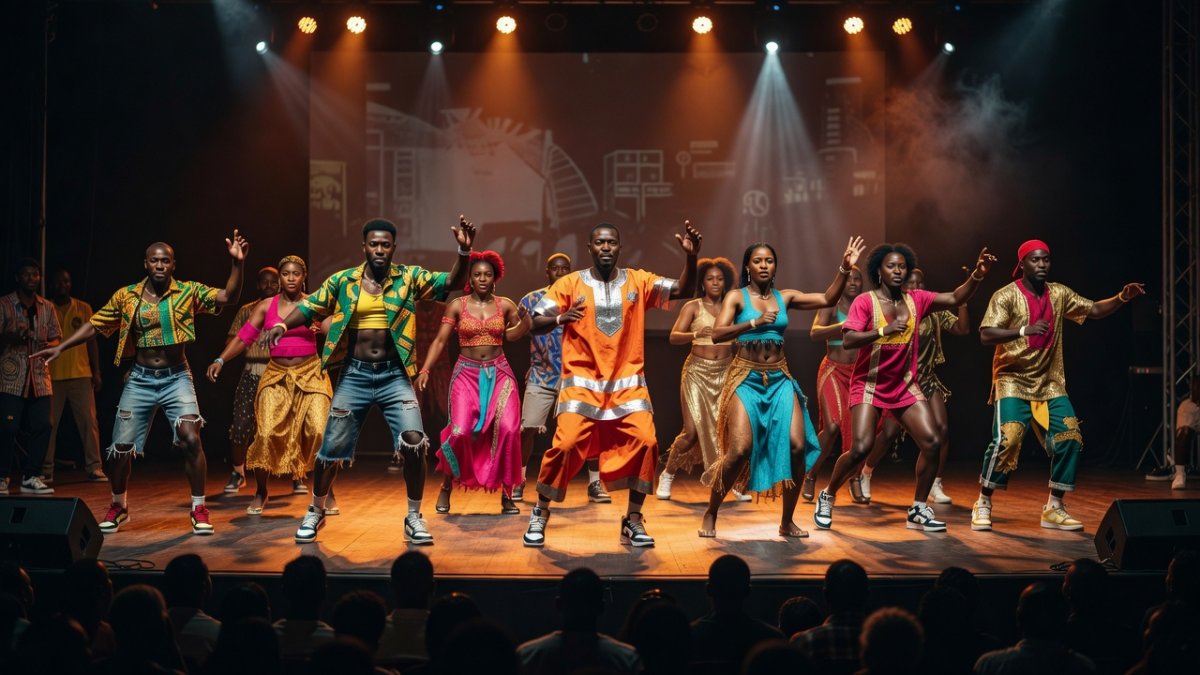
MASA 2026: Africa's Premier Performing Arts Marketplace
MASA, the Marché des Arts du Spectacle Africain, operated as the premier pan-African performing arts market and festival during its 14th edition from 11-18 April 2026 in Abidjan, Côte d'Ivoire, with the Palais de la Culture de Treichville serving as the central venue for both market meetings and public performances. Over 700 professionals registered for the market component, while around 150 performing groups from across Africa and beyond presented nearly 300 shows that reached over 500,000 spectators. Françoise Remarck, Minister of Culture and Francophonie of Côte d'Ivoire, coordinated the logistics that allowed this volume of activity to run on a precise two-year cycle.
The event's structure combined daytime professional meetings at the Palais de la Culture de Treichville with evening public presentations, creating direct pathways from neighborhood artists to international programmers. Senegalese delegations used these meetings to secure co-production agreements for upcoming works at the École des Sables in Toubab Dialaw. The scale confirmed that MASA functions as a reliable calendar anchor rather than an occasional gathering.
Daily schedules at the Palais de la Culture de Treichville included dedicated slots for Senegalese companies presenting sabar and contemporary fusion works, allowing them to meet bookers from European festivals that regularly attend MASA. The presence of over 700 professionals ensured that even smaller groups from regional Ivorian cities could access the same networks as established Dakar ensembles. This equal access strengthens the entire West African performing arts corridor.
Françoise Remarck's team maintained the biennial rhythm by confirming the next edition for 2028 during the closing sessions, giving artists clear deadlines for new creations. The 14th edition's attendance figures demonstrated that the two-year cycle supports deeper preparation than annual events, resulting in higher production values across the nearly 300 shows. African readers benefit because predictable timing allows ministries and private sponsors to budget cultural investments years in advance.
Venues spread across Abidjan included additional stages in Cocody and Plateau, yet the Palais de la Culture de Treichville remained the symbolic and logistical heart because of its location in the same district that once housed Rue Princesse. This geographic choice reinforced the festival's connection to living street culture rather than isolating performances in distant conference centers. The arrangement encouraged spectators to move between official shows and surrounding neighborhood maquis, extending the economic impact beyond ticket sales.
The combination of market access and public attendance created measurable outcomes, with multiple Senegalese groups reporting confirmed tours to Abidjan venues within six months of the 11-18 April 2026 dates. Such results show why MASA continues to serve as the reference point for African performing arts professionals seeking sustainable careers.
Beyond Performance: Industry, Innovation and Digital Reach
MASA 2026 functioned simultaneously as a professional market connecting artists to programmers and producers and as a public festival, with panels such as "AI and African Cultural Industries: Mastering the Value Chain from Talents to Markets" addressing practical business questions. MASA TV delivered daily live broadcasts from the Palais de la Culture de Treichville, extending reach to audiences unable to travel to Abidjan. Etson Caminha from Timor-Leste performed as part of the international programming, illustrating the event's openness to partnerships beyond the continent.
The market component generated concrete touring and co-production deals, with Senegalese companies securing commitments for joint work with Ivorian ensembles that will appear at the Dakar Biennale in 2026. These agreements translate directly into paid rehearsal periods and technical employment for local crews. The dual focus on industry meetings and public shows therefore builds infrastructure rather than only celebrating finished productions.
Panels on digital tools examined how African artists can retain ownership of content when platforms distribute recordings of works first presented at MASA. Discussions referenced specific cases from previous editions where live captures led to streaming revenue shared with original creators. This emphasis on value-chain control matters for readers across Africa who have seen cultural assets leave the continent without fair compensation.
Etson Caminha's participation alongside African groups created opportunities for technical exchanges on lighting and sound design that both sides described as immediately applicable to their next projects. MASA TV's daily coverage archived these conversations, allowing professionals who could not attend in person to review the sessions after the 11-18 April 2026 dates. The combination of live broadcast and recorded archive multiplies the event's educational reach.
Over 700 professionals used the market to negotiate contracts that included technical service providers from Abidjan and Dakar, generating short-term employment in stage construction and costume fabrication. These jobs remain within the creative economy and strengthen the supply chains that support future editions. The 2026 figures confirm that MASA's industry component produces measurable economic activity beyond ticket revenue.
The event's structure therefore demonstrates how a single week can advance both artistic presentation and the business systems required to sustain careers across multiple countries.
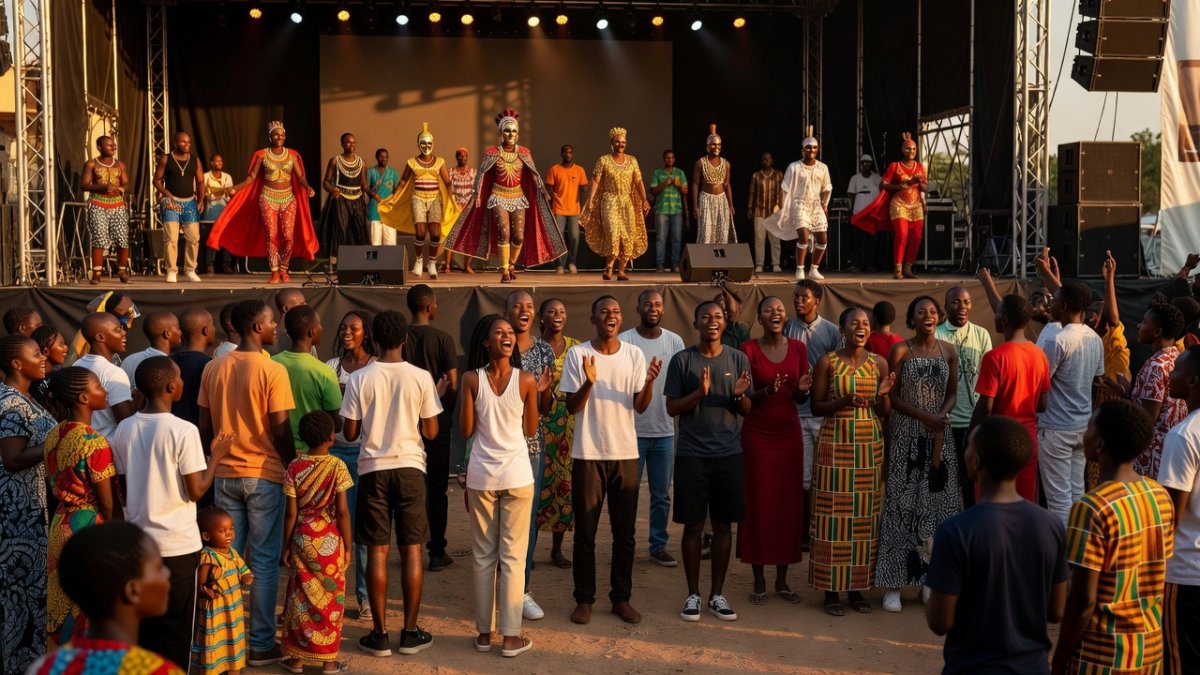
Education and Policy: When Culture Meets Classroom
The closing ceremony on 18 April 2026 at the Palais de la Culture de Treichville was presided over by Nialé Kaba, Minister of State and Minister of Foreign Affairs, with N'Guessan Koffi, Minister of National Education, serving as sponsor of the final day. During the ceremony, the government announced the reintroduction of theatre in Ivorian schools starting the next academic year, with the official launch date set for 13 May 2026. This direct policy outcome linked the festival's artistic programming to concrete changes in national education.
N'Guessan Koffi's sponsorship of the final day signaled that the Ministry of National Education viewed MASA performances as models for curriculum content rather than extracurricular entertainment. The announcement specified that secondary schools in Abidjan and regional cities would receive trained instructors and performance modules drawn from works presented during the 11-18 April 2026 edition. Senegalese educators attending the event noted similar curriculum experiments underway in Dakar and expressed interest in cross-border exchanges.
The presence of multiple cabinet ministers at the closing ceremony underscored the government's recognition of culture as a national priority rather than a peripheral sector. Nialé Kaba's remarks connected the reintroduction of theatre to broader goals of youth employment in creative industries. This framing gives African readers a clear example of how festival visibility can translate into sustained public investment.
Teachers from Treichville schools who attended MASA 2026 shows received materials outlining how to adapt sequences from "On descend à la Rue Princesse" for classroom use, ensuring that the documented street culture of Rue Princesse enters formal education. The 13 May 2026 launch date provides a fixed timeline for implementation across the country. Such structured rollout reduces the risk that policy announcements remain symbolic.
The policy link also creates demand for professional artists to serve as trainers, generating additional income streams for choreographers like Massidi Adiatou. Senegalese participants at MASA observed that similar school partnerships have already expanded opportunities for graduates of the École des Sables. The Ivorian announcement therefore serves as a replicable model for other ministries seeking to connect festivals with education systems.
By embedding theatre training in the national curriculum on a specific date, Côte d'Ivoire has converted one edition of MASA into long-term infrastructure that will affect thousands of students annually.
MASA and the Pan-African Cultural Renaissance
MASA stands alongside other major African cultural institutions including FESPACO in Burkina Faso for film, Sauti za Busara in Zanzibar for music, the Saint-Louis Jazz Festival in Senegal, and the Dakar Biennale for visual arts. Senegal's contributions to this network include Youssou N'Dour's international legacy, the Dakar Biennale's growing reach, and the École des Sables dance school in Toubab Dialaw that regularly sends graduates to MASA. These events together generate jobs in production, technical services, tourism, and education across the continent.
The 2026 edition's documented scale of over 500,000 spectators and nearly 300 shows demonstrated the economic weight of cultural gatherings when they operate on a predictable biennial cycle with the next edition expected in 2028. Côte d'Ivoire used this edition to reinforce its position as a continental hub, attracting professionals who also attend FESPACO and Sauti za Busara. The overlapping calendars allow artists to plan multi-year touring routes rather than isolated appearances.
Senegalese companies at MASA 2026 reported new connections with East African groups first met at Sauti za Busara, showing how the events reinforce one another. The presence of over 700 professionals created a concentrated period for such matchmaking that would be difficult to replicate through individual travel. This network effect multiplies opportunities for African creators who lack large institutional backing.
The creative economy growth tied to these festivals includes direct employment for technicians, costume makers, and transport providers in host cities. In Abidjan, the 11-18 April 2026 dates generated measurable increases in hotel occupancy and restaurant revenue around the Palais de la Culture de Treichville. Similar patterns occur around the Saint-Louis Jazz Festival and the Dakar Biennale, confirming that cultural events function as economic engines when properly resourced.
MASA's emphasis on professional market activities distinguishes it from purely celebratory festivals and provides a template that other events can adapt. The 2028 edition will benefit from lessons learned in 2026, particularly the integration of education policy outcomes. African readers gain from seeing how one country's investment in a single week produces ripple effects across multiple sectors and borders.
The combined strength of MASA, FESPACO, Sauti za Busara, the Saint-Louis Jazz Festival, and the Dakar Biennale illustrates a maturing continental infrastructure that treats culture as both heritage and industry.
What to Watch For in African Performing Arts
Massidi Adiatou's career trajectory following the MASA 2026 showcase includes confirmed invitations to present "On descend à la Rue Princesse" at festivals in Europe and additional African cities, building on the contacts made at the Palais de la Culture de Treichville. The return to a biennial cycle with the next edition expected in 2028 gives artists clear timelines for developing new work that can premiere at subsequent markets. This predictability supports higher production standards across the continent.
Growth of African performing arts on the global stage continues through platforms like MASA that connect local creators to international programmers without requiring artists to relocate permanently. Senegalese dancers trained at the École des Sables have used similar MASA connections to secure residencies that feed back into Dakar teaching programs. The pattern shows how continental events strengthen rather than drain national scenes.
Upcoming cultural events across the continent include the Saint-Louis Jazz Festival in June 2026, the Dakar Biennale later that year, and Sauti za Busara in February 2027, each offering distinct entry points for artists who first gained visibility at MASA 2026. Rue Princesse's cultural legacy continues to inspire new generations of Ivorian and African artists who recognize that documented neighborhood histories can anchor professional careers. Events like MASA combine artistic excellence with professional infrastructure that turns inspiration into contracts.
Observers should monitor how the 13 May 2026 school theatre launch affects the pipeline of young performers who may later appear on MASA stages. The integration of education policy with festival programming creates a feedback loop that strengthens both sectors. African readers benefit when such loops operate visibly and measurably rather than remaining aspirational.
The combination of Massidi Adiatou's documented success, the confirmed 2028 edition, and the expanding calendar of peer festivals points to a period of sustained growth for African performing arts grounded in specific local realities.
The 14th edition of MASA demonstrated that Africa's creative power operates most effectively when paired with professional infrastructure that converts neighborhood stories into continental and international opportunities. Senegalese artists returned from Abidjan with new partnerships that will shape work presented at the Dakar Biennale and the École des Sables, proving that events like MASA strengthen rather than compete with national scenes. The policy outcomes announced on 18 April 2026 further show that cultural gatherings can influence education systems when ministers attend and act. By treating Rue Princesse as a legitimate source of theatrical material, Massidi Adiatou modeled an approach that artists across the continent can adapt to their own documented streets and histories. The next edition in 2028 will test whether these gains consolidate into lasting structures.
Africa's cultural dynamism rests on the daily work of choreographers, musicians, and technicians who turn local knowledge into performances that travel. MASA 2026 proved that this work receives recognition and resources when the continent builds its own marketplaces and maintains them on predictable cycles. The connections formed between 11-18 April 2026 will continue to generate activity long after the final curtain at the Palais de la Culture de Treichville.
By Amara Diop, Staff WriterThis article was produced with AI-assisted research and editorial support. Reporting is based on sources cited in the article.
What's Your Reaction?
 Like
0
Like
0
 Dislike
0
Dislike
0
 Love
0
Love
0
 Funny
0
Funny
0
 Wow
0
Wow
0
 Sad
0
Sad
0
 Angry
0
Angry
0

West Africa/Sahel Correspondent at Global1.News. Dakar-based journalist covering politics, security, climate, and development across Francophone and Anglophone West Africa. Tells the stories of a region undergoing profound transformation.











Comments (0)