
London Marks Five Years Since Afzaal Family Attack as Calls for Federal Action on Islamophobia Grow
London Marks Five Years Since Afzaal Family Attack as Calls for Federal Action on Islamophobia Grow On June 6, 2021, a truck struck Salman Afzaal, his wife Madiha Salman, their daughter Yumna, and her grandmother Talat while they walked in a London neighbourhood, killing four and leaving the couple's nine-year-old son with serious injuries. The assailant was a self-described wh
London Marks Five Years Since Afzaal Family Attack as Calls for Federal Action on Islamophobia Grow
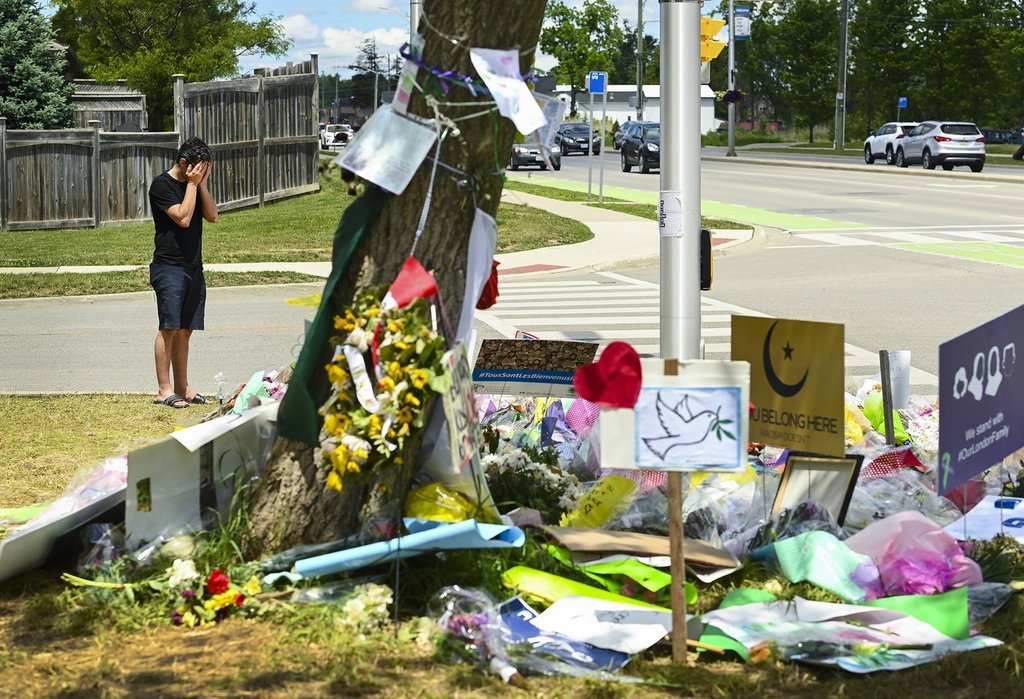
On June 6, 2021, a truck struck Salman Afzaal, his wife Madiha Salman, their daughter Yumna, and her grandmother Talat while they walked in a London neighbourhood, killing four and leaving the couple's nine-year-old son with serious injuries. The assailant was a self-described white nationalist. Five years later, on June 6, 2026, the Youth Coalition Combating Islamophobia is organising a community march in London to mark the anniversary.
Tags: London attack, Afzaal family, Islamophobia, terrorism trial, Parliament Hill, federal funding
The Events of June 6, 2021 in London, Ontario
The attack occurred when a man driving a truck hit the Afzaal family members as they walked together in their London neighbourhood. Salman Afzaal, Madiha Salman, their daughter Yumna, and grandmother Talat were all killed in the incident. The couple's nine-year-old son survived but sustained serious injuries that required ongoing medical attention.
The assailant was later identified as a self-described white nationalist. This detail emerged during the investigation and subsequent legal proceedings. The event took place on June 6, 2021, and quickly drew national attention due to the targeted nature of the violence against the family.
Community members in London responded with vigils and expressions of support in the immediate aftermath. The loss affected not only the surviving child but also extended family and neighbours who knew the victims. The incident highlighted vulnerabilities faced by Muslim families in Canadian cities.
Local authorities worked to secure the area and begin the investigation process. The nine-year-old survivor received care at area hospitals following the collision. Details of the family's outing that day underscored the ordinary nature of their walk before the attack occurred.
The 2023 Trial and Terrorism Designation
In 2023 the assailant was convicted of four counts of murder and one count of attempted murder. The judge ruled that the murders constituted an act of terrorism. This determination marked a significant application of Canada's legal framework to the case.
The proceedings represented the first time Canada's terrorism laws went before a jury in a first-degree murder trial. Evidence presented during the trial established the assailant's ideological motivations. The convictions reflected the jury's assessment of both the individual acts and their broader intent.
Court records documented the planning and execution of the attack. The terrorism finding allowed for enhanced sentencing considerations under existing Canadian statutes. Legal observers noted the precedent set by bringing these specific laws before a jury for the first time in this context.
The outcome provided a measure of accountability for the families affected. The nine-year-old survivor was referenced throughout the proceedings as the victim of the attempted murder charge. The trial concluded with the convictions that addressed both the personal and ideological dimensions of the crime.
Community March Organised for June 6, 2026
The Youth Coalition Combating Islamophobia is organising a community march in London on the fifth anniversary. The event aims to bring residents together to remember the victims and reaffirm commitments against hate. Organisers have focused on creating a space for reflection and collective action.
Participants are expected to walk through areas connected to the family's life in the city. The march builds on previous commemorations held in the years since 2021. Youth involvement underscores the intergenerational impact of the tragedy on London's Muslim community.
Local groups have coordinated logistics to ensure the event remains peaceful and inclusive. The date of June 6, 2026, aligns precisely with the fifth anniversary of the attack. Attendance is anticipated from families, community leaders, and allies across the region.
The march serves as a public demonstration of solidarity. It connects directly to ongoing discussions about safety for Muslim residents in Canadian urban centres. Organisers have emphasised education and awareness as core elements of the day's activities.
London Police Chief Thai Truong's Statement
London Police Chief Thai Truong issued a statement marking the anniversary. He noted that certain moments in a community's history leave a mark that never goes away, describing the 2021 attack as one of those moments for London. The chief's remarks acknowledged the lasting effect on residents.
Truong emphasised remembrance not only for what was taken but also for what the memory continues to inspire. He highlighted unity, compassion, courage, and a responsibility to stand up against hate in all its forms. These themes reflect the city's response over the intervening years.
The statement from the police chief underscores institutional recognition of the event's significance. It connects the personal tragedy to broader civic values held in Canadian communities. Truong's words were released in conjunction with the planned march activities.
Local law enforcement has maintained engagement with affected families since the original incident. The chief's comments build on prior communications about community safety. They reinforce the role of police in supporting remembrance efforts while addressing hate-motivated violence.
Advocacy Efforts on Parliament Hill
Khaled Al-Qazzaz, head of the Canadian Muslim Public Affairs Council, spoke on Parliament Hill on Thursday. He described the attack as having exposed a reality of Islamophobia across Canada. His remarks drew attention to persistent challenges faced by Muslim communities nationwide.
Al-Qazzaz stated that despite years of studies, consultations, and public commitments, Muslims in Canada continue to face discrimination, harassment, violence, and unequal treatment. He further noted that Islamophobia is expressed not only through individual acts of hatred but also through broader social and institutional structures.
The council used the occasion to release a new report urging Ottawa to take concrete steps against anti-Muslim hate. The presentation on Parliament Hill connected the London attack to patterns observed in other parts of the country. Al-Qazzaz's comments framed the need for systemic responses.
Parliament Hill provided a national platform for these advocacy messages. The timing, days before the London anniversary, linked local remembrance with federal-level discussions. The council's intervention highlighted the intersection of individual tragedies and policy gaps.
Report Recommendations and Federal Funding Context
The new report calls for following through on recommendations from House and Senate committees. It specifically references $40 million in federal funding allocated to protect mosques and Muslim schools. These resources represent one concrete measure already in place to address security concerns.
Additional recommendations focus on policies to hold social media companies accountable for hate content. The report notes that mass killings in Canada have been carried out by individuals exposed to extremist content online. This connection underscores the role of digital platforms in radicalisation pathways.
Implementation of committee recommendations remains a central demand from advocacy groups. The $40 million funding figure illustrates existing government investment in physical security for Muslim institutions. Report authors argue that further action is required to address institutional dimensions of discrimination.
The document ties these proposals to the broader goal of reducing violence motivated by hate. It references the London attack as a case study in the consequences of unchecked Islamophobia. Federal departments are urged to coordinate responses across justice, public safety, and social development portfolios.
Continued National Dialogue on Hate and Safety
The combination of the London march and the Parliament Hill presentation illustrates parallel local and national responses. Five years after the convictions, attention remains on preventing similar incidents. Canadian values of fairness and inclusion are frequently invoked in these discussions.
Provincial and federal jurisdictions continue to navigate responsibilities in addressing hate-motivated crime. The RCMP and local police forces maintain roles in both investigation and community outreach. The Charter of Rights and Freedoms provides the legal backdrop for balancing security and expression.
Reports such as the one released by the Canadian Muslim Public Affairs Council contribute data and analysis to ongoing policy debates. The $40 million in funding stands as one benchmark against which further commitments may be measured. Social media accountability measures are presented as necessary complements to physical protections.
The nine-year-old survivor of the original attack remains a reminder of the personal stakes involved. Community events in London and advocacy in Ottawa both aim to translate remembrance into prevention. The measured pace of policy development reflects the complexity of addressing entrenched patterns of discrimination.
By Alex Thompson, Staff Writer
This article was produced with AI-assisted research and editorial support. Reporting is based on sources cited in the article.
What's Your Reaction?
 Like
0
Like
0
 Dislike
0
Dislike
0
 Love
0
Love
0
 Funny
0
Funny
0
 Wow
0
Wow
0
 Sad
0
Sad
0
 Angry
0
Angry
0

Canada Correspondent at Global1.News. Based in Toronto, covering Canadian politics, energy, trade, and US-Canada relations. Provides the Canadian perspective on North American and global affairs.











Comments (0)