
Israeli Settlers Attack West Bank Village of Khalail al-Luz, Destroying Homes and Olive Groves
In a recent Middle East Eye report from the occupied West Bank village of Khalail al-Luz near Hebron, a resident described how Israeli settlers arrived with the explicit intent to destroy and kill, using stones, firearms, and vehicles to overrun homes and fields in coordinated assaults that left families fleeing into surrounding hills. Israeli Settlers Wage Coordinated Attack o
In a recent Middle East Eye report from the occupied West Bank village of Khalail al-Luz near Hebron, a resident described how Israeli settlers arrived with the explicit intent to destroy and kill, using stones, firearms, and vehicles to overrun homes and fields in coordinated assaults that left families fleeing into surrounding hills.
Israeli Settlers Wage Coordinated Attack on Palestinian Village of Khalail al-Luz, Destroying Homes and Olive Groves
Khalail al-Luz, Occupied West Bank — June 2026 — Residents of this rural village near Hebron described how armed settlers descended on their community in coordinated attacks that destroyed homes, burned agricultural structures, and uprooted ancient olive trees, forcing families to flee into nearby hills as part of a broader surge in settler violence across the occupied West Bank.
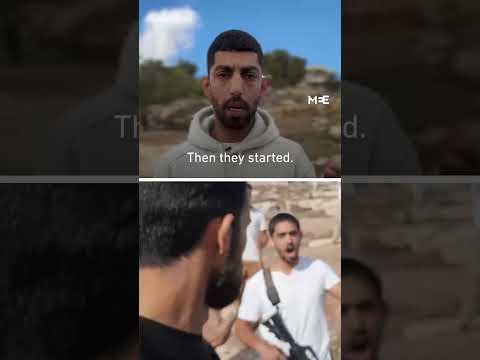
The Night of Coordinated Assaults in Khalail al-Luz
Residents of Khalail al-Luz recounted how groups of Israeli settlers descended on the community in the early hours, smashing windows, setting agricultural structures ablaze, and uprooting olive trees that had sustained families for generations. The attackers moved through the village in vehicles, firing shots and hurling stones at homes while families gathered what belongings they could before retreating into the hills. One resident quoted in the Middle East Eye footage emphasized that the intent was not merely intimidation but outright destruction of the community's presence in the area.
Khalail al-Luz sits in Area C of the occupied West Bank, where Israeli military and administrative control governs all land use decisions. The village has faced gradual encirclement by Israeli settlements and outposts over recent years, shrinking available grazing land and farmland for Palestinian herding families. These families depend on livestock rearing and olive cultivation, both of which suffered direct damage during the attack as structures burned and trees were felled.
Scale of Settler Violence Across the West Bank
More than twenty coordinated settler attacks occurred across the West Bank in a single night around the time of the Khalail al-Luz incident, marking part of a documented surge that intensified after United States and Israeli strikes on Iran in early 2026. United Nations figures record six Palestinians killed by settlers since March 2026, with the violence concentrated in rural communities like those near Hebron where Palestinian herding and Bedouin populations maintain traditional livelihoods.
Since the beginning of 2026, over one hundred incidents involving demolitions or settler violence have damaged more than one hundred ninety water and sanitation structures, according to UN OCHA reporting. These figures reflect repeated targeting of essential infrastructure in Area C, where Palestinian access to resources remains tightly restricted under Israeli administration. The pattern leaves communities without reliable water sources for both household use and agricultural needs.
Displacement Pressures on Herding Communities
Palestinian herding and Bedouin communities in Area C face particular vulnerability because their way of life requires open land for grazing, which settlements and outposts have progressively claimed. In Khalail al-Luz, families described how the destruction of olive groves and livestock shelters directly threatens their economic survival, forcing temporary displacement into hills where they lack shelter or protection from further attacks.
The UN Special Coordinator for the Middle East Peace Process has warned that settler violence functions as a driver of displacement, pushing Palestinian families from land they have inhabited for decades. This process occurs amid a broader tally of casualties in the West Bank, where over one thousand one hundred sixty-nine Palestinians have been killed and more than twelve thousand six hundred wounded since October 2023. Such numbers underscore the cumulative human toll on communities already navigating restricted movement and resource access.
Israeli Military Response and Access Obstruction
Residents reported that Israeli military forces typically arrive in Khalail al-Luz only after settler groups have withdrawn, at which point soldiers close off the village and prevent firefighters or ambulances from reaching damaged sites. This sequence leaves fires to burn unchecked and injured individuals without timely medical care, compounding the physical destruction with prolonged isolation.
Area C's status under full Israeli military and administrative control means Palestinian communities lack independent mechanisms to secure their own protection or reconstruction. The military's delayed presence and subsequent restrictions on movement have become recurring features in accounts from villages near Hebron, where settler outposts continue to expand despite international objections.
International Condemnations and Human Rights Assessments
In June 2026 the European Union's top diplomat issued a condemnation of the rising settler violence, highlighting its role in undermining stability across the occupied territories. International human rights organizations have characterized the repeated attacks on Palestinian communities in Area C as amounting to ethnic cleansing, citing the systematic destruction of homes, water infrastructure, and agricultural assets that render continued residence untenable.
These assessments draw on patterns observed in multiple locations around Hebron, where Palestinian families report similar sequences of settler incursions followed by military lockdowns. The destruction of livelihoods tied to olive production and livestock rearing carries long-term economic consequences for communities whose cultural identity remains rooted in agricultural traditions passed across generations.
Local Economy and Daily Realities Under Encroachment
Daily life in Khalail al-Luz revolves around the rhythms of herding and seasonal olive harvests, both now threatened by the loss of trees and structures documented in recent attacks. Families must weigh the risks of remaining on land encircled by settlements against the prospect of abandoning ancestral plots that represent their primary source of income and connection to the landscape.
The broader West Bank economy in Area C reflects these pressures, as restricted access to water and land reduces agricultural output and increases dependence on external aid. Palestinian residents describe a constant negotiation between maintaining presence on their land and protecting family members from violence that has already claimed numerous lives since late 2023.
Pathways Toward Accountability
Calls for accountability center on documented incidents like the assault on Khalail al-Luz, where specific patterns of settler coordination and military facilitation can be traced through resident testimonies and UN monitoring. Without intervention to halt further encroachment and protect water infrastructure, communities face continued erosion of their capacity to sustain themselves in place.
Regional analysts note that the surge in violence since early 2026 has accelerated displacement trends already visible in herding areas near Hebron. Sustained international attention to these events remains essential for documenting the human impact and supporting Palestinian efforts to preserve their presence amid ongoing pressures.
By Fatima Al-Rashid, Staff Writer
This article was produced with AI-assisted research and editorial support. Reporting is based on sources cited in the article.
What's Your Reaction?
 Like
0
Like
0
 Dislike
0
Dislike
0
 Love
0
Love
0
 Funny
0
Funny
0
 Wow
0
Wow
0
 Sad
0
Sad
0
 Angry
0
Angry
0
Gulf/MENA Correspondent at Global1.News. Based in Doha, covering Gulf politics, energy markets, diplomacy, and development across the Middle East and North Africa. Tracks the economic transformation of the Gulf states.













Comments (0)