
IDF Exposes Massive Hezbollah Tunnel Network Under Southern Lebanese Village
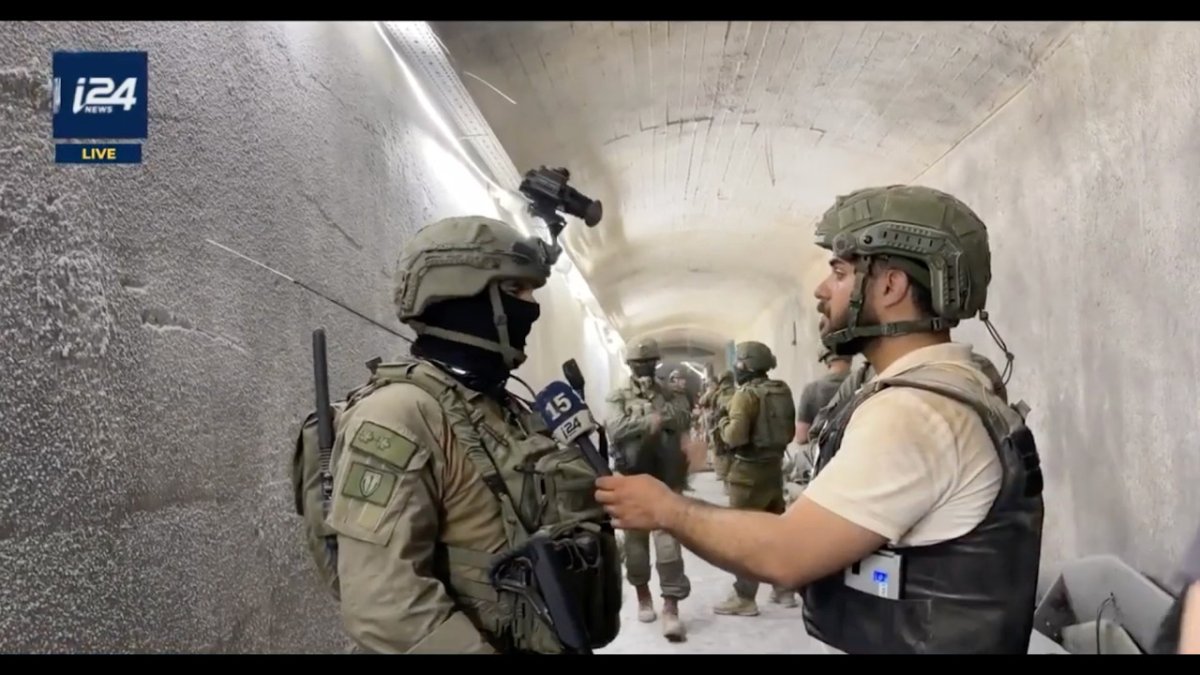
In a recent i24NEWS English video report, IDF troops are shown methodically exposing a vast underground terror network concealed beneath a civilian village in southern Lebanon — just six miles from the Israeli border. The operation in Majdal Zoun has revealed one of the most sophisticated Hezbollah tunnel systems discovered since the ceasefire went into effect. IDF Exposes Mass
In a recent i24NEWS English video report, IDF troops are shown methodically exposing a vast underground terror network concealed beneath a civilian village in southern Lebanon — just six miles from the Israeli border. The operation in Majdal Zoun has revealed one of the most sophisticated Hezbollah tunnel systems discovered since the ceasefire went into effect.
IDF Exposes Massive Hezbollah Tunnel Network Under Southern Lebanese Village 10 km from Border
Jerusalem, Israel — IDF troops from the 551st Brigade, operating as part of the 91st Division under current ceasefire understandings, have uncovered an extensive Hezbollah tunnel network hidden beneath the southern Lebanese village of Majdal Zoun, approximately 10 km from the Israeli border. The discovery includes a tunnel over 200 meters long, four launch shafts, and a drone factory concealed inside a mountain.
The Discovery in Majdal Zoun
The 551st Brigade, operating within the 91st Division, identified the tunnel network during routine activities in the Majdal Zoun area of southern Lebanon. These actions aligned directly with ceasefire terms that permit Israeli forces to address immediate threats near the border. The site sits roughly 10 km north of Israeli territory, placing it within range of multiple northern Israeli communities.
IDF units uncovered the entrance after clearing surface structures in the village. The discovery confirmed Hezbollah's continued use of civilian locations for military purposes, a pattern documented across southern Lebanon. This finding occurred as Israel and Lebanon entered their fifth round of talks in Washington aimed at stabilizing the border region.
The operation dismantled more than 50 terrorist infrastructure sites in the immediate vicinity, including observation posts and weapons storage facilities. These sites formed part of a broader network that Hezbollah maintained despite the ceasefire framework. Israeli security officials in Jerusalem noted that such infrastructure directly threatens daily life along the northern border.
The Tunnel's Scale and Capabilities
The tunnel extends more than 200 meters in length and reaches depths exceeding 25 meters. Engineers documented four launch shafts positioned along its route, along with 12 separate rooms that included dedicated living quarters for operatives. These dimensions allow sustained operations without surface exposure.
Inside the tunnel, IDF forces recovered explosive devices, anti-tank missiles, and multiple UAVs designed for drone operations. A separate drone factory was also located hidden inside a mountain within Majdal Zoun, indicating integrated production capacity. The facility's design supports the assembly and launch of drones capable of reaching Israeli territory.
The tunnel's construction features reflect advanced engineering standards that enable rapid drone deployment toward northern Israel. This infrastructure directly endangers communities near the border and underscores the need for continued vigilance by the IDF and related agencies operating from bases in northern Israel.
Elimination of Radwan Force Operatives
During the operation, IDF troops eliminated more than 20 Hezbollah terrorists, including over 10 members of the Radwan Force. The Radwan Force maintains specialized units trained for cross-border incursions into Israeli territory. Their presence in Majdal Zoun confirmed active preparations despite ceasefire restrictions.
The eliminations took place as part of systematic clearing actions around the tunnel entrances and associated infrastructure sites. More than 50 additional terrorist infrastructure locations were dismantled in the same area, removing observation posts and storage facilities that supported Hezbollah activities. These actions reduced immediate threats to Israeli border security.
The Radwan Force losses represent a significant degradation of Hezbollah's elite capabilities in southern Lebanon. Israeli defense planners in Tel Aviv assess that such strikes limit the group's ability to conduct surprise attacks across the border in the current environment.
Iranian Financing and Design Elements
The tunnel network received direct financing and design support from Iranian sources, according to IDF assessments. Iranian technical specifications appear in the shaft construction and drone launch mechanisms, enabling sustained UAV operations into Israeli airspace. This connection ties the Majdal Zoun site to broader Iranian efforts to arm proxy forces along Israel's northern frontier.
The separate drone factory discovered inside a mountain in Majdal Zoun further demonstrates Iranian involvement in production infrastructure. Components recovered match patterns seen in previous Iranian-supplied systems used by Hezbollah. Israeli Foreign Ministry statements have repeatedly highlighted these supply lines as central to regional instability.
Such Iranian-backed facilities increase the risk of escalation involving multiple fronts, including potential coordination with groups in Gaza and the West Bank. The discovery reinforces Israel's requirement to maintain active defenses coordinated through the Prime Minister's Office and the IDF Northern Command.
IDF Chief of Staff Assessment
IDF Chief of Staff Lt. Gen. Eyal Zamir visited troops operating in southern Lebanon following the Majdal Zoun discovery. He described the current ceasefire as shaky and emphasized that the military must remain prepared to resume full operations at any moment. His remarks came during direct inspections of the 91st Division positions.
Lt. Gen. Zamir stressed the importance of maintaining operational readiness across the 551st Brigade and supporting units. The assessment reflects ongoing concerns that Hezbollah continues to exploit civilian areas in southern Lebanon for military infrastructure, as evidenced by the tunnel and drone factory in Majdal Zoun.
The Chief of Staff's comments align with assessments from Israeli security institutions that monitor threats from Hezbollah and Iranian proxies. These evaluations influence decisions made in Jerusalem regarding force posture and diplomatic positions in the Washington talks.
Implications for Ceasefire and Washington Talks
The Majdal Zoun findings occur during the fifth round of Israel-Lebanon talks in Washington, where negotiators address border security and implementation of ceasefire terms. The tunnel's capabilities and the Radwan Force presence complicate efforts to reach lasting arrangements that protect northern Israeli residents.
Hezbollah's established pattern of embedding military assets within civilian villages like Majdal Zoun continues to undermine trust in diplomatic processes. Israeli officials argue that verified infrastructure must be addressed before any further concessions in the Washington framework.
The operation's results affect daily security calculations for communities along the Lebanese border and influence broader Israeli strategy toward Iranian influence in Lebanon. Continued IDF presence in southern Lebanon remains necessary to prevent reestablishment of similar networks that threaten Israeli territory.
By Hannah Berg, Staff WriterThis article was produced with AI-assisted research and editorial support. Reporting is based on sources cited in the article.
What's Your Reaction?
 Like
0
Like
0
 Dislike
0
Dislike
0
 Love
0
Love
0
 Funny
0
Funny
0
 Wow
0
Wow
0
 Sad
0
Sad
0
 Angry
0
Angry
0

Israel Correspondent at Global1.News. Based in Tel Aviv, covering Israeli politics, security, technology, and society. Provides balanced, deeply-sourced reporting on one of the most closely-watched regions in the world.













Comments (0)