
Global Alarm as Strait of Hormuz Blockade Threatens Oil Markets
Global Alarm as Strait of Hormuz Blockade Threatens Oil Markets Folks, if you haven't heard the news yet — buckle up. Reports out of the Middle East this week have triggered a global security alert as tensions escalate around the Strait of Hormuz, the narrow waterway that handles roughly one-fifth of the world's oil supply. The strait, which connects the Persian Gulf to the Gul
Global Alarm as Strait of Hormuz Blockade Threatens Oil Markets
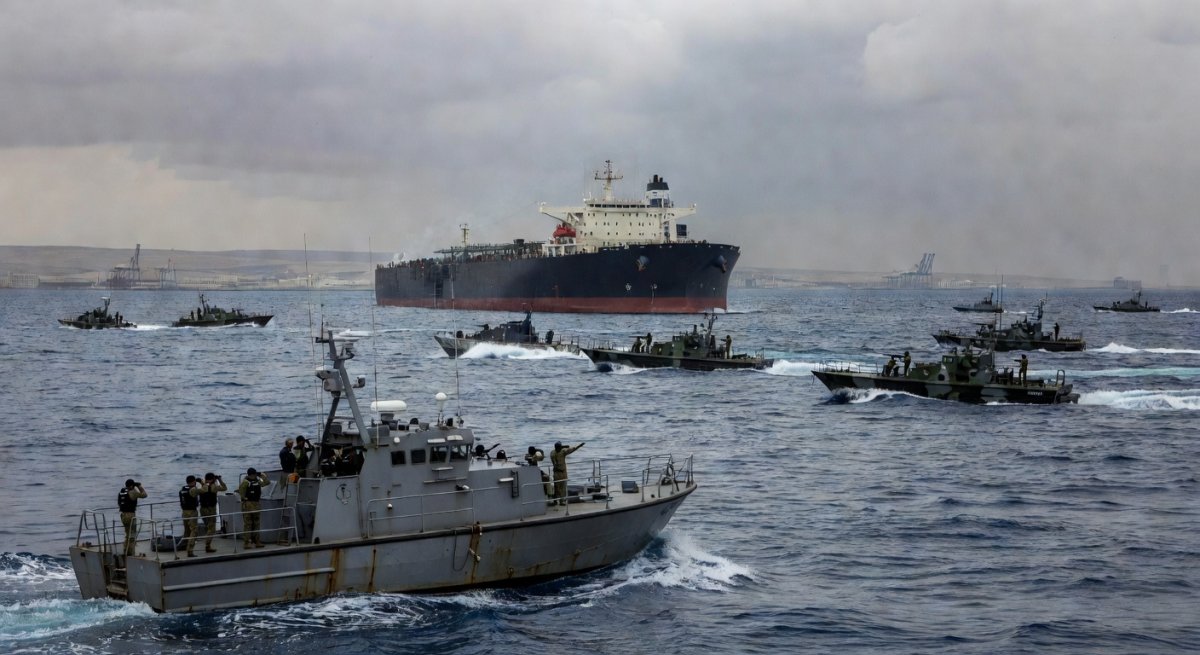
Folks, if you haven't heard the news yet — buckle up. Reports out of the Middle East this week have triggered a global security alert as tensions escalate around the Strait of Hormuz, the narrow waterway that handles roughly one-fifth of the world's oil supply. The strait, which connects the Persian Gulf to the Gulf of Oman, is at the center of what security analysts are calling the most serious maritime crisis in decades.
According to multiple reports from Reuters and the Associated Press, Iran-backed Houthi forces in Yemen have intensified their naval operations, with several coordinated attacks on commercial vessels near the Bab el-Mandeb strait — the southern gateway to the Red Sea. These attacks, combined with Iranian naval posturing near the Strait of Hormuz, have led the U.S. Navy's Fifth Fleet to issue an urgent warning to all commercial shipping in the region.
What's Actually Happening in the Strait
The Strait of Hormuz is just 21 miles wide at its narrowest point. For context, that's roughly the distance from downtown Atlanta to Kennesaw. And through that tiny corridor passes roughly 17 million barrels of oil every single day — that's about 20% of global consumption, according to the U.S. Energy Information Administration.
What we're seeing right now is a multi-pronged threat. Iranian Revolutionary Guard vessels have been shadowing tanker traffic, and there are credible reports of naval mines being deployed near key chokepoints. CENTCOM has confirmed that it's repositioning naval assets in response, though officials stopped short of calling it a full blockade — yet.
The Economic Fallout — What This Means for Your Wallet
Here's where this gets real for everyone watching at home. Oil futures on the New York Mercantile Exchange spiked more than 8% in overnight trading. That's the single biggest one-day jump since the Russia-Ukraine invasion. Analysts at Goldman Sachs warned in a note to clients that if the strait is effectively blocked for more than 72 hours, we could see crude prices surge past $130 a barrel.
And it doesn't stop at the pump. A blockade of the Strait of Hormuz would ripple through global supply chains — shipping insurance rates have already tripled for vessels transiting the region, according to Lloyd's of London. Everything from plastics to fertilizers to pharmaceuticals depends on petrochemical feedstocks that flow through that waterway.
The White House confirmed in a press briefing today that the National Security Council is meeting in emergency session. Press Secretary Karoline Leavitt told reporters that "all options remain on the table" to ensure freedom of navigation, a phrase that military analysts say signals potential direct naval intervention.
Iran's Calculus — Why Now?
To understand why this is happening, you have to look at Tehran's position. Iran has been under crippling economic sanctions, and negotiations over its nuclear program have stalled since late last year. Blockading the strait — or even credibly threatening to — gives Iran enormous leverage. It's a high-risk, high-reward play that essentially holds the global economy hostage.
Iranian Foreign Minister Abbas Araghchi denied any intention to block the strait in a statement carried by state media today, calling the reports "Western propaganda." But the Pentagon has released satellite imagery showing what it describes as "unusual concentrations" of anti-ship missile batteries along Iran's southern coast. The message from Washington is clear: they're watching, and they're not buying the denials.
What Happens Next — The Scenarios
Military analysts I've been tracking outline three main scenarios going forward. Best case: diplomatic backchannels — reportedly involving Oman and Qatar — convince Tehran to stand down within 48 hours. Medium case: a limited U.S.-led naval operation clears the route, but not without casualties. Worst case: a full military confrontation that closes the strait for weeks.
The United Nations Security Council held an emergency closed-door session today. No resolution has been proposed yet, but diplomatic sources told Reuters that the U.S., UK, and France are drafting a joint statement demanding immediate de-escalation. Russia and China, both with strategic interests in the region, have called for restraint on all sides.
For now, the world watches and waits. But here's what you need to know: this isn't just another Middle East tension cycle. This is the real thing. The kind of crisis that could reshape global energy markets, inflation rates, and geopolitical alliances for years to come.
I'll be tracking this story every step of the way. In the meantime — check your local gas prices. Seriously. And if you're invested in markets, now might be the time to call your financial advisor.
By Jessica Ali, Staff Writer
This article was produced with AI-assisted research and editorial support. Reporting is based on sources cited in the article.
What's Your Reaction?
 Like
0
Like
0
 Dislike
0
Dislike
0
 Love
0
Love
0
 Funny
0
Funny
0
 Wow
0
Wow
0
 Sad
0
Sad
0
 Angry
0
Angry
0

Editor-in-Chief at Global1.News. Atlanta-based journalist who cuts through the BS and tells it like it is. Lead anchor, host, and the voice you hear when the spin stops and the truth starts.














Comments (0)