
Erdogan Vows Peace Despite Israeli Provocations
**Keywords:** Recep Tayyip Erdoğan, Israel, Iran, US-Iran deal, Islamabad MoU, Turkey foreign policy, Netanyahu, Middle East peace, Gaza conflict, NATO summit Ankara, Netanyahu sabotage, Turkey mediation Erdoğan Vows Peace Will Prevail Despite Israeli Provocations, Accuses Netanyahu of Sabotaging US-Iran Deal Erdogan Vows Peace Will Prevail Despite Israeli Provocations, Accuses
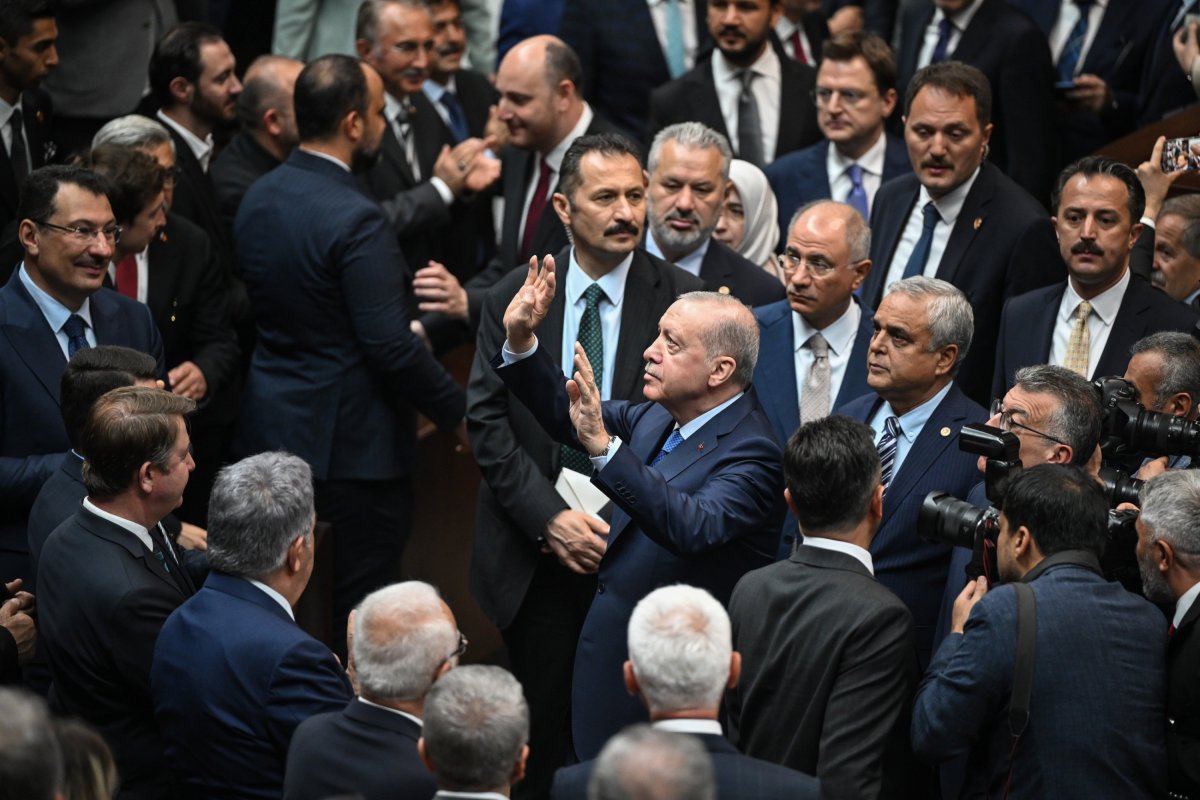
Erdogan Vows Peace Will Prevail Despite Israeli Provocations, Accuses Netanyahu of Sabotaging US-Iran Deal
Ankara, Turkiye - June 24, 2026 --
The Immediate Context of Erdoğan's Parliamentary Address
President Recep Tayyip Erdoğan addressed the parliamentary group meeting of the ruling Justice and Development Party in Ankara on June 24, 2026, delivering remarks that underscored Turkey's determination to steer the region toward stability amid heightened tensions. His statements came just weeks after the signing of the Islamabad MoU, a landmark agreement involving the United States, Iran, and Pakistan aimed at de-escalating longstanding hostilities. Erdoğan framed the moment as one requiring heightened sensitivity, noting that Turkey had successfully navigated the country away from direct involvement in the preceding U.S.-Israel-Iran war through careful coordination with allies and measured diplomatic interventions. This speech built upon Turkey's established position of championing the Palestinian cause, a stance that led Ankara to sever ties with Israel following the outbreak of renewed conflict in 2023.
The timing of the address aligned closely with verified intelligence assessments, including a Washington Post report from June 19 warning that Israel might attempt to sabotage the emerging U.S.-Iran understanding. Erdoğan explicitly referenced efforts over the preceding ten days to disrupt the deal, positioning Turkey as a stabilizing force that had contributed through back-channel diplomacy, direct stances, and timely interventions to prevent disagreements from spiraling. He emphasized the dedication of Turkey's foreign affairs and security bureaucracies in managing what he described as one of the riskiest conflicts since World War II. Such coordination ensured that provocations did not draw Ankara into the fray, preserving national interests while advancing broader regional objectives.
Erdoğan's rhetoric also highlighted the upcoming NATO summit scheduled for July 7-8 in Ankara as a platform for further consolidating these gains. By linking domestic parliamentary remarks to international forums, he signaled Turkey's intent to leverage its unique geographic and political position at the crossroads of Europe, Asia, and the Middle East. This approach reflects a consistent strategy of balancing assertive defense of Palestinian rights with pragmatic engagement in energy markets and great power competition, where Turkey seeks to avoid entanglement in Sunni-Shia rivalries that have historically complicated Gulf dynamics.
Throughout the address, the Turkish leader reiterated that peace would arrive despite external obstacles, drawing on historical precedents of Turkish mediation in conflicts involving multiple regional actors. His words resonated with Ankara's long-standing critique of expansionist policies that have escalated violence in Gaza and spilled into neighboring Syria and Lebanon. By grounding his analysis in these verified developments, Erdoğan positioned Turkey not merely as a commentator but as an active architect of de-escalation, committed to utilizing every opportunity for lasting resolution in the Iran crisis and beyond.
Turkey's Strategic Contributions to the US-Iran Negotiations
Erdoğan detailed Turkey's multifaceted role in facilitating the Islamabad MoU, describing interventions that ranged from discreet back-channel communications to more overt diplomatic postures when necessary. These efforts proved instrumental in bridging gaps between the United States under President Trump and Iranian leadership under President Pezeshkian, with Pakistani Prime Minister Sharif also playing a pivotal part in the trilateral framework. Turkey's involvement stemmed from a recognition that unchecked escalation risked engulfing the entire region, particularly given Israel's non-participation in the agreement and its continued operations in Lebanon. Such actions underscored Ankara's capacity to act as a neutral yet influential broker, drawing on its NATO membership and extensive intelligence networks.
Historical context reveals Turkey's evolution from a peripheral observer to a central mediator in Iran-related diplomacy. Following the 2023 rupture in relations with Israel over Gaza, Ankara intensified outreach to Tehran while maintaining channels with Washington, a balancing act complicated by Sunni-Shia competition across the Gulf. Erdoğan's administration has consistently advocated for de-escalation that incorporates energy market stability, recognizing OPEC+ dynamics and the need to prevent disruptions that could affect global supplies. This strategic foresight allowed Turkey to contribute meaningfully without compromising its core principles regarding the Palestinian issue or the dangers of occupation as state policy.
Coordination with allies extended beyond bilateral talks to encompass multilateral forums, where Turkey highlighted the risks of radical elements within Israeli politics outbidding one another in calls for intensified conflict. The president noted that this frenzied competition had manifested in accusations of insufficient bloodshed, revealing a mindset detached from conventional statecraft. By intervening before such dynamics could derail the Islamabad MoU, Turkey helped secure a framework that excluded Israel yet addressed core security concerns for all signatories. This approach aligns with Ankara's broader vision of regional prosperity achieved through justice and stability rather than perpetual instability.
Looking ahead to the NATO summit in Ankara, Erdoğan signaled continued Turkish support for implementation of the deal, emphasizing that institutions had demonstrated exceptional resolve during the crisis. This dedication reflects lessons from past engagements, including Turkey's management of spillover effects from the Gaza conflict into Syria and Lebanon. Through sustained diplomatic pressure and alliance-building, Ankara aims to ensure that the agreement fosters not only an end to immediate hostilities but also pathways for addressing underlying grievances tied to Israel's expansionist ambitions and the ideal of a greater territory at the expense of neighbors.
Accusations Against Israel and the Netanyahu Administration
Central to Erdoğan's remarks was a direct indictment of the Netanyahu administration for pursuing policies that equate national security with the destabilization of surrounding states. He described a network that has institutionalized terrorism and occupation, actively working to undermine the Islamabad MoU in the days following its announcement. Israel, not being a party to the agreement, nonetheless persisted with attacks in Lebanon, actions that Ankara views as deliberate attempts to reignite wider confrontation. This critique ties into longstanding Turkish concerns over the "promised land" concept, which has fueled conflicts reaching genocidal proportions in Gaza and extended repercussions into Syria and Lebanon.
Regional dynamics amplify these tensions, as Israel's stance contrasts sharply with initiatives like the Abraham Accords that sought normalized relations among certain Gulf states. Erdoğan pointed out that statements from Israeli officials and opposition figures alike reveal a competition in advocating extreme measures, sidelining any prospect of peace. Such behavior, he argued, stems from a radical outlook that rejects even minimal stability, preferring instead a perpetual state of alert that justifies further incursions. Turkey's decision to cut ties post-2023 positioned it firmly against these trends, aligning with support for Palestinian self-determination amid great power rivalries involving the United States, Russia, and China.
The president's analysis connected these provocations to broader Sunni-Shia fault lines, noting how Israeli actions risk inflaming sectarian divides that Iran and Gulf monarchies like Saudi Arabia and the UAE have sought to manage through diversification efforts. By sabotaging diplomatic openings, the Netanyahu government threatens energy market equilibria critical to OPEC+ members and global consumers alike. Erdoğan's warnings served as a caution that such mischief would persist until countered by unified regional resolve, with Turkey prepared to fulfill its responsibilities in promoting tranquility.
Despite these challenges, Erdoğan expressed confidence that no amount of disruption could ultimately block the emergence of justice and prosperity. His remarks drew on Turkey's experience in shielding itself from the "ring of fire" during the U.S.-Israel-Iran war, attributing success to policies that prioritized dialogue over confrontation. This stance reinforces Ankara's role in countering narratives that frame instability as inevitable, instead advocating coordinated responses that incorporate Egypt, Qatar, and other actors to isolate extremist influences and advance shared security interests.
Implications for the Israel-Palestine Conflict and Regional Spillover
Erdoğan's address placed the Palestinian cause at the forefront, linking it inextricably to the success or failure of the Islamabad MoU. Turkey's championing of this issue has defined its foreign policy since the 2023 escalation, prompting the severance of diplomatic relations with Israel and vocal opposition to occupation tactics. The president argued that true peace requires addressing the root causes in Gaza, where violence has reached unprecedented levels, rather than allowing provocations to dictate the agenda. This perspective integrates with efforts to prevent spillover into Lebanon and Syria, areas where Turkish influence has historically intersected with Iranian and Hezbollah activities.
Strategic analysis reveals how the absence of Israel from the US-Iran framework creates both opportunities and vulnerabilities. While the deal focuses on ending direct conflict between Washington and Tehran, unresolved Palestinian grievances risk providing pretexts for continued Israeli operations. Erdoğan highlighted the need for sensitivity in this period, warning that radicals in Israel view any peace dividend as a threat to their security doctrine. Turkey's back-channel contributions aimed to mitigate these risks, ensuring that the agreement could serve as a foundation for wider de-escalation involving multiple stakeholders across the Middle East.
Connections to Gulf diversification strategies further illustrate the stakes. Countries such as Saudi Arabia and the UAE have pursued economic reforms that depend on regional calm, yet Israeli actions threaten to undermine these initiatives by sustaining cycles of retaliation. Erdoğan's emphasis on stability despite provocations aligns with Turkey's interest in energy cooperation and countering great power competition that often exploits divisions. By advocating for a lasting resolution to the Iran crisis, Ankara seeks to create space for addressing the Israel-Palestine impasse through multilateral channels rather than unilateral force.
Historical precedents, including past Turkish mediation attempts, inform this cautious optimism. Erdoğan recalled how coordinated efforts had previously contained conflicts, suggesting that similar dedication could prevail again. The upcoming NATO summit offers a venue to rally support for these goals, reinforcing Turkey's commitment to utilizing every diplomatic tool in pursuit of justice for Palestinians and security for all neighbors affected by the ongoing turmoil.
Broader Middle East Dynamics and Great Power Competition
The speech situated Turkey's diplomacy within the larger tapestry of Middle East affairs, where Sunni-Shia competition, Gulf economic transformations, and Iran nuclear concerns intersect with Israel-Palestine tensions. Erdoğan noted that Israel's exclusion from the Islamabad MoU did not diminish its capacity to influence outcomes through indirect means, including operations that risk drawing in additional actors like Egypt and Qatar. This dynamic underscores the necessity of Turkish vigilance in preventing the agreement from becoming another flashpoint in great power rivalries involving the United States and its adversaries.
Energy markets play a central role in these calculations, as stability in Iran and surrounding areas directly affects OPEC+ production quotas and global prices. Turkey's policies have sought to insulate its economy while promoting diversification among Gulf states, recognizing that prolonged conflict benefits neither producers nor consumers. Erdoğan's critique of Israeli provocations thus extends beyond immediate security to encompass the economic foundations of regional prosperity, advocating for frameworks that reward cooperation over confrontation.
Turkey's ability to maintain distance from the "ring of fire" during the recent war exemplifies a model of strategic autonomy that other nations might emulate. By engaging in back-channel efforts and direct interventions, Ankara helped shape an outcome that prioritizes negotiation, even as Netanyahu's administration pursued parallel tracks of escalation in Lebanon. This approach resonates with Abraham Accords-era efforts at normalization, though Erdoğan stressed that genuine progress requires inclusive solutions addressing Palestinian aspirations rather than selective alliances.
Looking to the NATO summit, these themes will likely feature prominently in discussions on alliance cohesion amid shifting alliances. Erdoğan's remarks prepare the ground for Turkey to advocate policies that counter radical influences and foster environments where peace can take root despite persistent obstacles from certain quarters.
Historical Context of Turkey-Israel Relations and Future Commitments
Relations between Turkey and Israel have traversed cycles of cooperation and rupture, with the 2023 Gaza conflict marking a decisive break that Erdoğan has since leveraged to bolster Turkey's credentials as a defender of Palestinian rights. His June 24 address revisited these tensions, accusing the Netanyahu government of transforming occupation into a core state function that destabilizes neighbors including Syria and Lebanon. This historical lens informs Ankara's current strategy of supporting the Islamabad MoU while preparing for potential Israeli attempts at sabotage, as flagged in prior intelligence reports.
Erdoğan's emphasis on institutional dedication highlights how Turkey's foreign policy apparatus has adapted to these challenges, employing a mix of public diplomacy and private channels to advance peace. The president pledged continued support for resolving the Iran crisis, framing it as essential to preventing further mischief that could unravel hard-won gains. Such commitments resonate with Turkey's regional influence, where it balances ties with Iran against obligations to NATO partners and economic interests in Gulf diversification.
Future trajectories depend on navigating the interplay between Israel-Palestine dynamics and wider Sunni-Shia equilibria. By keeping Turkey outside direct conflict, Erdoğan has preserved leverage for the NATO summit, where discussions may address how to reinforce the US-Iran understanding against external pressures. His vision of peace prevailing despite provocations offers a roadmap that prioritizes justice, stability, and prosperity for all involved parties.
In closing his remarks, Erdoğan invoked divine will in overcoming obstacles, signaling enduring resolve. This rhetorical flourish underscores Turkey's self-perception as a pivotal actor capable of steering the Middle East toward calmer waters through persistent, principled engagement.
Outlook for Regional Stability and Turkey's Enduring Role
As the region processes the implications of the Islamabad MoU, Erdoğan's address serves as both a warning and a call to action. He affirmed that Turkey would not hesitate to contribute to any initiative yielding even marginal peace opportunities, particularly in addressing the Iran crisis through sustained diplomatic means. This forward-looking stance accounts for the risks posed by Israeli policies that view stability as antithetical to their security model, extending from Gaza's devastation to potential flashpoints in Lebanon and Syria.
Integration with global dynamics remains crucial, as great power competition continues to shape outcomes in energy markets and nuclear negotiations. Turkey's experience in managing the U.S.-Israel-Iran war without entanglement provides a template for other states seeking autonomy amid Sunni-Shia divides and Gulf transformations. Erdoğan's coordination with allies positions Ankara to influence the NATO summit agenda toward reinforcing multilateral frameworks like the recent deal.
Ultimately, the president's message conveys cautious optimism grounded in verified diplomatic successes. By highlighting the dedication of Turkish institutions and the potential for peace despite provocations, he charts a path that prioritizes comprehensive resolutions over piecemeal accommodations. This approach, rooted in advocacy for the Palestinian cause and regional equity, ensures Turkey's voice remains central in shaping Middle East affairs for years to come.
Through these efforts, Ankara demonstrates that stability is achievable when backed by resolute policies and alliance networks, offering hope that justice and prosperity can eventually prevail across the region.
By Malik Hassan, Staff Writer
This article was produced with AI-assisted research and editorial support. Reporting is based on sources cited in the article.
What's Your Reaction?
 Like
0
Like
0
 Dislike
0
Dislike
0
 Love
0
Love
0
 Funny
0
Funny
0
 Wow
0
Wow
0
 Sad
0
Sad
0
 Angry
0
Angry
0

Middle East Correspondent at Global1.News. Based in Beirut, covering politics, conflict, energy, and society across the Middle East. Brings context and depth to a region often reduced to headlines.









Comments (0)