
Gulf of Paria widens as Trinidad pours oil on troubled Venezuelan waters
The Spill Comes to Light From the moment Heritage Petroleum Limited detected an oil slick at 07:25 hrs on May 1, 2026 in the Main Field off Trinidad's western coast, the ripple effects have reached well beyond the immediate containment zone. What Trinidad's Energy Minister Dr. Roodal Moonilal described as a minor, quickly-contained incident involving roughly ten barrels has bal
The Spill Comes to Light
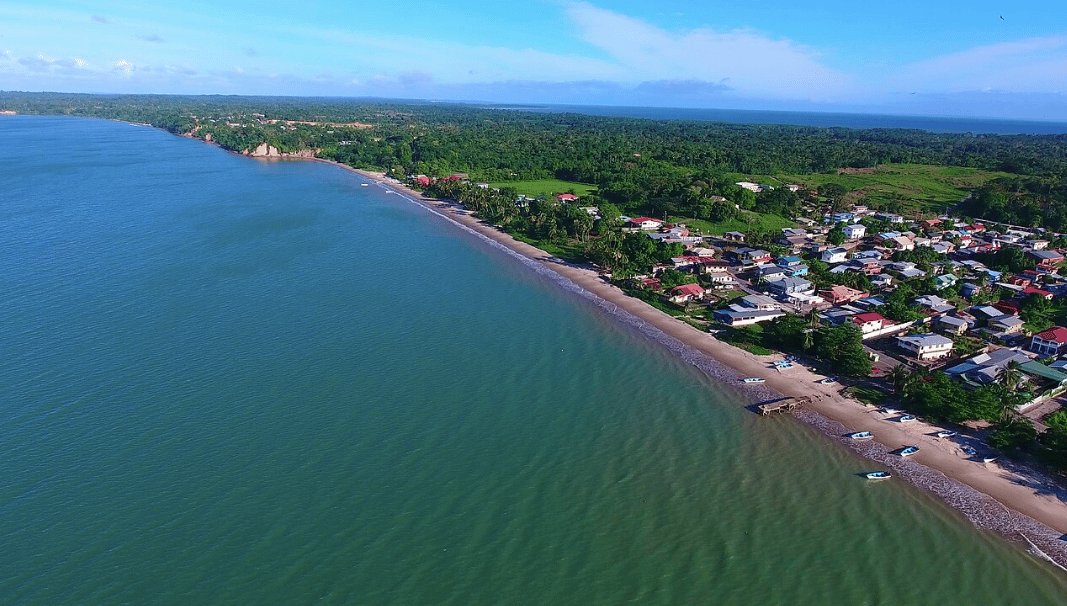
From the moment Heritage Petroleum Limited detected an oil slick at 07:25 hrs on May 1, 2026 in the Main Field off Trinidad's western coast, the ripple effects have reached well beyond the immediate containment zone. What Trinidad's Energy Minister Dr. Roodal Moonilal described as a minor, quickly-contained incident involving roughly ten barrels has ballooned into a full-blown diplomatic dispute with Venezuela — one that threatens to reshape how the two neighbours manage their shared maritime space for years to come. In the quiet hours before dawn, workers at the offshore platform noticed the tell-tale sheen spreading across the water, a sight all too familiar to those who have spent their lives drawing a living from these waters. The call went out swiftly, and containment booms were deployed with the urgency that comes from knowing how quickly a small leak can grow in the Gulf of Paria.
Yet what began as a routine operational alert soon took on a life of its own. Heritage Petroleum, the state-owned company responsible for much of Trinidad's onshore and nearshore production, moved quickly to isolate the source and begin recovery operations. By mid-morning the slick had been corralled, and officials were already preparing statements to reassure the public that the matter was under control. Community voices from nearby Cedros and Icacos, however, carried a different tone. Fishermen heading out that morning spoke of an unusual odour on the breeze and a faint film on the surface that clung to their nets even before official word reached the jetties.
The warmth of Trinidadian mornings in these coastal villages usually brings the sound of engines starting and the smell of fresh coffee shared among crews. On this particular day the mood was heavier. Elders recalled past incidents, some dating back decades, when similar sheens had appeared without clear explanation. The shared nature of the Gulf means that what happens on one side is felt on the other, and the people who live closest to the water have long understood that borders drawn on maps do not stop the currents. As the sun climbed higher, the story began its journey from the platform to the capital and then across the water to Caracas, where it would soon land with far greater force than anyone in Port of Spain had anticipated.
Venezuela's Demand: Compensation and Answers
Venezuela's Foreign Minister Yvan Gil formally demanded information and compensation from Trinidad and Tobago over the May 1, 2026 oil spill, setting in motion a diplomatic exchange that has already strained relations between the two countries. In a series of communiques released through Caracas, Minister Gil made clear that Venezuela views the incident as more than a routine operational matter. The Venezuelan position rests on satellite imagery dated April 28 that appears to show an oil slick originating from Trinidadian waters and drifting westward toward the Venezuelan coastline. These images, shared publicly by the Venezuelan foreign ministry, have become central to their argument that the spill's volume, origin, and type of hydrocarbon remain unknown and require independent verification.
Trinidadian officials have maintained that dialogue channels stayed open throughout the episode, yet Caracas insists that timely information was not forthcoming. The absence of early notification, according to Venezuelan statements, left communities along the western coast unprepared for any potential impact. Minister Gil's call for compensation is framed not merely as a financial claim but as recognition of the principle that shared waters demand shared responsibility. In the coastal towns of Venezuela's Sucre and Delta Amacuro states, the news travelled quickly through fishing cooperatives and market stalls, stirring memories of earlier environmental pressures that have already reduced catches in recent years.
The formal demand has also prompted Venezuela to request a joint technical assessment of the spill's trajectory. Such an assessment would involve both nations' environmental agencies working alongside independent observers, a step Trinidad has so far approached with caution. For the people living along the Gulf, the diplomatic language masks a deeper anxiety: once oil enters these waters, it does not respect the invisible line that separates the two countries. The coming weeks will reveal whether the two governments can move from accusation to cooperation or whether the spill will mark a lasting chill in what has historically been a relationship built on neighbourly exchange.
Environmental Toll: Wetlands, Fish, and Livelihoods
Venezuela claims that 1,625 square kilometres of wetlands across 12 strategic wetland systems now stand at risk from the spill, a figure that has galvanised environmental groups on both sides of the Gulf. Four of Venezuela's national parks are said to be threatened, including areas that serve as critical breeding grounds for migratory birds and nurseries for juvenile fish. More than 140 fish species could be affected, with mangroves particularly vulnerable because oil can smother their roots and prevent the exchange of oxygen that keeps these forests alive. In Trinidad, the same currents that carry the slick also touch the mangrove stands near Icacos and Cedros, where local families have harvested crabs and oysters for generations.
The human dimension is equally stark. Over 500 fishermen's livelihoods are said to be at risk if the contamination persists or spreads further. In the small wooden boats that leave at first light from both Trinidadian and Venezuelan shores, the daily catch represents not only income but also the cultural thread that binds coastal communities together. When the slick reaches the shallows, it coats the seagrass beds where fish shelter, and the smell lingers on hands and clothing long after the boats return. Elders in Cedros speak quietly of the need to protect the next generation's right to fish these waters without fear, while younger crew members wonder whether they will have to travel farther afield or seek work on land.
The ecological stakes extend beyond immediate species loss. Wetlands act as natural buffers against storms and rising seas, and any damage inflicted now could leave both nations more exposed in the years ahead. Community organisations in Trinidad have already begun informal monitoring, walking the beaches at low tide to record any signs of oil residue. Their Venezuelan counterparts have issued similar calls, underscoring that the health of the Gulf of Paria is a shared inheritance that cannot be divided by political boundaries. The coming months will test whether scientific cooperation can keep pace with the ecological clock that is already ticking.
Port of Spain Responds: "A Minor Incident"
Trinidad's Energy Minister Dr. Roodal Moonilal described the event as a minor, quickly contained 10-barrel spill, a characterisation that stands in sharp contrast to Venezuela's assessment. In briefings to the local press, the minister emphasised that Heritage Petroleum followed established protocols and that the volume recovered matched the initial estimate. Trinidad maintains that regular dialogue with Venezuelan counterparts continued even as the diplomatic temperature rose, pointing to existing bilateral mechanisms for maritime incidents. Officials in Port of Spain argue that the rapid deployment of containment equipment prevented wider dispersal and that independent verification would ultimately support their account of events.
Yet the discrepancy over the spill's scale has left room for public scepticism at home. In the fishing villages of the south-west peninsula, residents have questioned whether ten barrels truly captures the full picture, especially given the satellite evidence presented by Caracas. Community leaders have called for greater transparency, including the release of daily recovery reports and water sampling results. The government has responded by inviting local environmental groups to observe future operations, a gesture welcomed but viewed by some as overdue. The warmth that usually characterises Trinidadian public life has been tempered by a quiet determination to ensure that the Gulf's resources are not compromised for the sake of diplomatic convenience.
Port of Spain's position also reflects the broader reality that Trinidad's energy sector remains a cornerstone of the national economy. Any perception of lax oversight could affect investor confidence, while an overly defensive stance risks alienating the very communities whose support is essential for long-term stability. The coming weeks will show whether the government's measured tone can bridge the gap with Caracas or whether further evidence will force a recalibration of the official narrative.
Oil Spill Fears Across the Caribbean
The Trinidad-Venezuela dispute arrives against a backdrop of heightened regional anxiety over offshore oil operations, most notably the ongoing legal action by Guyanese citizens against ExxonMobil. In that case, plaintiffs have sought an unlimited parent-company guarantee for any future spill cleanup costs, arguing that limited liability leaves small nations exposed to catastrophic environmental damage. The Court of Appeal's ruling against unlimited liability drew sharp criticism from former EPA Director Dr. Vincent Adams and attorney Christopher Ram, both of whom warned that the decision weakens the safeguards available to communities living near extraction sites. Their voices have resonated across the Caribbean, where memories of past industrial accidents remain vivid.
Trinidadian observers note that the Gulf of Paria has long served as a natural laboratory for testing how two nations can jointly steward a single body of water. The current spill has revived calls for a permanent bilateral environmental commission with real enforcement powers. Such a body could standardise reporting requirements, conduct joint aerial surveys, and establish compensation protocols before the next incident occurs. In the markets of Port of Spain and the fishing co-operatives of Cedros, conversations now turn as easily to satellite imagery as to the price of fish, reflecting a growing awareness that environmental security is inseparable from economic security.
The regional dimension also highlights the need for stronger Caribbean-wide standards. Neighbouring islands that do not share a direct border with Venezuela or Trinidad nevertheless feel the effects through migratory fish stocks and tourism perceptions. Dr. Adams and Mr. Ram have urged CARICOM to treat the current episode as a wake-up call rather than an isolated diplomatic spat. Their critique extends beyond any single company or country, focusing instead on the structural vulnerabilities that allow small spills to become large disputes when information is not shared promptly and transparently.
The Bottom Line
The May 1 spill has already widened the Gulf of Paria in ways that go beyond geography, exposing fault lines in trust, communication, and shared stewardship between Trinidad and Venezuela. What began as a contained operational matter has become a test of whether two neighbours can transform a moment of crisis into a durable framework for managing their common waters. The satellite images, the competing assessments of volume, and the voices of fishermen on both coasts all point to the same conclusion: the old ways of handling incidents are no longer sufficient.
Looking ahead, the most constructive path lies in joint monitoring, transparent data sharing, and a compensation mechanism that does not require diplomatic confrontation to activate. Communities in Icacos, Cedros, and their Venezuelan counterparts have the most at stake and the clearest interest in seeing such mechanisms established. Their lived experience of the Gulf offers a practical wisdom that ministries and corporations would do well to heed. The coming months will determine whether this episode marks a turning point toward genuine partnership or simply another chapter in a long history of unresolved grievances.
For Trinidad, the challenge is to balance its energy interests with the imperative of good neighbourliness. For Venezuela, the opportunity exists to convert its formal demands into collaborative solutions. The waters themselves remain indifferent to politics; they will carry whatever is spilled, for better or worse, until the two nations decide to act as true custodians of the Gulf they both call home.
By Sharon Sahatoo, Staff WriterThis article was produced with AI-assisted research and editorial support. Reporting is based on sources cited in the article.
What's Your Reaction?
 Like
0
Like
0
 Dislike
0
Dislike
0
 Love
0
Love
0
 Funny
0
Funny
0
 Wow
0
Wow
0
 Sad
0
Sad
0
 Angry
0
Angry
0

Caribbean Correspondent at Global1.News. Based in Port of Spain, Trinidad, covering Caribbean politics, economy, energy, climate, and culture. Amplifying the voices and stories of the Caribbean region.









Comments (0)