
Aitrepreneur Wan 2.2 LoRA Training Guide Drops for...
The open-source AI video generation landscape has reached a pivotal moment with the release of a comprehensive tutorial from Aitrepreneur demonstrating how to train custom LoRA models for Alibaba’s Wan 2.2 on everyday consumer hardware. This development lowers the barrier for independent creators seeking to fine-tune video generation models without relying on expensive cloud in
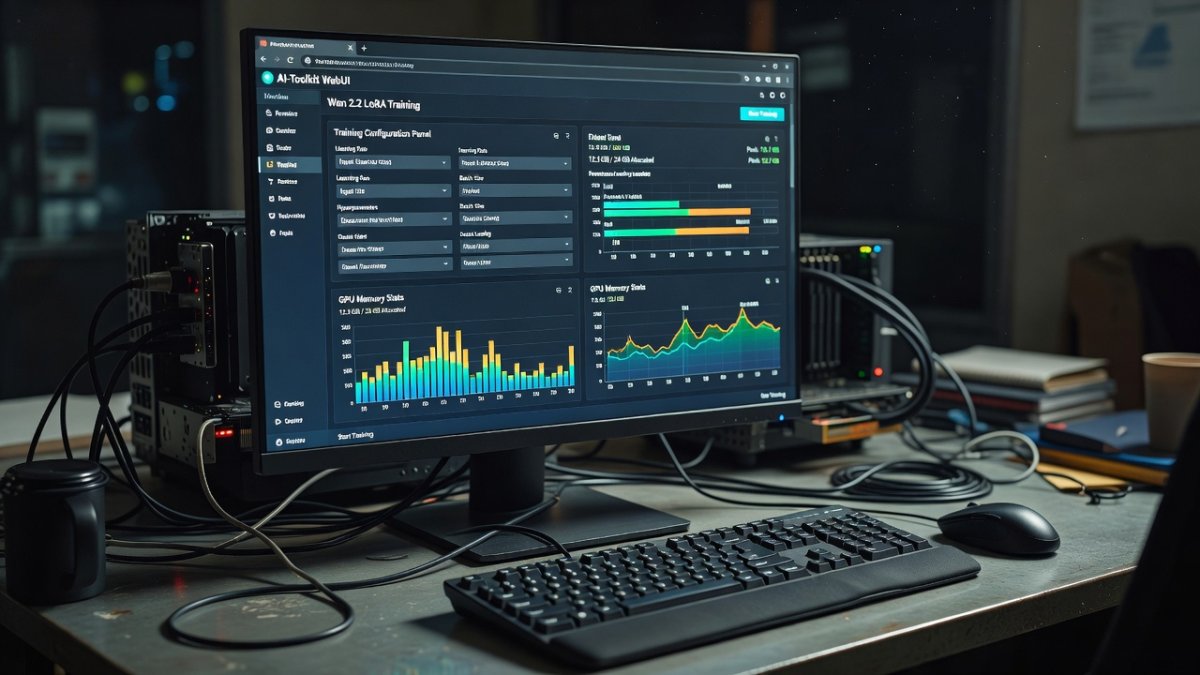
The open-source AI video generation landscape has reached a pivotal moment with the release of a comprehensive tutorial from Aitrepreneur demonstrating how to train custom LoRA models for Alibaba’s Wan 2.2 on everyday consumer hardware. This development lowers the barrier for independent creators seeking to fine-tune video generation models without relying on expensive cloud infrastructure or proprietary platforms. The tutorial centers on the AI-Toolkit WebUI, a browser-based interface that streamlines the entire training pipeline for both image and video LoRAs.
Aitrepreneur Releases Complete Wan 2.2 LoRA Training Guide for 8-12GB GPUs
Atlanta, GA – June 24, 2026 — Aitrepreneur has published a detailed tutorial video walking users through the process of training custom LoRA adapters for Wan 2.2, Alibaba’s latest open-source video generation model, using the AI-Toolkit WebUI. The guide covers both image and video LoRA training workflows and explicitly targets GPUs with 8-12GB of VRAM, including the RTX 3060, RTX 4060, and RTX 3070 series. By releasing the full workflow publicly, Aitrepreneur has given the broader community a practical path to create personalized video models without enterprise-grade hardware.
The Wan 2.2 Breakthrough
Wan 2.2 represents a substantial leap forward from Alibaba’s earlier Wan releases. The model introduces improved temporal coherence, better motion realism, and native support for longer clip generation compared with Wan 2.1. Unlike closed-source systems that restrict fine-tuning, Wan 2.2 ships with publicly available weights and a modular architecture that readily accepts LoRA adapters. This openness allows researchers and hobbyists to inject specific styles, characters, or motion patterns directly into the base model.
The architecture improvements in Wan 2.2 include an enhanced diffusion transformer backbone and refined cross-attention layers that better preserve subject identity across frames. These changes make the model particularly suitable for LoRA training because the adapter layers can focus on style or character details without destabilizing the core motion priors. Early community tests show that even modest LoRA ranks produce noticeable gains in visual fidelity when trained on curated datasets of 200–500 images or short video clips.
Training Custom LoRAs on Consumer Hardware
The AI-Toolkit WebUI serves as the central interface in Aitrepreneur’s tutorial. Built on top of the open-source AI-Toolkit repository, the WebUI abstracts complex command-line arguments into an intuitive dashboard that handles dataset preparation, captioning, and training configuration. Users can upload images or video clips, generate captions with built-in vision-language models, and launch training jobs directly from the browser.
Training runs comfortably on GPUs with 8-12GB VRAM when using 512×512 or 768×432 resolutions and batch sizes of 1–2. The tutorial demonstrates successful LoRA training on an RTX 4060 Laptop GPU with 8GB, completing a 1,000-step run in roughly 45 minutes. Gradient checkpointing and 8-bit optimizers keep memory usage within limits while maintaining acceptable convergence speed. The same workflow scales to 12GB cards for higher resolutions or larger batch sizes without requiring code changes.
This accessibility marks a genuine democratization of video model customization. Previously, training even a basic LoRA for video generation demanded 24GB+ cards or paid cloud instances. The AI-Toolkit WebUI removes that requirement, allowing students, indie filmmakers, and small studios to experiment locally.
From Images to Video: What This Means Creatively
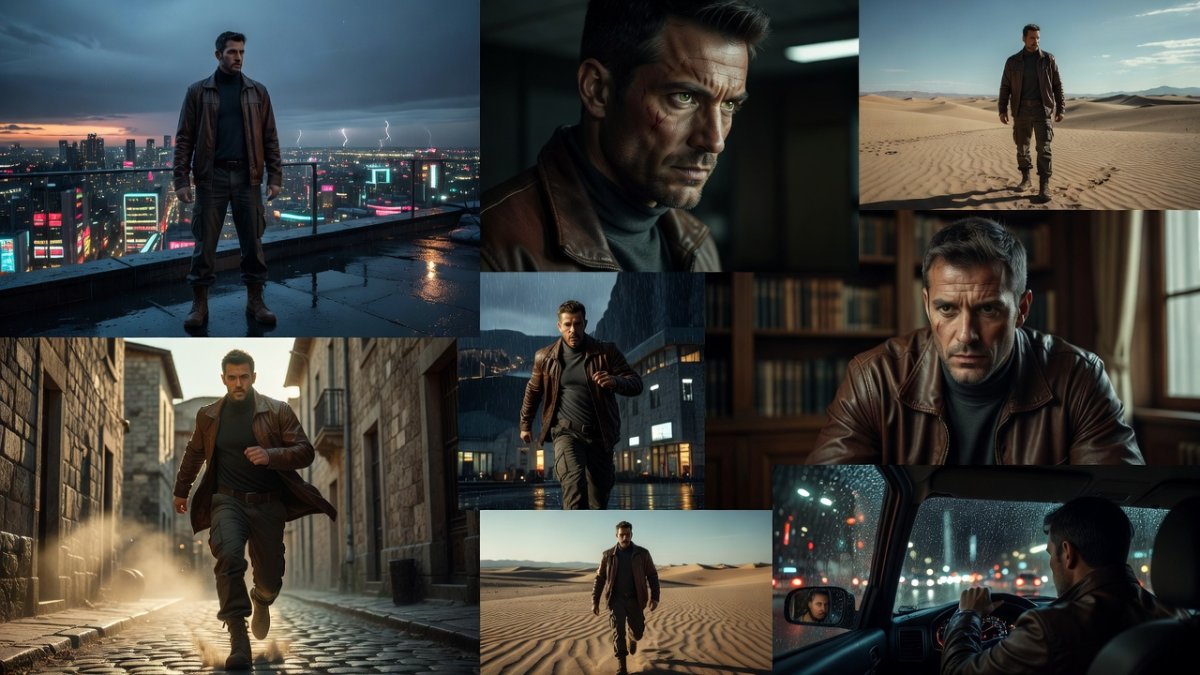
One of the tutorial’s most compelling sections shows how a single LoRA trained on still images can be applied to video generation while preserving character consistency across multiple scenes. The workflow first trains an image LoRA on a character dataset, then uses that adapter as a starting point for a short video fine-tune. The resulting model maintains facial features, clothing details, and artistic style even when the prompt requests new camera angles or actions.
Creators can therefore build reusable character libraries. A freelance animator could train one LoRA for a protagonist and reuse it across dozens of short-form videos without re-creating the character each time. The same technique extends to visual styles, allowing rapid production of branded content that matches a company’s established aesthetic.
The Open Source AI Video Race
Wan 2.2 enters a crowded but rapidly maturing field. It competes directly with models such as Open-Sora, CogVideoX-5B, and the latest Stable Video Diffusion derivatives. While proprietary services like Runway Gen-3 and Kling maintain quality leads in certain motion categories, none currently offer the same level of local fine-tuning flexibility at consumer VRAM levels. The combination of Wan 2.2’s open weights and the AI-Toolkit WebUI therefore shifts competitive advantage toward community-driven iteration.
Development velocity in open-source video generation has accelerated dramatically since late 2025. New techniques for efficient temporal attention and memory-optimized training appear on GitHub weekly. Aitrepreneur’s tutorial arrives at a moment when these advances are converging, giving practitioners a single, documented path to leverage them.
What This Means for Creators
Independent creators now have a realistic route to proprietary-looking video output without recurring subscription costs. A small YouTube studio can train a custom LoRA on its host’s likeness and generate consistent B-roll or animated segments locally. Educational institutions can produce tailored explainer videos featuring institutional mascots or historical figures without licensing fees.
The 8-12GB VRAM target also aligns with hardware many creators already own. Rather than requiring a workstation upgrade, users can begin experimenting immediately on mid-range laptops or desktops purchased within the last two years. This lowers the financial threshold for participation in advanced AI video work.
The Bottom Line
Aitrepreneur’s tutorial transforms Wan 2.2 from an impressive research release into a practical tool for everyday creators. By documenting a complete, consumer-GPU-friendly workflow for both image and video LoRA training, the guide accelerates the shift toward personalized, locally run video generation models. As open-source video capabilities continue to close the gap with proprietary systems, tools like the AI-Toolkit WebUI will determine who gets to shape the next wave of synthetic media.
By Jessica Ali, Staff Writer
This article was produced with AI-assisted research and editorial support. Reporting is based on sources cited in the article.
What's Your Reaction?
 Like
0
Like
0
 Dislike
0
Dislike
0
 Love
0
Love
0
 Funny
0
Funny
0
 Wow
0
Wow
0
 Sad
0
Sad
0
 Angry
0
Angry
0

Editor-in-Chief at Global1.News. Atlanta-based journalist who cuts through the BS and tells it like it is. Lead anchor, host, and the voice you hear when the spin stops and the truth starts.














Comments (0)