
Eastern Ontario residents push back as Alto high-speed rail considers Kingston stop
Eastern Ontario residents push back as Alto high-speed rail considers Kingston stop Federal Transport Minister Steven MacKinnon announced Monday that the federal government will consider a southern route option for the high-speed rail corridor linking Ottawa and Peterborough, including a potential stop in Kingston. The move has sparked immediate concern among residents in Easte
Eastern Ontario residents push back as Alto high-speed rail considers Kingston stop
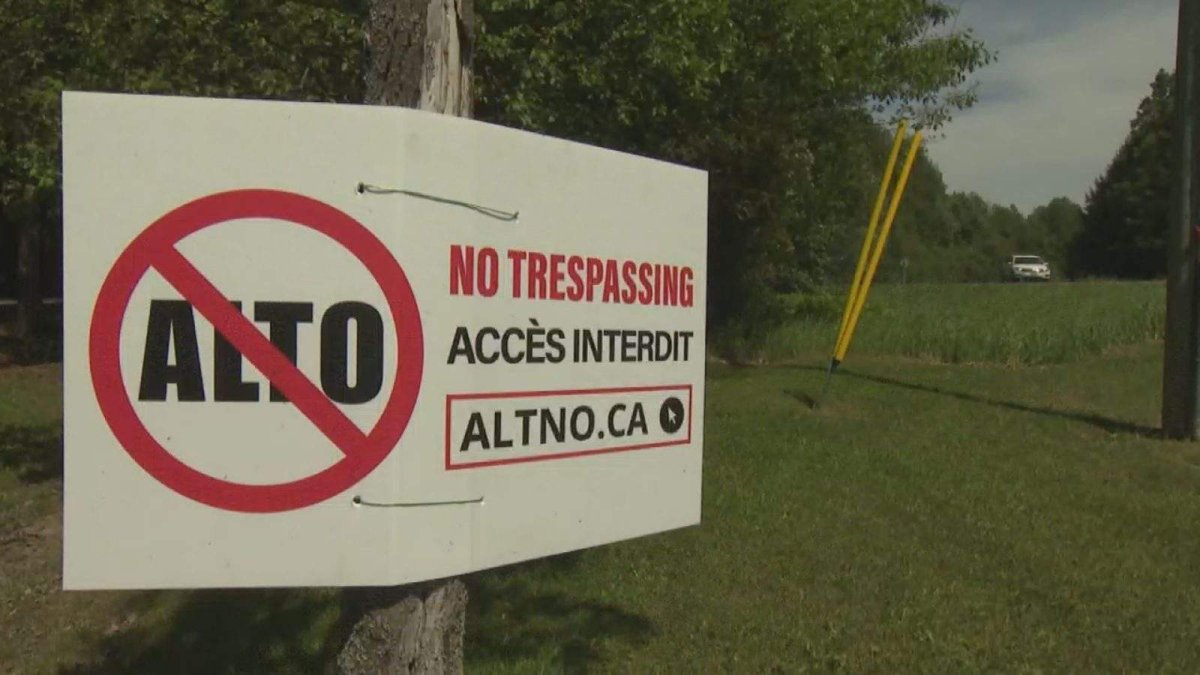
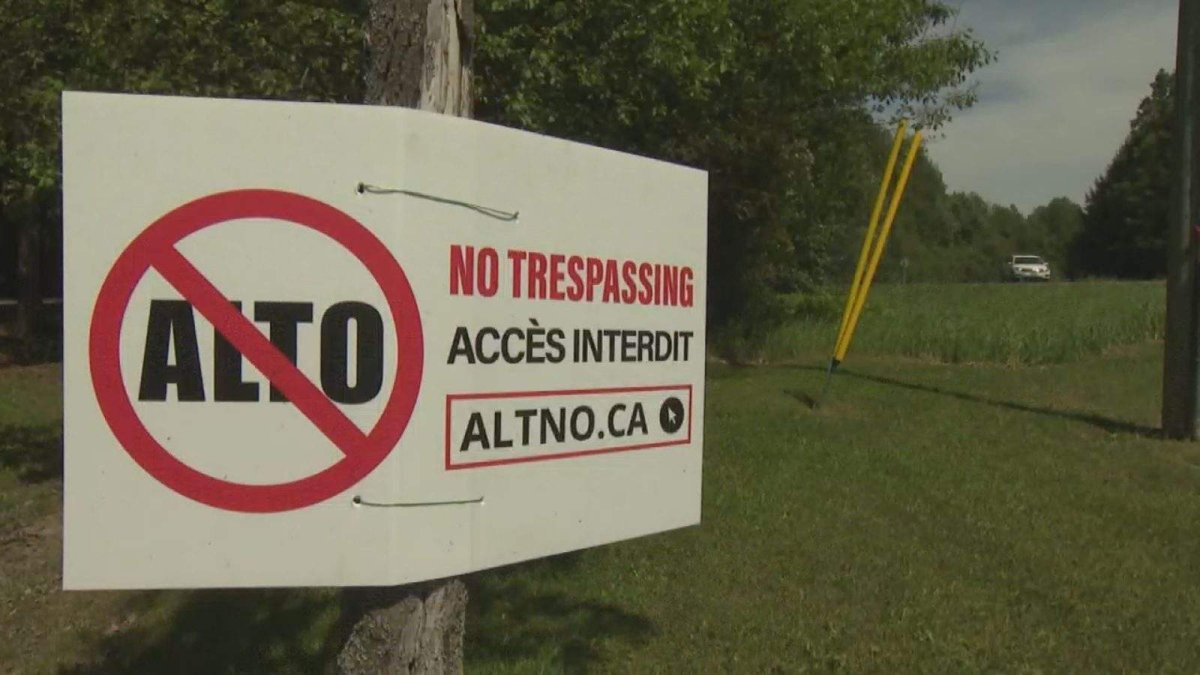
Federal Transport Minister Steven MacKinnon announced Monday that the federal government will consider a southern route option for the high-speed rail corridor linking Ottawa and Peterborough, including a potential stop in Kingston. The move has sparked immediate concern among residents in Eastern Ontario, who say the proposal threatens rural landscapes and local ways of life without adequate consultation.
Government Plans for High-Speed Rail
The announcement from Minister MacKinnon marks a shift in planning for the Alto high-speed rail project. Officials have been directed to examine a southern alignment that could bring the line through Kingston, even though the government has already mandated seven specific stops on the corridor: Toronto, Peterborough, Ottawa, Laval, Montreal, Trois-Rivieres, and Quebec City. This mandated list remains unchanged, yet the new southern option introduces fresh routing possibilities that were not previously highlighted in public documents.
Transport Canada has emphasised that any final decision must balance connectivity with environmental and community considerations. The corridor is intended to serve as a vital link across central Canada, reducing travel times between major urban centres while supporting economic growth. However, the inclusion of a Kingston stop under the southern route has raised questions about how additional stations might affect overall project timelines and costs.
Project planners note that the southern route would traverse parts of Frontenac County and surrounding townships. This path differs from earlier northern alignments that avoided denser rural areas. Residents in these townships have begun organising public meetings to discuss the implications, citing concerns over land use and noise levels associated with high-speed operations.
Local Residents' Opposition
Sarah McMullen of Save South Frontenac says residents feel betrayed by the sudden consideration of the southern route. Her group conducted a local poll that found 41.6 percent of respondents oppose the southern route specifically, while 55.8 percent oppose the project entirely. Many participants expressed frustration that earlier public consultations had focused on different alignments, leaving little opportunity to voice concerns about a Kingston-area stop.
Community members describe the proposal as disruptive to agricultural operations and recreational trails that criss-cross the region. Several families have lived on the same properties for generations, and the prospect of expropriation or restricted access has created widespread anxiety. McMullen noted that residents had expected the rail line to follow established transportation corridors rather than cutting through previously untouched farmland.
Public forums held in the weeks following the announcement drew hundreds of attendees. Speakers highlighted the need for transparent mapping and detailed impact studies before any route is advanced. Local municipal councils have passed resolutions requesting further information from federal officials, underscoring the depth of unease in Eastern Ontario.
Questions on Project Viability
Alto projects 24 million annual riders by 2055, a figure that has drawn scrutiny from independent analysts. A McGill University study estimates ridership closer to 8-10 million passengers per year under similar conditions. The gap between these projections has prompted calls for revised modelling that accounts for post-pandemic travel patterns and competition from existing bus and air services.
Critics argue that optimistic forecasts could lead to overbuilding infrastructure that fails to generate sufficient revenue. They point to international examples where high-speed rail lines have struggled to meet initial ridership targets, resulting in ongoing subsidies. In the Canadian context, where population density between Ottawa and Peterborough remains relatively low outside urban cores, achieving the higher projection appears particularly challenging.
Supporters of the project maintain that integrated ticketing and connections to downtown stations will drive usage over time. They also highlight environmental benefits from shifting travellers away from personal vehicles and short-haul flights. Nevertheless, the divergence in ridership estimates continues to fuel debate among policy experts and local stakeholders alike.
Expert Views on Route and Speed
Peter Miasek of Transport Action Ontario has called for a solid business case before proceeding with any route decision. He stresses that detailed cost-benefit analyses must be released publicly to allow informed discussion. Miasek also suggests that operating speeds of 170 km/h rather than the proposed 300 km/h could provide greater flexibility in routing while still delivering meaningful time savings compared with current options.
Anthony Jenkins, a local resident and frequent commentator on infrastructure matters, worries that the rail line could create an impenetrable barrier across the landscape. He notes that high-speed tracks often require extensive fencing and grade separations, which can fragment wildlife habitats and limit pedestrian and farm-vehicle crossings. Jenkins advocates for elevated or tunnelled sections in sensitive areas to mitigate these effects.
Both Miasek and Jenkins agree that lower maximum speeds might allow the line to follow existing rail rights-of-way more closely, reducing the need for new land acquisition. This approach could address some community concerns while maintaining acceptable travel times between the mandated stops. Federal officials have not yet commented on whether speed reductions remain under consideration.
Future Implications for the Region
The coming months will be critical as Transport Canada completes its review of the southern route option. Additional public consultations are expected, though dates have not been confirmed. Residents in Eastern Ontario continue to organise petitions and letter-writing campaigns aimed at ensuring their voices shape the final alignment decision.
Local businesses remain divided on the potential economic effects. Some tourism operators see opportunities from improved access to Kingston, while agricultural producers fear long-term disruption to operations. Municipal leaders have requested dedicated funding for community benefit agreements should the southern route advance.
Ultimately, the success of the Alto project will depend on balancing national connectivity goals with the specific needs of communities along the corridor. The mandated stops provide a clear framework, yet the introduction of a Kingston stop via the southern route has introduced new variables that require careful navigation. Continued dialogue between federal planners and Eastern Ontario residents will be essential to reaching an outcome that enjoys broad support.
Federal-Provincial Dynamics and Funding
The Alto high-speed rail initiative highlights longstanding tensions in federal-provincial relations, particularly around cost-sharing arrangements for major transportation infrastructure. While the federal government has taken the lead in announcing route options and mandated stops, Ontario holds significant jurisdiction over land use planning and portions of the existing rail network. This division raises questions about how construction costs, estimated in the tens of billions, will be divided between Ottawa and Queen's Park, especially given competing provincial priorities such as highway expansion and transit upgrades in the Greater Toronto Area.
Jurisdictional issues extend beyond funding to regulatory oversight and environmental assessments. Rail infrastructure crossing multiple provinces requires coordination with bodies like the Canada Transportation Agency, yet Ontario municipalities retain authority over local zoning and expropriation processes. Eastern Ontario townships have already signalled their intent to leverage these powers if the southern route advances. The project also intersects with broader federal infrastructure funding programs, including the Investing in Canada Plan, where contributions from multiple levels of government have historically been structured through bilateral agreements that prioritise shared economic and environmental objectives.
Economic and Environmental Balancing Act
The economic case for high-speed rail in Canada rests on projections of reduced travel times and induced economic activity, yet independent analyses continue to question whether ridership will justify the substantial capital outlay. Cost estimates for the full corridor have ranged widely, with some modelling placing the price tag above $30 billion when including land acquisition, tunnelling through sensitive areas, and grade separations. Proponents argue that long-term benefits, including agglomeration effects around stations and decreased congestion on Highways 401 and 416, could offset these expenditures over decades.
Environmental considerations add another layer of complexity. Shifting passengers from short-haul flights and personal vehicles aligns with federal carbon reduction targets under the 2030 Emissions Reduction Plan, potentially cutting millions of tonnes of greenhouse gases annually once operational. However, construction-related emissions from concrete production and habitat disruption in rural Eastern Ontario could delay net positive impacts. Questions about long-term viability persist, particularly if lower operating speeds are adopted to reduce costs and community opposition, which might limit both the environmental gains and the competitive edge against existing Via Rail services.
Historical Context of Canadian High-Speed Rail
Debates over high-speed rail in Canada date back decades, with early proposals in the 1960s and 1970s exploring links between the Windsor-Quebec City corridor. Successive federal studies, including those commissioned in the 1980s and 1990s, examined technologies ranging from magnetic levitation to conventional steel-wheel systems but repeatedly stalled over concerns about population density and fiscal restraint. The Via Rail network, long the backbone of passenger service, has undergone incremental upgrades rather than transformative high-speed investments, leaving Canada as an outlier among G7 nations.
The current Alto project draws comparisons to international examples such as France's TGV and Japan's Shinkansen, where dedicated rights-of-way and consistent political commitment enabled success. Unlike those systems, Canadian efforts have been hampered by fragmented governance and competition from well-developed air and highway networks. Previous Via Rail high-frequency rail studies proposed speeds up to 200 km/h on upgraded tracks, yet the Alto emphasis on 300 km/h operations represents a more ambitious departure that echoes earlier rejected concepts while incorporating lessons from European and Asian implementations.
By Alex Thompson, Staff Writer
This article was produced with AI-assisted research and editorial support. Reporting is based on sources cited in the article.
What's Your Reaction?
 Like
0
Like
0
 Dislike
0
Dislike
0
 Love
0
Love
0
 Funny
0
Funny
0
 Wow
0
Wow
0
 Sad
0
Sad
0
 Angry
0
Angry
0

Canada Correspondent at Global1.News. Based in Toronto, covering Canadian politics, energy, trade, and US-Canada relations. Provides the Canadian perspective on North American and global affairs.














Comments (0)