
Duterte ICC Trial Opens Doors for Up to 1,000 Victims Seeking Justice
Duterte ICC Trial Opens Doors for Up to 1,000 Victims Seeking Justice Communities Hold On to Hope Across the Philippines, families who lost loved ones during the anti-drug campaign continue to carry heavy hearts. The possibility that up to 1,000 victims may take part in the International Criminal Court proceedings against former President Rodrigo Duterte brings a quiet sense of
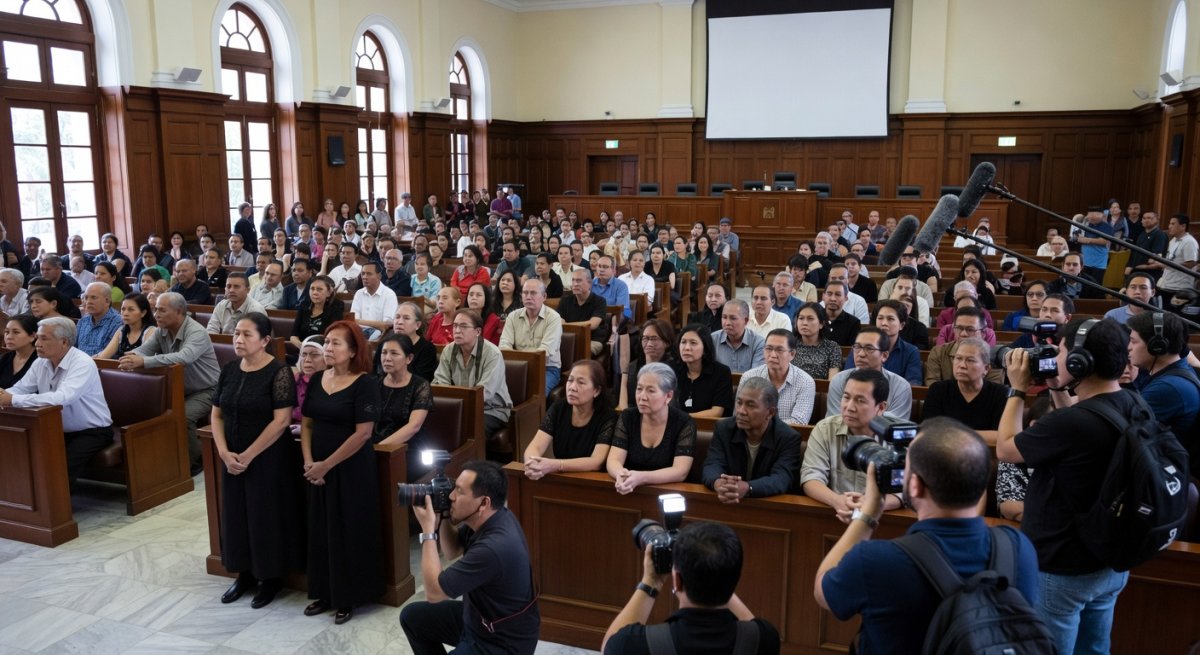
Communities Hold On to Hope
Across the Philippines, families who lost loved ones during the anti-drug campaign continue to carry heavy hearts. The possibility that up to 1,000 victims may take part in the International Criminal Court proceedings against former President Rodrigo Duterte brings a quiet sense of recognition to households still waiting for answers.
Many ordinary Filipinos remember the nights when communities lived in fear. Mothers who once searched police stations and morgues now watch from afar as legal steps unfold in The Hague. Their stories remind us that justice is not just a courtroom matter but a deeply personal longing shared by entire neighborhoods.
These families often feel forgotten in daily conversations about politics. Yet the chance to participate in the trial offers them a platform to be seen and heard, even from thousands of miles away.
Victim Numbers Reflect Widespread Impact
ICC Assistant to Counsel Kristina Conti shared that estimates now point to between 500 and 1,000 victims who may join the case. She noted how entire households can qualify, with five family members sometimes counted as victims under one submission using household forms.
This approach acknowledges that the loss of one person ripples through many lives. In tight-knit Philippine communities, a single death can leave children without parents, siblings without support, and barangays without familiar faces at local gatherings.
Conti’s comments highlight how interest remains strong, with more than 500 people still considering applications. The numbers show the campaign’s reach touched far more than official tallies once suggested, touching the lives of everyday citizens in cities and provinces alike.
Distinguishing Victims from Witnesses
At the ICC, victim participants play a distinct role from witnesses. Under Article 68(3) of the Rome Statute, those affected can present their views and concerns through legal representatives without interfering with the accused’s right to a fair trial.
This mechanism allows families to express how the events changed their daily existence. It gives space for stories of grief, economic hardship, and community disruption that might otherwise stay silent in formal proceedings.
Witnesses, by contrast, will focus on evidence. Prosecutors plan to call 60 to 70 witnesses, including around 31 insiders. Victim participation adds another layer, centering the human experience alongside legal facts.
Timeline Brings Cautious Anticipation
The ICC opened victim application forms in 2021. After charges against Duterte were confirmed in April 2026, the court resumed evaluating those applications ahead of the trial set to open on November 30.
Duterte faces accusations of crimes against humanity involving murder linked to operations from 2013 to 2018. Human rights groups have long estimated that the campaign claimed up to 30,000 lives, a figure that continues to weigh on affected families.
Senator Ronald “Bato” dela Rosa, who served as Duterte’s police chief during the campaign, is also wanted by the ICC. His role in implementation remains part of broader discussions about accountability at all levels of authority.
Ordinary Lives Behind the Numbers
For many Filipinos, the trial represents more than legal process. It connects to questions of how local government units and national agencies handled public safety, and how communities can begin to heal from years of uncertainty.
Children who grew up without fathers, widows managing households alone, and neighbors who lost friends all carry these experiences. Their participation could help document the wider social costs that statistics alone cannot capture.
Department of Health records and Philippine National Police reports once framed the campaign in operational terms. Victim accounts now add personal dimensions that Congress and civil society groups have long urged be acknowledged.
Looking Toward Shared Accountability
As the November 30 trial date approaches, attention turns to how the ICC chamber will balance victim voices with the requirements of due process. The process offers a chance for the international community to witness the realities faced by Philippine families.
Communities across the country continue to discuss what meaningful justice might look like. For some, it means recognition that every life lost mattered; for others, it means ensuring such events never repeat in any form.
The road ahead remains long, yet the growing number of applications signals that many are ready to step forward. Their courage reflects the enduring Filipino spirit of seeking truth even when the path is uncertain.
By Bella Reyes, Staff WriterThis article was produced with AI-assisted research and editorial support. Reporting is based on sources cited in the article.
What's Your Reaction?
 Like
0
Like
0
 Dislike
0
Dislike
0
 Love
0
Love
0
 Funny
0
Funny
0
 Wow
0
Wow
0
 Sad
0
Sad
0
 Angry
0
Angry
0

Africa Correspondent at Global1.News. Based in Lagos, covering politics, business, technology, and culture across the continent. Focused on telling African stories beyond the headlines — the innovation, entrepreneurs, and communities shaping the region's future.











Comments (0)