
Chihuahua Farmers Block Roads and Border Crossings in Water Law Protest
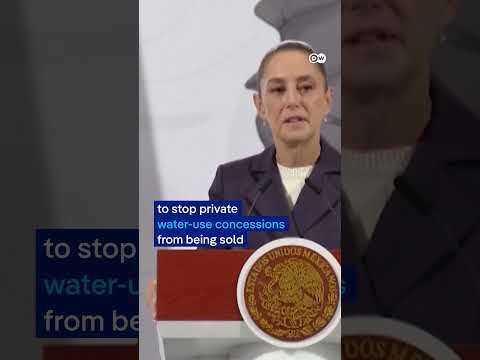
In a recent DW News report, thousands of Mexican farmers in Chihuahua blocked major highways and border crossings to protest proposed changes to water laws that they say threaten their livelihoods and the future of agriculture in northern Mexico. The demonstrations centered on the Rio Bravo basin, where prolonged drought has already reduced harvests for families in rural coloni
In a recent DW News report, thousands of Mexican farmers in Chihuahua blocked major highways and border crossings to protest proposed changes to water laws that they say threaten their livelihoods and the future of agriculture in northern Mexico. The demonstrations centered on the Rio Bravo basin, where prolonged drought has already reduced harvests for families in rural colonias near Ciudad Juárez. With the federal government in Mexico City watching closely, these campesinos are demanding that their voices be heard before any water allocation decisions are finalized.
Chihuahua Farmers Block Roads and Border Crossings in Water Law Protest
Chihuahua, Chihuahua – Mexico — Mexican farmers in Chihuahua have taken to the streets and highways this week, blocking key border crossings and major roads in a coordinated protest against proposed water law changes. Protesters gathered at strategic points including the international bridges connecting Ciudad Juárez to El Paso, Texas, halting commercial traffic for hours. Ejido leaders coordinated the actions across multiple municipalities, demanding that the Sheinbaum administration address what they describe as a systemic failure in water allocation that has left agricultural communities parched.
Background of the 1944 Water Treaty Dispute
The 1944 Water Treaty between Mexico and the United States governs allocations from the Rio Bravo, yet Mexican farmers argue that current delivery schedules leave too little for domestic agriculture. Under the treaty, Mexico must supply set volumes to the United States during five-year cycles, a requirement that has created recurring tensions during dry periods. This cycle has been a source of friction between the two nations for decades, with Mexican farmers often bearing the brunt of treaty compliance during drought years.
Campesinos in Chihuahua state that federal authorities through CONAGUA have prioritized treaty compliance over local needs in recent cycles. This has forced reductions in irrigation for corn and alfalfa fields that sustain thousands of households around the municipalities of Delicias and Meoqui. In the past, similar water debt obligations have sparked protests that shut down international bridges for weeks at a time.
Impact on Families and Rural Communities
In the colonias surrounding Chihuahua City, small-scale farmers report that water shortages have already cut their yields by nearly half compared to five years ago. Families who once sold produce at local tianguis now rely on remittances from relatives working in maquiladoras across the border. The economic ripple effect extends beyond the fields — local tortillerías and taquerías in rural communities report fewer customers as household incomes shrink.
Women in these communities often manage household water use while men spend longer hours at the blockades. Children in rural schools near the blocked routes have faced disrupted transportation, affecting attendance at institutions supported by the Secretaría de Educación Pública. For many of these families, the protest is not a political statement but a last resort to protect their way of life.
Demands for Renegotiated Allocations
The protesters are calling on the Sheinbaum administration to renegotiate water shares among agricultural, industrial, and municipal users within the Rio Bravo basin. They want clearer rules that protect campesino access before additional volumes are released to fulfill treaty obligations. Leaders from the Unión de Ejidos in Chihuahua have submitted formal petitions to the Secretaría de Gobernación and CONAGUA asking for emergency drought declarations and adjusted delivery schedules.
Without these steps, the protesters warn that more families will abandon their land for work in northern border cities or migrate further north. The depopulation of rural communities in Chihuahua has already accelerated over the past decade, with INEGI data showing declining populations in several agricultural municipalities. A failure to address water access could worsen this trend, hollowing out communities that have sustained Mexican agriculture for generations.
Political Context and Federal Response
The current protests build on tensions that persisted through the AMLO presidency and now face the Sheinbaum administration. Morena party legislators in the Cámara de Diputados have introduced bills to update water distribution formulas, yet farmers say implementation remains slow and disconnected from the reality on the ground. The PAN party, which has strong electoral support in Chihuahua, has accused the federal government of neglecting northern states in favor of central and southern regions.
SEDENA personnel have been deployed to monitor the blockades but have not cleared the roads by force, reflecting the government's recognition that the issue affects core agricultural regions vital to Mexico's food supply. At the mañanera, President Sheinbaum has acknowledged the protesters' concerns and pledged to review water allocation policies, though no specific timeline has been announced.
Long-Term Stakes for Mexican Agriculture
If the federal government does not address the allocation disputes, experts at INEGI project continued declines in Chihuahua's contribution to national grain production. This would raise costs at tortillerías across central Mexico and increase reliance on imported feed for livestock operations in states like Sonora and Sinaloa. For a country that values food sovereignty, the loss of domestic agricultural capacity in the north represents a strategic vulnerability.
Campesino organizations plan to maintain pressure through sustained demonstrations until concrete policy changes emerge from Palacio Nacional. Their actions highlight how water policy decisions made in Mexico City directly shape daily survival for families who grow the food Mexicans eat and underscore the growing tension between international treaty obligations and the needs of rural communities.
By Rosa Martinez, Staff Writer
This article was produced with AI-assisted research and editorial support. Reporting is based on sources cited in the article.
What's Your Reaction?
 Like
0
Like
0
 Dislike
0
Dislike
0
 Love
0
Love
0
 Funny
0
Funny
0
 Wow
0
Wow
0
 Sad
0
Sad
0
 Angry
0
Angry
0

Latin America/Andes Correspondent at Global1.News. Based in Bogota, covering politics, environment, energy, and social movements across the Andean region. Passionate about environmental journalism and communities protecting their land.














Comments (0)