
Cracks in Russia's Economy Shine Through at SPIEF as War Spending Strains Civilian Sectors
Black smoke rose over St. Petersburg this week as the St. Petersburg International Economic Forum opened. A Ukrainian drone strike produced the plume, an image that captured the tension surrounding Russia's flagship investment gathering. The forum brings together Kremlin officials, business executives from companies such as Gazprom and Rosneft, media figures, and representative
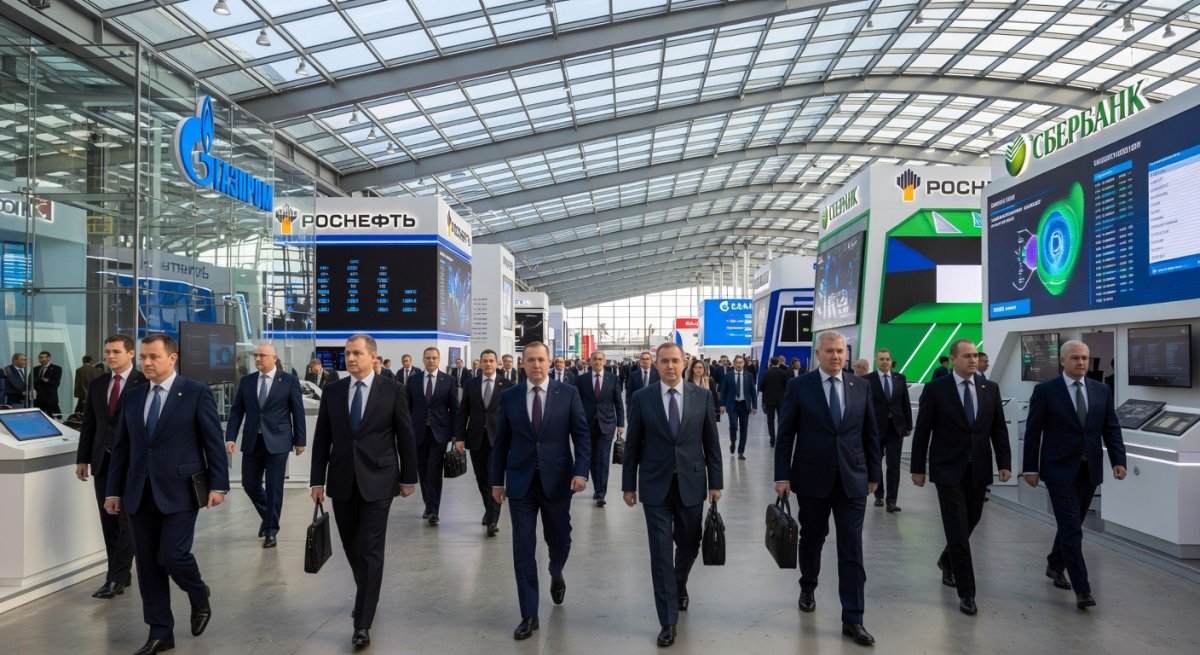
Black smoke rose over St. Petersburg this week as the St. Petersburg International Economic Forum opened. A Ukrainian drone strike produced the plume, an image that captured the tension surrounding Russia's flagship investment gathering. The forum brings together Kremlin officials, business executives from companies such as Gazprom and Rosneft, media figures, and representatives from non-Western states.
Since the full-scale invasion of Ukraine, Moscow has used SPIEF to project stability and strengthen ties with partners in Asia and the Middle East. This year the event occurred against mounting financial pressures inside Russia itself. The central question remained whether the economy could continue to support the military campaign without deeper damage to civilian sectors.
Cracks in Russia's Economy Shine Through at SPIEF as War Spending Strains Civilian Sectors
St. Petersburg, Russia – This Week — Panel discussions at the forum largely avoided direct examination of the Ukraine conflict. Topics instead centered on improving the investment climate and the role of artificial intelligence. Yet the contrast between the polished displays and the underlying strains was evident to participants and observers alike.
The Drone Attack Sets the Tone
Comments from senior figures revealed growing caution. Maxim Oreshkin, a Kremlin economic official, stated on a Thursday panel that Russia should not expect a return to pre-war conditions or the lifting of Western sanctions. He framed the economy as likely to remain isolated from the West for the foreseeable future.
GDP Forecast Downgraded Amid Slowing Growth
Last month Deputy Prime Minister Alexander Novak announced that the government had lowered its 2026 GDP growth projection from 1.3 percent to 0.4 percent. The revision marked a sharp departure from the rapid expansion recorded in 2023 and 2024, when defense outlays helped produce growth rates of 4.1 percent and 4.9 percent respectively.
Officials have described the earlier surge as a period of overheating followed by managed cooling. Oreshkin called for more aggressive policies to expand trade and investment with non-Western countries. Skepticism about the effectiveness of such measures has increased among some analysts and lawmakers.
Communist Party Lawmaker Breaks with Official Optimism
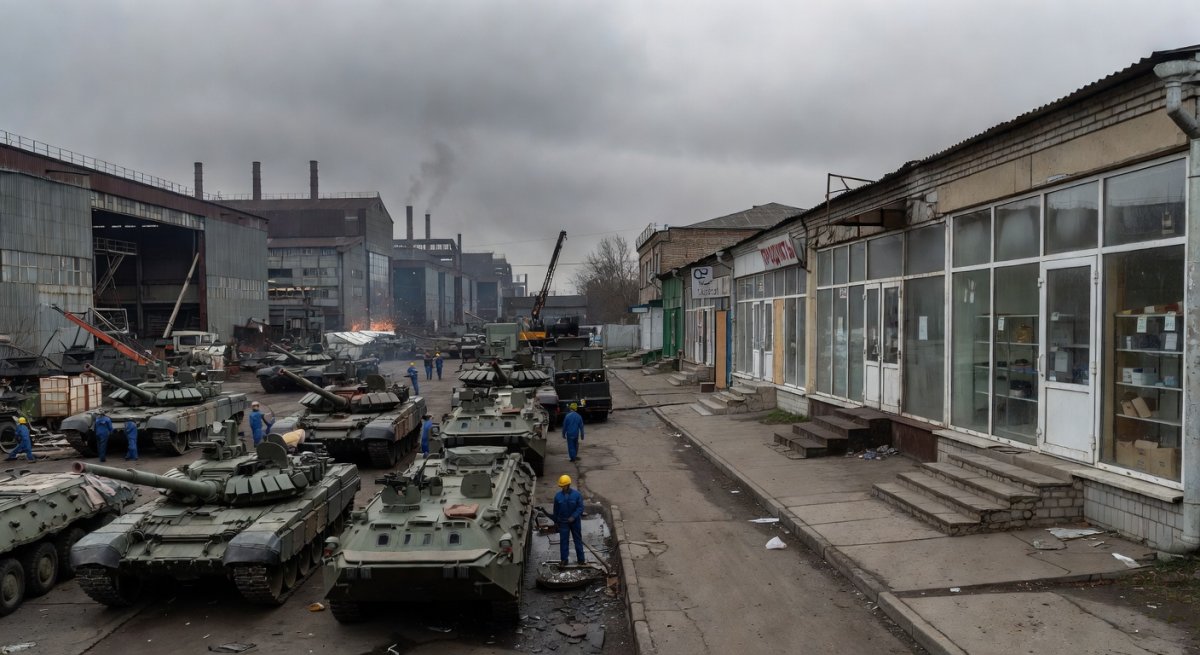
Days before the forum opened, State Duma deputy Renat Suleimenov of the Communist Party offered unusually direct criticism. In an interview the Siberian lawmaker questioned the value of continued high military production, noting that tanks and shells generate no consumer benefit for the population.
Suleimenov asked what scope remained for development, investment, and capital expenditures while resources flowed into the defense sector. His remarks stood out because they came from a sitting official rather than an opposition figure or independent economist.
Economists Point to Long-Term Demographic and Fiscal Risks
Economist Dmitry Nekrasov observed that the Russian economy can sustain the current level of military spending for an extended period. He argued that the greater challenge lies in financing any further increases should battlefield requirements rise. Nekrasov added that working-class households, who lack representation at events such as SPIEF, are likely to bear the eventual costs through slower wage growth and reduced public services.
Nekrasov cautioned against taking official statements at face value, noting that SPIEF is designed to present Russia as an attractive investment destination. Fashionable topics receive attention while deeper pessimism stays muted.
Business Leaders Highlight Demographic Constraints
At Sberbank's invitation-only business breakfast on Friday, Aeon Corporation founder Roman Trotsenko stated plainly that the business environment is performing poorly. He attributed the slowdown primarily to demographic decline rather than sanctions alone. Birth rates fell last year to a 200-year low, reducing the labor force available for both civilian and defense industries.
Trotsenko described the old growth model as exhausted. His assessment aligned with broader concerns that population shrinkage will limit Russia's capacity to expand output without major policy shifts.
Impact on Ordinary Russians and Regional Stability
Defense spending has supported employment in certain industrial regions, yet civilian sectors face persistent pressure from labor shortages and restricted access to Western technology. Energy exports to Asia have provided revenue, but the benefits have not fully offset rising domestic costs for ordinary households in cities such as Moscow and St. Petersburg.
Post-Soviet dynamics continue to shape outcomes. Regions with heavy defense industry presence experience different effects than areas reliant on small business or services. The long-term strain on living standards remains a central uncertainty for policymakers and citizens alike.
Analysis and Implications
The SPIEF forum has historically served as a barometer of Russia's economic confidence. This year's edition suggests that even as Kremlin officials project stability, the underlying pressures from sustained war spending, demographic decline, and technological isolation are becoming harder to manage. Analysts suggest the gap between official messaging and ground-level realities is widening, and that the coming months will test whether the government's managed cooling strategy can prevent a deeper downturn.
For ordinary Russians, the risks are tangible: slower wage growth, reduced public services, and an economy increasingly oriented around defense production at the expense of civilian needs. The question that lingers after SPIEF is not whether Russia's economy can survive the war, but at what cost to the country's long-term prosperity.
By Irina Volkov, Staff Writer
This article was produced with AI-assisted research and editorial support. Reporting is based on sources cited in the article.
What's Your Reaction?
 Like
0
Like
0
 Dislike
0
Dislike
0
 Love
0
Love
0
 Funny
0
Funny
0
 Wow
0
Wow
0
 Sad
0
Sad
0
 Angry
0
Angry
0
Russia/Eastern Europe Correspondent at Global1.News. Covering Russian politics, energy, security, and the shifting dynamics of the post-Soviet space. Provides clear-eyed analysis on one of the world's most opaque regions.









Comments (0)