
Netanyahu: Israel Prevented Iran's Nuclear Annihilation at JNS Summit
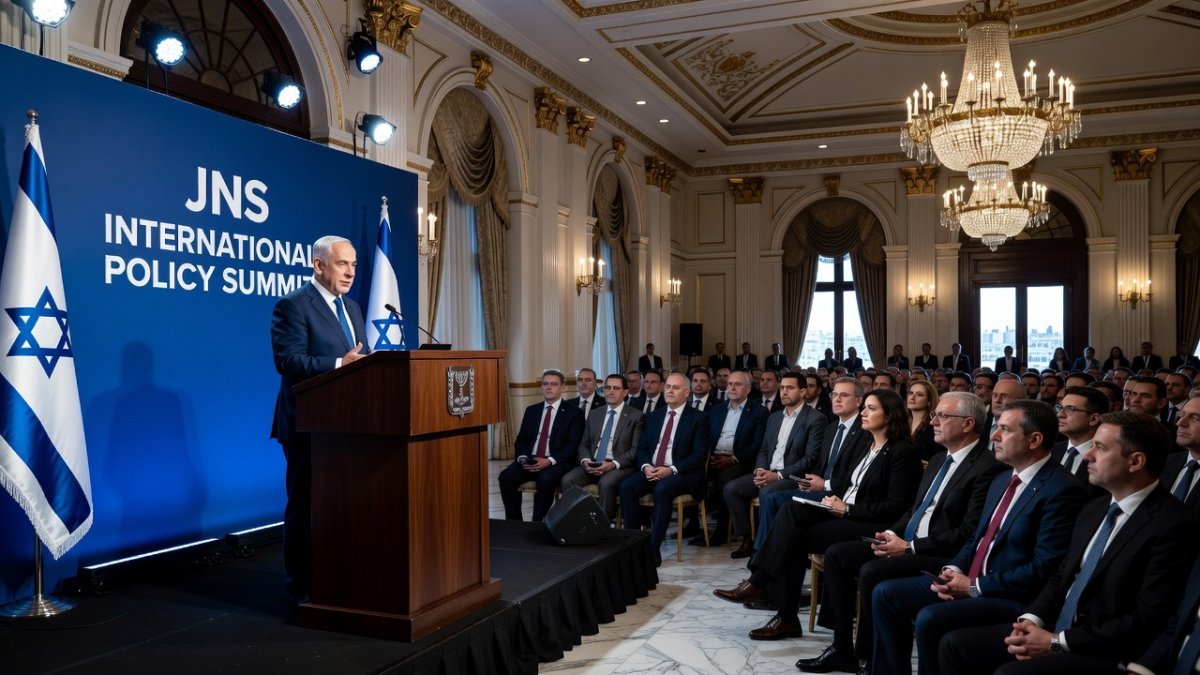
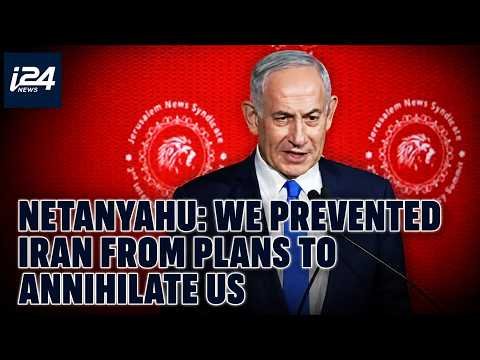
The i24NEWS English video embedded at the top captures Prime Minister Benjamin Netanyahu delivering a sweeping address at the 2nd annual JNS International Policy Summit on June 21, 2026, at the Waldorf Astoria Jerusalem. Netanyahu, fresh from a visit to the memorial of his brother Yonatan who fell at Entebbe in 1976, laid out Israel's completed operations against Iran and its p
The i24NEWS English video embedded at the top captures Prime Minister Benjamin Netanyahu delivering a sweeping address at the 2nd annual JNS International Policy Summit on June 21, 2026, at the Waldorf Astoria Jerusalem. Netanyahu, fresh from a visit to the memorial of his brother Yonatan who fell at Entebbe in 1976, laid out Israel's completed operations against Iran and its proxies while 200 security experts, politicians, diplomats and journalists gathered to chart post-October 7 strategy. His remarks underscore how Jerusalem has rewritten the rules of engagement across the region.
Iran's Nuclear Infrastructure Destroyed
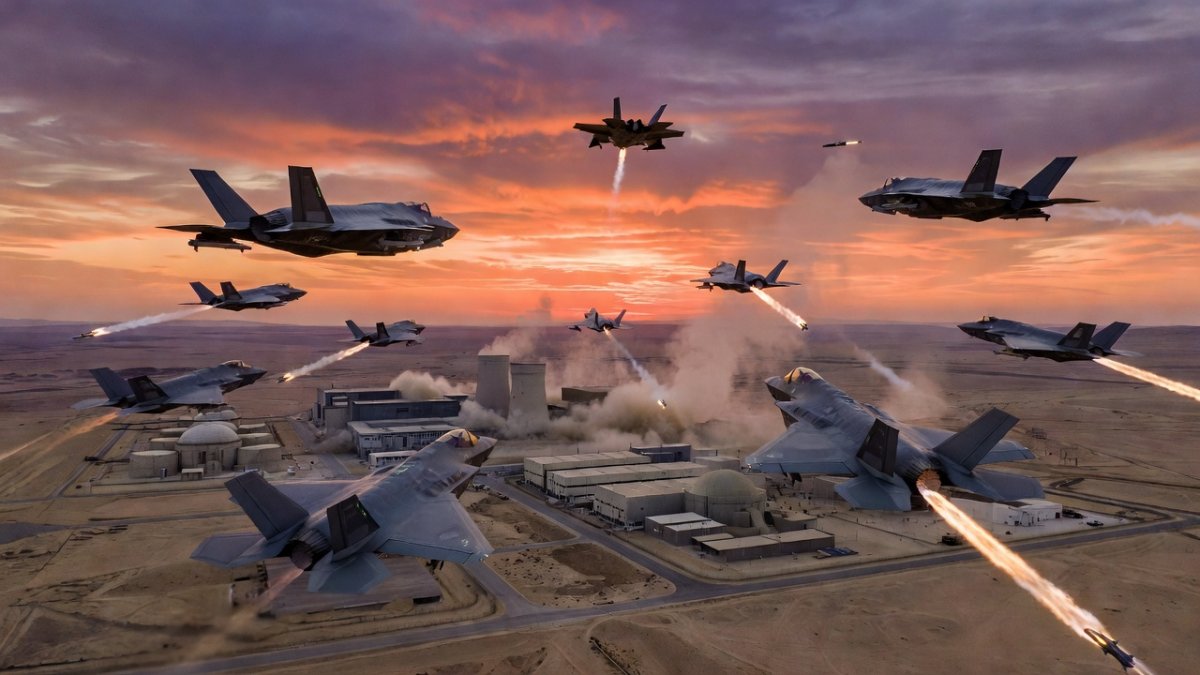
Prime Minister Netanyahu told the JNS summit that Operation Rising Lion and Operation Roaring Lion eliminated Iran's path to nuclear weapons. "Had we not acted in Operation Rising Lion and then in Operation Roaring Lion, Iran would have had atomic bombs, and let me tell you something. They would have used them. That's what we prevented," he stated. Israeli pilots struck nuclear sites, missile batteries and regime targets deep inside Iranian territory, destroying infrastructure that years of Mossad operations alone could not reach.
The Prime Minister detailed the elimination of 20 top Iranian nuclear scientists, twelve during Rising Lion and eight more in Roaring Lion. "When you take out the scientists, it's very hard to make a nuclear weapon," Netanyahu said. These targeted strikes, coordinated with precise intelligence from the IDF and Shin Bet, removed the human capital required to reconstitute a weapons program on short notice. Analysts at the Waldorf Astoria noted that such losses will delay any Iranian restart by at least a decade.
Netanyahu further reported that the operations inflicted hundreds of billions of dollars in damage on the Islamic Revolutionary Guard Corps. "They may not recover," he assessed. The IRGC's command nodes, missile production lines and forward bases across western Iran now lie in ruins, weakening Tehran's ability to project power toward the Lebanon border or the Gaza Strip. Israeli security officials assess that this degradation directly reduces the threat envelope facing communities from Kiryat Shmona to Sderot.
By breaching the long-standing taboo against striking Iranian soil with conventional military force, Israel demonstrated that distance no longer shields adversaries. The successful penetration of Iranian airspace by IAF squadrons has already prompted Gulf states to recalibrate their own defense postures. Jerusalem's actions have reset the deterrence equation across the Middle East, showing that preemptive military reach can neutralize existential threats before they mature.
A New Israeli Security Doctrine
Netanyahu declared that Israel has abandoned reactive defense in favor of decisive initiative. "We changed Israel's security doctrine. We initiate, we attack, we surprise, and we attack those enemies that seek our destruction before they have a chance to do so," he told the summit audience. This shift, forged in the aftermath of October 7, now guides every operational decision from the Prime Minister's Office through IDF Southern and Northern Commands.
The doctrine explicitly rejects the notion that certain targets remain off-limits. "For years, people told us, you cannot attack the soil of Iran. Yes, you can do Mossad operations... but you cannot send our military to Iran, but we changed that," Netanyahu recounted. Israeli pilots now operate routinely over Iranian skies, striking both nuclear facilities and conventional missile arrays. The precedent established in Rising Lion and Roaring Lion has been absorbed into IDF planning documents as a permanent option.
Security experts at the JNS summit emphasized that this proactive posture extends beyond Iran. It now encompasses preemptive action against any actor assembling capabilities that could threaten Israeli population centers. The doctrine prioritizes rapid decision cycles between intelligence collection and strike authorization, compressing the window available to adversaries. Shin Bet and Mossad assessments presented at the Waldorf Astoria confirmed that this approach has already disrupted multiple attack plots in their early stages.
By institutionalizing surprise and initiative, Jerusalem has altered the cost-benefit calculations of every hostile capital. Regional actors now factor in the certainty of Israeli response rather than the probability of restraint. This doctrinal evolution, rooted in the hard lessons of 2023 and 2024, positions Israel to shape events rather than merely absorb them.
Hezbollah and the Northern Front
Netanyahu credited Israel's campaign with dismantling Hezbollah's offensive capacity along the Lebanon border. "We exploded the beepers, we took out Nasrallah, we decimated Hezbollah's military machine, we prevented the Radwan Force from invading the Galilee, we destroyed over 90 percent of the 150,000 rockets and missiles that Hezbollah amassed against us," he stated. These cumulative blows have left the group's command structure in disarray and its rocket stockpiles largely neutralized.
The Prime Minister drew a sharp distinction between the Lebanese state and the Iranian proxy. "We don't have a war with Lebanon, we have a war with Hezbollah," he said. Israeli forces maintain a security zone inside southern Lebanon to prevent re-infiltration by remaining Radwan units. This buffer, IDF commanders report, has already reduced cross-border incidents and allowed displaced residents of northern Israel to begin returning to their homes.
Netanyahu announced parallel security zones in Syria and Gaza that will remain in place "as long as necessary to protect our people." These zones deny adversaries staging areas within striking distance of Israeli territory. Military analysts at the summit noted that the zones also facilitate ongoing intelligence collection and rapid interdiction of smuggling routes that once supplied Hezbollah and Hamas.
The degradation of Hezbollah's arsenal and leadership has produced measurable effects on the broader Iranian axis. With its primary forward arm crippled, Tehran faces greater difficulty coordinating multi-front pressure against Israel. Jerusalem's northern border communities now operate under significantly reduced threat levels, validating the decision to sustain operations until the Radwan threat was eliminated.
Hostage Recovery and the War Against Hamas
Netanyahu described the dismantling of Hamas's senior leadership and the recovery of all hostages as central achievements. "We shattered Iran's terror axis. We took out Sinwar, we took out Haniyeh, we took out Deif, we took out tens of thousands of terrorists, and despite those who said it couldn't be done, we brought back to Israel every single hostage," he declared. The operations combined precise targeted killings with sustained ground pressure inside Gaza.
The establishment of a security zone along Gaza's perimeter now prevents Hamas from regrouping near Israeli communities. IDF engineering units continue to expand buffer areas while Shin Bet monitors remaining tunnel networks. Netanyahu stressed that these measures will persist until Hamas no longer possesses the capacity to repeat the atrocities of October 7.
Israeli officials highlighted the unusually low civilian casualty ratio achieved during the Gaza campaign. "We should be commended for [low civilian casualties], not condemned," Netanyahu told the summit. This outcome resulted from rigorous target vetting processes involving multiple intelligence agencies and real-time legal oversight. The approach has preserved international legitimacy while achieving decisive military results.
By removing Hamas's top echelon and recovering every hostage, Israel has restored a measure of deterrence that had eroded prior to October 7. The combination of leadership decapitation, territorial buffers and hostage return demonstrates that sustained pressure can reverse the gains of terrorist organizations. Gaza's security zone now serves as a permanent reminder that violations of Israeli sovereignty carry lasting consequences.
The US-Israel Partnership and International Response
US Ambassador to Israel Mike Huckabee addressed the JNS summit with a direct message of solidarity. "Americans should thank God for the Jewish people," he said. His remarks underscored the enduring strategic alignment between Washington and Jerusalem even as operations expanded across multiple fronts. Netanyahu's address reinforced that American support remains vital for sustaining Israel's qualitative military edge.
The Prime Minister's emphasis on low civilian casualties was framed as a deliberate policy choice that distinguishes Israeli operations from those of its adversaries. This record, he argued, merits recognition rather than criticism from international bodies. Diplomats present at the Waldorf Astoria noted that Israel's transparency regarding targeting procedures has helped maintain support among key European and Asian partners.
Netanyahu also addressed rising antisemitism worldwide. "Don't cower, don't be afraid, and fight back," he urged. The statement linked Israel's military successes to the broader defense of Jewish communities facing threats in multiple countries. Israeli officials view the defeat of Iran and its proxies as contributing directly to the security of diaspora populations.
The partnership with the United States continues to provide critical intelligence, munitions and diplomatic cover. Joint assessments shared at the summit indicate that this cooperation has accelerated the degradation of Iranian and Hezbollah capabilities. Jerusalem's ability to act decisively while retaining American backing illustrates the strength of the bilateral relationship under current conditions.
The JNS Summit and Israel's Strategic Future
The 2nd annual JNS International Policy Summit at the Waldorf Astoria Jerusalem brought together more than 200 experts to examine Israel's post-October 7 security architecture. Netanyahu's arrival directly from his brother Yonatan's Entebbe memorial infused the proceedings with historical resonance. The Prime Minister invoked that 1976 operation to illustrate the enduring requirement for bold action against tyranny.
"If free people mobilize their courage and muster their strength, they can overcome the worst tyrannies in the world," Netanyahu said, referencing Entebbe. He also quoted his father Benzion: "Stare unflinchingly at the danger, calmly consider what needs to be done and what can be done, and be ready to enter the fray at the proper moment." These principles now animate Israel's revised doctrine of initiative and preemption.
Summit participants examined how the security zones in Gaza, Lebanon and Syria will shape long-term border management. Discussions focused on integrating new intelligence capabilities with rapid strike options to prevent any reconstitution of enemy forces. The consensus held that the operations of 2025 and 2026 have fundamentally altered Israel's threat environment.
By documenting the destruction of Iran's nuclear infrastructure, the collapse of Hezbollah's military machine and the recovery of all hostages, Netanyahu presented a coherent narrative of restored deterrence. The JNS gathering concluded that Israel's willingness to act independently when necessary, while maintaining alliances, offers the most reliable path to enduring security in a volatile region.
By Hannah Berg, Staff WriterThis article was produced with AI-assisted research and editorial support. Reporting is based on sources cited in the article.
What's Your Reaction?
 Like
0
Like
0
 Dislike
0
Dislike
0
 Love
0
Love
0
 Funny
0
Funny
0
 Wow
0
Wow
0
 Sad
0
Sad
0
 Angry
0
Angry
0

Israel Correspondent at Global1.News. Based in Tel Aviv, covering Israeli politics, security, technology, and society. Provides balanced, deeply-sourced reporting on one of the most closely-watched regions in the world.















Comments (0)