
Bolivian Blockades Put Newborns at Risk as Oxygen Runs Low in La Paz Hospitals
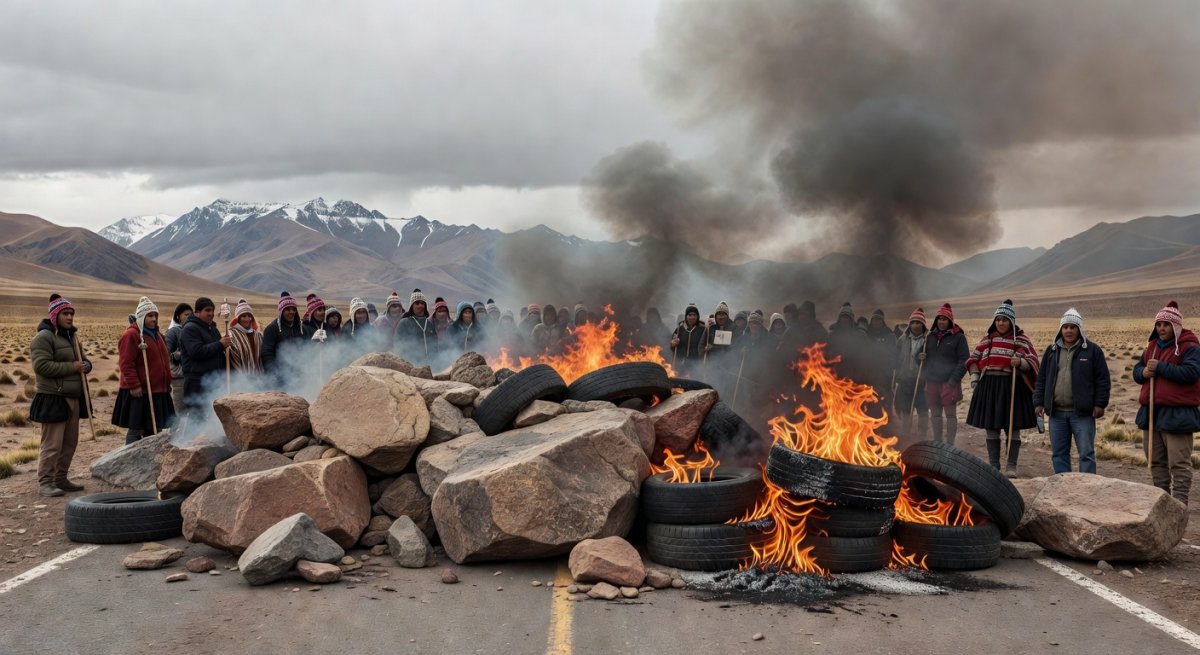
Across the highland capital of La Paz, mothers clutch empty oxygen cylinders outside hospital gates while their children struggle for breath. More than 80 blockades have paralyzed the country for approximately 35 days by early June 2026, turning routine medical supply routes into battlegrounds. La Paz has been declared in sanitary and humanitarian emergency, a stark acknowledgm
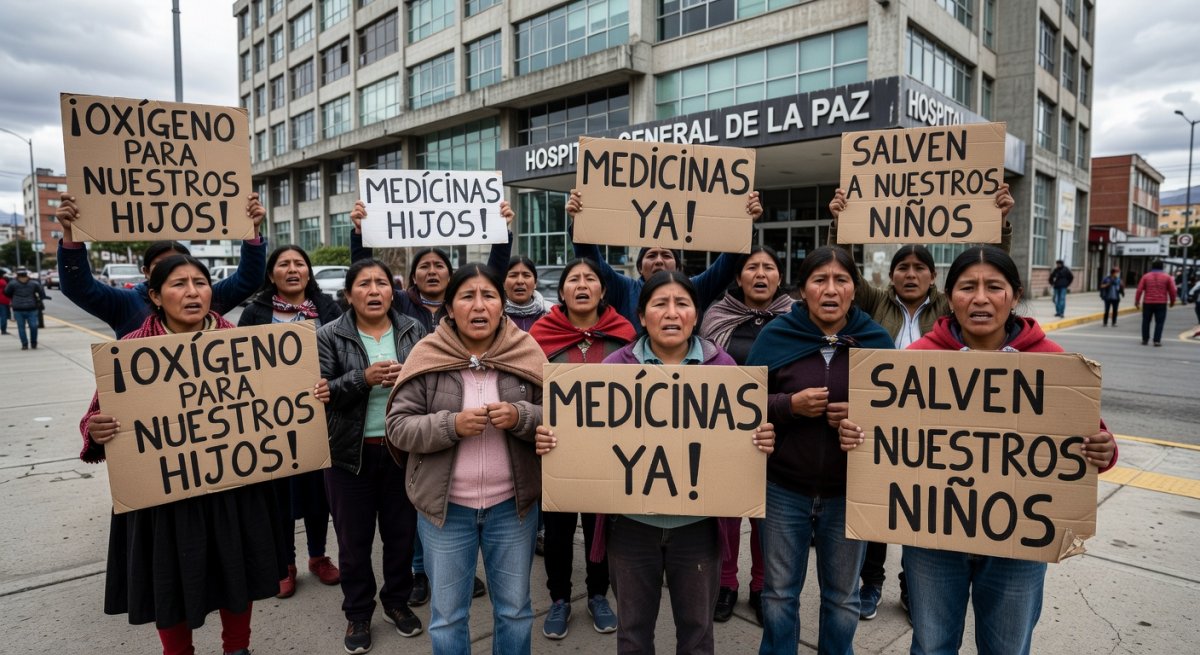
Across the highland capital of La Paz, mothers clutch empty oxygen cylinders outside hospital gates while their children struggle for breath. More than 80 blockades have paralyzed the country for approximately 35 days by early June 2026, turning routine medical supply routes into battlegrounds. La Paz has been declared in sanitary and humanitarian emergency, a stark acknowledgment that the health system stands on the brink of collapse. Parents gather daily, chanting for oxygen, medicines, and food, their voices echoing against the thin mountain air that already makes breathing difficult.
Presidential spokesperson José Luis Gálvez confirmed 42 people now lie in critical condition in La Paz and El Alto hospitals solely because oxygen supplies cannot reach them. At least eight deaths have already been linked directly to the blockades, including two children whose small bodies could not survive the shortage. These are not abstract statistics; they represent families torn apart by political confrontation that has weaponized the most basic element of life.
The crisis stems from anti-government protests demanding the resignation of centrist President Rodrigo Paz. Fuel subsidy cuts that doubled gas prices overnight and a controversial land reform bill threatening small farms have fueled the unrest, with many protesters linked to supporters of former President Evo Morales. Yet the human cost falls heaviest on the vulnerable, the sick, and the newborns who have no voice in the political struggle.
Bolivian Blockades Put Newborns at Risk as Oxygen Runs Low in La Paz Hospitals
La Paz, Bolivia — Every blocked road represents another hour without oxygen, another family holding vigil beside an empty tank. The political standoff has created a humanitarian catastrophe that is only beginning to unfold.
Children's Hospital and Maternity Ward on the Edge
Inside Hospital del Niño (Children's Hospital), 24 patients require oxygen 24 hours a day, every day. Current supplies are projected to last only until June 6 or 7. Doctors rotate cylinders with desperate precision, knowing that once these run out, there is no backup route through the more than 80 blockades that have stood for 35 days. The hospital has become a frontline in a war it never chose, where the enemy is political impasse rather than disease.
At Hospital de la Mujer (Maternity Hospital), 28 newborns lie at immediate risk. Oxygen supplies ran out completely on June 4, forcing staff to improvise with whatever portable units remain while parents weep outside. These infants, born into Bolivia's political firestorm, now depend on dwindling reserves that cannot be replenished because cylinders cannot pass the roadblocks. The maternity ward has transformed from a place of new life into a site of quiet desperation.
Hospital del Norte in El Alto has already suspended all scheduled surgeries, joining a national pattern of 50 to 60 elective procedures canceled daily across the capital region. Each canceled operation represents postponed treatment and families forced to watch loved ones deteriorate. The oxygen for all La Paz hospitals is projected to last only two more weeks under current conditions. Without humanitarian corridors, these facilities will face total blackout, turning a health crisis into an irreversible catastrophe for the most fragile patients.
Governor Revilla and Hospital Staff Issue Desperate Pleas
La Paz Governor Luis Revilla has repeatedly requested humanitarian corridors to allow oxygen, medicines, and food to reach hospitals. His appeals have so far met only political stonewalling while patients continue to suffer. Revilla has documented the transport nightmare: cylinders loaded onto trucks sit idle at blockade lines, drivers threatened, supplies rotting under the highland sun. Each day of delay multiplies the risk for the 42 people already in critical condition.
Hospital staff describe working shifts that stretch beyond exhaustion, manually carrying tanks between wards when vehicles cannot move. They watch oxygen levels drop in real time, calculating hours rather than days. The spokesperson José Luis Gálvez has stated plainly that the shortages are blockade-induced, not the result of production failure. This distinction matters because it places responsibility squarely on those maintaining the 80-plus roadblocks for 35 days.
Medical workers report that at least eight deaths, including two children, have been recorded since the blockades intensified. These numbers are expected to rise sharply once the remaining two weeks of oxygen are exhausted. Revilla's calls for corridors represent the minimum humanitarian standard, yet the protests — aimed at forcing President Rodrigo Paz to resign — continue without exception for medical emergencies.
President Paz Weighs State of Exception
President Rodrigo Paz now evaluates whether to declare a state of exception granting greater authority to clear blockades and restore supply lines. The decision carries heavy weight in a country already fractured by fuel subsidy cuts that doubled gas prices overnight and a land reform bill seen as threatening small farms. Protesters, many linked to former President Evo Morales, have framed their actions as resistance to centrist policies, yet the collateral damage to hospitals grows daily.
The regional alliance Escudo de las Américas has condemned the destabilization, warning that prolonged blockades threaten not only Bolivia but broader democratic stability across the continent. Paz must balance the risk of appearing authoritarian against the certainty that without intervention, more patients will die from lack of oxygen. The 42 critical cases and eight confirmed deaths already tied to the 35-day blockade represent the current toll. Any state of exception would aim to open corridors for the oxygen cylinders that currently cannot move, with government sources indicating planned priorities include medical convoys and protection for hospital supply chains.
What This Means for Bolivia's Health System
Bolivia's health system has long operated under strain, yet the current blockade-induced crisis reveals systemic fragility exposed by more than 80 roadblocks lasting 35 days. The suspension of 50 to 60 elective surgeries daily means thousands of patients now face delayed diagnoses and worsening conditions that will burden hospitals long after the protests end. Elective procedures are not optional luxuries; many involve cancer monitoring, orthopedic repairs, and cardiac interventions whose postponement increases mortality risk.
La Paz's declaration of sanitary and humanitarian emergency formalizes what doctors have known for weeks: the capital cannot sustain itself without external supply lines. The difficulty transporting oxygen cylinders past roadblocks has turned a manageable logistics issue into a life-or-death bottleneck. With only two weeks of oxygen remaining citywide, the system faces a hard deadline that political negotiations have so far ignored. The deaths of at least eight people, including two children, serve as early warning signs that this is not merely a protest tactic but the systematic dismantling of healthcare access for the most vulnerable.
Voices from the Ground — Parents and Medical Workers
Outside Hospital del Niño, mothers hold handmade signs reading "Oxígeno para nuestros hijos." One woman described watching her five-year-old son's oxygen saturation drop while waiting for a cylinder that never came because the delivery truck remained trapped behind a blockade. Similar scenes unfold at Hospital de la Mujer, where fathers have begun sleeping on the pavement to guard the few remaining tanks for their newborns. These parents represent the human face of the 42 critical cases confirmed by José Luis Gálvez.
Medical workers speak of rationing decisions no clinician should ever face. A nurse at Hospital del Norte in El Alto recounted turning away scheduled surgery patients because the operating room lacked guaranteed oxygen for recovery. Fifty to 60 such cancellations occur daily across La Paz, each one a quiet tragedy compounding the eight confirmed deaths already attributed to the blockades. Staff describe the emotional toll of explaining to families that politics, not medicine, dictates survival.
Protesters maintain their demand for President Rodrigo Paz's resignation, citing fuel subsidy cuts and the land reform bill. Yet the parents outside hospitals ask a different question: how many children must die before corridors open? Their voices carry the raw authority of those who have nothing left to lose except the lives of their children. The contrast between political slogans and bedside vigils reveals the moral bankruptcy of tactics that treat hospitals as acceptable collateral damage.
The Bottom Line — What Comes Next
The next two weeks will determine whether La Paz's hospitals receive oxygen or become sites of mass preventable death. Governor Luis Revilla's request for humanitarian corridors remains the clearest immediate solution, yet implementation requires either negotiation or the state of exception currently under consideration. The regional condemnation issued by Escudo de las Américas signals that Bolivia's crisis now carries international stakes beyond domestic politics.
President Rodrigo Paz must decide whether the cost of clearing blockades outweighs the certainty of additional deaths among the 42 critical patients and the 28 newborns already without oxygen at Hospital de la Mujer. The eight deaths recorded so far, including two children, represent only the beginning if supplies are not restored. Every day of continued blockade erodes the remaining two weeks of oxygen and deepens the humanitarian emergency.
Ultimately, the blockades linked to Evo Morales supporters have achieved neither resignation nor policy reversal; they have only produced a health catastrophe that will scar Bolivia for years. The parents protesting outside hospitals do not ask for political victory. They ask for oxygen, medicines, and the chance to keep their children alive. That demand is not negotiable, and history will judge those who treat it as secondary to any other objective.
By Elena Vasquez, Staff Writer
This article was produced with AI-assisted research and editorial support. Reporting is based on sources cited in the article.
What's Your Reaction?
 Like
0
Like
0
 Dislike
0
Dislike
0
 Love
0
Love
0
 Funny
0
Funny
0
 Wow
0
Wow
0
 Sad
0
Sad
0
 Angry
0
Angry
0

Latin America Correspondent at Global1.News. Based in Mexico City, covering politics, economics, energy, and culture across the region. Brings an on-the-ground perspective to stories spanning from the Rio Grande to Patagonia.











Comments (0)