
Free Shuttle Service Halted Amid Conflict with Songtaew Operators in Bangkok
In the bustling streets of Bangkok this week, a promising initiative to ease commuter burdens through a free shuttle service came to an abrupt halt just hours after its launch on Monday, underscoring the delicate balance between innovation and tradition in Thailand's capital. The suspension, ordered by the Bangkok Metropolitan Administration, followed swift protests from songta
In the bustling streets of Bangkok this week, a promising initiative to ease commuter burdens through a free shuttle service came to an abrupt halt just hours after its launch on Monday, underscoring the delicate balance between innovation and tradition in Thailand's capital. The suspension, ordered by the Bangkok Metropolitan Administration, followed swift protests from songtaew operators who feared for their livelihoods in neighborhoods across districts like Din Daeng and Phra Nakhon. This event, reported widely on June 5, 2026, via Bangkok Post platforms, reflects deeper currents in Thai society where community voices shape urban progress.
Free Shuttle Service Halted Amid Conflict with Songtaew Operators in Bangkok
Bangkok, Thailand — The Bangkok Metropolitan Administration's attempt to introduce a complimentary shuttle bus service along key routes in central districts encountered immediate resistance from local transport providers on Monday this week, leading to its suspension by evening.
City officials had envisioned the service connecting popular markets and residential areas near the Chao Phraya River, yet songtaew drivers gathered quickly to voice their concerns over potential income loss during the Songkran preparation season when many families rely on steady fares for temple visits and household needs.
Local communities in areas such as Bang Rak and Sathon expressed mixed sentiments, with some residents appreciating the free option while others noted the cultural role of songtaews in fostering neighborly interactions during daily commutes to wats like Wat Pho.
How the Shuttle Service Was Launched and Halted
The Bangkok Metropolitan Administration rolled out the free shuttle service on Monday morning this week, deploying several buses along routes spanning from Victory Monument through Ratchaprasong to the bustling Pratunam market area, aiming to provide relief amid rising fuel costs affecting many Bangkok households.
Within hours, songtaew operators from nearby stands in Din Daeng district mobilized, highlighting how their vehicles have long served as vital links for workers traveling to factories in the eastern suburbs where BTS lines remain limited.
By midday, the protests prompted BMA representatives to engage directly with community leaders, resulting in the service suspension by late afternoon to allow for dialogue sessions planned at the City Hall on Phra Nakhon side.
Residents in the affected zones, many of whom attend morning alms-giving at local temples, noted the brief operation's convenience but understood the need to respect the established transport ecosystem rooted in Thai communal values.
Songtaew: Bangkok's Backbone of Local Transport
Songtaews, the iconic pickup trucks fitted with two benches along the sides, have operated in Bangkok since the mid-20th century, charging fares between 10 and 20 baht per short trip depending on distance and serving routes that weave through narrow sois inaccessible to larger buses.
These owner-driver vehicles, often family-run businesses passed down through generations in communities around Chatuchak and Bang Kapi, provide essential connectivity to areas beyond the reach of the BTS Skytrain's Sukhumvit line or the MRT Blue Line extensions completed in recent years.
Culturally, songtaews embody Thailand's emphasis on flexible, community-oriented mobility, allowing riders to share stories during rides to neighborhood markets or evening visits to temples during Buddhist holy days like Makha Bucha.
In districts such as Khlong Toei, where port workers depend on these services for affordable access to their jobs, the vehicles also support local economies by stopping at family-run noodle stalls that thrive on the steady flow of passengers.
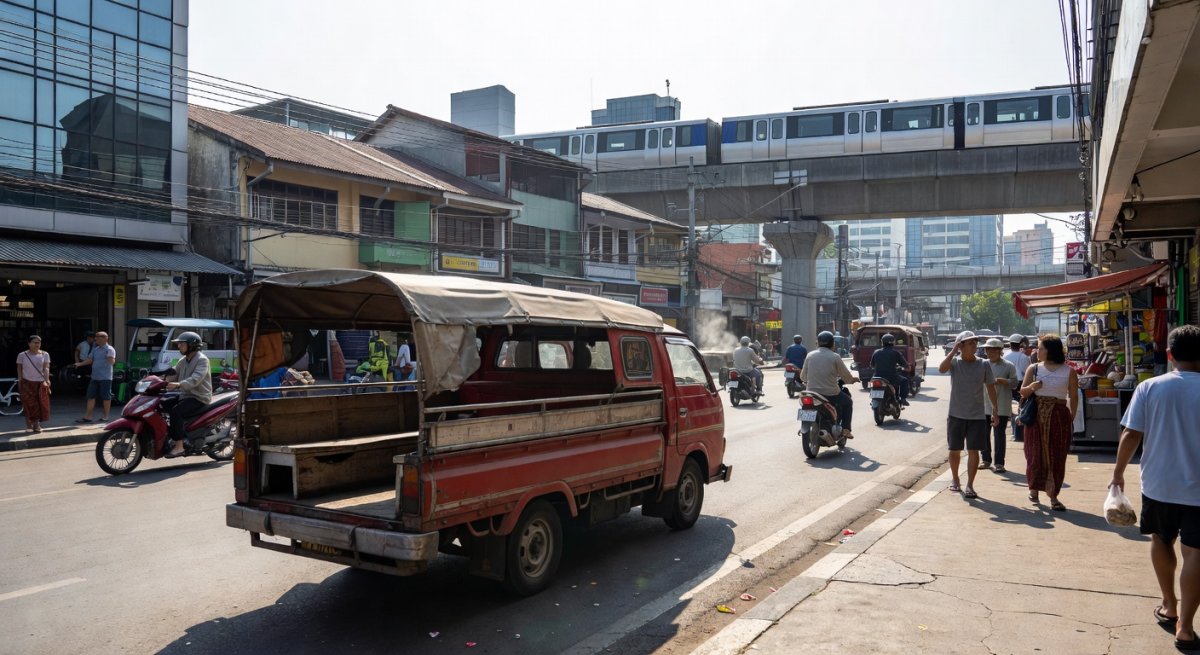
(Global 1 News)
Protests Force Swift Suspension
On Monday afternoon this week, groups of songtaew operators positioned their vehicles at designated shuttle stops near the Victory Monument, peacefully blocking access while displaying signs that emphasized their role in sustaining families across Bangkok's working-class neighborhoods.
The Bangkok Metropolitan Administration responded promptly by halting the free service after consulting with transport cooperatives, acknowledging the operators' concerns that stemmed from broader economic pressures including fluctuating rice prices affecting rural relatives who supply goods to city markets.
Both sides expressed willingness to negotiate, with songtaew representatives proposing joint route planning sessions and BMA officials highlighting the city's commitment to preserving traditional livelihoods alongside modern developments in line with Thailand's sufficiency economy principles promoted in Buddhist teachings on moderation.
Community elders from nearby wats offered to mediate future talks, drawing on the Thai cultural practice of seeking harmony to resolve disputes in public spaces frequented by both locals and visitors from Southeast Asian neighboring countries.
Not the First Conflict: Parallels in Chiang Mai, Phuket, Pattaya
Similar tensions have arisen in Chiang Mai where songtaew operators protested electric bus introductions along the Ping River routes last year, citing threats to income that supports hill tribe communities traveling to the city's famous Sunday walking street markets tied to northern Thai Buddhist festivals.
In Phuket, tuk-tuk and songtaew groups voiced opposition to new ferry-linked transport pilots near Patong Beach, leading to temporary adjustments that preserved fares at 15 baht for short hops serving tourism workers during high season peaks around Loy Krathong celebrations.
Pattaya's operators faced comparable challenges with proposed beachfront shuttle expansions, resulting in collaborative programs where traditional vehicles integrated with city buses to maintain service to outlying villages reliant on these networks for access to schools and temples.
These regional examples illustrate how Thailand's provinces navigate transport evolution while honoring the informal sector's contributions to local economies and social fabrics, much like Bangkok's current situation amid Southeast Asia's rapid urbanization.
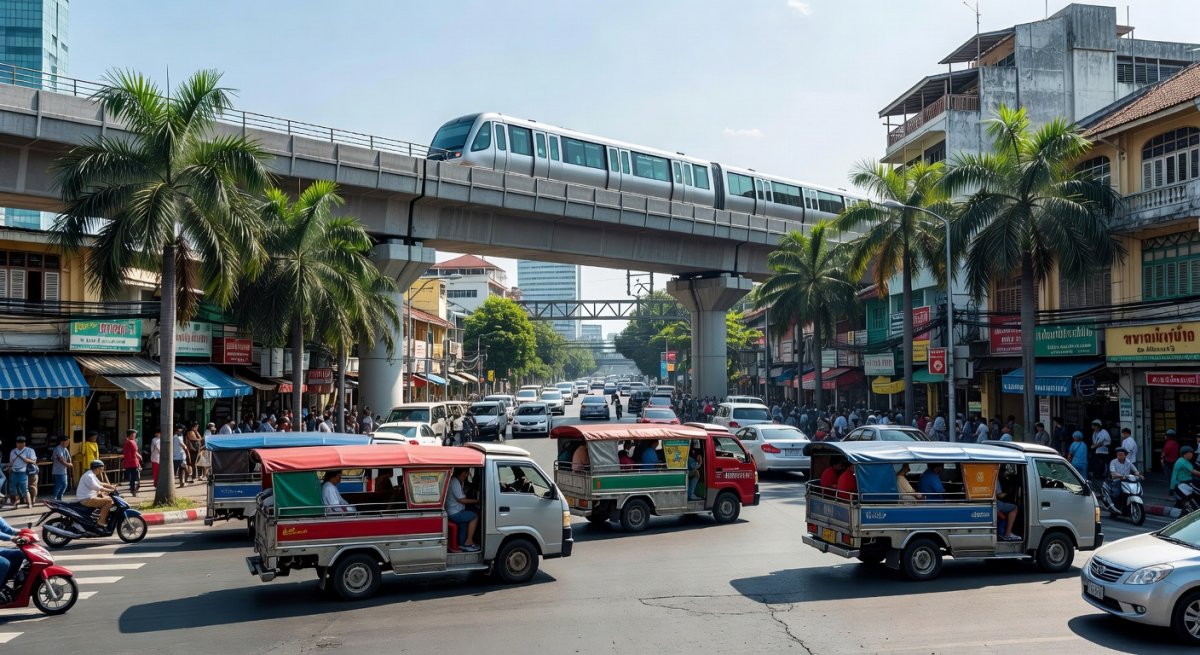
(Global 1 News)
Bangkok's Evolving Transport Landscape
Bangkok continues to expand its rail networks with BTS extensions reaching further into Nonthaburi province and MRT lines connecting to the new airport rail link, yet these systems often bypass dense residential pockets where songtaews fill critical gaps for daily commuters.
The introduction of electric buses by the Bangkok Metropolitan Administration in pilot zones along Silom Road reflects national pushes toward greener mobility aligned with Buddhist emphases on environmental stewardship, though integration with existing informal transport remains a key challenge.
Local communities in areas like Bang Sue benefit from these changes but rely on songtaews for last-mile connections to fresh markets where vendors sell produce from Isan regions, sustaining cultural exchanges during festivals such as Songkran water blessings.
As Southeast Asian cities observe Bangkok's approach, the focus stays on balancing efficiency with the preservation of livelihoods that have supported Thai families for decades amid political discussions on urban equity in the capital.
What the BMA Must Consider
Policy experts recommend that the Bangkok Metropolitan Administration explore route adjustments allowing songtaews to complement the free shuttle in peripheral neighborhoods such as Lat Phrao, ensuring fares remain viable at 10 to 20 baht while reducing overlap in high-demand corridors.
Revenue-sharing models could involve cooperatives where operators receive support during transition periods, drawing from successful Thai initiatives in other provinces that tie transport reforms to community welfare funds used for temple restorations and youth education programs.
Compensation schemes might include subsidies for vehicle upgrades to meet emission standards, fostering goodwill in line with Buddhist values of compassion toward working families who contribute to the city's vibrant street life around landmarks like the Grand Palace.
Engaging local leaders from diverse districts ensures that solutions respect the cultural significance of songtaews as social hubs, promoting inclusive planning that addresses both modern needs and traditional practices across Bangkok's 50 districts.
What to Watch For
Upcoming meetings between Bangkok Metropolitan Administration officials and songtaew associations are scheduled for later this week at City Hall, with potential outcomes including revised service maps that incorporate feedback from operators serving routes near the Chao Phraya River piers.
Deadlines for public consultations in districts like Sathon aim to gather input by mid-June 2026, potentially leading to hybrid models tested first in pilot areas with strong temple community involvement.
Observers anticipate announcements on compensation frameworks tied to broader transport budgets, which could influence similar policies in other Thai cities and set precedents for Southeast Asian regional cooperation on sustainable mobility.
Residents are encouraged to participate in these discussions, as outcomes will shape how Bangkok honors its transport heritage while advancing toward more accessible urban living for all.
As Bangkok moves forward from this week's events, the episode offers a gentle reminder of the importance of listening to every voice in the community, much like the shared journeys on songtaews that connect hearts across the city's diverse neighborhoods and beyond into the wider region.
By Ann Srisawat, Staff WriterThis article was produced with AI-assisted research and editorial support. Reporting is based on sources cited in the article.
What's Your Reaction?
 Like
0
Like
0
 Dislike
0
Dislike
0
 Love
0
Love
0
 Funny
0
Funny
0
 Wow
0
Wow
0
 Sad
0
Sad
0
 Angry
0
Angry
0
Southeast Asia Correspondent at Global1.News. Based in Bangkok, covering Thai and Southeast Asian politics, economy, technology, and culture. Deep regional perspective on one of the world's most dynamic regions.















Comments (0)