
Big Bend Wall Threatens Ojinaga Levee and Families
Keywords: Big Bend border wall, Ojinaga Chihuahua, Presidio levee, DHS barrier, Sheinbaum border policy, maquiladora workers, Rio Grande flooding, Barnard Construction, Fisher Sand and Gravel, cross-border families DHS Approves Massive Barrier in Big Bend Region The Department of Homeland Security approved a $2.45 billion project to install 30-foot steel bollard walls across 17
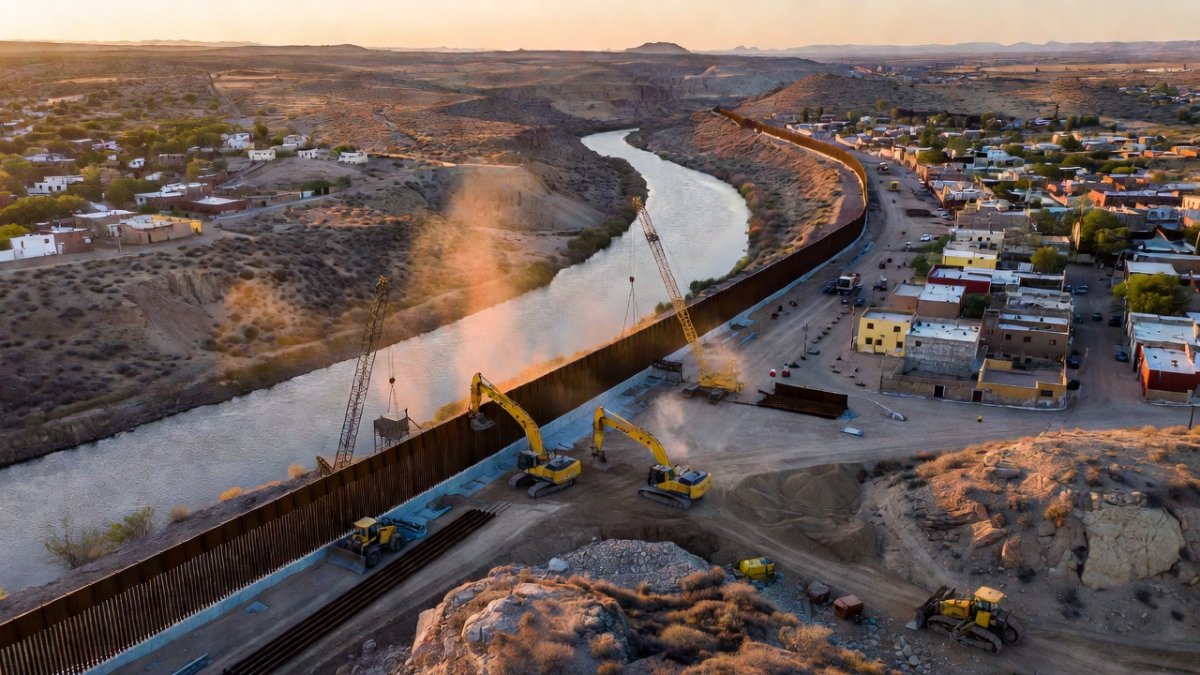
DHS Approves Massive Barrier in Big Bend Region
The Department of Homeland Security approved a $2.45 billion project to install 30-foot steel bollard walls across 175 miles of the Big Bend sector, specifically targeting Hudspeth, Jeff Davis, and Presidio counties in West Texas. Construction equipment including tractors first appeared at the Chispa Road entrance in late March 2026, marking the start of work on fiber optic cables, cameras, 12-foot maintenance roads, and 24-foot patrol roads alongside the barriers. This infrastructure sits directly in the floodplain of the Rio Grande, where Ojinaga families on the Mexican side have long depended on the river for daily life and commerce.
Local leaders in Presidio have raised immediate concerns about the placement of these bollards on engineered levees rebuilt after the devastating 2008 floods that destroyed hundreds of homes in the Presidio Valley. John Kennedy of the Presidio Municipal Development District noted that the federal government is proceeding without adequate community notification, even though the levee system carries treaty obligations between the United States and Mexico. Ojinaga residents who cross daily for work or family visits now face uncertainty about whether the new concrete-embedded structures will hold during the next heavy rain season.
The project timeline follows standard federal contracting procedures without accelerated enforcement dates beyond the March 2026 start. Mexican families in the colonias near the Presidio-Ojinaga International Rail Crossing watch the equipment movements from across the river, aware that any disruption to the levee could affect both sides of the border equally.
Contractors Awarded Billions for Construction
Barnard Construction Co. received a $960.4 million contract to handle the Presidio corridor portion of the barrier, while Fisher Sand and Gravel secured $1.2 billion for 70 to 80 miles stretching from Ruidosa to Colorado Canyon. Fisher Sand and Gravel has a documented history of environmental violations from prior projects, yet the awards proceeded under the current administration's border infrastructure push. These companies began mobilizing equipment in the remote Big Bend terrain where steep canyon walls meet the Rio Grande.
Ojinaga maquiladora workers who commute across the rail crossing each morning now hear the distant rumble of heavy machinery on the U.S. side. The contracts specify bollard walls embedded in concrete on the earthen levee slopes, a design choice that local engineers in Presidio have flagged as incompatible with the existing flood control system rebuilt after 2008. Mexican officials at the SRE continue to monitor these developments through standard diplomatic channels without issuing project-specific statements as of June 2026.
Community members in Ojinaga emphasize that the real impact falls on families who rely on the crossing for healthcare, education, and legitimate trade rather than on abstract policy debates. The $2.45 billion total reflects allocations across multiple counties, with no indication of faster-than-normal completion schedules beyond the initial March start date.
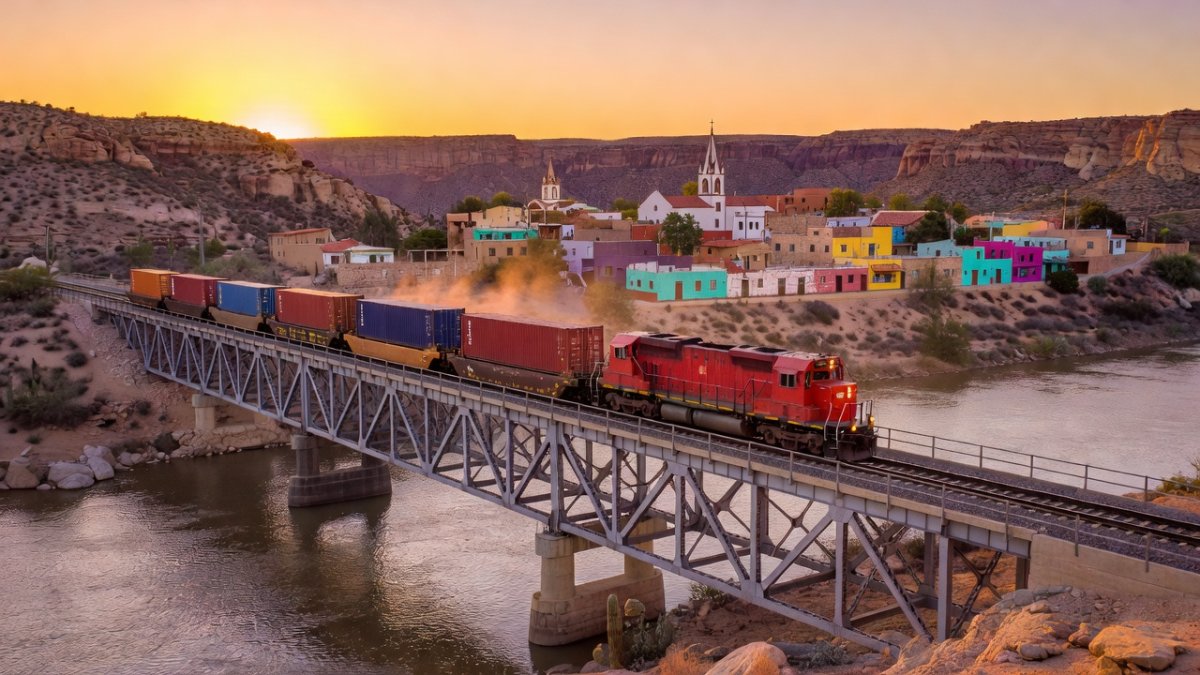
Presidio Levee Faces Critical Risks from Wall Placement
The 15-mile Presidio Valley Flood Control System, rebuilt after the 2008 floods at a replacement value near $100 million, now faces direct pressure from the 30-foot bollards placed on its earthen slopes. A lawsuit filed June 17, 2026, by Democracy Forward argues that embedding concrete structures in the levee without full community consultation violates basic floodplain management principles. Ojinaga families remember the 2008 destruction vividly, as floodwaters crossed the river and damaged homes and businesses on both sides.
John Kennedy stated clearly that the issue centers on whether federal agencies can install major infrastructure on treaty-mandated levees without prior local input. The rail crossing, one of only eight U.S. international rail crossings, was realigned with the new levee after 2008 to maintain daily commerce between Presidio and Ojinaga. Any compromise to the levee during heavy rains could send water into Mexican colonias and disrupt the legitimate movement of goods and people.
Residents on the Ojinaga side organize informal meetings in community centers to discuss contingency plans, drawing on the shared history of the Rio Grande as a connector rather than a divider. The lawsuit remains active in federal court, with no immediate resolution expected before further construction advances.
Environmental Protections Waived Amid Lawsuits
In February 2026, DHS Secretary Kristi Noem waived 28 environmental laws, including the Endangered Species Act, NEPA, and Clean Water Act, to expedite the Big Bend project. These waivers directly affect habitat within Big Bend National Park and Big Bend Ranch State Park, where rare species depend on the intact river corridor. Lawsuits from the Center for Biological Diversity and Friends of Ruidosa Church were filed in El Paso federal court, joined by public-records complaints from the Texas Civil Rights Project.
Bipartisan opposition has emerged among Texas lawmakers who represent districts along the border, citing the lack of standard environmental review. Ojinaga families who fish and gather along the Mexican bank of the Rio Grande express concern that dust and noise from construction will travel across the water, disturbing the shared ecosystem that supports local agriculture and wildlife. The waivers do not alter the underlying requirement for eventual compliance reporting, though timelines remain unchanged from standard federal processes.
Community leaders in Chihuahua note that the environmental impacts do not stop at the international boundary, as the river serves as a single ecological system for both nations. Mexican environmental groups have begun coordinating with U.S. counterparts through established cross-border networks.
Crossing Data Challenges High-Entry Claims
DHS has described the Big Bend sector as a high illegal entry area, yet CBP statistics show it records the lowest crossing numbers across its 517 miles compared with the Rio Grande Valley or Tucson sectors. The Presidio-Ojinaga rail crossing handles only legitimate daily commerce, including maquiladora shipments and passenger traffic for workers, students, and healthcare providers. Ojinaga residents cross regularly for medical appointments in Presidio and return the same day.
The rail infrastructure, rebuilt after 2008 in coordination with the levee, supports steady economic activity that benefits families on both sides. Construction activity has already introduced noise and dust that affect the quality of these routine crossings. Mexican workers report longer wait times as equipment movements near the port of entry create temporary disruptions.
Local business owners in Ojinaga emphasize that the crossing remains essential for the regional economy, with no evidence of sudden increases in unauthorized activity that would justify the scale of the new barrier. Families continue their daily routines while monitoring developments through community radio and word of mouth.
Ojinaga Families Brace for Daily Disruptions
Cross-border families in Ojinaga now navigate new uncertainties as the barrier construction advances near the rail crossing. Maquiladora employees, students attending schools in Presidio, and healthcare workers who travel for shifts all depend on the open connection that has existed for generations. The 30-foot bollards and accompanying roads create visible changes to the landscape visible from Mexican colonias.
President Claudia Sheinbaum has maintained consistent opposition to expanded border barriers, with the SRE tracking infrastructure projects through routine diplomatic reporting. No specific statement on the Big Bend project has been released as of June 2026, though Ojinaga residents express hope that ongoing dialogue will protect the levee and crossing. Community gatherings in Ojinaga focus on practical steps to maintain family ties despite physical changes on the U.S. side.
The shared Rio Grande ecosystem continues to bind the two communities, even as construction dust drifts across the water. Families organize small support networks to share information about crossing conditions and any emerging flood warnings.
Landslide Concerns and Mexican Government Response
Construction on the steep canyon terrain of Big Bend introduces additional landslide and erosion risks that could alter the river channel on the Mexican side. These geological concerns compound the flooding worries already raised by the levee placement. Ojinaga residents who live closest to the river monitor slope stability during seasonal rains, drawing on local knowledge passed through generations.
The SRE maintains standard monitoring of cross-border infrastructure without project-specific announcements. Ordinary Ojinaga families continue daily life while hoping that bilateral discussions will address both flood and landslide hazards before the next rainy season. The rail crossing remains operational for legitimate traffic, serving as a vital link for commerce and family connections.
Community resilience in Ojinaga centers on protecting the shared resources of the Rio Grande valley, where Mexican and American lives have intertwined for decades. Local leaders coordinate with counterparts in Presidio through established channels to exchange information on construction progress and any observed changes to the riverbank.
Tags: Big Bend border wall, Ojinaga Chihuahua, Presidio levee, DHS barrier, Sheinbaum border policy, maquiladora workers, Rio Grande flooding, Barnard Construction, Fisher Sand and Gravel, cross-border families, Big Bend National Park, Democracy Forward lawsuit
By Rosa Martinez, Staff Writer
This article was produced with AI-assisted research and editorial support. Reporting is based on sources cited in the article.
What's Your Reaction?
 Like
0
Like
0
 Dislike
0
Dislike
0
 Love
0
Love
0
 Funny
0
Funny
0
 Wow
0
Wow
0
 Sad
0
Sad
0
 Angry
0
Angry
0
Latin America/Andes Correspondent at Global1.News. Based in Bogota, covering politics, environment, energy, and social movements across the Andean region. Passionate about environmental journalism and communities protecting their land.












Comments (0)