
ASEAN-GCC Convergence: Kao Kim Hourn Charts a Pragmatic Path Through US-China Rivalry
In the shifting sands of global power dynamics, the convergence between the Association of Southeast Asian Nations and the Gulf Cooperation Council emerges as a calculated response to intensifying US-China rivalry. ASEAN Secretary-General Kao Kim Hourn, in an exclusive interview with Al Arabiya English on June 5, 2026, outlined a pragmatic framework for deepening ties that prio
In the shifting sands of global power dynamics, the convergence between the Association of Southeast Asian Nations and the Gulf Cooperation Council emerges as a calculated response to intensifying US-China rivalry. ASEAN Secretary-General Kao Kim Hourn, in an exclusive interview with Al Arabiya English on June 5, 2026, outlined a pragmatic framework for deepening ties that prioritizes economic resilience and strategic autonomy over ideological alignment. This budding partnership spans critical sea lanes from the South China Sea to the Strait of Hormuz, where energy security and trade routes intersect with great-power competition.
ASEAN-GCC Convergence: Kao Kim Hourn Charts a Pragmatic Path Through US-China Rivalry
Beirut, Lebanon - June 5, 2026 — ASEAN Secretary-General Kao Kim Hourn’s recent exclusive interview with Al Arabiya English underscores a deliberate pivot toward Gulf partnerships as Southeast Asian states navigate the crosscurrents of American Indo-Pacific strategies and Chinese Belt and Road ambitions. With global supply chains fragmenting under tariff wars and technology export controls, both regions seek diversified alliances that safeguard 30 percent of world maritime trade passing through contested waters. Hourn emphasized ASEAN’s consensus-driven model as a template for GCC engagement, avoiding the zero-sum traps that have polarized ASEAN members between Washington’s security guarantees and Beijing’s infrastructure largesse. This convergence promises not only commercial gains but also a buffer against secondary sanctions risks tied to the Russia-Ukraine conflict and Taiwan Strait tensions.
Historical Context of ASEAN-GCC Engagement
The foundations of ASEAN-GCC dialogue trace back to the 1990 Manama meeting, where foreign ministers first explored energy cooperation amid post-Cold War realignments. That initial contact laid groundwork for incremental confidence-building measures, including joint working groups on maritime security that later expanded after the 2011 Arab uprisings disrupted Gulf investment flows. Momentum accelerated dramatically with the 2023 Riyadh summit, where leaders committed to doubling bilateral trade from $120 billion to $240 billion by 2030 through targeted sectors such as petrochemicals, halal manufacturing, and digital services. Saudi Arabia’s Public Investment Fund and the UAE’s Mubadala have since channeled over $15 billion into ASEAN sovereign wealth vehicles, while Malaysia and Indonesia secured preferential access for palm oil and rubber exports under Gulf standardization protocols. These milestones reflect a shared recognition that neither region can afford over-reliance on Western or East Asian markets alone, particularly as US CHIPS Act restrictions and Chinese dual-circulation policies reshape technology transfers. Hourn noted in the Al Arabiya English interview that the 2023 framework explicitly references the 1990 Manama principles of non-interference, enabling pragmatic progress even when political divergences arise over issues such as Myanmar or Yemen.
South China Sea Code of Conduct
Negotiations for a binding South China Sea Code of Conduct, launched in 2013 under ASEAN’s chairmanship, remain stalled by competing sovereignty claims over the Spratly and Paracel archipelagos. Vietnam and the Philippines have pursued parallel arbitration strategies under UNCLOS, culminating in the landmark 2016 Hague ruling that invalidated China’s nine-dash line. Cambodia’s 2022 veto of a unified ASEAN statement exposed internal fractures that Hourn has sought to mend through quiet diplomacy. The stakes extend far beyond fish stocks and hydrocarbon blocks: approximately 30 percent of Saudi crude exports destined for Northeast Asia transits these waters, rendering any escalation an immediate threat to Gulf fiscal planning. Recent satellite imagery reveals expanded Chinese installations on Mischief Reef alongside Vietnamese outposts on Barque Canada Reef, prompting Singapore and Malaysia to quietly coordinate with GCC naval attaches on freedom-of-navigation protocols. Kao Kim Hourn argued during the interview that a finalized code must incorporate third-party energy transit guarantees, a position welcomed by Riyadh and Abu Dhabi as they diversify crude destinations away from the volatile Malacca Strait. Failure to conclude the talks risks inviting external arbitration that could further internationalize the dispute, undermining ASEAN centrality.
ASEAN’s Hedging Strategy
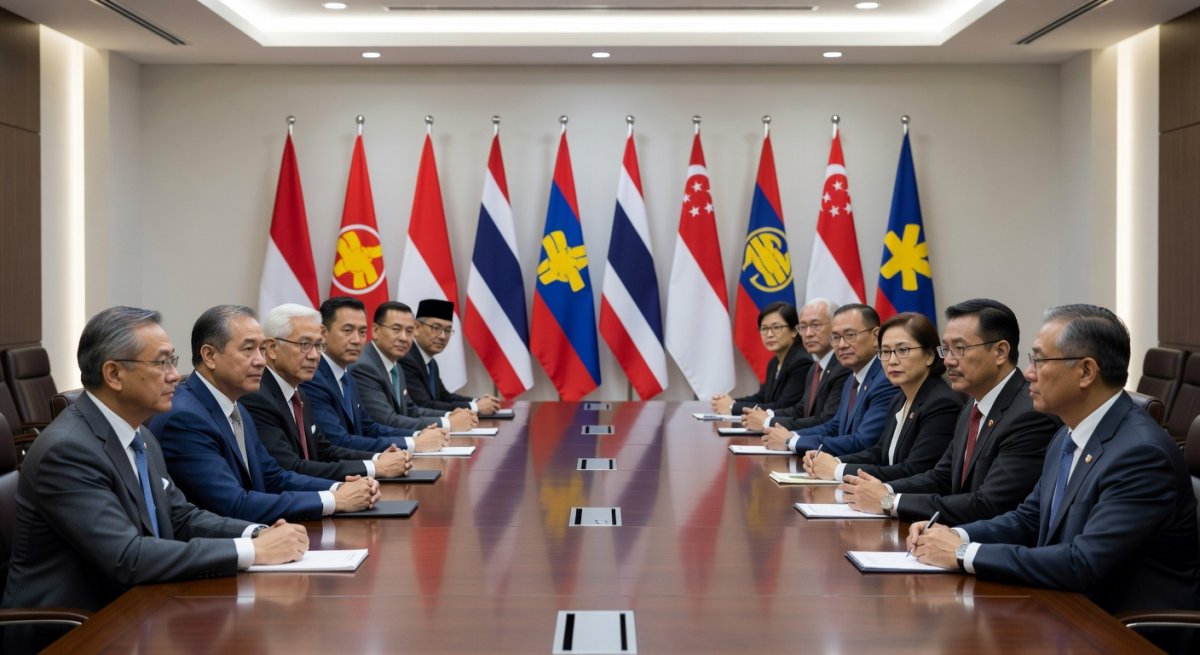
Philippine President Ferdinand Marcos Jr. has accelerated the return of US forces to Subic Bay and Clark Air Base under the 2014 Enhanced Defense Cooperation Agreement, yet Manila simultaneously courts Chinese contractors for railway projects in Mindanao. Thailand maintains a delicate equilibrium, purchasing Chinese submarines while hosting Cobra Gold exercises with American troops. Indonesia’s capital relocation to Nusantara incorporates both Japanese funding and Chinese engineering consortia, illustrating the classic ASEAN hedge. Gulf states mirror this approach with striking precision: the UAE accepted US F-35 deliveries while constructing Chinese-built ports at Khalifa, and Saudi Arabia signed S-400 air-defense contracts alongside American THAAD batteries. Kao Kim Hourn highlighted these parallels as evidence that middle powers can extract concessions from both superpowers without full alignment. Such dual-track procurement preserves bargaining leverage, yet it generates interoperability headaches for planners and raises proliferation concerns among Western export-control regimes. The interview revealed Hourn’s view that ASEAN-GCC dialogue mechanisms could formalize best-practice exchanges on technology safeguards, reducing the risk of inadvertent technology leakage.
Gulf-ASEAN Economic Synergy
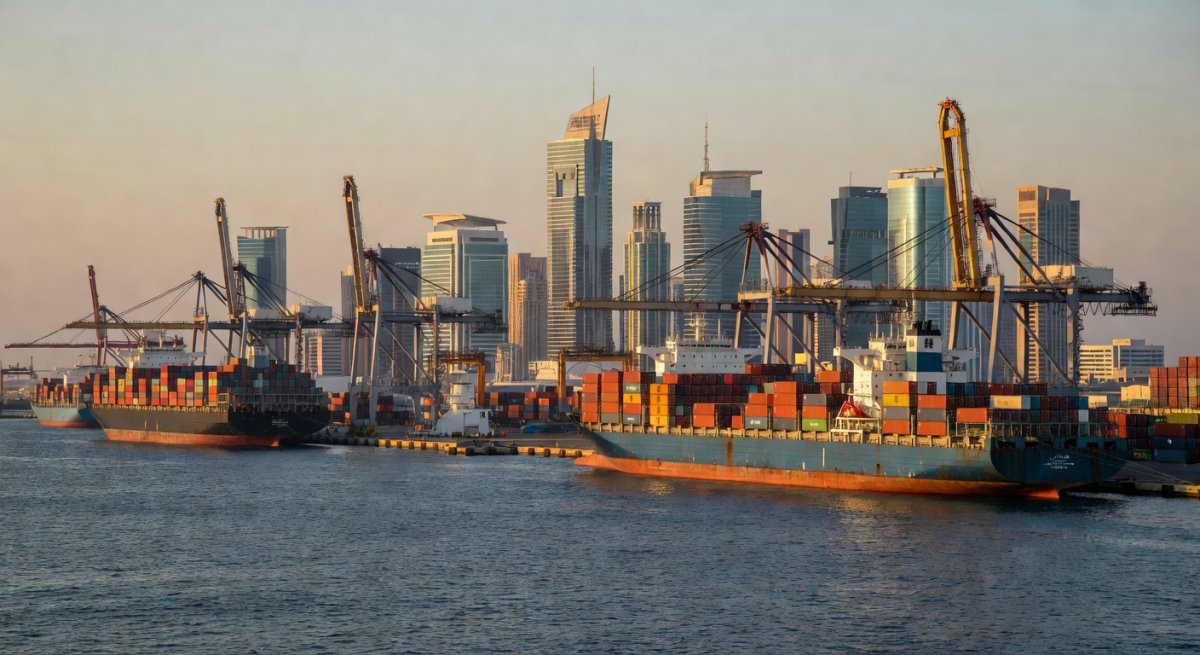
Public Investment Fund commitments exceeding $5 billion in Indonesian nickel processing and green hydrogen ventures complement ADIA’s $8 billion portfolio concentrated in Singaporean real estate and Malaysian semiconductor parks. Qatar Investment Authority’s $2.3 billion stake in Vietnam’s Vinhomes residential complexes underscores appetite for demographic dividends. Parallel infrastructure financing includes Malaysia’s $35 billion East Coast Rail Link, now partially underwritten by Gulf sukuk issuances, addressing ASEAN’s estimated $210 billion annual infrastructure financing gap. These flows coincide with the launch of the ASEAN-GCC Business Council in 2024, which has facilitated 47 memoranda of understanding in petrochemicals and logistics. Energy synergy is equally pronounced: Gulf refiners are expanding joint ventures in Singapore’s Jurong Island to produce low-sulfur fuels compliant with IMO 2030 standards. Hourn stressed that such capital recycling allows ASEAN governments to fund domestic priorities without accumulating unsustainable debt to either Beijing or Washington. The resulting supply-chain redundancy also mitigates chokepoint vulnerabilities, particularly if Hormuz or Malacca closures materialize during future crises.
Demographic and Cultural Links
Indonesia’s 240 million Muslims and Malaysia’s 20 million form the demographic backbone of potential people-to-people ties, with over 200,000 Indonesians and Malaysians performing hajj or umrah annually under expanded Saudi visa quotas. Halal trade between the regions surpassed $12 billion in 2025, driven by Malaysian-certified processed foods entering Gulf supermarkets and Emirati date exports reaching Jakarta hypermarkets. Cultural diplomacy has intensified through the annual ASEAN-GCC Cultural Festival hosted in Kuala Lumpur and Abu Dhabi, featuring joint exhibitions on Islamic heritage and contemporary art. Educational exchanges have grown via King Abdullah Scholarship Program placements for ASEAN students at Gulf universities, fostering Arabic-language proficiency that facilitates future commercial negotiations. Hourn observed that these soft-power linkages provide a stabilizing undercurrent when political disagreements surface, reminding both sides of shared civilizational affinities that predate modern state boundaries.
Strategic Calculus
Saudi Vision 2030’s diversification targets align closely with ASEAN’s projected 5 percent average annual growth through 2030, creating openings for alternative payment systems that bypass dollar clearing. Discussions around yuan and dirham settlement mechanisms for energy trades have gained traction, particularly after Chinese digital-yuan pilots in Singapore and Thailand. Supply-chain architects now model scenarios that reroute critical minerals and electronics around both Malacca and Hormuz via new Indian Ocean corridors financed by Gulf capital. Kao Kim Hourn framed this calculus as an exercise in collective resilience rather than anti-Western posturing, noting that ASEAN’s treaty of amity and cooperation remains open to GCC accession. Such strategic hedging also incorporates climate considerations, with joint research on carbon capture for petrochemical complexes in Jubail and Jurong.
Prospects for Formal Trade Framework
The UAE-Indonesia Comprehensive Economic Partnership Agreement, ratified in 2024, serves as a template for broader arrangements, while Saudi Arabia and Malaysia are finalizing a bilateral roadmap targeting 2027 signature. A region-to-region framework would encompass a combined population of 700 million and aggregate GDP exceeding $5 trillion, potentially creating the world’s third-largest integrated market. Negotiators are studying provisions for mutual recognition of halal standards, digital trade rules, and investment screening aligned with OECD guidelines. Hourn cautioned that political sensitivities around labor mobility and petrochemical subsidies must be addressed incrementally to avoid the fate of the long-stalled ASEAN-EU talks. Success would hinge on GCC willingness to accommodate ASEAN’s most-favored-nation flexibility clauses.
Regional Implications
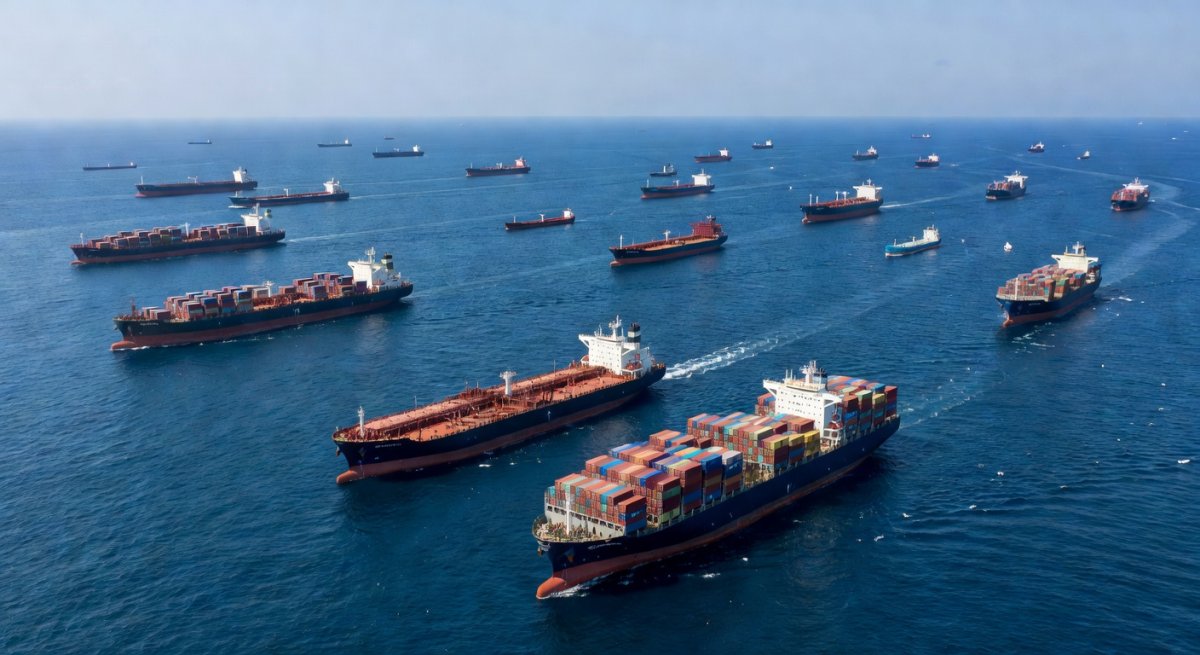
Qatar’s 18 million tons of annual LNG exports to ASEAN markets already influence spot-price benchmarks in Singapore, while Saudi deliveries averaging 1.2 million barrels per day to Southeast Asian refiners provide price signals that reverberate across Gulf fiscal planning. Enhanced connectivity could dampen volatility transmitted through the Strait of Malacca, offering indirect benefits to European and East Asian consumers. Yet the partnership also raises questions for external actors: Washington may perceive deeper Gulf-ASEAN links as diluting its Indo-Pacific coalition, whereas Beijing could interpret them as competitive infrastructure corridors. Kao Kim Hourn’s pragmatic vision ultimately positions both regions as co-architects of a multipolar order, where economic interdependence serves as the primary deterrent to conflict.
By Malik Hassan, Staff WriterThis article was produced with AI-assisted research and editorial support. Reporting is based on sources cited in the article.
What's Your Reaction?
 Like
0
Like
0
 Dislike
0
Dislike
0
 Love
0
Love
0
 Funny
0
Funny
0
 Wow
0
Wow
0
 Sad
0
Sad
0
 Angry
0
Angry
0

Middle East Correspondent at Global1.News. Based in Beirut, covering politics, conflict, energy, and society across the Middle East. Brings context and depth to a region often reduced to headlines.










Comments (0)