
12th Cairo International Festival for Drums and Traditional Arts: Rhythm and Peace Unite Continents in Historic Cairo
In the golden light of Cairo's evenings, the 12th Cairo International Festival for Drums and Traditional Arts pulsed with life from June 19 to 23, 2026, as drummers from across Africa and the Arab world gathered at the Cairo Opera House. Their rhythms, echoing from ancient Pharaonic temples to the vibrant souks of the Nile and the villages along the Senegal River, wove a tapest
In the golden light of Cairo's evenings, the 12th Cairo International Festival for Drums and Traditional Arts pulsed with life from June 19 to 23, 2026, as drummers from across Africa and the Arab world gathered at the Cairo Opera House. Their rhythms, echoing from ancient Pharaonic temples to the vibrant souks of the Nile and the villages along the Senegal River, wove a tapestry of shared heritage that transcends time and borders. The air filled with the resonant thuds of hand drums and the sharp cracks of sticks on taut skins, reminding every listener how percussion carries stories older than written language.
12th Cairo International Festival for Drums and Traditional Arts: Rhythm and Peace Unite Continents in Historic Cairo
Cairo, Egypt — The 12th edition of the Cairo International Festival for Drums and Traditional Arts placed rhythm at the center of cultural dialogue under the theme "Dialogue for Peace," rendered in Arabic as حوار من أجل السلام and also known as "Dialogue of Drums for Peace." With the Egyptian Ministry of Culture serving as official patron, the event drew around 40 international folkloric troupes to stages and public squares throughout the city, turning Cairo into a living crossroads where African and Arab percussion traditions met and conversed. The five-day gathering demonstrated how shared beats can bridge divides that politics and distance often widen.
Drums for Peace: The 12th Edition
The 12th Cairo International Festival for Drums and Traditional Arts unfolded from June 19 to 23, 2026, at the Cairo Opera House under the clear theme "Dialogue for Peace," expressed in Arabic as حوار من أجل السلام and also titled "Dialogue of Drums for Peace." The Egyptian Ministry of Culture acted as official patron, providing institutional support that allowed the program to extend beyond formal stages into neighborhoods across the capital. Street performances filled historic squares such as Tahrir and Midan al-Hussein with free shows that drew local families, children, and international visitors into spontaneous circles of clapping and dancing.
The opening night began at 9 PM on the Cairo Opera House grounds, where floodlights caught the dust rising from dancers' feet and the first synchronized drum rolls rolled across the audience like distant thunder. This biennial gathering first launched in 2009 and has now reached its 12th edition, always rooted in Egypt's layered heritage that blends Pharaonic, Islamic, Coptic, and African traditions. Performances at historical and cultural sites throughout Cairo reinforced these deep connections, turning ancient backdrops into living stages for rhythm and dialogue.
Evening air in Cairo carried the mingled scents of street food and oud incense as troupes rehearsed in side courtyards. Audiences arrived early, spreading woven mats on the ground and sharing thermoses of mint tea while waiting for the first beats. The festival's structure encouraged both seated listening and participatory dancing, allowing Egyptians and foreigners alike to feel the pulse move through their bodies.
Young volunteers in white gallabiyas guided visitors between venues, explaining the origins of each instrument in quick, warm exchanges. The presence of families with small children highlighted how the event welcomed all ages, turning what could have been a specialist music gathering into a city-wide celebration. By the third night, regular attendees greeted one another like old friends, exchanging stories of which troupe had moved them most.
Performances at historical and cultural sites throughout Cairo reinforced these deep connections, turning ancient backdoors into living stages for rhythm and dialogue. The choice of locations such as the Citadel and the grounds near the Pyramids of Giza placed living traditions against stone that has witnessed centuries of conquest and exchange. This deliberate setting reminded participants that drums have sounded in these same places since the time of the pharaohs.
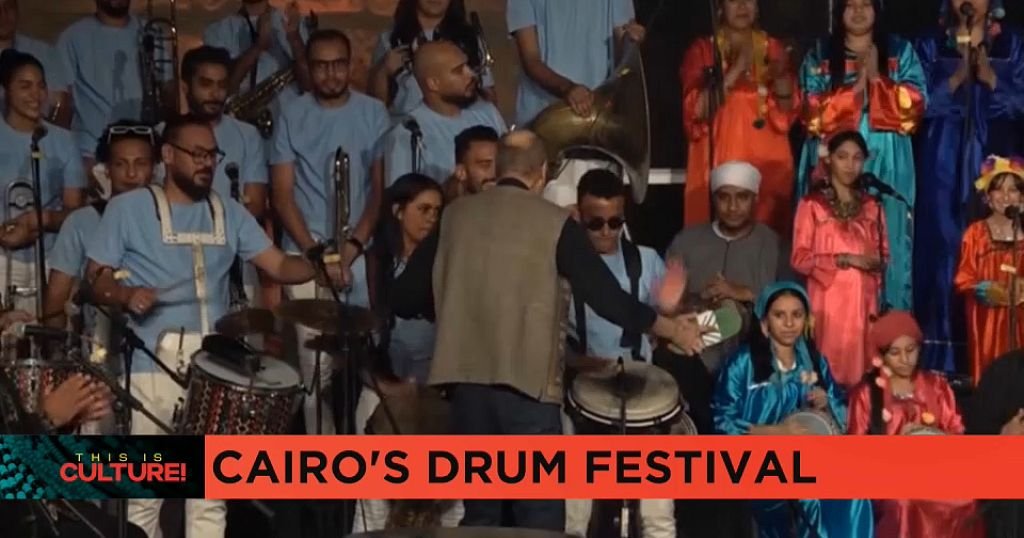
A Continent's Rhythm: Global Performances at Cairo Opera House
Around 40 international folkloric troupes performed across the festival venues, creating a dense schedule of daily shows and workshops that kept the Opera House grounds alive from morning until late night. India's Kathak dances appeared at both the opening and closing ceremonies, their intricate footwork and swirling costumes providing a graceful counterpoint to the heavier drum ensembles. Bollywood performances filled several evenings with energetic group choreography that drew cheers from audiences familiar with the films and curious newcomers alike.
The Indian Council for Cultural Relations and the Embassy of India in Cairo supported these contributions, strengthening long-standing cultural ties between the two nations through coordinated artist exchanges and technical assistance. Sudanese popular bands stole the spotlight with their high-energy sets that mixed traditional beats and contemporary flair, drawing repeated applause from packed audiences who rose to their feet during extended improvisations. The Egyptian Ismailia National Troupe for Folk Arts performed with the simsimiya, the traditional string instrument of the Suez Canal region, showcasing Egypt's own percussive roots in a style that traces back to canal workers' songs.
Groups from Japan and China added further layers, presenting taiko drumming and regional folk ensembles that highlighted the universal language of rhythm connecting all cultures. Japanese taiko players struck massive barrel drums with such force that the vibrations traveled through the wooden benches, while Chinese ensembles introduced delicate hand cymbals and frame drums that contrasted sharply with the deeper African tones. These juxtapositions created unexpected harmonies during joint jam sessions held each afternoon.
Audience members often lingered after shows to speak with performers through translators, asking about the meaning behind specific rhythms and the materials used to craft the instruments. One evening a Senegalese sabar player joined a Japanese taiko group for an impromptu duet that left the crowd silent with wonder before erupting into applause. Such moments revealed how the festival functioned less as a series of separate concerts and more as an ongoing conversation between traditions.
Workshops held in smaller halls allowed participants to try basic patterns on unfamiliar drums, fostering direct physical exchange between artists and the public. Egyptian children learned simple Kathak steps while Indian dancers attempted the rolling sabar technique, their laughter bridging language gaps. These sessions often ran longer than scheduled because neither side wanted to stop the learning.
The 11th edition in 2024 had also featured around 40 troupes, including a notable Palestinian group whose presence underscored the festival's ongoing commitment to voices from conflict zones. This continuity gave returning visitors a sense of an expanding family of artists who return year after year to renew friendships formed on the same stages.
From War Drums to Art: The Festival's Founding Mission
Founder and director Intisar Abdel Fattah has guided the festival since its beginning in 2009 with a clear vision of turning instruments of conflict into tools for harmony. He has often explained that drums were originally used during wars and that he wanted to transform a war instrument into an instrument of art and peace. In his words, "We are trying as much as possible to humanely communicate with the world's cultures to emphasize love, forgiveness and peace."
The festival began with the aim of sending a message of peace through spiritual music, choosing historical and cultural sites of Cairo as backdrops to deepen that message. Each edition builds on this foundation, inviting artists to share traditions that predate modern conflicts and remind audiences of shared human rhythms. Intisar Abdel Fattah's approach has kept the event focused on dialogue rather than spectacle, ensuring that every performance carries an underlying call for understanding.
Across many African societies, drums have long served as coded messengers that could travel faster than runners across savanna and forest. In Senegal the tama talking drum still carries announcements between villages, while in Egypt the same principle once relayed commands along the Nile during ancient military campaigns. By reframing these instruments as vehicles for peace, the festival reclaims their original communal purpose rather than their wartime use.
The philosophical depth of this mission resonates with elders who remember when drumming circles resolved village disputes before colonial courts arrived. Young artists arriving in Cairo often speak of feeling they are continuing an ancestral practice of using rhythm to restore balance after violence. This continuity gives the event a moral weight that extends beyond entertainment into the realm of living cultural repair.
Intisar Abdel Fattah's insistence on historical sites as performance venues further embeds the message in Egypt's own story of survival through successive empires. When drummers play against the walls of the Citadel, they stand where Mamluk and Ottoman soldiers once mustered, yet the only weapons present are mallets and hands. The contrast makes the peace message tangible rather than abstract.

Voices from the Festival: Audiences and Artists Speak
French attendee Anouk Honore captured the spirit when she said, "Percussions were a great way to make everyone come together. There was a message of peace and unity which we loved." Egyptian attendee Manal Kamal expressed local pride, noting, "I am very proud of Egypt for organizing such an event, allowing us to enjoy various cultures from countries around the world." The Egyptian Ministry of Culture described the gathering as proof that art transcends borders and brings people together across differences.
Cairo residents filled the free street performances each evening, turning ordinary public spaces into spontaneous meeting points for families and travelers. Artists from distant countries remarked on the warmth of Egyptian hospitality, which made the exchange of rhythms feel like a natural extension of daily life. These personal accounts show how the festival creates immediate connections that linger long after the final drumbeat fades.
At street shows in neighborhoods like Islamic Cairo, vendors selling ful and taameya paused their work to watch dancers whirl past their carts. Children climbed onto shoulders for better views, their small hands beating time on their parents' heads. The informality of these settings allowed shy visitors to join the dancing without feeling they were on display.
International artists repeatedly mentioned the generosity of Egyptian hosts who invited them into homes for meals after rehearsals. One Chinese percussionist described being moved to tears by the sight of his hosts preparing a dish from his own region using local ingredients as a gesture of welcome. Such acts transformed professional exchanges into lasting personal bonds.
The closing ceremony carried an emotional weight that surprised even seasoned performers. When all troupes joined for a final collective rhythm on the Opera House steps, many audience members wiped their eyes as the sound swelled and then slowly faded. The shared silence that followed felt like a collective promise to carry the message of peace outward.
North Africa's Living Heritage: Drumming Traditions Across the Continent
Drumming traditions stretch across North and West Africa, from the Nile Valley to the Atlantic coast, carrying stories of community and spirit. Egypt's percussive heritage reaches back to Pharaonic times and continues through Islamic and Coptic eras, with instruments like the simsimiya keeping ancient patterns alive. Morocco's Gnaoua festival offers a parallel tradition where percussive spiritual music heals and unites, much like the Cairo event.
Burundi's drum heritage finds expression at the UMUKOZO Cultural Festival, where royal drums still mark important gatherings and rites of passage. In Senegal, the tama talking drum and the sabar ensemble remain central to celebrations, allowing musicians to speak directly through rhythm in ways that cross language barriers. Across the continent, drums serve as vehicles for spiritual expression, storytelling, and the daily bonding that holds communities together through generations.
The djembe, now known worldwide, originated among the Malinke people and traveled with West African migrants to North African cities where it joined local frame drums in new fusions. The kora, though a stringed instrument, often accompanies sabar ensembles in Senegal, its resonant body functioning almost like an additional drum. These interconnections demonstrate how African percussion has always traveled and adapted rather than remaining fixed in one place.
Younger generations across the continent are preserving these traditions through apprenticeships that begin as early as age seven. In Cairo workshops, Egyptian teenagers learned basic sabar patterns from Senegalese masters, while Senegalese participants studied the simsimiya's delicate plucking technique. Such exchanges ensure that knowledge passes forward even as urbanization threatens older performance contexts.
Connections between North and West African drumming run deeper than geography suggests. The same goatskin heads and wooden frames appear from Marrakech to Khartoum, and the call-and-response structures used in Sudanese wedding songs mirror those heard in Senegalese wrestling matches. The Cairo festival makes these shared roots audible in one place.
What This Means for Africa's Cultural Diplomacy
Cultural diplomacy gains strength when festivals like this one open doors between Africa and the wider world through shared artistic practice. India-Egypt cultural ties grew visibly through the Kathak performances, supported by the Indian Council for Cultural Relations and the Embassy of India in Cairo. The event serves as a living platform for preserving intangible cultural heritage, giving traditional artists international stages they might otherwise lack.
Festival tourism brings measurable economic activity to Cairo hotels, markets, and transport services during the June dates each edition. Africa's cultural festivals build soft power by presenting the continent's creativity on equal terms with global traditions from Japan, China, and beyond. Institutions across the continent can study the Cairo model of combining formal stages with free public events to reach both local residents and international visitors while presenting a positive image of Egypt and Africa.
African governments could invest more systematically in such festivals by creating dedicated cultural diplomacy funds that support artist travel and venue preparation. These investments yield returns not only in tourism revenue but also in strengthened regional ties when neighboring countries send troupes and share programming ideas. The Cairo example shows that modest state support can leverage significant private and international partnerships.
Private sector sponsorship from African companies in telecommunications, banking, and tourism could expand the festival's reach without compromising its artistic focus. Several Egyptian firms already provide in-kind support through equipment and hospitality; scaling this model continent-wide would allow smaller nations to host similar events. Corporate involvement framed as heritage stewardship rather than advertising tends to earn greater community trust.
The next edition could feature expanded collaboration with Sahelian griot traditions and East African ngoma ensembles, further widening the geographic and stylistic range. Inviting youth ensembles from conflict-affected regions would continue the founding mission of using rhythm as a bridge. With careful planning, the Cairo festival can serve as a template for a network of African drum gatherings that together strengthen the continent's voice in global cultural conversations.
By Amara Diop, Staff Writer
This article was produced with AI-assisted research and editorial support. Reporting is based on sources cited in the article.
What's Your Reaction?
 Like
0
Like
0
 Dislike
0
Dislike
0
 Love
0
Love
0
 Funny
0
Funny
0
 Wow
0
Wow
0
 Sad
0
Sad
0
 Angry
0
Angry
0

West Africa/Sahel Correspondent at Global1.News. Dakar-based journalist covering politics, security, climate, and development across Francophone and Anglophone West Africa. Tells the stories of a region undergoing profound transformation.










Comments (0)