
Xi Jinping to meet Kim Jong Un in rare visit to North Korea
Xi Jinping to meet Kim Jong Un in rare visit to North Korea Strategic Timing of the Pyongyang Summit The announcement that President Xi Jinping will travel to North Korea from 8 to 9 June marks his first visit in nearly seven years, following an invitation from Kim Jong Un. This trip occurs shortly after Xi hosted US President Donald Trump and Russian President Vladimir Putin i
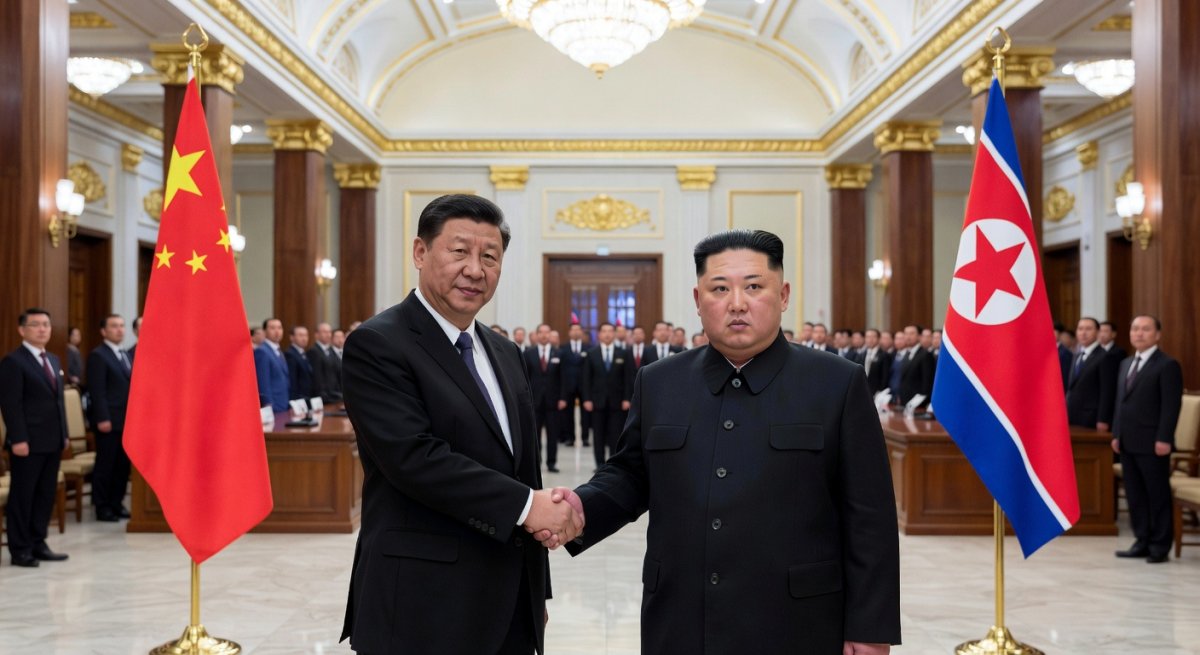
Strategic Timing of the Pyongyang Summit
The announcement that President Xi Jinping will travel to North Korea from 8 to 9 June marks his first visit in nearly seven years, following an invitation from Kim Jong Un. This trip occurs shortly after Xi hosted US President Donald Trump and Russian President Vladimir Putin in Beijing, underscoring the complex triangular dynamics involving Pyongyang. The timing aligns with the 65th anniversary of the 1961 Sino-North Korean mutual defence treaty, which remains China's sole formal defence pact with any nation and commits both sides to mutual support in the event of attack.
China's position as North Korea's primary economic and political partner gives Beijing substantial leverage amid international sanctions tied to Pyongyang's nuclear programme and reported human rights issues. The 1,400 km shared border facilitates this role, positioning the visit as an opportunity to reinforce bilateral ties without overstating immediate policy shifts.
China's Dual Circulation Strategy and Border Trade Priorities
Beijing's engagement with Pyongyang reflects broader objectives under the Dual Circulation strategy, which emphasises domestic resilience alongside selective external linkages. As North Korea's largest trading partner, China is expected to discuss expanded cross-border commerce, including potential increases in goods movement and tourism to support new North Korean facilities such as beach and ski resorts. These developments could bolster Pyongyang's economy while aligning with China's interest in regional stability along its northeastern frontier.
Officials from the Ministry of Commerce (MOFCOM) have historically managed such trade frameworks, though specific commitments from this visit remain to be detailed. The approach avoids abrupt changes, consistent with China's cautious handling of sanctions compliance.
Navigating the Russia-North Korea Alignment
Despite close ties with both Moscow and Pyongyang, Beijing observes the growing cooperation between Kim Jong Un and Vladimir Putin with measured caution. North Korea's reported involvement in the Ukraine conflict has elevated its international profile, yet Xi seeks to prevent any alliance that might complicate China's own relations with Russia or draw additional scrutiny from Western powers. The visit provides a platform to reaffirm China's central role without endorsing expanded military coordination.
This calculus extends to ASEAN and the Global South, where second-order effects could influence perceptions of multipolar diplomacy. Strengthened Sino-North Korean links may encourage other nations to seek balanced engagement with Beijing rather than exclusive alignment with either Washington or Moscow.
Nuclear Programme and Denuclearisation Continuity
North Korea's nuclear advancements remain central to the discussions. Recent statements from Kim indicate that weapons-grade nuclear materials production capacity has more than doubled over the past five years, demonstrated during tours of new facilities. While China has long advocated denuclearisation of the Korean Peninsula, its public stance has shown continuity rather than escalation in recent years.
Following the Trump-Xi meeting in Beijing, a White House fact sheet noted reaffirmation of the shared denuclearisation goal. A Chinese foreign ministry spokesperson, however, emphasised policy consistency without direct confirmation of new agreements. This measured response highlights Beijing's preference for dialogue over confrontation, even as Pyongyang displays its arsenal to visiting dignitaries.
South Korea's Position and Mediation Hopes
Seoul has expressed hope that Xi could encourage Pyongyang to resume talks with both South Korea and the United States. Unification Minister Chung Dong-young noted expectations that the summit might address restarting US-North Korea negotiations. Since Kim's December 2024 declaration ending reunification efforts and designating South Koreans as adversaries, communication channels have been severed.
Recent interactions, such as the North Korean women's football team's visit to the South, illustrated the current chill, with minimal engagement from Pyongyang's side. China's potential mediating influence could affect broader Northeast Asian stability, though outcomes depend on Pyongyang's willingness to engage.
Geopolitical Leverage and Long-Term Implications
From Beijing's perspective, the visit serves multiple strategic interests: maintaining influence over the Korean Peninsula, securing border stability, and projecting leadership in multilateral forums. For Kim, the propaganda value of hosting Xi reinforces domestic narratives of independence achieved without concessions to Washington or Seoul. The mutual defence treaty continues to anchor the relationship, yet evolving regional dynamics require careful management to avoid unintended escalations involving the EU or other actors.
Practical implications include sustained Chinese economic support as a lifeline for North Korea, tempered by awareness of international sanctions regimes. Future developments will hinge on how both sides balance economic cooperation with nuclear and security concerns, shaping trajectories for the wider Indo-Pacific region.
By Prof. Marcus Chen, Staff WriterThis article was produced with AI-assisted research and editorial support. Reporting is based on sources cited in the article.
What's Your Reaction?
 Like
0
Like
0
 Dislike
0
Dislike
0
 Love
0
Love
0
 Funny
0
Funny
0
 Wow
0
Wow
0
 Sad
0
Sad
0
 Angry
0
Angry
0

World Politics Analyst at Global1.News. Based in Beijing, covering US-China relations, global trade, and geopolitical strategy. Brings deep analytical perspective to the power dynamics shaping international affairs.















Comments (0)