
Xi Hosts Putin Days After Trump — A Strategic Analysis of Back-to-Back Summits
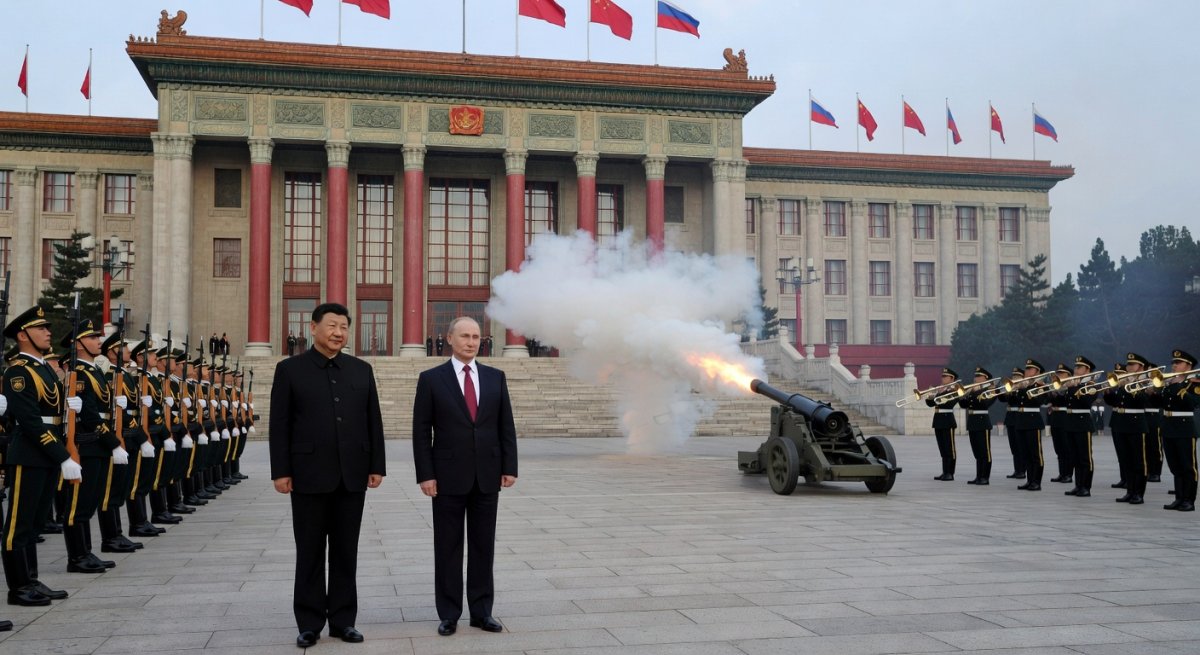
The Symbolism of Parallel Summits Recent receptions for Vladimir Putin and Donald Trump outside the Great Hall of the People followed nearly identical formats, complete with military honour guards, cannon fire and marching bands. These back-to-back visits illustrate the image Chinese officials seek to convey: a capital engaged with multiple powers yet bound to none. The source
The Symbolism of Parallel Summits
Recent receptions for Vladimir Putin and Donald Trump outside the Great Hall of the People followed nearly identical formats, complete with military honour guards, cannon fire and marching bands. These back-to-back visits illustrate the image Chinese officials seek to convey: a capital engaged with multiple powers yet bound to none. The source text notes that such events underscore China's massive economy and diplomatic clout, positioning Beijing as the destination where major leaders now converge.
Contrasting Political Pressures on the Two Guests
Putin has visited China more than twenty times and maintains a close personal relationship with Xi Jinping. However, the ongoing war in Ukraine and Western sanctions have increased Russia's reliance on Beijing, which serves as its top trading partner and primary buyer of oil and gas. Discussions produced more than twenty agreements on trade and technology, yet no approval emerged for the long-stalled Russian gas pipeline. A joint statement likewise contained no major breakthroughs on core issues.
Xi Jinping's Leverage Across Both Engagements
Chinese officials negotiated from a position strengthened by expanded trade ties elsewhere and dominance in rare earth minerals and advanced manufacturing. This leverage placed Beijing on equal footing with Washington amid the U.S. president's unpredictability. In meetings with both leaders, Xi confronted counterparts whose countries face protracted and costly conflicts: the Middle East crisis for the United States and the invasion of Ukraine, now in its fifth year, for Russia.
China's Shift from Isolation to Central Role
Five years earlier, China faced closed borders during the pandemic, sharp deterioration in relations with the West, and sanctions linked to human rights concerns in Xinjiang and policies in Hong Kong. Aggressive diplomatic rhetoric at that time strained ties with regional partners. Since then, officials have moderated their approach, recognising the need for foreign investment and stable commerce amid economic slowdown. Ties have been repaired with Australia, Canada and the United Kingdom, allowing world leaders to pursue deals with the world's second-largest economy.
Boundaries of Diplomatic Influence
Despite the enhanced posture, clear limits appear. Xi referenced only the Middle East conflict when speaking with Putin, describing a complete end to the war in Iran as of utmost urgency, while offering no comment on Russia's actions in Ukraine. The joint statement criticised treacherous military strikes and hypocritical use of negotiations, yet avoided direct engagement with the Ukraine situation. Analysts cited in the source text, including Samir Puri and Dr Zheng Runyu, observe that Russia requires deeper cooperation with China more acutely than the reverse under current global conditions.
This article was produced with AI-assisted research and editorial support. Reporting is based on sources cited in the article.
What's Your Reaction?
 Like
0
Like
0
 Dislike
0
Dislike
0
 Love
0
Love
0
 Funny
0
Funny
0
 Wow
0
Wow
0
 Sad
0
Sad
0
 Angry
0
Angry
0

World Politics Analyst at Global1.News. Based in Beijing, covering US-China relations, global trade, and geopolitical strategy. Brings deep analytical perspective to the power dynamics shaping international affairs.











Comments (0)