
South Lebanon Under Fire: Israel-Hezbollah Exchanges Escalate Along the Blue Line
South Lebanon Under Fire: Israel-Hezbollah Exchanges Escalate Along the Blue Line The Blue Line that separates Lebanon from Israel has once again become a corridor of fire. In recent days, exchanges between the Israel Defense Forces and Hezbollah have intensified, with artillery barrages, drone incursions and precision strikes targeting positions on both sides of the demarcatio
South Lebanon Under Fire: Israel-Hezbollah Exchanges Escalate Along the Blue Line
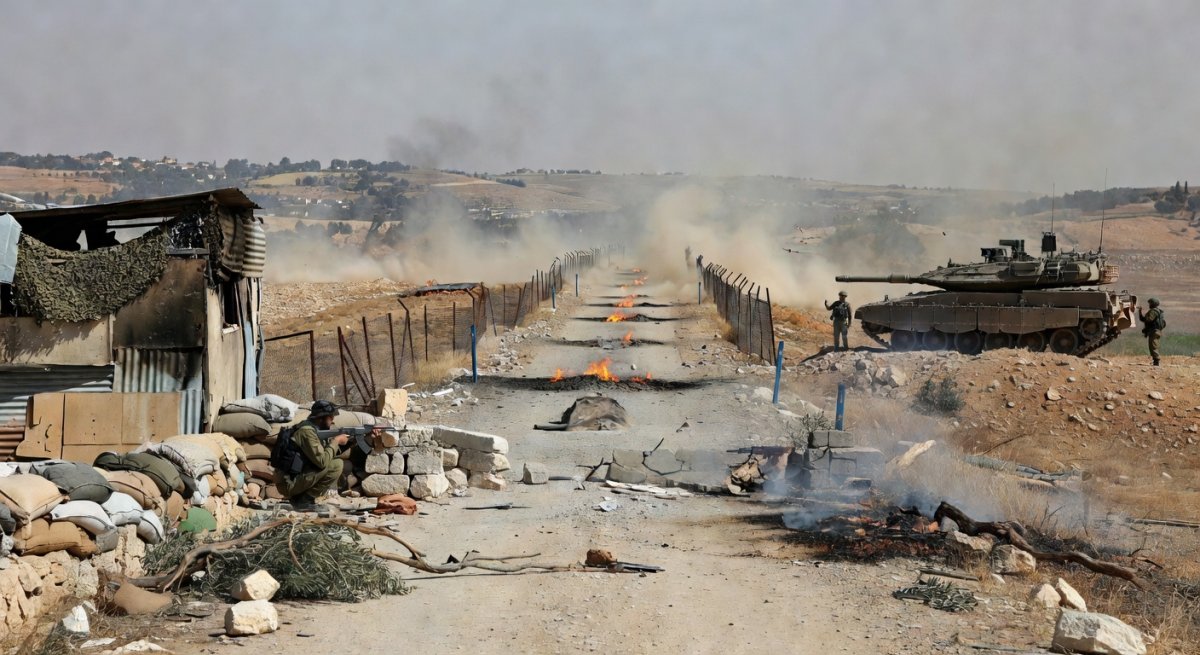
The Blue Line that separates Lebanon from Israel has once again become a corridor of fire. In recent days, exchanges between the Israel Defense Forces and Hezbollah have intensified, with artillery barrages, drone incursions and precision strikes targeting positions on both sides of the demarcation line. Lebanese border villages from Naqoura to Kfar Kila have absorbed the brunt of the escalation, forcing fresh waves of displacement and raising fears that the simmering conflict could spiral into a full-scale war.
Lebanese security sources and international monitors report at least a dozen cross-border incidents since the beginning of the month, involving anti-tank missiles, mortar fire and Israeli airstrikes on suspected Hezbollah infrastructure. The Lebanese Army has maintained a visible presence but remains constrained by its limited mandate and resources. For residents of south Lebanon, the pattern feels all too familiar: sporadic violence that disrupts daily life and threatens to erase any prospect of return to normalcy.
Global1 News has cross-referenced reports from Reuters, Al Jazeera, AP, LBCI and Lebanon\'s National News Agency to establish a clear picture of the current escalation and its implications for Lebanon\'s already fragile stability.
Timeline of Recent Incidents
On 12 October, Hezbollah announced it had targeted an Israeli military post near the disputed Shebaa Farms with Kornet anti-tank missiles in retaliation for earlier Israeli strikes. The Israel Defense Forces responded with artillery shelling of areas around Kafr Chouba and Houla, according to statements from the IDF Spokesperson\'s Unit. Two days later, on 14 October, Israeli drones struck what the military described as a Hezbollah weapons depot near the village of Aitaroun, producing secondary explosions that were visible from several kilometers away.
Further exchanges occurred on 16 October when Hezbollah fired a volley of rockets toward Israeli positions near Metulla, prompting Israeli warplanes to conduct low-altitude flights over southern Lebanon as a show of force. Lebanese civil defense teams reported damage to agricultural land and at least three civilian injuries from shrapnel in the vicinity of Marjayoun. These incidents mark the sharpest uptick in activity along the Blue Line since the November 2023 understanding that had temporarily reduced the frequency of attacks.
Humanitarian and Economic Impact on Border Communities
More than 8,000 residents from 14 villages within five kilometers of the Blue Line have been displaced since the latest round of escalation began, according to Lebanon\'s Disaster Risk Management Unit. Schools in Bint Jbeil and Tibnin have been converted into temporary shelters, while local hospitals in Nabatiyeh report increased admissions for trauma-related injuries. Farmers have abandoned olive groves and tobacco fields at the peak of the harvest season, compounding economic losses already estimated in the tens of millions of dollars.
The Lebanese government has appealed for international humanitarian assistance, yet delivery remains hampered by damaged roads and the reluctance of aid organizations to operate close to active frontlines. Many families who fled the 2006 war are once again packing belongings, haunted by memories of that summer\'s destruction.
Israeli Military Calculations and Objectives
Israeli officials have framed the recent strikes as necessary defensive measures to degrade Hezbollah\'s operational capabilities along the border. The IDF has deployed additional Merkava tanks and Iron Dome batteries to northern Israel while conducting targeted raids on underground tunnels and rocket launch sites. Military analysts note that Israel appears determined to enforce a buffer zone of several kilometers inside Lebanese territory, a demand Hezbollah has categorically rejected.
Prime Minister Benjamin Netanyahu\'s office has linked the border situation to the broader campaign against Iran-backed groups, warning that any major Hezbollah offensive would trigger a severe Israeli response. This posture reflects Israel\'s strategic priority of preventing the establishment of a permanent Hezbollah presence immediately adjacent to its northern communities.
Hezbollah\'s Operational Posture and Deterrence Strategy
Hezbollah Secretary-General Hassan Nasrallah has reiterated in recent speeches that the group\'s actions remain calibrated to support operations in Gaza while preserving its core deterrent against Israeli ground incursions. The movement has mobilized additional Radwan Force units along the front but has so far avoided large-scale rocket barrages into Israeli population centers. Lebanese political observers interpret this restraint as an attempt to avoid giving Israel a pretext for a wider offensive that could devastate Lebanon\'s civilian infrastructure.
Nevertheless, Hezbollah continues to demonstrate advanced reconnaissance and precision-strike capabilities, including the use of explosive drones that have successfully evaded Israeli air defenses on multiple occasions. This ongoing demonstration of force serves both to maintain morale among its base and to signal to regional actors that any attempt to marginalize the group militarily will be costly.
Lebanese State and Diplomatic Responses
Lebanon\'s caretaker government has condemned the Israeli strikes through formal diplomatic channels and requested an emergency session of the UN Security Council. Foreign Minister Abdallah Bou Habib has engaged with envoys from the United States, France and the European Union, emphasizing that Lebanon cannot absorb another war. The Lebanese Armed Forces have increased patrols along the Blue Line in coordination with UNIFIL, yet their capacity to interdict Hezbollah movements remains limited by political and logistical constraints.
Parliamentary blocs remain divided, with some factions calling for strict neutrality and others insisting that Hezbollah\'s resistance role is inseparable from Lebanon\'s defense doctrine. This internal fragmentation weakens Beirut\'s ability to present a unified negotiating position.
Broader Regional and International Context
The current escalation cannot be isolated from the wider conflict that erupted after 7 October 2023. Iran-backed networks across Iraq, Syria and Yemen have all activated in varying degrees, creating a multi-front challenge for Israel and its allies. The United States has deployed additional naval assets to the eastern Mediterranean, while European capitals have intensified shuttle diplomacy aimed at preventing a second major front from opening.
China and Russia have issued statements urging restraint, though their influence over the immediate actors remains marginal. The situation underscores how local border disputes along the Blue Line are now inextricably tied to great-power competition and the unresolved Palestinian question.
Impact and Reactions from Lebanese Society
Inside Lebanon, civil society organizations have mobilized to support displaced families, yet public anxiety is palpable. Markets in Beirut have seen price spikes for basic goods amid fears of supply disruptions. International airlines have begun reducing flights to Beirut-Rafic Hariri International Airport, further isolating the country economically. Lebanese citizens across sectarian lines express exhaustion with the cycle of violence and demand that political leaders prioritize de-escalation over ideological posturing.
Key Takeaways
- Escalation along the Blue Line has displaced over 8,000 Lebanese civilians since early October, with significant damage to agricultural infrastructure.
- Both Israel and Hezbollah are calibrating operations to avoid all-out war while maintaining credible deterrence.
- Lebanon\'s state institutions remain constrained in their ability to enforce a ceasefire or protect border communities.
- Regional actors including Iran, the United States and European powers are actively engaged in behind-the-scenes diplomacy.
- Any further miscalculation risks triggering a wider conflict with devastating consequences for Lebanon\'s economy and population.
The coming days will test whether diplomatic channels can restore the fragile November understanding or whether the logic of escalation will prevail. Lebanon stands once more at the precipice, its sovereignty and security held hostage to decisions made far beyond its borders.
This is Malik Hassan for Global1 News, reporting from Beirut. 🇱🇧
This article was produced with AI-assisted research and editorial support. Reporting is based on sources cited in the article.
What's Your Reaction?
 Like
0
Like
0
 Dislike
0
Dislike
0
 Love
0
Love
0
 Funny
0
Funny
0
 Wow
0
Wow
0
 Sad
0
Sad
0
 Angry
0
Angry
0

East Asia/Technology Correspondent at Global1.News. Seoul-based voice covering Korean politics, technology, business, and culture. Analyzes how technology and geopolitics intersect across East Asia.













Comments (0)