
Vision Thailand: Commerce Minister Charts Multipolar Trade Course
Thailand stands at a crossroads where the old certainties of export-led growth no longer guarantee prosperity. When Deputy Prime Minister and Minister of Commerce Suphajee Suthumpan took the stage at the 80th Anniversary Bangkok Post Forum on Friday, she delivered more than a policy speech — she presented a blueprint for how a mid-sized nation can navigate a world increasingly divided between superpowers.
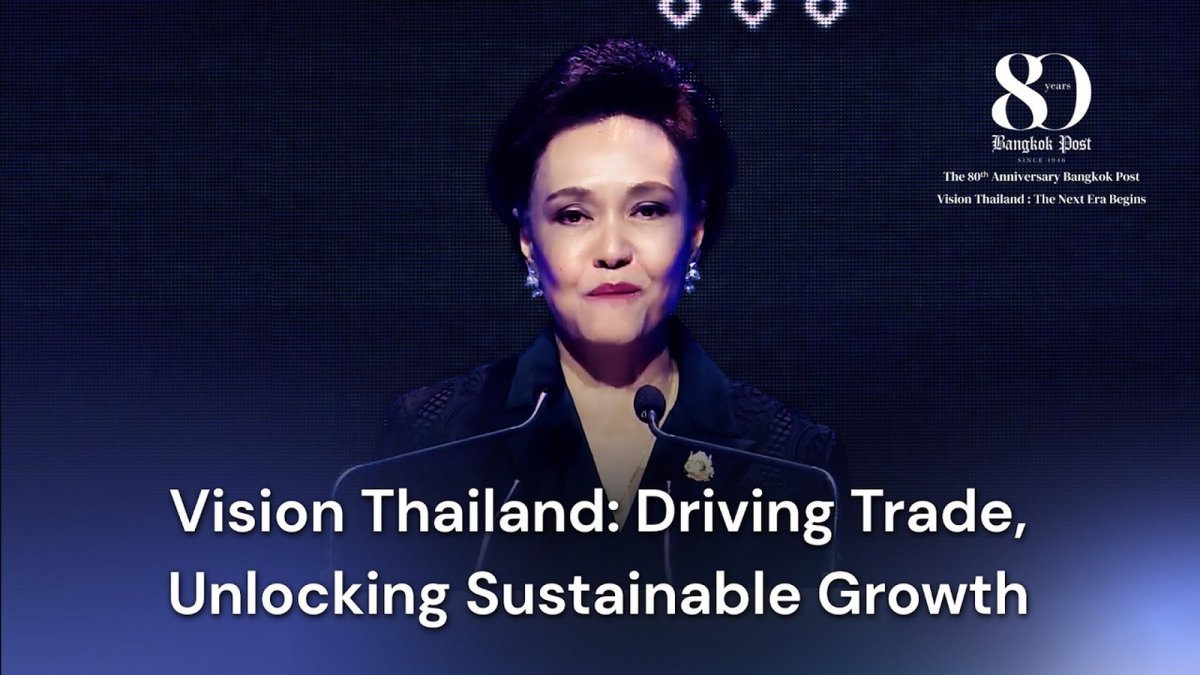
Thailand stands at a crossroads where the old certainties of export-led growth no longer guarantee prosperity. When Deputy Prime Minister and Minister of Commerce Suphajee Suthumpan took the stage at the 80th Anniversary Bangkok Post Forum on Friday, she delivered more than a policy speech — she presented a blueprint for how a mid-sized nation can navigate a world increasingly divided between superpowers. Her keynote, "Vision Thailand: Driving Trade, Unlocking Sustainable Growth," came at a moment when Thai exporters, farmers, and small business owners across the kingdom are asking the same question: what comes next?
Vision Thailand: The Next Era Begins — Commerce Minister Charts a Multipolar Course for Trade and Sustainable Growth
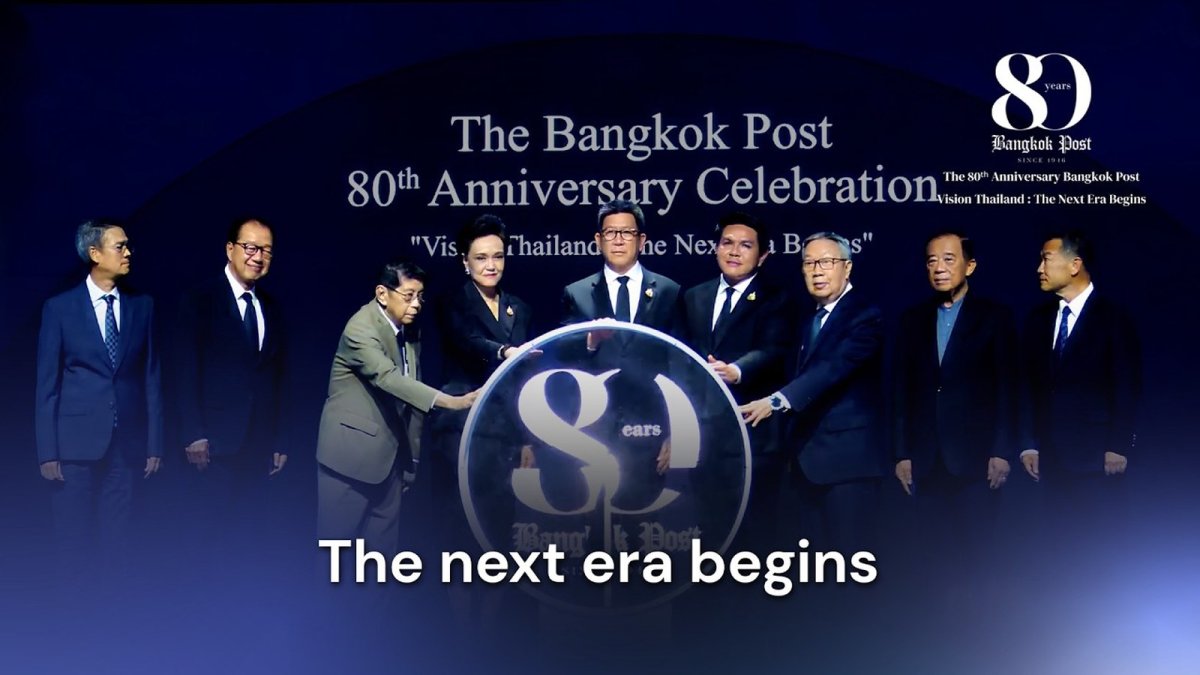
Bangkok, Thailand — The 22nd floor of Centara Grand and Bangkok Convention Centre at CentralWorld buzzed with quiet anticipation on Friday as business leaders, diplomats, and policymakers gathered for the 80th Anniversary Bangkok Post Forum under the theme "Vision Thailand: The Next Era Begins." Prof Dr Wissanu Krea-ngam, Chairman of the Board of Directors of Bangkok Post, opened the proceedings, marking eight decades since the newspaper was founded in 1946. But the spotlight belonged to Suphajee Suthumpan, who used her keynote address to argue that Thailand must fundamentally rethink its role in the global economy.
A Multipolar Economy: Thailand's New Compass
Suphajee's central argument was direct: the era of relying on a few dominant trading partners is over. She called for Thailand to transition toward a "multipolar economy," using trade as a tool to create value and sustainable growth rather than simply moving goods across borders. The Minister's framing reflects a growing recognition in Bangkok that the global order has shifted — the United States and China no longer define the entire landscape, and new poles of economic power are emerging across Asia, the Middle East, and beyond.
For Thai readers, this is not abstract geopolitics. It is about the price of rice in Ubon Ratchathani, the demand for rubber gloves from Songkhla, and the future of automotive parts factories in Rayong. When Suphajee warned that Thailand must "create options for ourselves and work with all parties," she was speaking directly to the anxiety felt across provincial Thailand, where communities have long depended on a handful of export destinations. The Minister's message was clear: diversification is not a luxury — it is survival.
Unlocking Three Gaps: Value, Market, and Participation
The heart of Suphajee's address lay in her diagnosis of three structural gaps holding Thailand back. The first, the Value Gap, refers to Thailand's historical position as a producer of raw materials and mid-tier manufactured goods rather than high-value branded products. The second, the Market Gap, stems from a dangerous concentration of export destinations. The Minister revealed that about one-third of Thai export value currently flows to just two main markets — a concentration risk that leaves the economy vulnerable to shocks in any single trading partner.
The third gap, the Participation Gap, is perhaps the most personally resonant for ordinary Thais. Suphajee noted that SMEs account for approximately 35% of Thailand's GDP, yet the roughly 22,000 SME and MSME exporters generate only about 12% of the country's export value. This disconnect between the backbone of the domestic economy and its presence in international markets represents both a failure and an opportunity. For the street vendors of Chiang Mai, the silk weavers of Surin, and the food processors of Khon Kaen, the question is whether they can be brought into the export economy — or left behind as the global trade landscape evolves.
From Production-Led to Market-Led: A Cultural Shift
Suphajee proposed a fundamental reorientation of Thai economic strategy: shifting from production-led to "market-led production." This is more than a bureaucratic phrase — it represents a cultural change in how Thai businesses approach the world. Instead of asking "what can we make?" the question becomes "what does the world want, and how can we deliver it with Thai creativity, Thai design, and Thai intellectual property?"
The Minister's emphasis on brands, intellectual property, and design signals a move away from competing on price alone. For generations, Thai exporters have succeeded by being efficient producers of goods designed elsewhere. The new vision asks Thai entrepreneurs to own the entire value chain — from conception to consumer. This resonates deeply in a country where traditional crafts and culinary heritage are already world-renowned, yet often fail to capture premium prices in international markets. The challenge is to translate cultural capital into economic value, a task that requires investment in design education, trademark protection, and marketing sophistication.
Four Working Groups: The Machinery of Change
To translate vision into action, Suphajee announced the establishment of four working groups. The Creative Economy and Visitor Economy group will focus on leveraging Thailand's cultural assets and tourism appeal. The Agriculture and Food Security group addresses the foundation of the Thai economy, from jasmine rice farmers in the Isaan region to seafood processors on the Andaman coast. The Community Economy and SME group targets the grassroots — the community enterprises and small businesses that form the social fabric of provincial Thailand. Finally, the International Trade group will work on expanding market access and diversifying export destinations.
These working groups are not merely advisory bodies. Suphajee indicated that "Quick Big Wins" should be visible within 6-12 months, with longer-term "Big Wins" reserved for structural adjustment. This timeline suggests a government in a hurry, aware that political momentum is finite and that Thai businesses need tangible results, not just white papers. For the SME owners in Hat Yai or the fruit exporters in Chanthaburi, the promise of visible improvements within a year is a meaningful commitment — one that will be measured against delivery.
Thailand's Position in Southeast Asia: A Regional Perspective
Thailand's trade strategy does not exist in a vacuum. As a founding member of ASEAN, Thailand's approach to the multipolar economy has implications for the entire region. When Bangkok diversifies its export markets, it opens pathways that neighboring countries — Laos, Cambodia, Myanmar, and Vietnam — can also benefit from through regional supply chains. The Minister's call to "work with all parties" reflects a distinctly Southeast Asian approach to great power competition: rather than choosing sides, the region seeks to maintain relationships with all major players while building its own internal resilience.
For Thai businesses, this regional perspective matters practically. The development of the Laos-China railway, the growth of digital commerce platforms across Southeast Asia, and the increasing integration of ASEAN supply chains all create new opportunities for Thai exporters. But they also create competition. Vietnam has aggressively pursued free trade agreements and attracted manufacturing investment that might otherwise have gone to Thailand. The Minister's emphasis on value creation and branding is, in part, a response to this competitive pressure — Thailand cannot win on labor costs alone, so it must win on quality, creativity, and trust.
Expert Perspectives: Digital Commerce and the Next Era
The forum's panels reinforced the themes of Suphajee's keynote. A session titled "The Next Era Begins: Thriving in a Changing World" brought together Chanida Klyphun, Southeast Asia Director of Public Policy at TikTok, and Narumon Chivangkur, Citi Country Officer and Banking Head of Citi Thailand, to discuss artificial intelligence, digital commerce, and Thailand's foundations for the future. Their presence underscored a key point: the next era of Thai trade will be digital, and the platforms that connect Thai sellers to global buyers are as important as the ports and highways that move physical goods.
For Thai SMEs, the digital opportunity is transformative. A silk producer in Pak Thong Chai can now reach customers in Milan or Tokyo through social commerce platforms, bypassing traditional intermediaries. A small cosmetics brand in Bangkok can build a global following through short-form video content. But the digital divide remains real — many provincial enterprises lack the skills, infrastructure, and capital to participate fully in the online economy. The Minister's working group on Community Economy and SME will need to address these gaps if the participation gap she identified is to be closed.

What to Watch For
The coming months will reveal whether the vision outlined on Friday translates into measurable change. The four working groups must now move from formation to action, identifying specific markets to target, products to promote, and barriers to remove. The 6-12 month timeline for "Quick Big Wins" suggests that the Ministry of Commerce is aiming for early victories — perhaps new trade agreements, streamlined export procedures, or targeted support for high-potential SME sectors.
For Thai readers, the key indicators to watch are concrete: the number of SME exporters, the diversification of export destinations, the growth of branded Thai products in international markets, and the share of export value captured by community enterprises. The Ministry of Commerce has set ambitious goals, but the real test will come in the provincial chambers of commerce, the farmers' cooperatives, and the family businesses that form the backbone of the Thai economy.
Suphajee's closing message — that Thailand must "be open, diversify markets, and maintain balance" — carries particular weight in a year when global tensions have disrupted supply chains and raised questions about the future of free trade. For a nation that has navigated colonialism, the Cold War, and successive economic crises by maintaining flexibility and openness, the multipolar approach is not a departure from tradition but a continuation of it. The next era of Thai trade will be defined not by the size of the country but by the creativity of its people and the wisdom of its policies.
As the forum concluded and attendees descended from the 22nd floor back into the bustling streets of Bangkok, the question hanging in the air was simple: can Thailand seize this moment? The vision has been articulated, the working groups established, and the targets set. Now begins the harder work of implementation — the patient, unglamorous labor of opening markets, building brands, and bringing Thai SMEs into the global economy. If the Minister's vision is realized, the next 80 years of Thailand's economic story may be even more remarkable than the last.
By Ann Srisawat, Staff Writer
This article was produced with AI-assisted research and editorial support. Reporting is based on sources cited in the article.
What's Your Reaction?
 Like
0
Like
0
 Dislike
0
Dislike
0
 Love
0
Love
0
 Funny
0
Funny
0
 Wow
0
Wow
0
 Sad
0
Sad
0
 Angry
0
Angry
0

Southeast Asia Correspondent at Global1.News. Based in Bangkok, covering Thai and Southeast Asian politics, economy, technology, and culture. Deep regional perspective on one of the world's most dynamic regions.













Comments (0)