
Russian Forces Edge Toward Ukraine's Kramatorsk Stronghold as Donbas 'Fortress Belt' Comes Under Fire
Russian forces are within 15 km of Kramatorsk and Sloviansk, targeting Ukraine's Donbas "fortress belt" with daily guided bombs and drones. The grinding offensive has reversed Kyiv's spring gains, with new commander Drapatyi facing his first major test.

KRAMATORSK, Ukraine — The daily rhythm of this eastern Ukrainian city is now measured in explosions, not hours. Iryna Rybakova, a press officer with Ukraine's 93rd Mechanized Brigade, described the past few weeks as "insane" in an interview with CNN, painting a picture of a city under relentless, industrial-scale assault. "There's shelling here every day. Guided bombs, a massive barrage, eight at a time... Just last night, they bombed the house where I used to live. We moved out of there a few months ago and it's just completely destroyed there now," she said.
Kramatorsk: A City That Has Become the Front Line
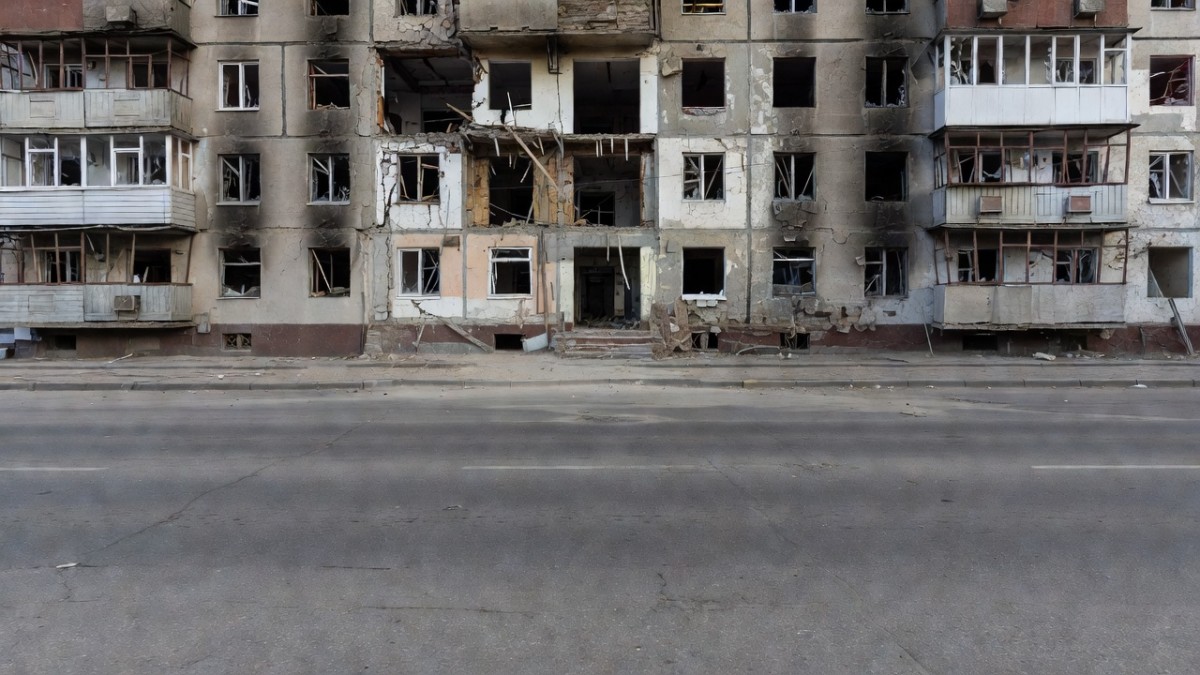
The destruction is not abstract. Nearly all of Kramatorsk's bridges have been destroyed, severing the city's internal lines of communication. Guided bombs and drone strikes are a daily reality, hitting cars, utility buildings, residential blocks, and administrative offices. For years, Kramatorsk served as a strategic rear point — a place where exhausted Ukrainian troops could rotate out of the hellish trenches of the Donbas front to rest, refit, and recover. That option is now gone. The city itself has become the front line.
From Spring Optimism to a Shifting Front
The shift is stark. In the spring, Ukraine's battlefield optimism was palpable, fueled by a months-long counteroffensive that clawed back more than 700 square kilometers of territory in the southeast, according to Kyiv. That momentum has reversed. Russian forces are now less than 15 kilometers (about 9 miles) from the outskirts of both Sloviansk and Kramatorsk, the two principal cities of what military analysts call the Donbas "fortress belt," according to regional officials cited by Reuters and the Straits Times on September 8. The situation, as CNN reported, has shifted decisively in Moscow's favor.
The Fortress Belt Under Siege
The fortress belt is not a single defensive line but a network of fortified industrial cities — Sloviansk, Kramatorsk, Druzhkivka, and Kostiantynivka — whose dense urban terrain, roads, and railways form a formidable barrier. This belt shields the more open plains to the west, and a breach here would ease the way for Russian forces to push deeper into eastern and central Ukraine. The stakes could not be higher for Kyiv's defensive strategy.
The belt is already fraying at its edges. Kostiantynivka, at the southern end of the network, has effectively lost its operational value as a Ukrainian stronghold, with only pockets of resistance remaining in the city's north. Druzhkivka, once a bustling industrial hub, is now mostly depopulated after months of relentless attacks. The human cost is being borne by the civilians who remain, and by the soldiers trying to hold the line.
Hennadiy Yudin, an officer with Ukraine's White Angels police evacuation unit, told CNN that the situation has deteriorated to the point where police can no longer drive into the town of Dobropillya and nearby villages. The front has advanced so close that soldiers must bring residents out on foot, walking them through dangerous terrain before evacuation teams can collect them farther from the line of contact. The war is no longer a distant rumble for these communities; it is at their doorstep.
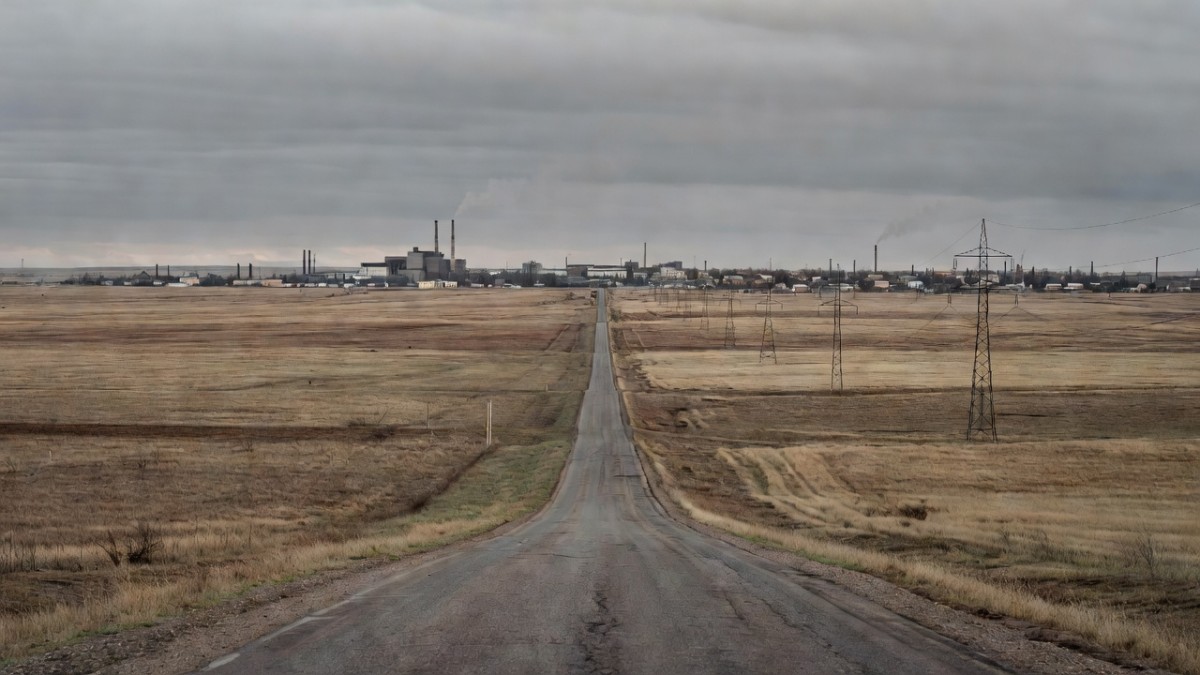
A Strategy of Annihilation, Not Conquest
The Russian approach to this battlefield is methodical and brutal, according to Jennie Olmsted, a Russia analyst at the Institute for the Study of War (ISW) quoted by CNN. Moscow wages a slow, grinding war of attrition that renders cities uninhabitable rather than seizing them quickly. The evidence is in the recent history of the conflict: it took Russian forces nine months of brutal fighting to take Bakhmut, and nearly two years to take Pokrovsk. By the time both cities fell, they were largely destroyed, their urban landscapes reduced to rubble that offered little strategic value beyond the symbolic.
Olmsted described the current phase as deliberate preparation. "They are setting conditions and preparing the battle space for offenses against Sloviansk," she said. This involves the systematic destruction of infrastructure, the relentless bombardment of residential areas, and the use of massive guided bombs to level defensive positions. The goal is not just to take ground, but to make the ground so costly to hold that Ukrainian forces are forced to withdraw or be annihilated.
The data supports this grim assessment. The ISW estimates that Russian forces advanced or infiltrated about 124 square kilometers of Ukrainian territory in August 2026. While that figure is roughly a quarter of the territory Russia gained in the same month in 2025, it represents a steady, grinding advance that is slowly consuming the Donbas. Western intelligence estimates cited by CNN suggest Russia is suffering roughly 40,000 casualties a month to achieve these gains — a staggering human toll that Moscow appears willing to pay.
The Battlefield Numbers Tell the Story
Ukraine's General Staff reported 263 combat clashes along the front line over the past day as of 8:00 a.m. on September 9, according to Ukrinform. The intensity is concentrated in key sectors: 49 Russian attacks were recorded in the Pokrovsk sector, and 17 in the Kostiantynivka sector. The Kramatorsk sector itself saw one Russian offensive operation directed toward the village of Yurkivka. Over the same 24-hour period, Russia launched two missile strikes and 79 airstrikes, dropping a staggering 302 guided aerial bombs.
The scale of drone warfare is equally unprecedented. Ukraine's General Staff reported that Russia deployed more than 9,200 one-way attack drones and carried out more than 2,600 shelling attacks over the past day alone, 42 of them using multiple-launch rocket systems. These numbers paint a picture of a front line under constant, overwhelming pressure, where Ukrainian defenders are forced to contend with a relentless barrage of munitions designed to exhaust their air defenses and break their morale.
On the broader scale of the conflict, Ukraine's government claims that Russian total personnel losses since the full-scale invasion began on February 24, 2022, now exceed about 1.5 million. This is a Ukrainian claim that CNN and Reuters cannot independently verify, and it should be treated with appropriate caution. However, even conservative estimates of Russian casualties suggest a war of attrition that is bleeding Moscow's military dry, even as it makes slow territorial progress.
New Commanders Face Their First Major Test
The looming battle for the Donetsk fortress belt is shaping up as one of the most consequential phases of the war this year, and it represents the first major test for Kyiv's new top general. Mykhailo Drapatyi took over as commander-in-chief in July, and he and his new corps commanders are now facing the most serious Russian offensive of the year, according to Reuters reporting on September 8.
The defense of the belt is being coordinated by a cadre of experienced and battle-hardened commanders. Andriy Biletskyi's corps, which earlier this year stabilized part of the front near Sloviansk, holds the northern anchor of the defensive network. Azov commander Prokopenko's force, which thwarted a major Russian assault near Dobropillia in 2025, brings significant combat experience to the southern sector. Air-assault Colonel Emil Ishkulov, whose 11th Army Corps covers Sloviansk and Kramatorsk, is responsible for the defense of the two most critical cities in the belt.
Analysts expect intense fighting to continue through September and October, with Russia expected to press its offensive as winter approaches. The coming weeks will be a critical test not only of Drapatyi's leadership but of Ukraine's ability to hold a defensive line against a Russian military that has learned to absorb massive losses in exchange for slow, steady territorial gains. The outcome of this battle could well determine the strategic trajectory of the war for the remainder of the year.
Diplomacy Stalls as Putin Holds Firm
While the military situation deteriorates on the ground, diplomatic efforts appear to have stalled. A weekend visit to Kyiv by US President Donald Trump's envoy Steve Witkoff and his son-in-law Jared Kushner — their first such trip — ended Sunday without a major breakthrough, according to CNN. The visit, which was closely watched for any signs of movement toward a negotiated settlement, produced no public progress on the core issues dividing the two sides.
Russian President Vladimir Putin continues to demand control over all of Donetsk and Luhansk, the two eastern regions that Moscow has claimed as its own territory. The Kremlin claims tangible progress toward this goal, but CNN reported that it could not independently verify Moscow's assertions about the timing of any potential offensive operations. The gap between Russian maximalist demands and Ukraine's insistence on territorial integrity remains as wide as ever.
The lack of diplomatic progress, combined with the deteriorating military situation, suggests that the war is entering a new and potentially decisive phase. With winter approaching, both sides are likely to seek to improve their positions before the ground freezes and the pace of operations inevitably slows. For the residents of Kramatorsk and the soldiers defending it, that means the coming weeks are likely to bring more of the same: daily shelling, guided bombs, and the grim calculus of survival in a city that has become a fortress under siege.
The human cost is visible everywhere in Kramatorsk. The destroyed homes, the shattered bridges, the empty streets where children once played — all bear witness to a war that shows no signs of ending. As Russian forces edge closer, the city that once served as a sanctuary for Ukraine's exhausted troops has become another battleground in a conflict that has already claimed hundreds of thousands of lives. The fortress belt is holding, for now, but the pressure is mounting with each passing day.
By Jessica Ali, Staff Writer
This article was produced with AI-assisted research and editorial support. Sources: CNN, Reuters, Institute for the Study of War, Ukrinform/General Staff of the Armed Forces of Ukraine.
What's Your Reaction?
 Like
0
Like
0
 Dislike
0
Dislike
0
 Love
0
Love
0
 Funny
0
Funny
0
 Wow
0
Wow
0
 Sad
0
Sad
0
 Angry
0
Angry
0

Editor-in-Chief at Global1.News. Atlanta-based journalist who cuts through the BS and tells it like it is. Lead anchor, host, and the voice you hear when the spin stops and the truth starts.











Comments (0)