
AI infrastructure will define the next industrial revolution
AI is no longer a buzzword for startups; it’s the new steel‑beam of the global economy. The data from Schneider Electric’s EVP Manish Kumar and the surrounding research makes it clear: AI‑driven infrastructure is becoming the backbone of the next industrial revolution.
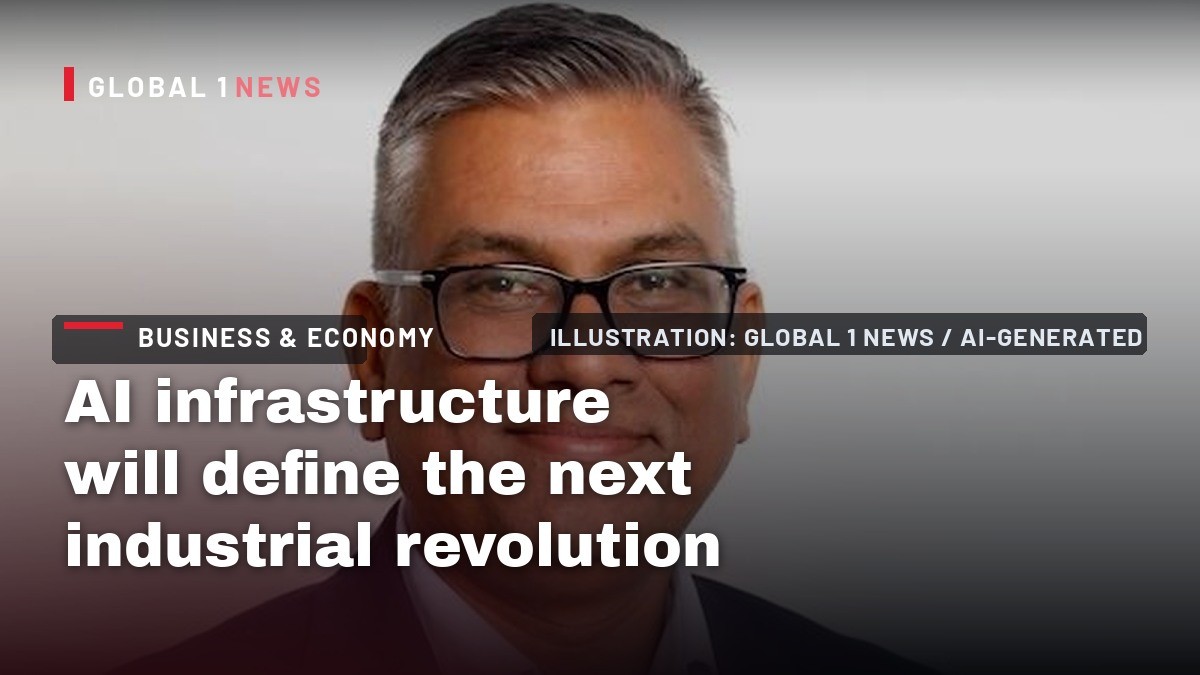
AI is no longer a buzzword for startups; it’s the new steel‑beam of the global economy. The data from Schneider Electric’s EVP Manish Kumar and the surrounding research makes it clear: AI‑driven infrastructure is becoming the backbone of the next industrial revolution. For anyone running a data centre or thinking about scaling a hosting business, the message is simple – you either build a secure, scalable, resilient AI factory now, or you get left behind by hyperscalers and VC‑fueled hype that promises miracles but delivers outages.
The Money Talk: Trillions on the Table, Not Just Dollars
Morgan Stanley’s research, as cited in the article, puts AI‑related investment on a trajectory toward almost $3 trillion by 2028, with more than 80 percent of that still to come. Gartner adds that worldwide AI spending is forecast at $2.52 trillion in 2026, a 44 percent year‑over‑year jump, and that software, services, and AI infrastructure make up 94 percent of that spend. Those numbers aren’t abstract; they translate directly into demand for power, cooling, and real‑estate that can host the massive compute clusters feeding generative models, autonomous vehicles, and industrial robots.
JLL’s projection of an “unprecedented investment supercycle” needing up to $3 trillion of new funding by 2030 underscores the scale. If you’re a boutique hosting provider, you’re staring at a market where the capital influx dwarfs traditional IT spend. The risk is not a lack of money – it’s a lack of capacity to absorb it. You need the physical plant to turn that cash into compute, and the industry is already seeing a rush to claim that space.
AI as a Macro‑Economic Variable
The article frames AI as a driver of GDP, earnings, credit markets, and geopolitics. That’s not hyperbole; it’s a shift from “tech‑only” to “economy‑wide” relevance. When AI workloads start to dominate half of all data‑centre workloads by 2030 – as JLL predicts – the ripple effects hit everything from power pricing to real‑estate valuation. For independent operators, that means you have to think like a utility, not just an ISP.
Schneider Electric’s focus on secure power and data centre resilience highlights the emerging priority: reliability is now a competitive moat. A single outage in a region that’s powering autonomous delivery drones or medical robots can cascade into regulatory penalties and lost contracts. The bottom line: you must embed redundancy and security at the design stage, not bolt it on after a breach.
Edge AI and the Real‑World Use Cases Driving Demand
North America’s deployment of driverless cars in 11 cities and autonomous delivery drones across another 50 locations illustrates the edge AI explosion. Those applications need low‑latency, high‑throughput connectivity – a perfect fit for regional data centres that can host inference workloads close to the end‑user. The same logic applies in APAC, where AI‑powered medical robots are entering operating rooms, demanding ultra‑reliable, low‑latency compute on site.
For a hosting founder, the lesson is clear: build or partner for edge sites. The hyperscalers are racing to claim the edge market, but their pricing models often assume massive scale that smaller providers can’t match. By offering a “pay‑as‑you‑go” model with transparent power and cooling costs, you can undercut the big guys while delivering the reliability they can’t guarantee at the edge.
Europe’s Sovereign AI Push and What It Means for the Market
The EU Commission’s creation of Digital Hubs and AI gigafactories, backed by up to €75 billion in investment with partners like SoftBank and Schneider Electric, signals a policy‑driven surge in sovereign AI capacity. France’s commitment to expand AI infrastructure is a direct response to the desire for digital sovereignty, and it will likely translate into preferential procurement for locally‑hosted workloads.
This is a wake‑up call for independent providers in Europe: align with national AI strategies, secure government contracts, and position your facilities as “sovereign‑grade” alternatives to US‑based hyperscalers. The same logic can be applied in other regions where governments are starting to earmark funds for AI‑centric infrastructure.
Power, Renewables, and the Grid Paradox
Goldman Sachs forecasts that data‑centre power demand will climb to 3‑4 percent of global consumption by decade’s end, with 40 percent of that increase expected to be met by green energy. The World Economic Forum points out that a mere one‑percent boost in system flexibility could unlock 100 GW of capacity in the US alone. In practice, that means data centres must evolve from pure consumers to “prosumer” assets that both draw and feed renewable power back into the grid.
For operators, the operational implication is twofold: first, invest in on‑site renewable generation or power‑purchase agreements that give you control over energy costs; second, adopt intelligent energy management systems that can dynamically shift loads to match renewable availability. The cost of ignoring this shift is not just higher electricity bills but also regulatory risk as jurisdictions tighten carbon‑intensity standards.
Cooling Innovations: The Unsung Hero of AI Factories
The article mentions “novel approaches to physical infrastructure, equipment design and system architecture – as well as innovations in liquid cooling.” In the AI era, cooling is the bottleneck that determines how much compute you can pack per square foot. Liquid cooling, when properly engineered, can cut PUE (Power Usage Effectiveness) dramatically, allowing you to host more GPUs per rack without blowing your power budget.
From a founder’s perspective, the ROI on liquid cooling is compelling. The upfront capex is higher, but the reduction in energy costs and the ability to host denser workloads translates into higher revenue per square foot. Moreover, clients increasingly demand sustainability metrics, and a low PUE is a strong selling point when negotiating contracts against hyperscalers that often hide their energy intensity.
Actionable Playbook for Independent Hosting Providers
So what should a founder do right now? First, audit your power and cooling architecture against the projected AI workload growth – aim for at least 20 percent headroom in both capacity and redundancy. Second, explore edge site roll‑outs in regions with emerging AI use cases, such as autonomous logistics corridors or medical robot hubs. Third, lock in renewable power contracts or on‑site generation to hedge against volatile electricity markets and meet emerging ESG requirements.
Finally, position your brand as a “secure, resilient AI factory” rather than a generic web host. Use the data points from Schneider Electric, Gartner, and JLL to back up your claims, and be transparent about your PUE, uptime, and carbon sourcing. In a market where hyperscalers flaunt “best practices” that crumble under real‑world load, a founder who can prove reliability and cost‑effectiveness will win the next wave of AI contracts.
— Allan Ali, Founder
This article was produced with AI-assisted research and editorial support. Reporting is based on the source material cited below. Sources: Data Center Dynamics; datacenterdynamics.com; Global1.News (28 September 2026).
By Allan Ali, Global1.News
What's Your Reaction?
 Like
0
Like
0
 Dislike
0
Dislike
0
 Love
0
Love
0
 Funny
0
Funny
0
 Wow
0
Wow
0
 Sad
0
Sad
0
 Angry
0
Angry
0

Publisher of Global1.News. Automation architect, systems builder, and the guy making sure the truth gets published.















Comments (0)