
Donald Duck's uncle was partly based on Wernher von Braun
When Disney rolled out Ludwig Von Drake back in 1961, it wasn’t just a goofy uncle for Donald Duck. The character was a deliberate nod to the rocket scientists who were shaping the Space Age, and the move tells a broader story about how pop culture leans on the tech elite to sell hype.
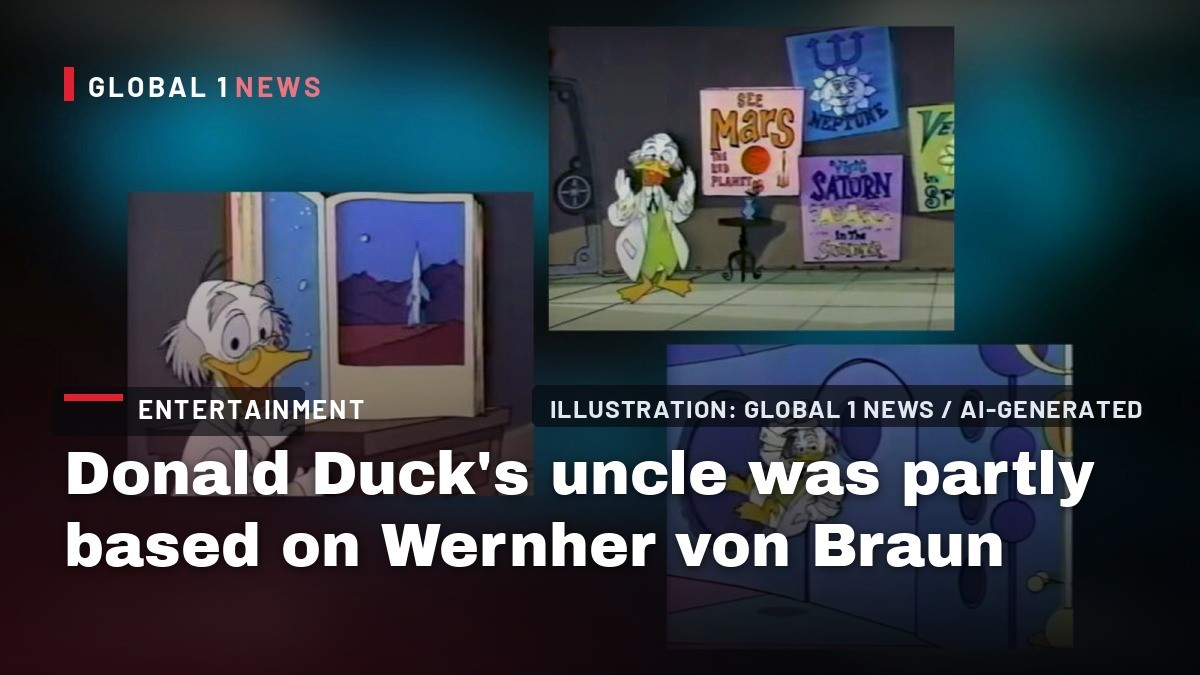
When Disney rolled out Ludwig Von Drake back in 1961, it wasn’t just a goofy uncle for Donald Duck. The character was a deliberate nod to the rocket scientists who were shaping the Space Age, and the move tells a broader story about how pop culture leans on the tech elite to sell hype. As a founder who’s been wiring up servers for a decade, I see the same pattern today: big‑name consultants get plastered on press releases while the real work—keeping the lights on for paying customers—gets ignored. The Von Drake saga is a reminder that “expert” branding can be as much about optics as it is about substance.
From Rocket Science to Cartoon Science
Disney didn’t just pull a name out of thin air. The studio enlisted German rocket pioneer Wernher von Braun, physicist Heinz Haber, and space writer Willy Ley to give the cartoon a veneer of credibility. Their involvement was meant to ensure the show’s “accurate (for then) information,” according to the source material. This mirrors today’s tech firms hiring former NASA engineers or ex‑hyperscaler architects to legitimize a product launch, even when the underlying architecture is still a prototype. The lesson? A marquee name can open doors, but it doesn’t guarantee the solution will survive real‑world stress.
Reused Footage and the Cost of Obsolescence
Von Drake’s “Inside Outer Space” episode leaned heavily on animation from Disney’s 1957 space specials—“Man and the Moon,” “Man in Space,” and “Mars and Beyond.” By the time the 1963 episode aired, the world had already seen two Soviet cosmonauts orbit Earth and two American sub‑orbital flights, yet the cartoon never mentioned those milestones. The reuse of dated material is a classic cost‑saving trick, one we see in cloud‑native startups that repurpose open‑source components without updating them for new threats. The result? A product that looks fresh on the surface but is already behind the curve.
The “Outstanding Genius” Pitch
Disney billed Von Drake as “the outstanding genius of the century,” a hyperbolic title that sold the character’s authority. Fast‑forward to today’s VC‑fueled hype cycles, and you’ll hear the same line: “the world‑changing platform,” “the next‑gen AI engine,” and so on. Those superlatives are designed to attract investors and early adopters, not to set realistic expectations for the engineering team tasked with delivering uptime. As someone who’s kept servers humming through multiple data‑center outages, I know that the gap between marketing hype and operational reality can be a fatal one.
Voice‑Over Accents and Cultural Context
The Austrian accent given to Von Drake by Paul Frees was a deliberate choice, tapping into post‑World‑War II sentiment. The accent made the character instantly recognizable as a “German scientist” without naming von Braun outright—a subtle way to ride the wave of public fascination with space while sidestepping lingering war‑time sensitivities. Modern tech firms do something similar by cloaking controversial backers behind “advisory boards” or “strategic partners,” leveraging the cachet while keeping the uncomfortable details at arm’s length.
Pricing Talk and the Illusion of Scarcity
At the start of the “Inside Outer Space” segment, Von Drake warns viewers to “get your copy right away before it becomes obsolete” and that “prices go up.” It’s classic scarcity marketing, a tactic still used by cloud providers who promise limited‑time discounts on compute that evaporate as soon as you sign up. The reality for independent hosting operators is that those price spikes are often a veneer for capacity constraints or strategic positioning, not a reflection of actual cost increases. Knowing the playbook helps us negotiate better contracts and avoid being caught off‑guard by sudden rate hikes.
Lessons for Independent Providers
The Von Drake story underscores a timeless business risk: relying on borrowed credibility without owning the underlying substance. As a founder who’s built and maintained production infrastructure for years, I’ve learned that the only thing that truly sustains a service is the rigor of the engineering behind it—not the fame of the consultants you can quote on a press release. Independent hosting providers must focus on solid architecture, transparent pricing, and honest communication with customers, rather than chasing the flash of a famous name.
Actionable Takeaways
First, vet any “expert” endorsement against actual deliverables. If a consultant’s résumé reads like a Hollywood cameo, ask for concrete proof of how their input improves reliability or performance. Second, audit reused components—whether animation clips or open‑source libraries—for relevance and security. Third, scrutinize scarcity‑driven pricing offers; compare them against baseline rates and factor in potential hidden costs. Finally, embed a culture that values operational honesty over marketing hype. That’s the only way to keep the lights on when the hype train passes by.
In the end, Ludwig Von Drake was a clever blend of science, showmanship, and strategic branding. For us in the hosting trenches, the real takeaway is to separate the sparkle from the substance and build on the latter. Anything less is just a cartoon.
— Allan Ali, Founder
This article was produced with AI-assisted research and editorial support. Reporting is based on the source material cited below. Sources: Ars Technica; arstechnica.com; Global1.News (26 September 2026).
By Allan Ali, Global1.News
What's Your Reaction?
 Like
0
Like
0
 Dislike
0
Dislike
0
 Love
0
Love
0
 Funny
0
Funny
0
 Wow
0
Wow
0
 Sad
0
Sad
0
 Angry
0
Angry
0

Publisher of Global1.News. Automation architect, systems builder, and the guy making sure the truth gets published.














Comments (0)