
Mallett: De Villiers Bok Mr Reliable
When the Springboks fell short against the Wallabies in Perth, the headlines were dominated by the scoreboard. Yet former coach Nick Mallett chose to shine a spotlight on a different story – the emergence of openside flanker Paul de Villiers as the team’s “Mr Reliable”.
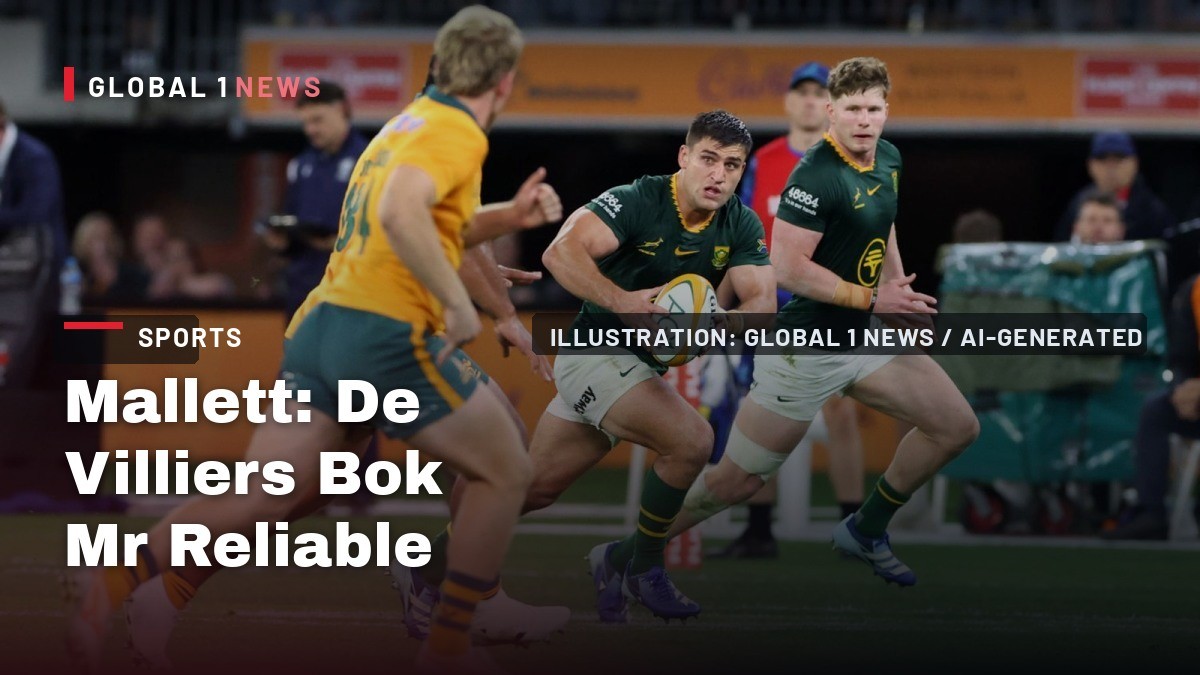
When the Springboks fell short against the Wallabies in Perth, the headlines were dominated by the scoreboard. Yet former coach Nick Mallett chose to shine a spotlight on a different story – the emergence of openside flanker Paul de Villiers as the team’s “Mr Reliable”. On the Talking Boks podcast, Mallett praised de Villiers’ performance, arguing that his consistency underscores the depth of loose‑forward talent that Rassie Erasmus now has at his disposal. In a sport where every tackle and turnover can swing a match, the South African side’s ability to call on a reliable bench has never been more crucial, especially with the Nations Championship looming in November.
De Villiers: The Unsung Hero of Perth
Nick Mallett’s assessment of Paul de Villiers was unequivocal: “I think Paul de Villiers was outstanding.” The former Springbok coach highlighted that the openside’s work rate and impact in a losing effort were a testament to his reliability. In a game where the Springboks were out‑scored, de Villiers’ contribution stood out as a bright spot, offering a glimpse of a player who can be trusted to give “100 % every time he plays”. That level of consistency is exactly what the Springboks need as they head into a grueling end‑of‑year schedule.
De Villiers’ performance also served a broader narrative for Mallett – the depth of the loose‑forward department. While the starting trio of Siya Kolisi, Jasper Wiese and Pieter‑Steph du Toit continues to anchor the back row, the coach emphasized that the bench now boasts a “hell of a back‑up loose trio”. This depth, he argued, will be tested when the Boks travel to Europe later this year.
Back‑Row Options: More Than Just a Starting Trio
Mallett didn’t stop at praising de Villiers. He also pointed to other players capable of stepping into the loose‑forward roles. Cameron Hanekom, currently lining up at No 8, was mentioned as a viable option, while Ruan Venter and BJ Dixon were highlighted as potential candidates for the openside flank. The former coach’s comments suggest that Erasmus now has a pool of players who can rotate without a significant drop in quality.
In practical terms, this means the Springboks can manage player workloads more intelligently. With a schedule that includes the Nations Championship, a possible November tour, and the ever‑present All‑Black rivalry, having multiple players who can perform at a high level reduces the risk of fatigue and injury. It also fuels internal competition, pushing each player to maintain peak performance to earn a spot in the match‑day squad.
Strategic Implications for the Nations Championship
The next major test for South Africa comes in the Nations Championship, where the Boks will face Italy, France and Ireland in November. Mallett’s confidence in Erasmus’ ambition was clear: “There’s no competition South Africa is involved in which we don’t want to win.” The former coach believes Erasmus will field a “changed‑up team for Italy” while keeping a “fully available team for Ireland and France”. This approach reflects a strategic balancing act – rotating the squad against a perceived weaker opponent while preserving a strongest‑possible XI for the tougher fixtures.
For South African fans, the promise of a fully loaded side against the northern hemisphere powerhouses is a tantalising prospect. It also signals that the depth highlighted by Mallett will be put to the test. If players like de Villiers, Hanekom, Venter and Dixon can step up when called upon, Erasmus will have the flexibility to keep his first‑choice stars fresh for the decisive matches.
Workload Management: The Eben Etzebeth Example
One of the lingering concerns for any South African squad is the cumulative workload on senior players, especially those with extensive caps. Mallett addressed this head‑on by citing 147‑cap lock Eben Etzebeth. He noted that despite Etzebeth’s recent string of six consecutive Springbok caps, his actual minutes on the field this year have been limited. “If you go on game time, the amount of minutes that Etzebeth has been played this year would be very few,” Mallett explained.
This observation underlines a broader point: the Springboks can afford to rotate their senior campaigners without compromising performance. Mallett argued that the limited minutes mean there’s “no problem” for Etzebeth, Kolisi or du Toit to feature in the end‑of‑year tour. In other words, the squad’s core can be refreshed, mitigating the risk of burnout as the season intensifies.
Back‑Line Hunger: The Fight for Starting Spots
While the forwards enjoy a deep bench, the backs are no less competitive. Mallett highlighted the desire among the back‑line to earn a place on the touring squad. He specifically mentioned Damian de Allende, Jesse Kriel and Sacha Feinberg‑Mngomezulu as players “desperate to play”. The former coach also threw a nod to Damian Willemse, asserting that “you can’t tell me that Damian Willemse won’t want to go on this trip and win this competition”.
Such statements reflect a broader culture of hunger within the Springbok camp. Players understand that selection is merit‑based and that the upcoming Nations Championship will be a platform to cement their places. For South African supporters, this internal competition translates into a more dynamic, high‑energy style of play – the kind of rugby that fuels stadium chants and unites fans across the nation.
Looking Ahead: What Success Means for South African Rugby
If Erasmus can harness the depth highlighted by Mallett – from reliable forwards like de Villiers to a hungry back‑line eager to prove themselves – the Springboks are poised to chase the Nations Championship title with intent. The former coach’s confidence that “there’s no competition South Africa is involved in which we don’t want to win” captures the collective ambition of a nation that lives and breathes rugby.
Beyond the trophy, a successful campaign would reinforce the narrative of transformation and unity that sport has long represented in South Africa. It would showcase a squad where seasoned veterans and emerging talents blend seamlessly, reflecting the country’s broader journey toward inclusive excellence. As the Boks prepare for the November showdown, South African fans will be watching not just for the final score, but for the proof that depth, reliability and hunger can drive the nation to new heights.
This article was produced with AI-assisted research and editorial support. Reporting is based on the source material cited below. Sources: SARugbyMag; sarugbymag.co.za; Global1.News (28 September 2026).
By Dante Williams, Staff Writer
What's Your Reaction?
 Like
0
Like
0
 Dislike
0
Dislike
0
 Love
0
Love
0
 Funny
0
Funny
0
 Wow
0
Wow
0
 Sad
0
Sad
0
 Angry
0
Angry
0

Breaking News and Investigations Correspondent at Global1.News. Based in London, covering global breaking news, security, and investigative stories. Known for digging deeper and connecting the dots across continents.













Comments (0)