
DPWH blacklists 2 more Discaya firms
The Department of Public Works and Highways (DPWH) has taken a decisive step against two construction firms tied to the controversial contractor Sarah Discaya, suspending them from any future government bidding.
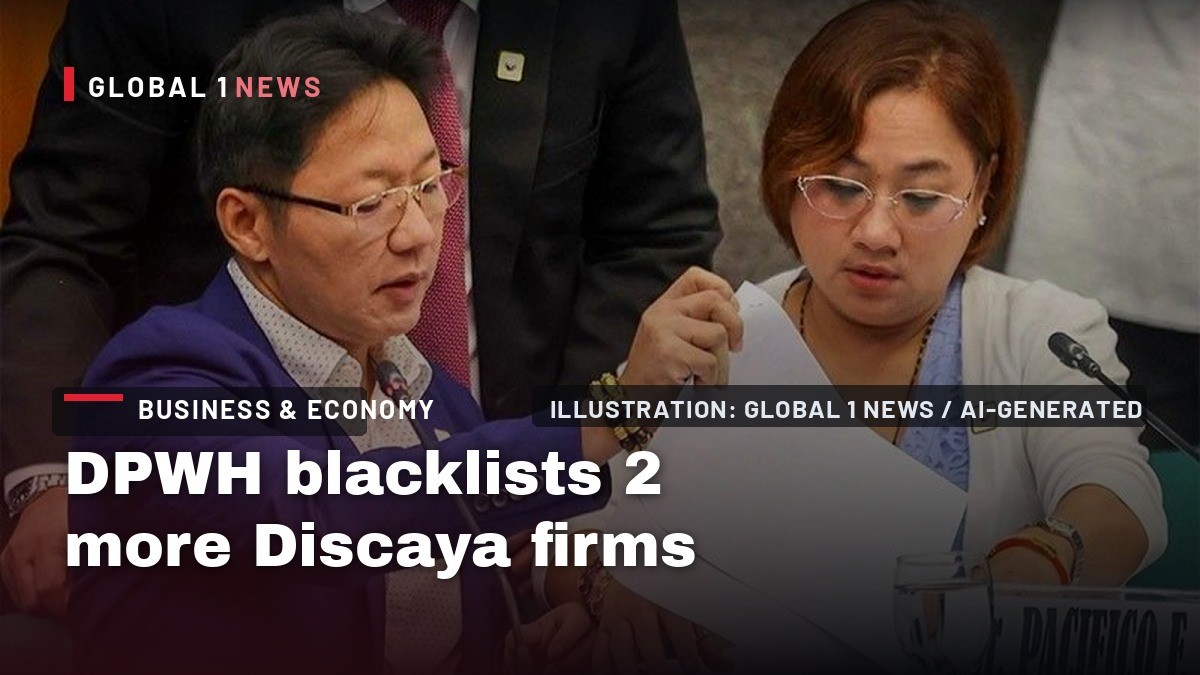
The Department of Public Works and Highways (DPWH) has taken a decisive step against two construction firms tied to the controversial contractor Sarah Discaya, suspending them from any future government bidding. The move, announced by Public Works Secretary Vince Dizon, follows a series of contract defaults that have cost the government over ₱203 million. For ordinary Filipinos, especially those in flood‑prone barangays and commuters who rely on road projects, the enforcement of procurement rules is a reminder that public funds must be guarded against abuse.
Blacklisting of YPR General Contractor and Way Maker General Contractor
Under Department Order 127, YPR General Contractor received a two‑year suspension after its contract to build flood‑mitigation structures along the Aklan River in Kalibo was terminated on October 30 of last year. The project, valued at ₱95.53 million, was part of a larger effort to protect low‑lying communities from seasonal flooding. The suspension marks YPR’s second offense, prompting the DPWH to impose a harsher penalty.
Way Maker General Contractor OPC was hit with a one‑year suspension under Department Order 128 Series of 2026 for defaulting on the Aklan West Road project, also terminated on October 30 and worth ₱80 million. In addition, Way Maker was slapped with a separate two‑year suspension under Department Order 131 for failing to complete a ₱28.27 million contract to establish a National Bureau of Investigation (NBI) facility on Taft Avenue in Manila, a contract that was terminated on November 19.
The Discaya Network Exposed in Senate Hearings
During a Senate Blue Ribbon Committee hearing last year, Discaya admitted under oath that she and her family own or hold stakes in nine construction firms that have been active bidders in DPWH projects. The list includes Alpha and Omega Gen. Contractor & Development Corp., St. Gerrard Construction and Development Corp., St. Timothy Construction Corp., St. Matthew General Contractor and Development Corp., Elite General Contractor and Development Corp., Amethyst Horizon Builders and General Contractor Development Corp., Great Pacific Builders and General Contractor Inc., and the two firms just blacklisted—YPR and Way Maker One Person Corp.
Initially, Discanya denied that her companies ever competed against each other for the same contract, but later acknowledged that there were instances where multiple entities from her network entered the same bidding process. This admission underscores concerns that a single family’s web of firms could dominate public works contracts, potentially sidelining more transparent and competitive bidders.
Implications for Local Communities
For barangays in Aklan and elsewhere, the suspension of these firms means that unfinished flood‑mitigation structures and road projects may face further delays. Residents who have endured repeated flooding during the monsoon season are left waiting for alternative contractors to step in, a process that could extend the timeline for critical infrastructure improvements.
Meanwhile, commuters in Manila who anticipated the new NBI facility on Taft Avenue must now contend with the uncertainty of when the project will be revived under a different contractor. Such disruptions affect daily life, from the safety of law‑enforcement operations to the flow of traffic in a densely populated district.
DPWH’s Expanding Management Structure
Secretary Dizon has also expanded the department’s top‑level management, appointing two new assistant secretaries and bringing the total to nine. The latest additions are Carlo Jauharo Castro, a former public affairs officer of the ride‑hailing app Angkas, now assistant secretary for planning, public‑private partnerships, and the National Building Code; and Angelo Nuestro, now assistant secretary for information management after a stint as undersecretary for connectivity at the Department of Information and Communications Technology.
They join a crowded roster that includes Genevieve Cuaresma (support services), Michelle Mae Vivo (legislative liaison), Melody Anne Calo‑Villar (legal service), Michelle de Vera (stakeholder relations and communications), Suzanne Marie Liwanag (Office of the Secretary), and retired Maj. Gen. Rommel Tello (regional operations in Luzon). Career official Nerie Bueno handles regional operations in Visayas and Mindanao, while OIC‑Undersecretary Lara Marisse Esquibil doubles as assistant secretary for external convergence projects.
Critics Question the “Top‑to‑Bottom” Cleanup
President Ferdinand Marcos Jr. ordered a “top‑to‑bottom” cleanup of the DPWH after massive anomalies were uncovered in flood‑control projects and budget insertion scandals. While Secretary Dizon’s move to suspend offending firms aligns with that directive, observers note that the department’s administrative layer has become denser rather than leaner. The nine‑member undersecretary panel now oversees specialized services, field operations, and central bureaus, but regional and district offices have not seen a corresponding reduction in staff.
Critics argue that the expansion of senior posts may dilute accountability rather than enhance it, especially if the same officials who oversee project approvals also manage the very agencies that are meant to audit them. The placement of the Internal Audit Service directly under the Office of the Secretary, for instance, raises questions about the independence of audit findings.
Potential Path Forward for Procurement Reform
The blacklisting of YPR and Way Maker signals a firmer stance on enforcing Republic Act 9184, the Government Procurement Reform Act. To translate this enforcement into tangible benefits for Filipinos, the DPWH must ensure that replacement contractors are vetted rigorously and that project timelines are protected. Strengthening the transparency of the bidding process—perhaps by publishing detailed award notices and contractor performance records—could deter future collusion among related firms.
Moreover, aligning the department’s top‑level management with its field operations could improve oversight. If senior undersecretaries and assistant secretaries are tasked with regular field visits and performance audits, the gap between policy and implementation may narrow, delivering faster, more reliable infrastructure to communities across the archipelago.
What This Means for the Everyday Filipino
For the average Filipino, the saga of the Discaya firms is more than a headline about bureaucratic penalties; it is a reminder that public works directly affect daily life—from the safety of homes in flood‑prone barangays to the efficiency of roads that connect markets, schools, and places of worship. The DPWH’s actions, while still unfolding, carry the promise that misuse of public funds will be met with concrete consequences.
As the department works to replace the suspended contractors and streamline its management structure, communities can hope for renewed progress on stalled projects. Vigilant citizen oversight, continued media scrutiny, and a steadfast commitment to the rule of law will be essential in ensuring that the “top‑to‑bottom” cleanup translates into real, lasting improvements for every Filipino who depends on safe, reliable infrastructure.
This article was produced with AI-assisted research and editorial support. Reporting is based on the source material cited below. Sources: Philstar.com; Global1.News (28 September 2026).
By Bella Reyes, Staff Writer
What's Your Reaction?
 Like
0
Like
0
 Dislike
0
Dislike
0
 Love
0
Love
0
 Funny
0
Funny
0
 Wow
0
Wow
0
 Sad
0
Sad
0
 Angry
0
Angry
0

Philippines/Southeast Asia Correspondent at Global1.News. Manila-based journalist covering Philippine politics, environment, maritime security, and social issues. Passionate about marine conservation and the communities protecting the Philippines' natural heritage.














Comments (0)