
Drumcree Stand-Off: Court Says Walk, Protesters Say Never
The Orange Order's Drumcree return parade was cleared by the courts to walk Portadown's Garvaghy Road for the first time in almost 30 years - then protesters blocked the route, and the stand-off was still unresolved hours later.
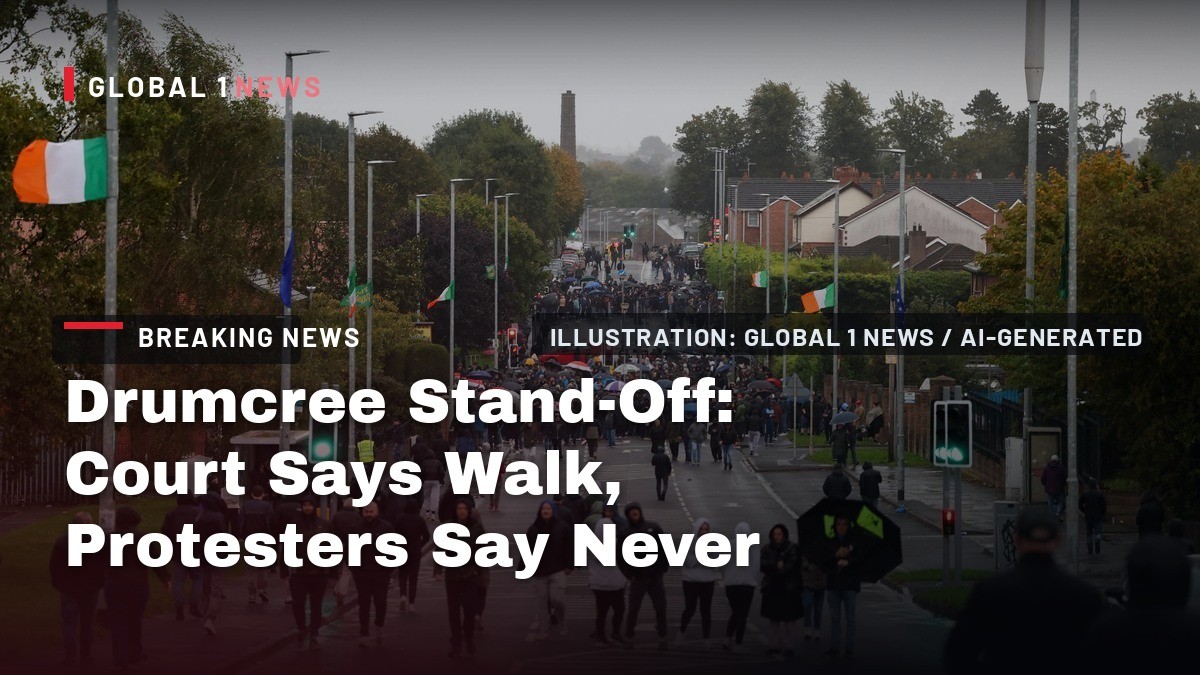
Thirty-five men are waiting at a church on a hill. A mile away, hundreds of people are standing on the road they want to walk down. The courts said the Orange Order could go. The road says no. As of this hour, the Drumcree return parade has not moved, the Garvaghy Road is still blocked, and nobody can tell you how Sunday ends.
Drumcree Stand-Off: Court Says Walk, Protesters Say Never
Portadown, Northern Ireland - The Orange Order's first permitted Drumcree return parade in almost 30 years was delayed for hours Sunday as protesters blocked the Garvaghy Road, leaving the stand-off unresolved at press time.
Portadown Waits: 35 Men, One Road, and a Wall of Protesters
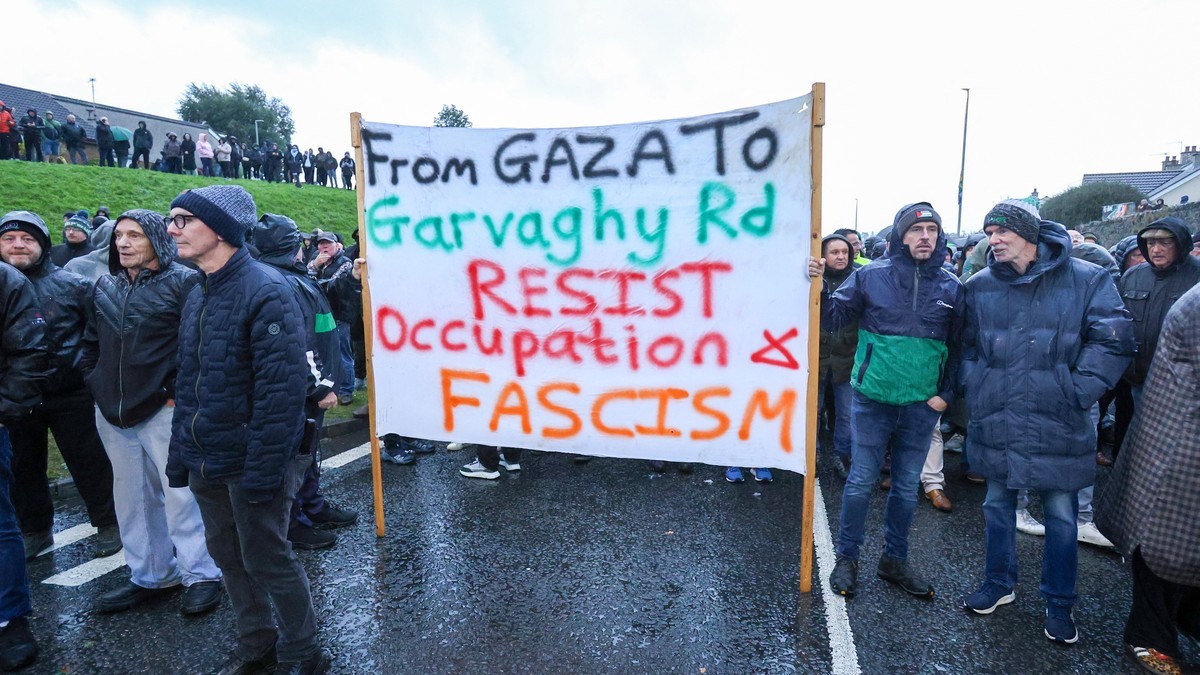
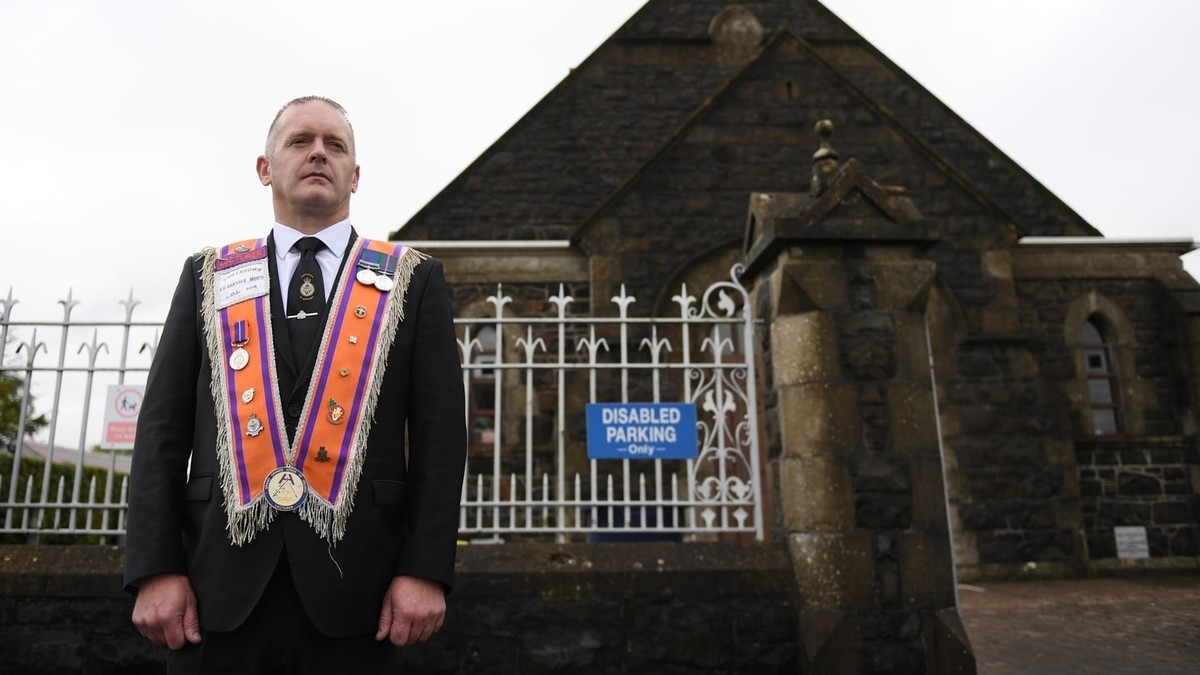
The Orangemen were due to leave Drumcree Church at 08:00. They did not. The Parades Commission had cleared a maximum of 35 participants to walk the Garvaghy Road, a predominantly nationalist and Catholic area, for the first time since 1997. No bands. No supporters. One banner. A hard 08:00 start and dispersal from Carleton Street Orange Hall by 09:30.
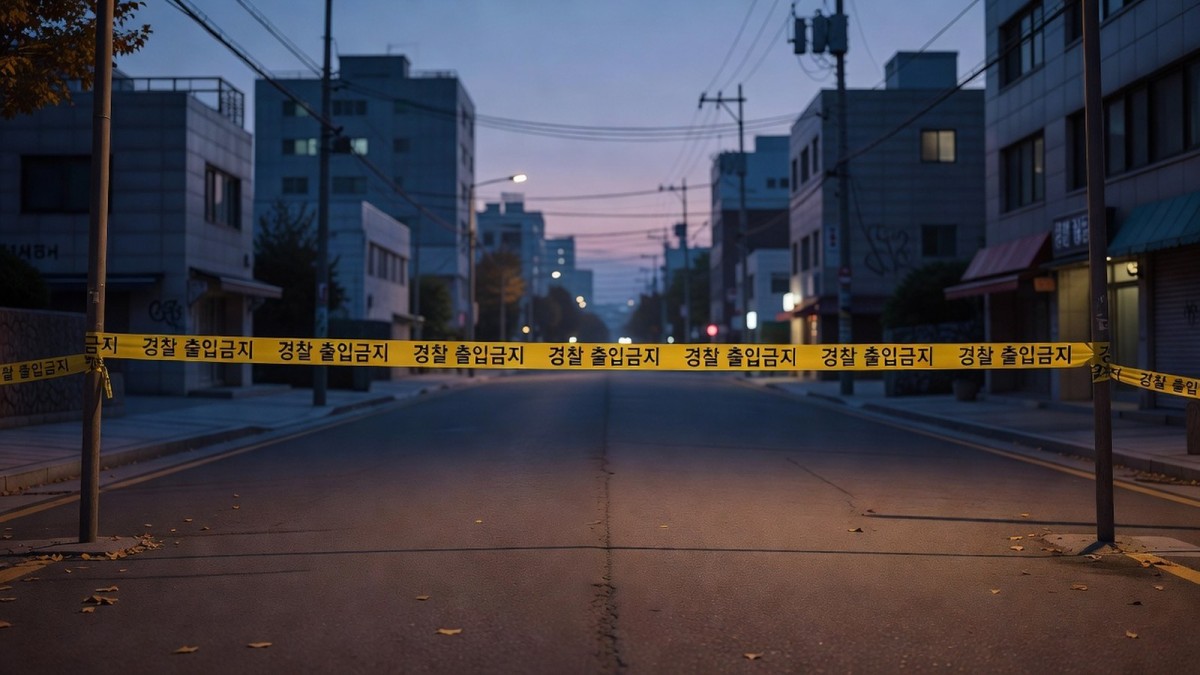
Instead, the road was blocked by two separate groups of protesters - one at the north end near where the parade was to begin, another to the south. Two cars were parked across the road. Many in the crowd wore balaclavas. Heavy rain fell through the morning. The PSNI told the Orangemen it had not received notice or clearance and could not facilitate the march. The Orangemen went back inside the church. A police helicopter circled overhead.
How a Procedural Error Reopened a 28-Year Wound
This did not happen because a court found a right to march. It happened because paperwork failed. Earlier this summer the Commission again refused the return route. A Portadown Orangeman, Alan Hynes, challenged that in the High Court, and the Commission admitted not all six commissioners had approved the final text of its decision before it was issued.
Belfast High Court Judge Gerry McAlinden said he had "no hesitation" in quashing it, criticising "errors", "shortcuts" and "sloppy procedures." The court cancelled the decision - it did not rule the Order had a right to the road. That left the Order free to apply again, and the Commission to decide afresh. The Commission said it did not contest the proceedings because of "identified procedural issues," and that the conditions were agreed unanimously on 24 June with all commissioners present.
Thirteen Hours of Courtrooms, Ending at 2:15 a.m.
Then the weekend turned into a legal relay race. On Saturday afternoon, High Court judge Patricia Smyth granted an injunction blocking the Commission's decision, saying the mistrust between residents and the Portadown lodge "cannot be overstated" and that the dispute had the potential to escalate across Northern Ireland. The Orange Order appealed. Late Saturday, the Court of Appeal - Lady Chief Justice Siobhan Keegan, Lord Justice Michael Humphreys and Lady Justice Denise McBride - upheld Hynes's appeal and let the march proceed.
Keegan called the situation "unprecedented" and said the injunction judge had "unfortunately erred in law." She added: "There is a major problem that the decision in this case was given after 2pm on a Friday afternoon. This cannot happen again." The case went back to the High Court, sitting from 00:20 to 02:15 Sunday before Justice Michael Humphreys, who noted the "unusual if not unprecedented circumstances."
On the Garvaghy Road: Balaclavas, a Sterile Zone, a Blocked Route
By first light the road belonged to the crowd. Hundreds blocked it, with several outlets reporting thousands and the BBC reporting numbers growing through the afternoon as more arrived. Police put a "sterile zone" between the two sides. Officers at the lower end wore ordinary uniforms, not public order equipment, and had not approached the group blocking the road.
Roughly five minutes before the scheduled 08:00 start, a substantial fireworks display went off nearby. A loudspeaker warned demonstrators they faced potential arrest for taking part in an unnoticed procession. Police repeated that message every 10 to 15 minutes. One lone protester threw a bottle at an armoured police vehicle; other protesters ordered him to stop and he returned to the crowd. By afternoon a PA system played music - Oasis, then Christy Moore's "Ride On" - and the crowd sang along. The atmosphere was described as calm and peaceful.
The Orange Order's Position: We Will Wait
The Order said it would complete its "1998 parade home from Drumcree along its traditional route," and that while it was "not happy with the further restrictions," it would "comply fully with the law and the determination." It asked its community to do likewise. On Sunday it said police had delivered an assessment that they could not facilitate the march, and that enforcing the law was now a matter for police. The Order said the march would go ahead when the road was clear.
The protesters said they would not clear the road. So the men stayed at the church, about a mile from the contested stretch, through the afternoon. The Order's Saturday statement had one line that now reads like a plea: "We hope that the 27 September can pass peacefully."
Sinn Féin in the Middle of It
First Minister Michelle O'Neill stood on the Garvaghy Road with protesters and said the reignition of Drumcree "brings into question how this whole peace process works." She said the progress of 28 years had been "brought into question by the actions of the Orange Order and those within political unionism that want to drag us backwards," called the decision "disgraceful," and said: "There is no going back. Not tomorrow. Not ever."
Sinn Féin president Mary Lou McDonald, speaking from the area, said residents would "not be drawn back to the past," called it "madness" and "primitive treatment of any community in the year 2026," and urged the Northern Ireland Secretary and the chief constable to intervene. Party representatives including Deirdre Hargey and Carál Ní Chuilín were on the ground all day; former party leader Gerry Adams arrived and stopped to take a photograph.
Unionism Answers Back
DUP leader Gavin Robinson said the legal position was "now unequivocal" - 35 Orangemen can walk in silence along Garvaghy Road - and that "the rule of law cannot apply only when Sinn Féin likes the outcome." He said a First Minister's duty is to uphold lawful decisions, "not inflame opposition to them," and called Sinn Féin politicians at the protest "lawmakers acting as lawbreakers."
DUP MP Carla Lockhart, outside the church, called the court outcome "a seismic win" and said: "The law is on our side. That's what they're afraid of; 35 men walking peacefully down the road with no band, silently with comrades." She called it "outrageous" to see Sinn Féin leaders "whipping up hysteria." Party members said they were trying to protest peacefully and lawfully but had been prevented from doing so.
A Police Chief Asking Everyone to Walk Away With Dignity
PSNI Chief Constable Jon Boutcher said he was "unbelievably proud" of officers managing "an exceptionally challenging situation," that the operation had so far helped ensure "no violence or disorder," and that an evidence-gathering operation was running. "I appeal to everyone to remain calm and peaceful," he said.
At a Belfast press conference he said a successful conclusion would be that "not one hair on one head gets harmed," and that he wanted everybody to find "a place that they can, with dignity, walk away from the current situation." He said police had been gathering evidence "from the get-go" and would "deal with that at the right time." Officers were deployed with mutual aid colleagues, including reinforcements from England.
What 1998 Cost
The Drumcree dispute began in 1995, when nationalists objected to the Orange Order passing through the Garvaghy Road. It sparked widespread disorder that resulted in the deaths of several people. The parade eventually went ahead that year after a three-day stand-off, when nationalists ended their protest. For several summers it produced violent clashes and a major security operation, and it is widely considered the biggest and most volatile sectarian flashpoint in Northern Ireland in the late 1990s.
In 1998, the newly established Parades Commission ruled the Order could not complete the return leg along Garvaghy Road. Widespread loyalist disorder followed. Three young brothers - Richard, Mark and Jason Quinn, aged 11, 10 and nine - were killed in a UVF petrol-bomb attack on their Ballymoney home during the unrest. The Order has applied almost every year since. It has been refused every year.
Where This Leaves the Peace Process
Justice Minister Naomi Long said there was "a predictability about all of this" and that "once the scab has been picked at it was never going to end well for anyone." She called it "an entirely avoidable conflict," adding: "There was no need to re-open this dispute." SDLP leader Claire Hanna, who met residents, said they were "understandably angry and anxious," and warned: "The potential consequences extend far beyond one street or one parade."
Northern Ireland Secretary Sir Chris Bryant cut short his time at the Labour conference to travel to Belfast, saying: "I wish we weren't in this position," and asking for rhetoric to come down "20%, 30%, maybe even 40% less." UK Prime Minister Andy Burnham told the BBC there had been "big gains made in Northern Ireland, and we don't want to see things go backwards," and appealed for calm on all sides. Taoiseach Micheál Martin called the Commission's decision "incomprehensible and wrong." At Drumcree, the men are still waiting. On the Garvaghy Road, so is everyone else.
By Jessica Ali, Staff Writer
This article was produced with AI-assisted research and editorial support. Sources: BBC News and BBC News NI live coverage, RTE, Al Jazeera and Reuters, The Independent, the Irish Independent and PA Media, Belfast Live, the Belfast Telegraph, The Irish News, and TheJournal.ie.
What's Your Reaction?
 Like
0
Like
0
 Dislike
0
Dislike
0
 Love
0
Love
0
 Funny
0
Funny
0
 Wow
0
Wow
0
 Sad
0
Sad
0
 Angry
0
Angry
0

Editor-in-Chief at Global1.News. Atlanta-based journalist who cuts through the BS and tells it like it is. Lead anchor, host, and the voice you hear when the spin stops and the truth starts.












Comments (0)