
Eir to begin 3G switch-off in Ireland later this week
When Eir announced it will start pulling the plug on its 3G network in Donegal this week, the headline grabbed the press, but the real story is what it means for anyone still clinging to legacy wireless gear – and for us hosting founders who know the cost of hanging onto dead tech.
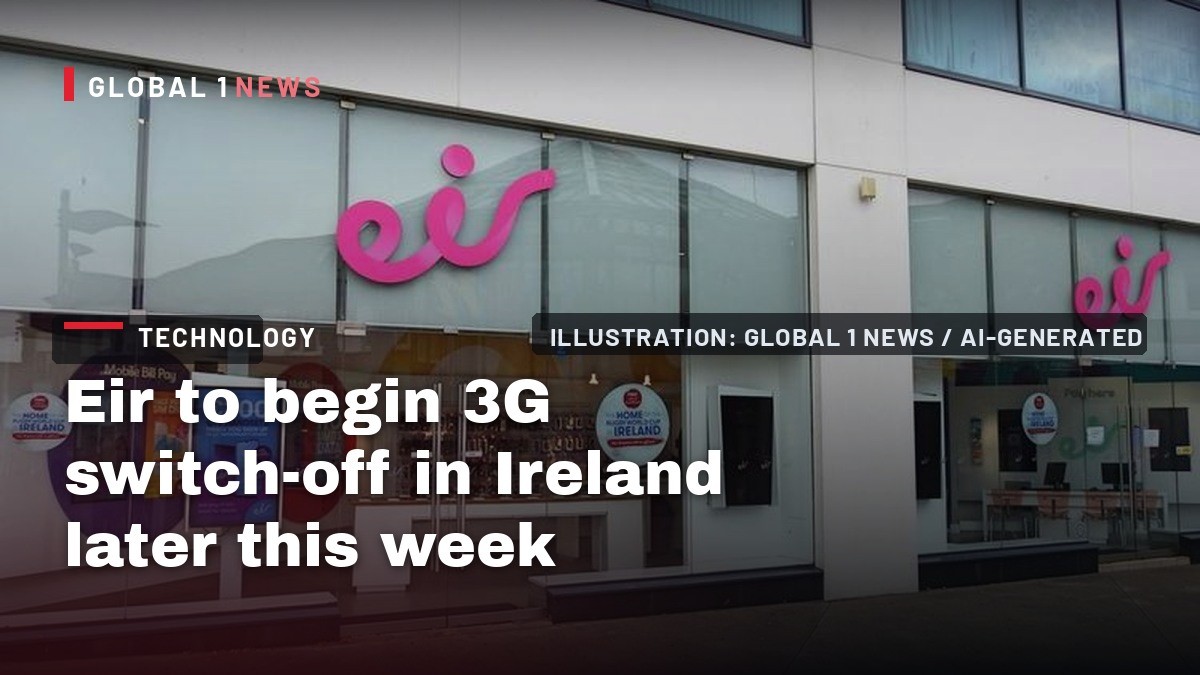
When Eir announced it will start pulling the plug on its 3G network in Donegal this week, the headline grabbed the press, but the real story is what it means for anyone still clinging to legacy wireless gear – and for us hosting founders who know the cost of hanging onto dead tech. The Irish telco says it will shift the remaining 3G users onto 4G, 5G and, for voice, its 2G network. That sounds tidy on a press release, but the ripple effects hit the bottom line of any business that still runs point‑of‑sale terminals, IoT sensors, or remote field units on 3G. In my decade of running production servers, I’ve seen the same pattern repeat: a carrier declares a “small number” of users still on the old tech, yet those users are often the most vulnerable, the most costly to migrate, and the ones that can break a supply chain if ignored.
Why the 3G sunset matters to hosting providers
The first thing to understand is that “only a small number of customers use 3G for data, calls, and texts” is a classic line that masks the real risk. Those customers are usually on devices that cannot be upgraded – think of agricultural drones, remote telemetry units, or legacy POS terminals in small retailers. When the network disappears, those devices simply stop talking. For a hosting provider that offers edge connectivity or managed IoT services, that translates into a sudden loss of traffic, SLA breaches, and a wave of support tickets that can swamp a skinny ops team.
From a business‑risk perspective, the cost of a network outage is not just the lost bandwidth; it’s the lost trust. In my own operations, a single carrier‑wide outage on a legacy protocol forced us to reroute traffic through a backup link, costing us hours of engineering time and a measurable dip in customer satisfaction scores. When a carrier like Eir phases out 3G, the same engineering scramble will happen for any downstream provider that hasn’t pre‑emptively migrated.
The economics of legacy network support
Carriers have been quick to point out that 4G and 5G are “more technologically advanced, cost‑effective, and energy‑efficient.” That’s not just marketing fluff – the power draw of a 3G base station is significantly higher per bit than a modern LTE node. For a carrier with 1.6 million mobile customers, the marginal cost of keeping a handful of 3G sites alive is a drain on the balance sheet. The same logic applies to us: every piece of legacy hardware we keep running eats electricity, rack space, and staff time. If you’re still paying for a 3G‑only modem in a remote site, you’re likely over‑paying on power and maintenance.
What’s more, the pricing models that hyperscalers push for “always‑on” connectivity often assume you’re on the newest LTE or 5G stacks. When you’re stuck on 3G, you’re forced onto legacy pricing tiers that are far less competitive. That’s why I always tell my team to audit any “small number” of legacy links – the hidden cost can be a serious profit‑killer.
Migration pain points and real‑world war stories
In practice, moving from 3G to 4G isn’t as simple as flipping a switch. Devices often need firmware upgrades, SIM swaps, or even hardware replacements. I recall a client in the Caribbean who ran a fleet of weather stations on 3G. When their carrier announced a similar shutdown, we had to coordinate a staggered rollout of LTE modules, re‑certify each unit, and rewrite the data ingestion pipeline to handle the new APN settings. The effort cost weeks of engineering and a small uptick in field failures during the transition.
The same pattern shows up in Ireland. Eir’s phased approach – starting in Donegal and rolling out county by county – means that any provider with customers spread across the island will face a moving target. You can’t simply “wait until the end”; you have to plan for each regional cut‑over, test locally, and have a rollback plan if the new network misbehaves. That’s a heavy lift for a lean hosting outfit.
Risk mitigation: what founders need to do now
The immediate action item is a network audit. Pull a list of every device, gateway, or edge node that still talks 3G. Cross‑reference that with your revenue streams – are those devices feeding critical SaaS services, or are they low‑value telemetry points? Prioritise the high‑impact ones for immediate migration. If you can’t replace the hardware, at least verify that the carrier’s 2G fallback will cover voice and SMS, and that your data path can survive the switch.
Second, engage with the carrier early. Eir hasn’t disclosed exact numbers, but the fact they’re starting in Donegal suggests they have a rollout schedule you can tap into. Ask for a migration window, technical guidelines, and any bulk SIM‑swap programs they might offer. In my experience, carriers will often throw a “migration assistance” package at you if you ask early enough – it’s cheaper for them than dealing with a flood of complaints later.
The broader industry trend and why it matters to us
What Eir is doing isn’t an isolated event. Telcos worldwide are shedding 3G in favour of LTE and 5G, citing cost savings and energy efficiency. That means the window of opportunity to lock in legacy contracts is closing fast. For hosting providers, the lesson is clear: clinging to old tech is a liability, not a competitive advantage. The market rewards those who can promise “future‑proof” connectivity, and that starts with a clean, LTE‑only stack.
From a strategic standpoint, this shift also opens a niche for specialised migration services. Companies that can bundle LTE hardware, SIM provisioning, and a managed connectivity layer will find a ready market among SMEs and verticals like agriculture, logistics, and public safety that still run 3G gear. If you have the chops to build that service, you can turn a risk into a revenue stream.
Actionable steps for September 2026
1. **Inventory** – Pull a comprehensive list of all 3G endpoints in your network. Use network monitoring tools to flag any traffic still on the 3G APN.
2. **Prioritise** – Rank those endpoints by revenue impact and regulatory importance. Flag any that handle payments, health data, or critical infrastructure.
3. **Engage** – Contact Eir’s enterprise support channel now. Ask for the phased rollout calendar and any migration assistance programs.
4. **Test** – Set up a pilot LTE migration in a low‑risk region. Validate that your data pipelines, authentication, and monitoring survive the hand‑off.
5. **Communicate** – Draft a clear notice to your customers explaining the upcoming change, the timeline, and the steps you’re taking to ensure continuity.
6. **Plan for the fallback** – If LTE isn’t feasible for a subset of devices, map out the 2G voice/SMS fallback and ensure you have a backup data channel (e.g., satellite or LoRa) for critical telemetry.
Bottom line: don’t let “small numbers” become big problems
The Eir 3G switch‑off is a reminder that “small” legacy user bases can still pose outsized risk. In my world, the cost of a surprise outage far outweighs the expense of a proactive migration. The carrier’s move to more efficient 4G/5G networks is inevitable, and the onus is on us – the hosting founders, the infrastructure builders – to stay ahead of the curve. Treat the phase‑out as a deadline, not a suggestion, and you’ll protect your service levels, your margins, and your reputation.
— Allan Ali, Founder
This article was produced with AI-assisted research and editorial support. Reporting is based on the source material cited below. Sources: Data Center Dynamics; datacenterdynamics.com; Global1.News (28 September 2026).
By Allan Ali, Global1.News
What's Your Reaction?
 Like
0
Like
0
 Dislike
0
Dislike
0
 Love
0
Love
0
 Funny
0
Funny
0
 Wow
0
Wow
0
 Sad
0
Sad
0
 Angry
0
Angry
0

Publisher of Global1.News. Automation architect, systems builder, and the guy making sure the truth gets published.















Comments (0)